21 Critical Questions to Ask a Car Accident Lawyer Before You Hire Them
Don't hire a lawyer without this checklist. Our guide covers 21 critical questions to ask a car accident lawyer to vet their experience, fees, and strategy.
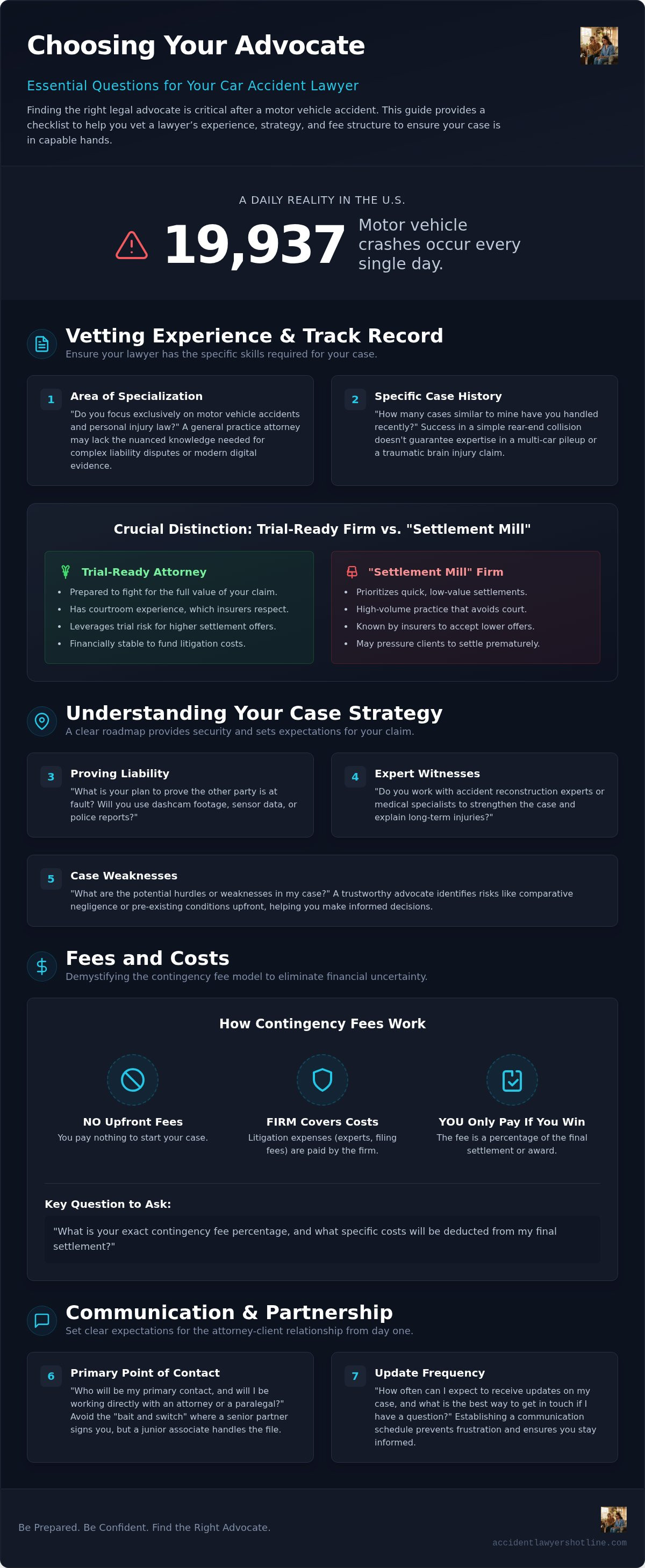
Every single day in the United States, approximately 19,937 motor vehicle crashes occur, leaving thousands of people to deal with the aftermath of injuries and financial loss. If you are one of them, you likely feel the weight of mounting medical bills and the pressure of insurance companies seeking a quick settlement. Finding the right advocate during this time is critical; however, knowing exactly which questions to ask a car accident lawyer can feel like a daunting task. You deserve a professional who does not just see a case number, but understands the high stakes of your physical and financial recovery.
We agree that the legal process should not be another source of stress in your life. You need clear answers about costs, timelines, and whether your attorney has the specialized knowledge to handle modern digital evidence or complex disputes over fault. This guide provides a comprehensive checklist designed to vet a lawyer’s experience and fee structure before you sign any paperwork. We will walk you through 21 essential questions that help you find a trustworthy advocate and gain total confidence that your case is in capable hands.
Key Takeaways
- Distinguish between "settlement mills" and trial-ready attorneys to ensure your advocate is prepared to fight for the full value of your claim.
- Use our targeted checklist of questions to ask a car accident lawyer to uncover their specific strategy for proving liability and managing expert witnesses.
- Master the details of the contingency fee model to eliminate uncertainty regarding legal costs and out-of-pocket litigation expenses.
- Set clear expectations for the attorney-client partnership by identifying your primary point of contact and communication schedule from the very first meeting.
- Learn how a professional case evaluation serves as a risk-free first step to connecting with a pre-vetted advocate tailored to your accident type.
Vetting Experience: Questions About the Lawyer’s Track Record
Choosing a legal representative is a high-stakes decision that directly impacts your financial recovery. You need to know if the person sitting across from you has the specific skills required for your unique situation. One of the first questions to ask a car accident lawyer involves their area of specialization. A general practice attorney who handles divorces or real estate may not understand the nuances of modern vehicle sensor data or complex liability disputes. You deserve an advocate who focuses exclusively on motor vehicle accidents and personal injury law.
It's vital to distinguish between a trial-ready firm and a "settlement mill." Settlement mills are high-volume firms that prioritize quick, low-value settlements to keep their doors open. They rarely step foot in a courtroom. Insurance companies keep detailed records on law firms; they know which attorneys are afraid of trial. If your lawyer has a reputation for settling every case, the insurance company will likely offer a lower amount. Before you commit, verify the attorney's standing with the state bar and check for memberships in professional trial lawyer associations. These credentials often signal a commitment to high-level advocacy.
Specific Case History Questions
Success in a rear-end collision case does not automatically translate to success in a complex multi-car pileup. You need to drill down into the specifics of their past work. Start by asking these two critical questions:
- "How many cases like mine have you handled in the last three years?"
- "What is your success rate with [specific injury type] claims?"
Whether you are dealing with whiplash or a traumatic brain injury, the medical evidence required varies significantly. A lawyer's recent trial experience is your greatest source of settlement leverage. When an insurer knows your attorney is prepared to present a case to a jury, they are much more likely to offer a fair settlement to avoid the risk of a courtroom loss.
Trial vs. Settlement Experience
You must determine if the firm has the financial resources to handle the costs of complex litigation. Building a strong case often requires hiring accident reconstruction experts and medical witnesses. Most reputable personal injury firms operate on a contingency fee model, which means the firm pays these litigation expenses upfront. If a firm lacks the capital to fund your case properly, they may pressure you to accept a subpar settlement.
Ask who will actually handle the daily work on your file. Some large firms use a "bait and switch" tactic where a senior partner meets you, but a junior paralegal manages the actual case. You need a dedicated professional who is personally invested in your outcome. A trial-ready attorney provides the "calm in the storm" you need, ensuring that if the insurance company lowballs your offer, you have the muscle to fight back in court.
Understanding Case Strategy: Questions About Your Roadmap
Once you've verified a lawyer's background, you need to see their specific plan for your recovery. A roadmap provides the security of knowing where your case is headed and how your advocate will handle the high stakes of your claim. When looking for consumer advice on hiring a lawyer, government experts suggest seeking a clear explanation of how an attorney will prove the other party is at fault. It's not enough for them to say they'll "fight for you." You need to know if they'll utilize modern digital evidence, such as dashcam footage or vehicle sensor records, to build a bulletproof case.
Proving liability often requires more than just a police report. Ask if the firm works with accident reconstruction experts to visualize the crash or medical witnesses to explain the long-term impact of your injuries. You should also demand a realistic assessment of your case's weaknesses. A trustworthy advocate won't just tell you what you want to hear; they'll identify potential hurdles like comparative negligence or pre-existing conditions. Understanding these risks early helps you make informed decisions about whether to settle or proceed to trial.
The "discovery" phase is a critical part of this legal roadmap. This is the formal process where both sides exchange evidence and information. You'll likely need to provide medical records, answer written questions, or give a deposition. Understanding these requirements early helps you feel prepared rather than overwhelmed by the process. If you're feeling uncertain about these steps, a car accident case evaluation can help clarify your path forward before you commit to a firm.
The Legal Theory of Your Case
Every successful claim rests on a solid legal theory. You need to understand how your lawyer intends to connect the driver's negligence to your specific damages. Ask these two vital questions:
- "What is your primary strategy for proving the other driver was at fault?"
- "What obstacles do you foresee with the current evidence?"
The best attorneys can explain complex legal strategies in simple, accessible terms. If they hide behind exclusionary legalese, they may not be the right partner to support you through this stressful time.
Timeline and Deadlines
Legal cases aren't resolved overnight, and you need a transparent estimate of the duration from the initial filing to a potential resolution. A major factor here is the "statute of limitations," which is the legally mandated deadline for filing your lawsuit. If you miss this window, you lose your right to seek compensation forever. Ask your lawyer exactly how much time remains under your state's laws and how they plan to meet all procedural deadlines. This is one of the most important questions to ask a car accident lawyer to ensure your rights remain protected throughout the process.
Fees and Costs: Asking About the Contingency Model
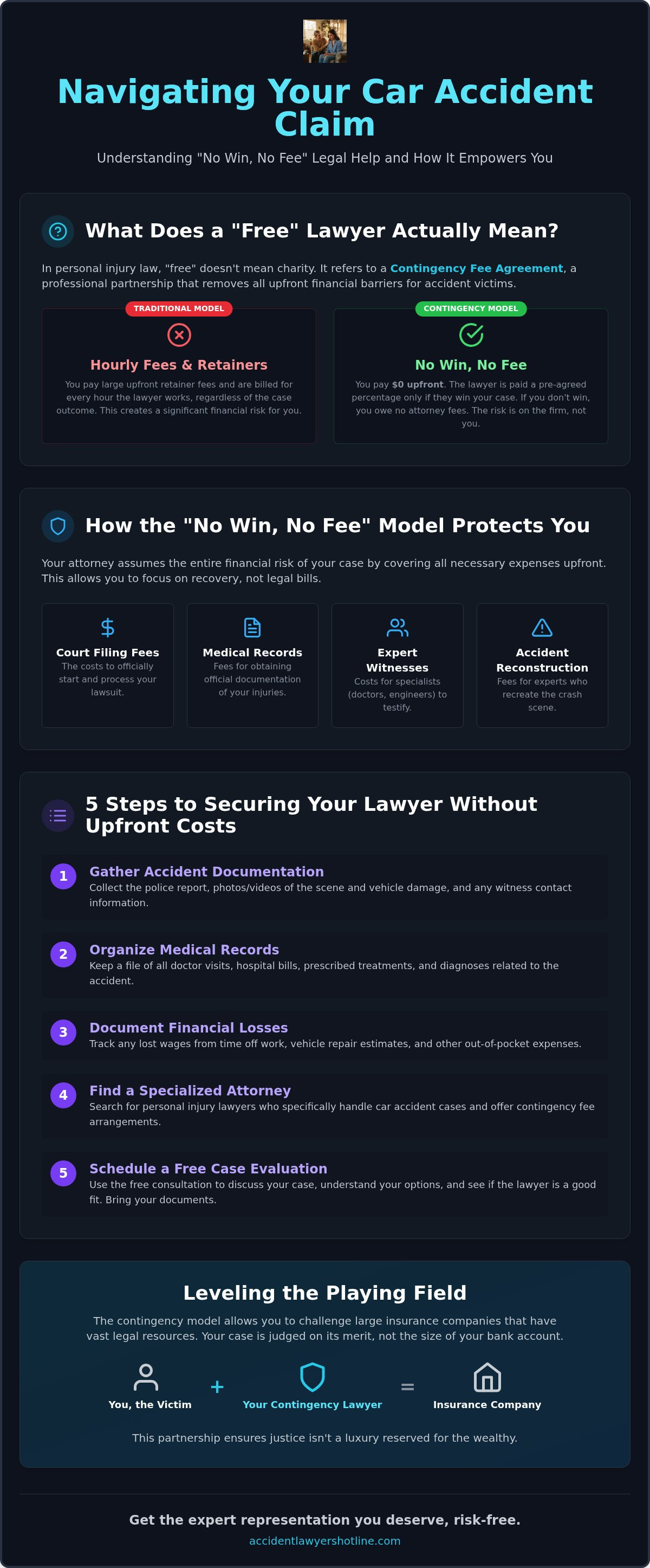
Financial anxiety is often the biggest barrier to seeking justice after a crash. You shouldn't have to pay out of pocket to hold a negligent driver accountable. Most reputable advocates operate as a no fee unless we win your case attorney. This means their payment is tied directly to your success. However, you must dig deeper into the fine print. One of the most critical questions to ask a car accident lawyer is how they distinguish between legal fees and litigation expenses.
Legal fees represent the lawyer's pay for their time and expertise. Litigation expenses cover the actual costs of building the case. These include court filing fees, the cost of obtaining medical records, and payments to expert witnesses. You need to know if the firm advances these costs. If a case is lost, you must know if you are still on the hook for these out-of-pocket expenses. A transparent advocate will explain these risks clearly before you sign any agreement.
The Fee Structure Breakdown
The standard contingency fee typically ranges between 33% and 40% of the final recovery. This percentage often increases if the case moves from a settlement phase into active litigation or trial. You need to understand exactly how this math works. Ask these specific questions:
- "What is your exact percentage for a settlement versus a court verdict?"
- "Do you advance all case costs, or will I be billed for expenses as they arise?"
- "Is your fee calculated before or after expenses are deducted from the gross settlement?"
The distinction between "gross" and "net" recovery is massive for your final check. If the fee is taken from the gross amount, the lawyer gets paid first, and then expenses are subtracted from your remaining share. If it's taken from the net, expenses are paid first, and the lawyer's fee is calculated on the remaining balance. Always clarify who is responsible for expert witness fees if the case does not result in a win.
Managing Medical Liens
A large settlement doesn't always mean a large check in your pocket. Healthcare providers often place "liens" on your case to ensure they are paid for the treatment they provided. A skilled attorney acts as your shield here. They should negotiate with hospitals and insurance companies to reduce these lien amounts. This negotiation process maximizes your final take-home pay.
You might also hear about a "Letter of Protection." This is a legal agreement that allows you to receive medical care now with the promise to pay the provider from your future settlement. It ensures you don't have to wait for treatment while your case is pending. Ensure your contract doesn't include hidden administrative fees for things like "postage" or "copying." A professional advocate provides a clear, written breakdown of every potential cost before you hire them.
Communication: Questions About the Attorney-Client Partnership
Many accident victims share a common frustration: they hire a lawyer and then never hear from them again. This "ghosting" effect can turn a stressful recovery into an overwhelming ordeal. You deserve a partnership built on transparency and regular updates. One of the most overlooked questions to ask a car accident lawyer is how they handle communication once the initial paperwork is signed. Knowing what to expect prevents the anxiety of feeling like your case has stalled in a filing cabinet. A successful legal outcome depends on a clear flow of information between you and your legal team.
Accessibility and Support
Ask: 'Who will be my day-to-day contact for questions?' In many large firms, you may work primarily with a case manager rather than the attorney. This isn't necessarily a problem, but you need to know who is responsible for your file. Ask: 'How quickly can I expect a return call or email?' A professional firm should offer a response time guarantee, typically within 24 to 48 hours. You should also ask about their preferred method of communication. Some firms use secure client portals to share documents, while others prefer direct email or phone calls. You need to feel supported rather than ignored during your recovery. If you are struggling to find an advocate who values communication, a car accident lawyer referral through a trusted hotline can bridge that gap.
Your Role in the Case
Your lawyer is the expert, but you are a vital part of the team. Ask what documentation they need from you on a monthly basis to keep the case moving. This usually includes updated medical bills, records of missed work, and receipts for out-of-pocket expenses. You must also understand how medical treatment compliance affects your legal standing. If you skip doctor appointments or ignore physical therapy, the insurance company will argue that your injuries aren't serious. This can drastically reduce the value of your settlement. Finally, set firm boundaries for insurance company interactions. Your lawyer should handle all communications with the other driver's insurer. This protects you from making statements that the insurance company could use to shift blame or deny your claim entirely.
The Decision: Why a Case Evaluation Hotline is Your Best First Step
After you have mastered the specific questions to ask a car accident lawyer, the next challenge is finding the right professional to answer them. Cold calling dozens of law firms while you are trying to recover from physical injuries is exhausting. It's an inefficient use of your energy during a high-stakes moment. A national hotline acts as a protective filter, shifting the burden of vetting from your shoulders to a seasoned facilitator. By using a standardized framework to pre-vet attorneys, a referral service ensures you only speak with advocates who meet rigorous standards for experience and results.
Instead of relying on a single firm's biased marketing claims, you gain access to an objective perspective. This service identifies attorneys who specifically work on a contingency basis, meaning you are matched with a "No Win, No Fee" specialist immediately. This removes the financial barrier to entry and ensures that your legal representation is motivated by your success. You don't have to guess if a lawyer is trial-ready or if they have the resources to fund your case; that work is already done for you.
Streamlining the Search
A referral service offers a much broader perspective than a single firm can provide. Different types of accidents require highly specialized knowledge. For example, a pedestrian or motorcycle accident involves different liability theories than a standard rear-end collision. The hotline identifies the right "fit" based on your specific accident type, whether it involves a commercial truck or a public bus. Speed is also a critical factor. In many cases, you can be connected with legal help within hours of your accident, ensuring that evidence like dashcam footage or witness statements is preserved before it disappears.
Next Steps for Your Recovery
Preparing for your evaluation is simple and takes the guesswork out of the process. To get the most out of your call, have your basic accident facts ready, including the date of the crash, the location, and a summary of your diagnosed injuries. This allows the evaluator to quickly assess the viability of your claim. A car accident case evaluation is a zero-risk first step. You aren't committing to a firm or signing a contract; you are simply gathering the information you need to move forward with confidence.
You deserve an advocate who is both empathetic to your struggle and formidable in the courtroom. Don't let the complexity of the legal system keep you from the compensation you need to pay your medical bills and restore fairness to your life. Get your free car accident case evaluation today and take the first step toward a professional resolution.
Secure Your Financial Future with the Right Advocate
Your physical and financial restoration depends on the quality of the advocate you choose. By mastering the questions to ask a car accident lawyer, you shift from a state of uncertainty to a position of strength. You now understand how to vet specialized experience, clarify fee structures, and demand a transparent communication strategy. These steps ensure that your legal roadmap is built on expertise rather than empty promises. You deserve a professional who sees the human impact of your accident, not just a case file.
Finding the right fit doesn't have to be an overwhelming process of cold calls and confusion. Our national network of motor vehicle accident specialists is designed to bridge the gap between your moment of crisis and a professional resolution. We focus on connecting victims with contingency-fee lawyers who prioritize your recovery above all else. There are no upfront costs for our support, allowing you to move forward without financial risk. Start Your Free Car Accident Case Evaluation Now to find a trustworthy partner who will fight for the fairness you deserve. You've been through enough; let a seasoned expert take the lead from here.
Frequently Asked Questions
What is the most important question to ask a car accident lawyer?
The most critical question involves the attorney’s specific trial experience and their track record with your particular accident type. You need to know if they are a "settlement mill" or an advocate prepared to take your case to a jury if the insurance company offers a lowball settlement. Ask how many cases similar to yours they have successfully resolved in the last three years to verify their current expertise and specialized knowledge.
How much does a car accident lawyer cost?
Most motor vehicle accident attorneys work on a contingency fee basis, which means there are no upfront costs for you to start your case. They only receive payment if they successfully recover a settlement or court award. While the industry standard typically ranges from 33% to 40%, you should confirm whether this percentage applies to the gross or net recovery. This model ensures that high-quality legal representation is accessible regardless of your current financial situation.
Should I hire a lawyer if the accident was minor?
Yes, you should consult an expert even if the accident seems minor. Injuries like whiplash or traumatic brain injuries often take days or weeks to manifest fully after the initial shock wears off. Additionally, insurance companies frequently undervalue property damage claims or attempt to shift blame onto you. A professional evaluation helps you understand the true value of your case and prevents you from signing a settlement that may not cover future medical needs.
What happens if I lose my car accident case?
Under the "no fee unless we win" model, you generally don't owe attorney fees if your case is unsuccessful. However, it's vital to clarify who is responsible for out-of-pocket litigation expenses such as filing fees or payments to expert witnesses. Most reputable firms advance these costs and waive them if the case is lost. Always review your contract during the initial meeting to ensure you aren't liable for administrative costs if you don't recover a settlement.
Can I change lawyers in the middle of a case?
You have the legal right to change your attorney at any point during your case if you feel your current representation is inadequate. If you feel "ghosted" or believe your lawyer lacks a clear strategy, you can seek a new advocate. The original lawyer may place a lien on your case for the work they already performed, but your new firm typically handles this transition. You shouldn't stay with a professional who doesn't prioritize your recovery.
How long do I have to file a car accident claim?
The timeframe to file a claim is governed by your state’s statute of limitations, which typically ranges from one to six years. However, claims involving government vehicles or public buses may have deadlines as short as six months. Missing these dates permanently bars you from seeking compensation. It's vital to act quickly to preserve evidence like dashcam footage and witness statements, as these details become much harder to gather as more time passes.
Do I have to talk to the other driver's insurance company?
No, you should avoid speaking directly with the other driver's insurance adjuster. Their goal is to minimize their company’s financial liability, and they may use your recorded statements to shift blame or deny your claim entirely. Instead, let your legal representative handle all communications. This ensures your rights are protected and prevents you from accidentally providing information that could harm your case value. Your advocate serves as your shield against aggressive insurance tactics.
What documents should I bring to my first meeting with a lawyer?
You should bring any evidence that supports your claim to your initial consultation. This includes the police report, photos of the accident scene, and contact information for any witnesses. Additionally, provide copies of your medical records, bills, and any correspondence you've received from insurance companies. These documents help the attorney perform a comprehensive evaluation and determine the best strategy for proving liability. Having this information ready is one of the best ways to prepare for the questions to ask a car accident lawyer.
Were You Injured in an Accident?
Get a free, confidential case evaluation. No upfront fees.
Get Free Case Evaluation