Bus Accident Lawyer: Navigating Complex Claims and Legal Rights in 2026
Injured in a bus crash? A bus accident lawyer helps navigate complex claims, strict deadlines, and common carrier laws to secure the settlement you deserve.
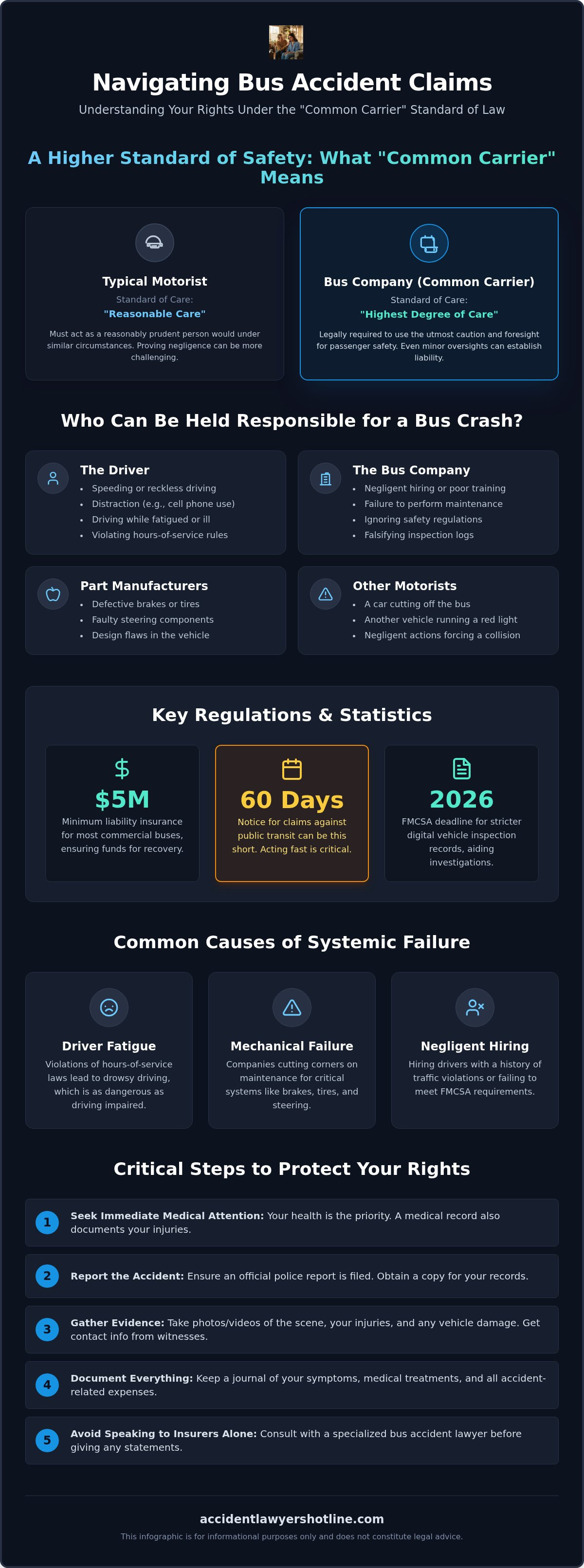
Did you know that bus companies are held to a "common carrier" standard, which means they owe you a higher level of safety than a typical motorist? When a collision happens, this legal distinction shifts the entire landscape of your claim and usually requires the insight of a bus accident lawyer to navigate. You might feel buried under mounting medical bills while wondering whether to sue the driver, the private company, or a government agency. It's natural to feel anxious about strict filing deadlines, especially since some claims against city transit require notice in as little as 60 days. You shouldn't have to face these complex legal hurdles alone while you're trying to heal.
You deserve a straightforward path to financial recovery without the burden of upfront costs. This guide explains how a professional identifies every liable party and manages the updated 2026 FMCSA digital record requirements. We promise to show you how a specialized case evaluation can help you secure the settlement you need for lost wages and long-term care. You'll learn about the latest safety regulations, the specific rules for school bus incidents, and the exact steps to take to ensure your rights remain protected. Let's move from uncertainty toward a resolution that restores balance to your life.
Key Takeaways
- Understand why bus companies are classified as common carriers and held to a higher legal standard of care than typical motorists.
- Identify the multiple parties that could be liable for your injuries, including drivers, private companies, or government agencies.
- Learn about the strict notice requirements and shortened filing deadlines that apply specifically to public transit and school bus claims.
- Discover how a bus accident lawyer uses specialized case evaluations to secure recovery for medical bills without any upfront costs.
- Follow the essential steps for gathering evidence and documenting injuries at the scene to build a stronger foundation for your recovery.
Understanding Bus Accident Claims and Common Carrier Laws
A bus accident isn't just a "big car accident." When you're injured on a public or private bus, the legal framework changes entirely. This is because bus companies are classified as common carriers. By definition, a common carrier is a business that transports people or goods for a fee. Because they hold the lives of the public in their hands, Common Carrier Laws require these companies to exercise the highest degree of care and foresight for passenger safety.
This higher standard of care is a critical advantage for your case. In a standard car accident, you must prove the other driver failed to act with "reasonable care." For a bus company, even a minor oversight in safety or maintenance can constitute negligence. A specialized bus accident lawyer understands how to leverage this distinction to hold carriers accountable. Additionally, the legal doctrine of Respondeat Superior ensures that bus companies are financially responsible for the negligence of their drivers, provided the driver was acting within the scope of their employment at the time of the crash.
Federal oversight also plays a massive role. The Federal Motor Carrier Safety Administration (FMCSA) sets strict standards for everything from driver health to vehicle upkeep. For example, as of February 2026, the FMCSA implemented stricter digital record requirements for Driver Vehicle Inspection Reports (DVIRs). These rules make it harder for companies to hide skipped maintenance or falsify safety logs. Commercial buses carrying 16 or more passengers are also required to maintain at least $5,000,000 in liability insurance, ensuring that significant resources are available for your recovery.
Why the Higher Standard of Care Matters for Your Case
Common carriers don't just have to be "careful"; they must be exceptionally vigilant. This means they're expected to anticipate potential hazards and take every possible precaution to avoid them. Because the law demands this "highest degree of care," it often becomes easier to prove liability. If a driver was speeding even slightly or a bus lacked a functioning safety handle, the company may be found liable for your injuries. This legal protection exists to ensure your safety is never compromised for the sake of a company's bottom line.
Common Causes of Bus Accidents in the United States
While every incident is unique, most bus crashes stem from preventable systemic failures. Your bus accident lawyer will typically investigate these common causes to build your claim:
- Driver Fatigue: Violations of hours-of-service regulations often lead to drowsy driving, which can be as dangerous as driving under the influence.
- Mechanical Failure: Despite the 2026 focus on digital inspection records, some companies still cut corners on brakes, tires, and steering systems.
- Negligent Hiring: Some carriers fail to enforce the FMCSA's English language proficiency requirements or ignore a driver's history of traffic violations during the hiring process.
Determining Liability: Who is Responsible for a Bus Crash?
Identifying fault after a bus crash is rarely simple. While a driver's actions are often the most visible cause, a thorough investigation frequently reveals that the true failure happened long before the bus even left the depot. According to bus accident statistics from the FMCSA, there were 48,204 bus crashes in the U.S. in 2021 alone. These incidents often involve a web of responsible parties, from the person behind the wheel to the corporation managing the fleet.
A bus accident lawyer will look at several factors to determine liability:
- The Driver: Logs and witness statements help determine if the driver was speeding, distracted, or violating hours-of-service rules.
- The Bus Company: Carriers are liable if they skipped mandatory maintenance or ignored systemic safety issues to save time or money.
- Third-Party Manufacturers: If a tire blowout or brake failure caused the crash, the company that built the faulty part might be held responsible.
- Other Motorists: Sometimes, another driver's negligence forces a bus off the road, making that driver liable for your injuries.
If you're feeling overwhelmed by the complexity of these claims, a professional case evaluation can help clarify your next steps and identify every potential source of recovery.
The Role of Respondeat Superior in Your Claim
In the legal world, the doctrine of "Respondeat Superior" is a powerful tool for victims. It establishes that employers are generally liable for the actions of their employees while they're on the clock. This is vital because it allows you to seek damages from a bus company's larger insurance policy rather than relying solely on a driver's personal assets. You don't just sue the driver, but the entity that hired them. This ensures that the organization profiting from the service also bears the responsibility for its safety failures.
Sovereign Immunity and Government Bus Accidents
Claims involving city transit or public school buses introduce a unique challenge called sovereign immunity. This legal principle can protect government entities from lawsuits, but there are specific exceptions for motor vehicle accidents. However, the window for action is incredibly small. While a typical personal injury claim might have a two-year limit, public transit accidents often require a "Notice of Claim" within 60 to 180 days. You must act quickly. Missing these short deadlines can permanently bar you from seeking the financial recovery you deserve.
Comparing Public Transit, School Bus, and Charter Bus Claims
The type of bus involved in your accident determines which laws apply and how much time you have to act. Public transit claims involve municipal insurance and strict filing windows. For city-run buses, you often have to file a formal notice within 60 to 180 days. This is much shorter than the standard two-year limit for most personal injury cases. If you miss this window, you lose your right to recovery. A bus accident lawyer understands these nuances and can help you meet these critical deadlines.
Special Considerations for School Bus Injuries
Districts and contractors owe the highest duty of care to minors. According to School Bus Safety guidelines from the NHTSA, these vehicles are designed to be safer than passenger cars, yet accidents still happen due to poor driver vetting or lack of seatbelts. Many school bus incidents also occur at bus stops where children are most vulnerable. Because these cases often involve commercial contractors, you might find our truck accident lawyer guide helpful for understanding how commercial vehicle liability overlaps with passenger transport. A qualified bus accident lawyer will investigate the district's hiring practices and maintenance logs to find the root cause of the injury.
Charter and Tour Bus Liability
Private charter and tour buses operate under different rules. These companies carry high-limit commercial policies, often ranging from $1,500,000 to $5,000,000 based on seating capacity. While these higher limits provide more protection for victims, the legal process is more complex. Many charter accidents occur across state lines, which can lead to disputes over which state's laws apply. Additionally, private contracts between the bus company and passengers might contain language that attempts to limit liability. An expert knows how to peel back the layers of parent corporations to identify the true owner of a smaller charter brand.
Interstate carriers like Greyhound fall under heavy federal oversight. These companies must comply with FMCSA regulations and are subject to scrutiny from the National Highway Traffic Safety Administration. When an accident happens on a cross-country route, the sheer volume of digital data and logs can be overwhelming. You need an advocate who can interpret this information to prove negligence. Whether it's a city bus or a luxury coach, the goal remains the same: ensuring you aren't left paying for a company's mistake.
Critical Steps to Take After a Bus Accident Injury
Your actions in the minutes and days following a crash determine the strength of your recovery. First, seek immediate medical attention. Even if you feel fine, internal injuries or delayed trauma like whiplash often take hours or days to appear. An official medical record created shortly after the incident serves as the primary evidence for your claim. Without this documentation, insurance companies will argue that your injuries were pre-existing or unrelated to the collision. This record is the first building block your bus accident lawyer will use to prove the extent of your damages.
Documenting the Scene and Your Injuries
If you are physically able, start gathering evidence before you leave the site. Use your phone to take photos of the bus interior, the exterior damage, and any visible road hazards like missing signs or skid marks. Identify the bus by its number or license plate. It is also vital to collect contact information from other passengers. Unlike a car accident where it's just two drivers, bus passengers are key witnesses who can corroborate your version of events. You should also save your bus ticket or digital receipt as definitive proof of passage.
- Record the names and badge numbers of responding officers.
- Start a "pain diary" to track how your injuries limit your daily activities.
- Report the accident to the authorities but avoid admitting any fault.
- Gather the names of any witnesses who saw the crash from outside the bus.
Avoiding the Insurance Adjuster Trap
You will likely receive a call from the bus company's insurance adjuster within days. They often sound helpful and empathetic, but their goal is to minimize the company's financial exposure. They may ask for a "recorded statement" to "get your side of the story." Don't do it. These statements are designed to trap you into admitting fault or downplaying your pain. Anything you say can be used to deny your claim later.
Consulting a bus accident lawyer early ensures that all communication with these adjusters is managed on your behalf. This protects your rights and ensures you don't accidentally compromise your case. If you're ready to shift this burden to an expert, you can get a free case evaluation to start your path toward recovery. By letting a professional handle the negotiations and paperwork, you can focus entirely on your physical healing and emotional well-being.
How a Professional Case Evaluation Protects Your Future
After a crash, you're likely facing physical pain and intense financial stress. A professional case evaluation serves as a risk-free first step toward clarity. During this review, an expert examines the specific details of your collision, identifies the responsible parties, and checks for upcoming legal deadlines. This process moves the burden of legal research from your shoulders to a seasoned professional. By consulting a bus accident lawyer, you gain a clear understanding of your case's value without any initial financial commitment. It's a methodical way to transition from a moment of crisis to a structured plan for resolution.
A legal referral service provides a unique advantage by matching you with an attorney who specializes in your specific type of crash. Whether you were on a city bus, a school bus, or a private charter, you need someone who understands the exact regulations involved. This specialized matching ensures you aren't just another file in a general practice firm. Instead, you're connected with an advocate who has handled similar high-stakes commercial litigation and knows how to counter the tactics used by large insurance companies.
The Benefits of the Contingency Fee Model
Many victims hesitate to seek help because they fear high hourly rates or retainer fees. The "No Fee Unless We Win Your Case" model removes this barrier entirely. You won't pay any upfront costs for legal representation, case filing, or expert investigations. The attorney only receives a percentage of the final settlement or court award. If they don't recover money for you, you don't owe them a fee. This structure ensures that your advocate is fully invested in the success of your claim. This protective approach to justice is a standard right for victims, similar to the protections outlined in our motorcycle accident lawyer pillar.
Starting Your National Case Evaluation Today
Connecting with an advocate through the hotline is a simple and supportive process. You'll provide the basic facts of the incident, and a professional will determine the best path forward. Waiting too long can jeopardize your ability to collect evidence, especially since digital logs and witness memories can fade quickly. Taking action now protects your right to full financial recovery for medical bills and lost wages. Don't let a company's mistake dictate your financial future. Get your free bus accident case evaluation now.
Securing Your Path to Recovery and Fairness
Bus accidents are governed by unique common carrier laws that demand the highest level of safety. Whether you were on a city bus with a short filing deadline or a private charter crossing state lines, the path to recovery involves identifying every liable party. You now understand you don't have to navigate these complex regulations alone. A bus accident lawyer can manage the aggressive tactics of insurance adjusters while you focus on your health. Our team provides national case evaluations 24/7 to ensure you never miss a critical filing window. We are highly experienced in both public transit and charter bus claims. Most importantly, we operate on a contingency basis, meaning there is no fee unless we win your case.
Connect with a Bus Accident Advocate for Your Free Evaluation today. You've already taken the first step by educating yourself about your rights. Let us help you restore the balance and security you deserve.
Frequently Asked Questions
Who is liable if I was a passenger on a bus that crashed?
Liability often extends to multiple parties, including the bus driver, the bus company, and even third-party maintenance contractors. Because buses are common carriers, they're held to a higher standard of care than typical drivers. If the driver was fatigued or the company skipped a safety check, they're responsible. A thorough investigation into the company's digital records and hiring practices is essential to identify every source of recovery for your injuries.
How long do I have to file a claim after a bus accident?
Your deadline depends on whether the bus was private or public. For private charter buses, many states allow up to two years. However, if you're filing against a government entity like a city transit authority, you might have only 60 to 180 days to file a formal notice. Missing this window can permanently bar your claim. It's critical to verify your local requirements immediately to protect your rights and future recovery.
Can I still recover damages if I was partially at fault for the bus accident?
Yes, you can usually still recover damages even if you were partially at fault. Most states follow comparative negligence rules. This means your total settlement is reduced by your percentage of responsibility. For example, if you're 20% at fault, you can still collect 80% of the damages. An expert advocate helps ensure the insurance company doesn't unfairly inflate your share of the blame to lower their payout or deny your claim entirely.
What kind of compensation can I get for my bus accident injuries?
You can seek compensation for both economic and non-economic losses. This includes current and future medical bills, lost wages, and physical therapy costs. You're also entitled to damages for pain and suffering, emotional distress, and loss of enjoyment of life. In cases of extreme negligence, such as a company ignoring repeated safety violations, you may even be eligible for punitive damages meant to punish the wrongdoer and prevent future incidents.
Is a bus company responsible if another driver caused the crash?
The bus company is generally not liable if another driver was 100% responsible for the crash. However, if the bus driver could have avoided the collision by following common carrier safety standards, the company may share liability. Often, these cases involve multiple insurance policies and complex negotiations. Your legal team will investigate whether the bus driver was speeding or distracted when the other vehicle initiated the accident to ensure all parties pay their share.
How much does it cost to hire a bus accident lawyer?
Hiring a bus accident lawyer through our network costs you nothing upfront. These cases are handled on a contingency fee basis. This means the attorney's fee is a percentage of the final settlement or court award. If you don't receive a recovery, you don't owe any legal fees. This risk-free model ensures that everyone has access to high-quality legal representation regardless of their current financial situation or mounting medical bills.
What happens if a school bus was involved in the accident?
School bus accidents involve unique liability rules and special protections for children. You may need to file a claim against a school district, a private transportation contractor, or both. These cases often have very short notice periods if the district is a government entity. An investigation will focus on driver vetting, school bus stop safety protocols, and the district's adherence to state-specific safety laws passed in early 2026 regarding illegal passing.
Do I need a lawyer if the bus company's insurance offered me a settlement?
You should always consult an expert before accepting a settlement offer from an insurance company. Initial offers are almost always lower than what your case is actually worth. Adjusters use these quick payouts to resolve the claim before the full extent of your medical needs is known. A bus accident lawyer evaluates the long-term costs of your injuries to ensure the settlement covers your future care and lost earning capacity.
Were You Injured in an Accident?
Get a free, confidential case evaluation. No upfront fees.
Get Free Case Evaluation