Suing for Pain and Suffering After a Car Accident: What Compensation Covers
Learn what suing for pain and suffering after a car accident may cover, how state laws and evidence affect claims, and when legal guidance may help you.
Suing for pain and suffering after a car accident may be possible, but your eligibility and the damages you can seek depend on state law and the effects of your injuries. The filing deadline also varies by state. There is no single nationwide rule that applies to every case.
It’s understandable to want clear answers about what your claim may cover, especially while you’re managing pain, treatment, and disruption to daily life. This guide explains the tax question, how pain and suffering damages may be assessed, and what insurers may consider when reviewing a claim.
You’ll also learn why medical records and other evidence matter, how state-specific rules can affect your options, and when legal help may be useful. Understanding those factors can help you make a more informed decision about what to do next.
Key Takeaways
- Pain and suffering can include physical discomfort, mental anguish, and other non-economic effects, but state rules may limit when you can pursue compensation.
- Massachusetts claims may depend on medical expenses or the seriousness of the injury, while fault can also affect eligibility.
- Medical records, injury photos, treatment costs, and documentation of missed work can help support your account of how the crash affected you.
- In New York, no-fault insurance generally covers medical costs and lost wages, while a serious injury threshold applies to pain and suffering claims.
- Filing deadlines vary by state, so understanding the rules where the crash happened can help you decide when legal guidance may be useful.
Is Pain and Suffering Compensation Taxable After a Car Accident?
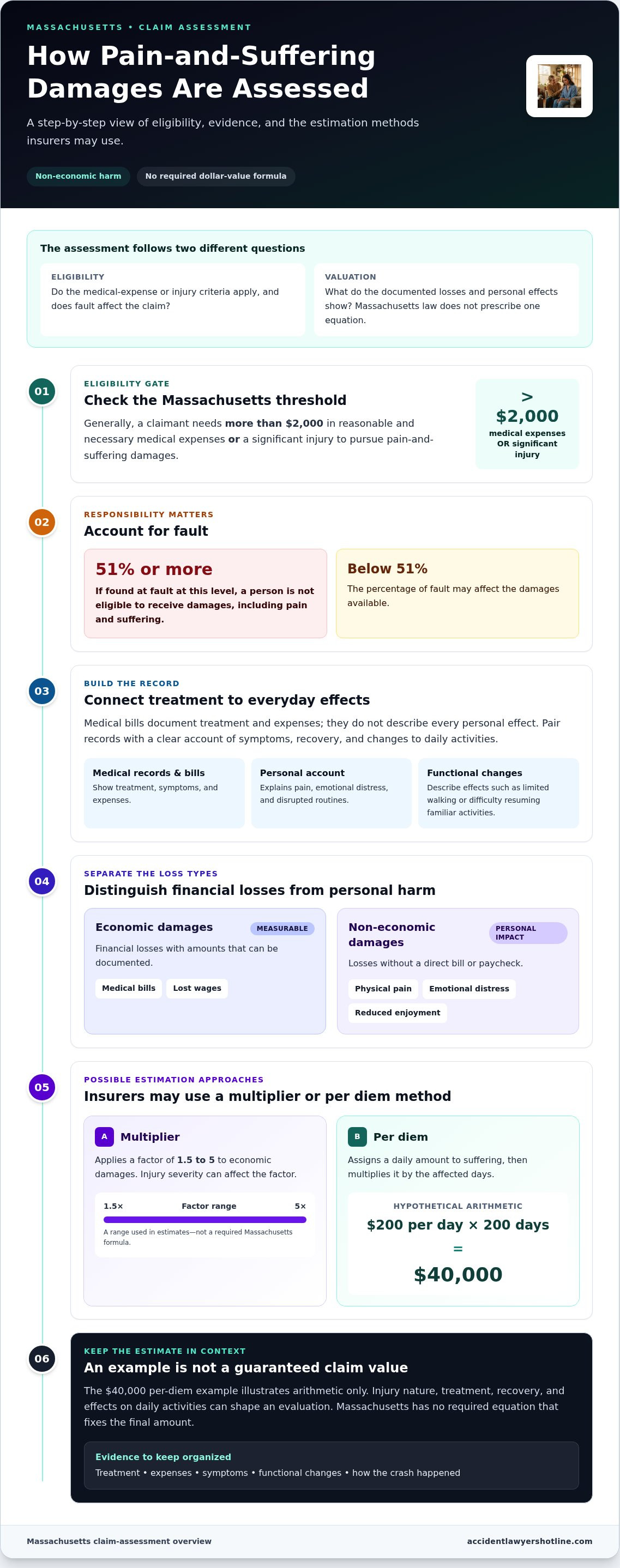
Tax treatment and eligibility are separate questions. A medical-expense threshold can affect whether you may pursue pain and suffering damages, but meeting that threshold alone doesn’t establish how an award is treated for tax purposes. In Massachusetts, car accident claimants generally need more than $2,000 in reasonable and necessary medical expenses or a significant injury to pursue these damages.
Pain and suffering refers to non-economic losses, including physical suffering and mental anguish. A claim may explain how an injury disrupted daily activities, affected emotional well-being, or changed the recovery process. Medical bills show treatment received, but they don’t describe every effect. For example, records may document treatment while your account explains how pain limited ordinary activities.
State rules set different injury thresholds. In Florida, a car accident victim generally can’t sue for pain and suffering unless the crash caused a qualifying injury: significant loss of ability to perform a necessary bodily function, permanent injury or aggravation of a pre-existing condition, significant and irreversible scarring or disfigurement, or death. These categories make the injury’s nature and lasting effects central to eligibility.
Evidence can connect the crash to those effects. Medical records and bills document symptoms, treatment, and expenses. Photographs can show visible injuries or scarring, while records from treatment providers may help describe recovery. A written account of limitations adds practical context, such as difficulty performing a necessary daily activity. Organize materials by date to make the injury’s course clear.
Fault can also affect compensation, but the rule depends on the state. In Massachusetts, a person found 51% or more at fault isn’t eligible to receive damages, including pain and suffering. Below that threshold, the percentage of fault may affect the damages available. A clear account of how the collision happened, supported by relevant evidence, can help address responsibility.
Filing deadlines matter alongside injury criteria. Massachusetts generally gives an injured person three years from the injury date to file a personal injury lawsuit, including a pain and suffering claim, according to the Massachusetts General Court. That deadline doesn’t determine tax treatment or prove an injury qualifies. It does make the accident date and subsequent records important details to preserve while assessing a claim.
How Are Pain and Suffering Damages Calculated in Massachusetts?
Pain and suffering means non-economic harm, including physical suffering and emotional distress. In Massachusetts, eligibility can depend on medical expenses, injury severity, and fault.
Pain and Suffering as Noneconomic Damages
Non-economic damages cover losses without a bill or paycheck, such as pain, emotional distress, and reduced enjoyment of activities. They differ from economic damages, which include measurable financial losses like medical bills and lost wages. Receipts can total financial costs, but they can’t assign a direct price to distress or changes in daily life.
Physical and Emotional Harm
Physical suffering may include ongoing pain, mobility limits, or discomfort during treatment. Emotional harm can include anguish and the effects of an injury on ordinary activities. Records can document treatment and symptoms, while a clear account explains how the harm changed daily routines. For example, a knee injury may affect walking, while distress may make familiar activities harder to resume.
Qualifying Car Accident Harm
Pain and suffering damages may cover physical suffering, mental anguish, and other non-economic effects of a crash. In Massachusetts, a claimant generally must have more than $2,000 in reasonable and necessary medical expenses or sustain a significant injury. Fault also matters: someone found 51% or more at fault isn’t eligible for damages, including pain and suffering.
Massachusetts law doesn’t set a formula for assigning a dollar value to these losses. Insurers may estimate damages using a multiplier or per diem method. A multiplier applies a factor of 1.5 to 5 to economic damages, with injury severity affecting the factor. The per diem approach assigns a daily amount to suffering, then multiplies it by the affected days.
For example, a hypothetical per diem calculation uses $200 per day over 200 days, producing $40,000. That illustrates the arithmetic, not a guaranteed value for another claim. The nature of the injury, treatment, recovery, and impact on daily activities can all shape an evaluation. Massachusetts has no required equation that fixes the final amount.
Economic damages may include medical bills and lost wages. Non-economic damages address pain, emotional distress, and other personal effects. Punitive damages are a separate category focused on the conduct involved, rather than reimbursing financial costs or compensating suffering. Keeping these categories distinct clarifies what each part of a claim seeks to address.
To assess eligibility and value, organize records showing treatment, expenses, symptoms, and functional changes. Compare documented economic losses with the physical and emotional effects described in the claim. This gives insurers a clearer basis for evaluating non-economic damages and makes gaps between records and your account easier to identify.
Will the Insurance Company Try to Reduce My Pain and Suffering Claim?
An insurer may challenge how the crash caused your injury, how it affected you, or whether the evidence supports your claimed losses. Organized records can help connect treatment, symptoms, and daily limitations in a personal injury claim.
Medical Records and Injury Documentation
Medical care and records create a documented account of an injury, its treatment, and its progress. Seek care for crash-related symptoms and describe them clearly during appointments, including symptoms that appear later. Keep bills, treatment records, medication costs, and receipts for medical devices together. These documents show what care you received and how the injury developed over time.
Evidence of Pain and Its Effects
Evidence of pain may include medical records, photographs, medication costs, and documentation of missed work. Each item can show a different effect: a photograph may show a visible injury, while employer records may document lost work time. A consistent timeline helps explain how the crash affected recovery and daily activities. It also gives an insurer specific information to consider when evaluating pain and suffering damages.
Document the effects as they happen. Note the date, symptoms, treatment, and activities pain made difficult. For example, record whether an injury interfered with walking, household tasks, or returning to work. These notes add practical context alongside medical records, but shouldn’t replace professional care or treatment records.
John’s hypothetical case shows why work documentation can matter: after a knee injury, he couldn’t return to work for nearly a year. Employer records of missed work could help establish the injury’s practical impact. Medical records and bills can show treatment, while a personal account explains how symptoms affected ordinary routines.
A claim may be challenged if its timeline leaves unanswered questions. Records of treatment alongside a clear account of continuing symptoms can help explain recovery. If symptoms arise later, seek medical care and document when they began. The connection between the crash, reported symptoms, and subsequent care is important evidence when evaluating a claim.
- Medical evidence: Keep records, bills, and information about medication or medical devices.
- Injury evidence: Save photographs that show visible injuries as they change.
- Impact evidence: Keep employer documentation of missed work and dated notes about affected activities.
A demand letter can bring the evidence together. It should summarize the claim and damages, then support the request for pain and suffering compensation with relevant documents and evidence. Recorded statements may also form part of the supporting material. A clear, consistent presentation helps the insurer understand what happened and how the injury affected you.
You can pursue a claim without a lawyer, but doing so requires careful documentation, strong evidence, and a demand letter. Injury claims can involve detailed records and disputed accounts. Organizing materials by date makes it easier to explain the claim and identify gaps before presenting it to the insurer.
New York no-fault insurance and the serious injury threshold
New York no-fault insurance generally covers medical costs and lost wages through your own auto insurer, subject to policy limits. To seek pain and suffering damages from another party, your injury generally must meet the state’s serious injury threshold.
One threshold category applies when an injury prevents you from performing substantially all your usual and customary daily activities for at least 90 days during the 180 days immediately following the accident. The restriction must affect ordinary activities, not just cause discomfort. For example, records of missed work and changes to daily routines can help show how the injury affected your life during that period.
No-fault coverage and a negligence claim serve different purposes. Your own insurer generally handles medical costs and lost wages regardless of who caused the crash, subject to policy limits. Pain and suffering compensation is separate. In New York, damages may be unavailable in some personal injury protection claims, while a qualifying serious injury can allow a claim against an at-fault party.
Florida also uses a no-fault insurance system. Drivers generally file with their own insurers for accident costs, regardless of who caused the crash. If insurance claims don’t sufficiently cover injury costs, an injured person may sue the at-fault driver or another negligent party. Florida’s rules differ from New York’s serious injury threshold, so the state where the collision occurred matters.
Insurance negotiations may consider available coverage, evidence of injury, medical records, and the effects on work and daily activities. A demand can explain the compensation sought and connect the evidence to physical pain, emotional distress, or other losses. Insurers may dispute the injury’s severity, its connection to the crash, or the amount requested. Clear records help explain the basis for the claim.
Filing a car accident injury lawsuit involves costs, risks, and several steps. Financial issues include documented medical bills, lost wages, and the compensation sought, while disputes over negligence, injury, or damages can complicate a claim. The process generally involves documenting losses, presenting the claim, negotiating, and filing a lawsuit if negotiations don’t resolve it.
New York generally requires a car accident lawsuit to be filed within three years of the accident, according to the New York State Legislature. Missing the applicable deadline may cost you the right to sue. Most U.S. car accident cases settle through negotiations before a lawsuit is filed, but understanding the injury threshold and deadline helps clarify whether a lawsuit may be an available option.
When to hire a car accident attorney
Consider legal help when an insurer disputes fault, challenges your injuries, or offers a settlement that doesn’t account for documented losses. An attorney can assess how medical evidence, economic damages, and the injury’s effect on daily life fit together. Legal help may be especially useful when pain continues, treatment is ongoing, or the crash caused lasting distress or disfigurement.
Timing matters because lawsuit deadlines depend on the state where the collision occurred. Across the United States, the filing period generally ranges from one to six years after the accident. Missing the applicable deadline can mean losing the right to sue. An attorney can identify the relevant time limit and help assess the steps needed before it expires.
Seek legal guidance promptly if the insurer questions whether the other driver’s negligence caused your injury. A dispute about how a collision happened, for example, can affect both responsibility and the value of a claim. A review can organize available records, identify gaps in the evidence, and clarify how the facts support the damages requested.
Legal guidance can also matter when an injury has lasting effects. A claim involving ongoing treatment, reduced ability to perform ordinary activities, or visible disfigurement needs more than a list of medical bills. The evidence should explain how the injury affects recovery and daily life. That context can help frame a settlement demand that accounts for economic damages and non-economic harm.
Before accepting a settlement, compare its terms with documented losses and the injury’s known effects. A quick payment may resolve a claim, but a rushed decision can leave important questions unanswered, such as whether the amount accounts for continuing symptoms or emotional distress. An attorney can review the offer, explain the issues it raises, and help you understand what accepting it means for the claim.
Legal help can be useful before a lawsuit becomes necessary. Most U.S. car accident cases settle through negotiations before a lawsuit is filed. An attorney can help prepare a clear claim, address an insurer’s objections, and assess whether negotiations are resolving the dispute. If they aren’t, consider whether filing suit is appropriate under the state’s rules and deadline.
- Consider an attorney when fault or injury severity is disputed.
- Review the settlement against medical records, economic damages, and lasting effects.
- Protect the filing deadline by identifying the applicable state time limit early.
You can pursue a claim without a lawyer, but it requires strong evidence, careful documentation, and a demand to the insurer. If your car accident case involves disputed negligence, lasting injury, or a settlement that doesn’t reflect documented harm, an attorney can help assess your claim and available options.
Accident Lawyers Hotline: Car Accident Case Evaluation
Accident Lawyers Hotline offers a Car Accident Case Evaluation to help you understand how your injury, records, and claim details fit together. It may be a useful next step when you’re weighing an insurer’s offer, facing disputed fault, or unsure how to assess pain and suffering damages. The service connects people with experienced personal injury and motor vehicle accident attorneys who can provide legal assistance.
Accident Lawyers Hotline also offers evaluations for truck, motorcycle, and pedestrian accident cases. An evaluation can help clarify what information matters as you consider your options. It doesn’t replace a review of the facts and state rules that affect your claim.
Contact Accident Lawyers Hotline to discuss a car accident case evaluation.
Take the Next Step With a Clearer Claim
Deciding whether to pursue compensation can feel difficult when recovery and paperwork compete for your attention. If you’re considering suing for pain and suffering after a car accident, focus on what your records show and which questions remain about your claim. A case evaluation can help you understand how those details fit together before deciding how to proceed.
Accident Lawyers Hotline offers Car Accident Case Evaluation, Truck Accident Case Evaluation, and Motorcycle Accident Case Evaluation. These options give people a place to discuss their accident and consider possible next steps. The right path depends on the injuries, available evidence, and applicable state rules.
Contact Accident Lawyers Hotline to discuss an evaluation. Taking that step can help you move forward with a more informed understanding of your options.
Frequently Asked Questions
Should You Accept a Pain and Suffering Settlement Offer?
Accept an offer only after comparing it with the losses and effects you can document. Consider whether it accounts for ongoing symptoms, treatment received, missed work, and changes to daily activities. Read the proposed settlement terms carefully and make sure you understand what the agreement resolves. If the insurer’s figure doesn’t reflect the evidence or leaves important questions unanswered, pause before deciding and seek guidance on the offer.
When Will I Receive My Car Accident Settlement?
There’s no single payment date for every car accident settlement. Timing depends on how long negotiations take and whether the parties agree on fault, injury evidence, and compensation. Most U.S. car accident cases settle through negotiations before a lawsuit is filed, but disputes can extend the process. Keep records organized and respond to requests for relevant information so documentation doesn’t become an avoidable obstacle.
Bottom Line: So How Much Can You Sue for Pain and Suffering in New York?
New York doesn’t cap pain and suffering damages in car accident cases. That doesn’t mean every injured person can pursue them: no-fault rules and the serious injury threshold affect whether a claim against another party may proceed. The injury’s effects, supporting evidence, and circumstances of the crash shape the damages sought. A dollar figure from another case won’t establish the value of yours.
What Is the Time Limit to File a Car Accident Claim?
The deadline depends on the state and on whether you mean an insurance claim or a lawsuit. For example, a New York car accident lawsuit generally must be filed within three years of the accident, according to the New York State Legislature. Insurance claim steps can follow different requirements. Identify where the crash occurred and what type of claim you’re pursuing before relying on a deadline.
What Role Does the At-Fault Driver’s Insurance Play in a Car Accident Claim?
The at-fault driver’s auto insurer may be responsible for paying damages under the applicable coverage. In Michigan, that insurer generally pays pain and suffering damages, though the driver may have to pay personally if damages exceed the policy limit. In no-fault states such as New York, your own insurer generally covers medical costs and lost wages, subject to limits. The coverage that applies depends on the state and type of claim.
How Are Pain and Suffering Damages Calculated in a Car Accident Claim?
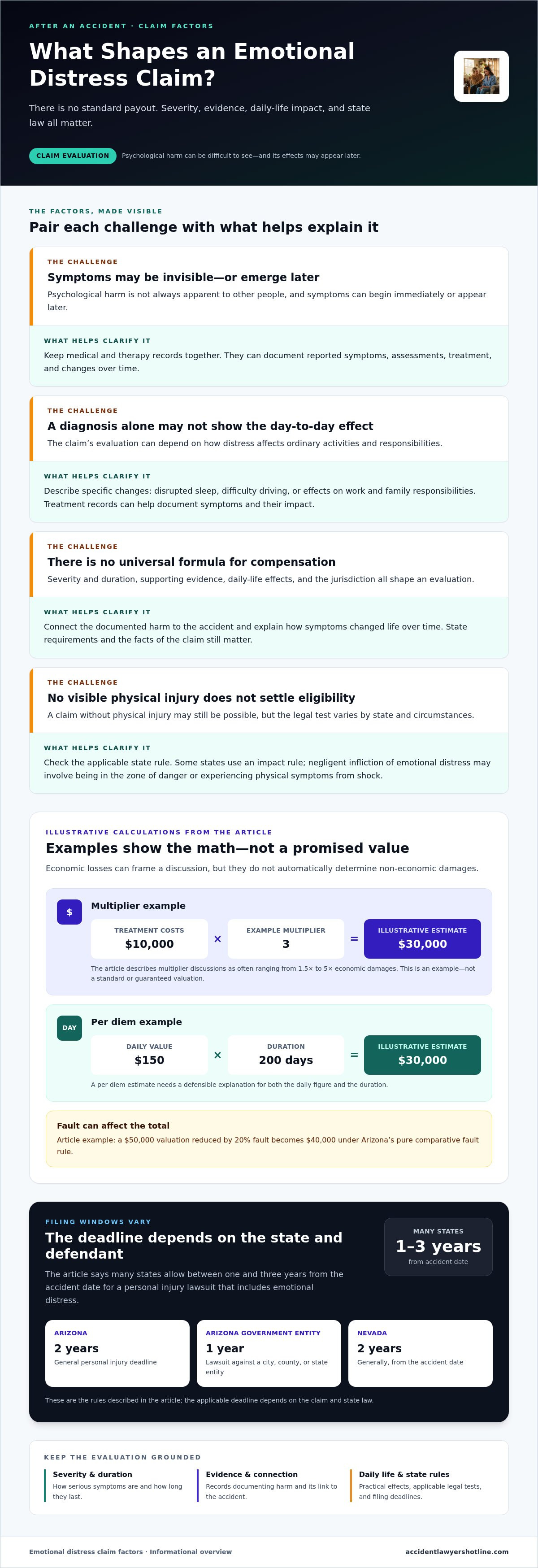
There’s no universal equation for valuing pain and suffering. Some estimates use a multiplier applied to economic damages; others assign a daily amount to the period of suffering. A New York per diem example uses $150 per day, then multiplies that amount by the affected days. These approaches offer ways to frame a demand, not a fixed legal formula or guaranteed award.
What Evidence Is Needed to Prove Pain and Suffering After a Car Accident?
Use evidence that connects the collision to both the injury and its effects. Arrange medical records and bills by date, save photographs showing visible changes, and keep employer records documenting missed work. A dated personal log can add context about symptoms and affected activities between appointments. Consistency matters: the timeline should make clear how the injury and its impact developed.
What Is the Deadline to Sue for Pain and Suffering After a Car Accident in Each State?
There isn’t one nationwide deadline: the general range is one to six years, depending on the state. New York generally allows three years from the accident, according to the New York State Legislature. Massachusetts generally allows three years from the injury date, according to the Massachusetts General Court. Michigan generally allows three years from the accident for a negligence lawsuit, according to the Michigan Legislature. The applicable rule depends on the state.
Were You Injured in an Accident?
Get a free, confidential case evaluation. No upfront fees.
Get Free Case Evaluation