Filing an Emotional Distress Claim: How Much Can You Sue
Filing a claim for emotional distress after an accident? Learn how compensation is assessed, what evidence helps, and how state deadlines affect your claim.
Emotional distress claims have no standard payout. Filing a claim for emotional distress after an accident may lead to compensation based on the severity of your distress, the evidence supporting it, its effect on daily life, and the law in your state. The claim may be part of a broader personal injury case.
Psychological harm can be difficult to value, especially when its effects emerge later or aren’t visible to others. Clear records can help show what changed and how the distress has affected you.
This article explains what may affect compensation, what medical records and other evidence can support a claim, and why filing deadlines vary by state. It also outlines how a claim is filed and negotiated, so you can understand the process and issues to consider before moving forward.
Key Takeaways
- Compensation depends on the severity of emotional harm, its impact on daily life, the strength of the evidence, and state law.
- Claims without physical injuries may still be possible, but state rules and the circumstances of the distress matter.
- Treatment records, personal notes, and statements from people who know you can help document how the accident affected you.
- Filing deadlines vary by state, so identifying the applicable rule is an important early step.
- Learn how filing and negotiation work, and what to consider before resolving an emotional distress claim.
How Much Can You Sue for Emotional Distress in a Personal Injury Case?
There’s no fixed dollar amount for emotional distress after a crash. In nearly every U.S. state, emotional suffering may qualify as non-economic damages in a personal injury claim, but state requirements vary.
Claims Without Physical Injuries
An emotional distress claim without physical injury seeks compensation for psychological harm caused by another person’s conduct. State law determines when a claim can proceed, so the absence of a visible injury doesn’t automatically rule one out.
Some states apply an impact rule, which may allow a claim if the crash physically affected you, even without a visible injury. Negligent infliction of emotional distress, or NIED, may also involve being in the zone of danger or experiencing physical symptoms from shock. The facts and legal test vary by state.
Emotional distress damages are often part of a larger personal injury lawsuit, such as a car accident case. They may address psychological harm separately from physical pain, while pain and suffering can encompass both physical pain and emotional suffering from injuries. For example, an injured driver may claim for a broken bone and related anxiety in the same case.
Claims typically involve severe, lasting distress rather than temporary sadness or anger. Anxiety, depression, post-traumatic stress disorder (PTSD), sleep problems, mood swings, and driving phobias can disrupt daily life. Someone who avoids driving after a collision, for example, may explain how that fear affects work or family responsibilities.
A bystander may have a separate path to a claim after witnessing a loved one’s serious injury or death. Generally, the person must have witnessed the event directly, been close enough to see it, and had a close personal relationship with the injured person. Learning about the crash later, without witnessing it, generally isn’t enough for this type of claim.
Psychological Injuries After a Car Accident
Psychological injuries are emotional or mental health effects that follow a crash, including anxiety, depression, PTSD, sleep disturbances, mood changes, and fear of riding in vehicles. Symptoms can begin immediately or appear later, and their effects may shape the claim’s evidence and value.
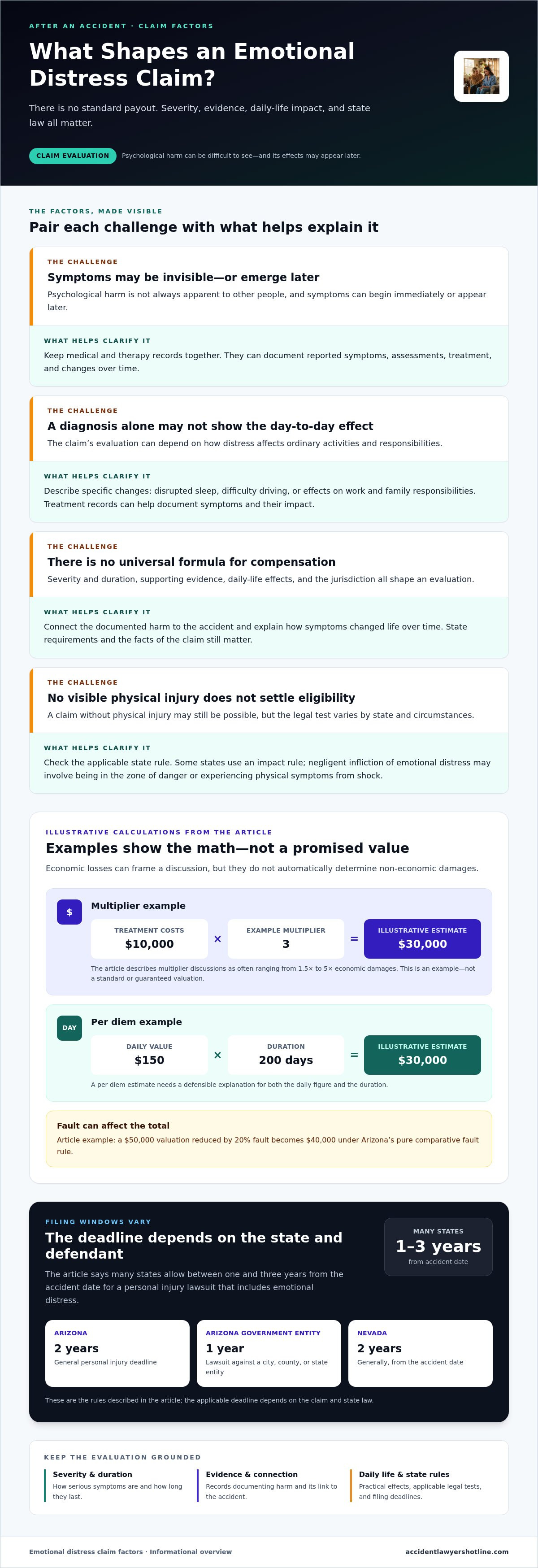
There’s no universal formula for emotional distress compensation. The severity and duration of symptoms, strength of the evidence, effect on daily activities, and jurisdiction all matter.
One illustrative calculation uses $10,000 in therapy and related medical costs multiplied by three, producing an estimated $30,000 in emotional distress damages. That example doesn’t establish a standard formula. An attorney assessing a personal injury case would consider the documented harm, its connection to the negligent driver, and the rules that apply in the state.
What Is the Statute of Limitations for Emotional Distress Claims?
Economic damages cover measurable losses, while non-economic damages address harm such as psychological suffering and reduced quality of life. A lawsuit seeking both may include medical bills and lost wages alongside emotional distress damages. State deadlines govern when a personal injury lawsuit must be filed, so the accident date and applicable state rule matter from the start.
Across many states, the filing window for a personal injury lawsuit that includes emotional distress is between one and three years from the accident date. Arizona’s general personal injury deadline is two years under A.R.S. § 12-542. A lawsuit against an Arizona city, county, or state entity has a one-year filing deadline, according to the Arizona State Legislature.
Nevada generally allows two years from the accident date to file a personal injury claim involving emotional distress, according to the Nevada Legislature. Nevada’s criteria also distinguish between direct injury and witnessing harm: NIED may apply when the defendant’s negligence physically injured the claimant. A bystander may have a claim after witnessing a close relative seriously injured or killed through negligence, even without physical injury.
There’s no fixed dollar amount for pain-and-suffering damages. Economic losses can help frame compensation, but they don’t automatically determine non-economic damages. Insurers and claimants may discuss a multiplier approach, often described as 1.5x to 5x economic damages, with severity affecting the multiplier. For example, $10,000 in documented treatment costs multiplied by three gives an estimate of $30,000. That is a calculation example, not a guaranteed valuation.
Another estimation method assigns a daily value to the distress and multiplies it by the period it affected the claimant. A $150 daily rate applied for 200 days produces an estimate of $30,000. The per diem method needs a defensible explanation for both the daily figure and duration. Evidence about treatment, work disruption, sleep, and driving can help explain the claimed impact.
Arizona also applies pure comparative fault under A.R.S. § 12-2505, reducing damages by the claimant’s share of fault without barring recovery. For example, a $50,000 valuation reduced by 20% fault becomes $40,000. This can affect total compensation, including non-economic damages. The accident circumstances, evidence, applicable filing deadline, and state rules all shape the claim’s evaluation.
To assess how a deadline and damages calculation may apply to an accident, discuss the claim with a lawyer familiar with personal injury cases.
Medical records and mental health treatment evidence
Medical and psychological evidence can document symptoms, treatment, and the effects of a crash on daily life. Keep records together to make the timeline and impact easier to understand.
Medical and Therapy Records
Medical records document reported symptoms, assessments, treatment, and changes over time. Tell your doctor about specific effects, such as panic while driving or recurring sleep problems, so they’re included in your record. Therapy and counseling notes can show how symptoms affect daily life and what care you received.
Keep appointment summaries, treatment plans, prescriptions, and related cost records together in a secure place. A doctor’s notes may also help document physical symptoms linked to emotional distress. For example, records describing stress-related physical symptoms can support an account of how psychological harm affected your health.
Diagnoses and Other Supporting Evidence
A formal diagnosis, such as PTSD, generalized anxiety disorder, or major depressive disorder, can document a recognized mental health condition. Psychological evaluations may use the PCL-5, GAD-7, or PHQ-9 as standardized assessment tools. A diagnosis does not tell the whole story, so connect it with treatment records and examples of daily limitations.
Witness statements can describe changes that medical records may not capture. A family member might explain how your mood, sleep, or routine changed after the collision. Work records can document missed shifts or lost wages when symptoms made it difficult to do your job. Together, these details may help show effects on normal functioning and economic damages.
Connecting Emotional Harm to the Crash
A claim needs evidence connecting the emotional harm to the accident, not just evidence that symptoms exist. Dates in medical records, treatment notes, and personal accounts can help establish when symptoms began and how they changed. A daily journal can record episodes, driving difficulties, disrupted routines, and effects on relationships.
Write entries close to the events they describe. Note the date, symptom, affected activity, and any care received. Save relevant medical and therapy records, bills, and work documents as they arise. These materials can help explain the connection between the crash, treatment, and changes in daily life during a lawsuit.
Consistent documentation can make gaps or changes in treatment easier to explain. For example, a journal entry about avoiding a particular route may add context to a therapy note about driving-related anxiety. Keep personal notes factual and preserve records that show both treatment and practical effects.
What Kind of Compensation Can Be Recovered for Emotional Distress?
In the United States, emotional distress damages may be claimed when state law permits recovery and evidence connects serious psychological harm to another party’s negligence. A negligent infliction of emotional distress (NIED) claim generally requires proof that the defendant’s careless actions caused severe distress.
Claims can be denied or reduced when the evidence doesn’t establish severity, causation, or the eligibility test required by state law. A claimant’s share of fault can also reduce damages under comparative-fault rules.
NIED describes psychological harm caused unintentionally by someone’s careless conduct. In an accident case, the claimant must show that another person’s negligence caused the distress and meet the applicable severity standard. Some states also require physical symptoms, being within the zone of danger, or another specific connection to the traumatic event.
Those requirements affect who can bring an injury claim. For example, a person who develops serious anxiety after a crash may need evidence linking the condition to the negligent driver. A witness who saw a loved one injured faces a different legal question, because bystander claims often depend on direct observation, proximity, and the relationship involved.
Negligence generally involves four elements: duty, breach, causation, and damages. Arizona requires proof by a preponderance of the evidence, meaning the evidence must show the claim is more likely true than not. A claimant could argue that a driver had a duty to act carefully, breached that duty, caused the crash, and contributed to documented depression or anxiety.
Causation connects the defendant’s conduct to the claimed harm. Treatment records, a diagnosis, or a timeline of symptoms after the collision can help explain that connection. If the evidence doesn’t support the link, the emotional distress portion of a claim may be challenged even when the collision itself is established.
Recoverable damages can include economic losses and non-economic harm. Economic damages may cover therapy, medication, medical care, or lost income if distress prevents you from working. Non-economic damages can address mental suffering, loss of enjoyment of life, and difficulty maintaining relationships or completing daily tasks.
Arizona follows pure comparative fault under A.R.S. § 12-2505. A claimant’s recovery is reduced by their percentage of fault, rather than barred solely because they share responsibility. For instance, if evidence assigns some fault to the claimant, the recoverable damages decrease in proportion to that share. This can affect compensation for both psychological harm and related economic losses.
Build the claim around each element: identify the duty, explain the breach, connect it to the distress, and document the resulting harm. Treatment records and evidence of missed work, for example, may support different parts of the damages claim. A state-specific review should also consider eligibility rules, available evidence, and comparative fault.
Filing and negotiating an emotional distress claim
Filing a claim usually means presenting the crash facts, the responsible party’s conduct, and your documented suffering. Filing a claim for emotional distress after an accident starts with organizing those details alongside physical injury records, mental health treatment notes, and a timeline of symptoms. This gives the insurer a clearer picture of what happened and how the harm affects daily life.
A personal injury lawyer can help assess a claim, organize supporting evidence, communicate with insurers, and pursue a lawsuit when needed. Attorneys individuals connect with through case evaluations work on a contingency basis, meaning there are no fees unless the case is won.
To prepare, gather documents linking the accident to its emotional and financial effects. Useful records may include:
- Medical records, therapy notes, prescriptions, and treatment-cost records.
- Personal journal entries describing symptoms, daily limitations, and changes in relationships or work.
- Statements from family members who observed changes in mood or routine.
- Work records showing missed time or lost wages because symptoms interfered with your job.
For example, a journal entry about panic while riding in a car can add context to a therapist’s treatment notes. Keep descriptions factual and consistent. Avoid exaggeration, and don’t post about your emotional condition or claim on social media. Insurers may use posts to challenge credibility, even when a brief update leaves out important context.
During negotiation, evidence should explain the connection between the collision, your symptoms, treatment, and daily limitations. An insurer may question whether the crash caused the distress, whether treatment supports the claimed severity, or whether other factors contributed. Respond with specific records. A missed-work record paired with treatment notes describing work-related symptoms can help clarify the impact.
Before filing a claim for emotional distress after an accident, consider what a proposed settlement would resolve. Compare it with documented effects, including ongoing care, lost income, and disrupted activities. A signed settlement may resolve the claim, so understand which claims it covers before accepting. Most emotional distress cases settle outside court, and claimants generally don’t have to testify. If negotiations fail, a lawsuit may be the next step, subject to the applicable filing deadline.
To discuss evidence and negotiation issues in an accident matter, request a personal injury case evaluation.
Accident Lawyers Hotline: Car Accident Case Evaluation
Accident Lawyers Hotline provides case evaluations to help accident victims understand possible next steps and connect with experienced personal injury attorneys. If emotional distress followed a crash, an evaluation can help organize the accident details, symptoms, treatment, and records relevant to your concerns.
Support is available for car, truck, motorcycle, and pedestrian accident cases. The attorneys individuals connect with offer legal assistance on a contingency basis, meaning there are no fees unless the case is won. An evaluation may help if you’re unsure how emotional harm fits into an injury claim or what evidence to gather before discussing resolution.
Contact Accident Lawyers Hotline to discuss a case evaluation and your questions about the accident.
Take the Next Step Toward Clarity
If you’re considering filing a claim for emotional distress after an accident, focus on your next decision: getting a clear view of your options. Discussing the accident, its impact, and your concerns can help you decide what to do next. Your experience deserves careful consideration, even when its effects aren’t visible to others.
Accident Lawyers Hotline offers Car Accident Case Evaluation, Truck Accident Case Evaluation, and Motorcycle Accident Case Evaluation. These evaluations provide a starting point for discussing an accident claim and connecting with an experienced personal injury attorney. Asking the right questions can help you approach the process with greater direction.
Contact Accident Lawyers Hotline to discuss your situation and explore a case evaluation. Taking that first step can make the path ahead feel more manageable.
Frequently Asked Questions
What Types of Accidents Can Cause Emotional Distress?
Car, truck, motorcycle, pedestrian, and bus accidents can all lead to emotional distress. A driver may develop a fear of driving after a collision, while a passenger may experience sleep problems or anxiety after a frightening impact. Witnessing a loved one’s serious crash injuries can also cause distress. The type of accident alone doesn’t establish a claim; the emotional effects and applicable state law matter too.
How Is Emotional Distress Different from IIED and NIED?
Emotional distress describes psychological harm, while IIED and NIED are legal claim types that may address it. IIED involves extreme or outrageous conduct and intentional or reckless action that causes severe distress. NIED concerns distress caused by someone’s negligence. For example, a crash-related anxiety claim may arise alongside a negligence case, while an IIED theory requires conduct beyond ordinary carelessness. Legal standards depend on the state.
Are Emotional Distress Damages Taxable?
Tax treatment can differ between compensation for emotional suffering alone and payments for treatment expenses. For example, an award of $40,000 for emotional suffering alone would generally be taxable, while therapy expenses may receive different treatment. A separate $15,000 payment for therapy expenses illustrates that distinction. How a particular payment is categorized matters, so keep settlement documents that identify each damage category and discuss tax questions with a qualified tax professional.
Calculating Compensation: What Is Your Claim Worth?
A claim’s value depends on the harm and supporting evidence, not a standard award for a particular diagnosis. Separate documented financial losses from harder-to-measure effects, such as disrupted relationships or reduced enjoyment of activities. One useful preparation step is to create a timeline linking treatment, work changes, and daily limitations. This helps show how distress affected you over time, not just at one moment.
Can You File a Lawsuit Without a Physical Injury?
Possibly. A physical injury isn’t required in every state or under every emotional distress theory, but state law determines eligibility. Some jurisdictions consider physical impact, being within the zone of danger, or physical symptoms from emotional shock. A bystander may face additional requirements, including directly witnessing a close relative’s serious injury. Before filing, identify the legal theory that fits the circumstances and the evidence supporting its specific elements.
Can You Sue for Mental and Emotional Harm After a Car Accident in Illinois?
Emotional pain, mental suffering, and loss of enjoyment of life may be considered non-economic damages in an accident claim, depending on applicable state law. A personal injury lawsuit involving emotional harm generally must be filed within two years under 735 ILCS 5/13-202. For example, a person whose anxiety limits ordinary activities may include that harm in a claim, supported by evidence of its effects and connection to the crash.
Do You Need Medical Records To Prove Emotional Harm?
Medical records can strengthen an emotional harm claim, but other evidence may also help explain its effects. Treatment notes can document symptoms and care, while a journal can describe daily difficulties between appointments. Statements from relatives may offer another perspective on changes in mood or routine. If you haven’t received treatment, that doesn’t necessarily mean your experience cannot be documented; record specific symptoms and their effects on work or daily activities.
What Evidence Is Needed to Prove Emotional Distress After an Accident?
Useful evidence may include treatment records, mental health evaluations, therapy costs, work records, personal notes, and statements from people who observed changes. Organize materials by date to show how symptoms developed after the accident. For example, pair a missed-work record with a note explaining why symptoms prevented you from working. Consistent, specific details help connect the event, the distress, and its practical consequences.
Were You Injured in an Accident?
Get a free, confidential case evaluation. No upfront fees.
Get Free Case Evaluation