Traumatic brain injury TBI lawsuit: settlement and liability
Learn how to assess a traumatic brain injury TBI lawsuit settlement, weigh evidence and fault, and understand care, losses, and legal fees before settling.
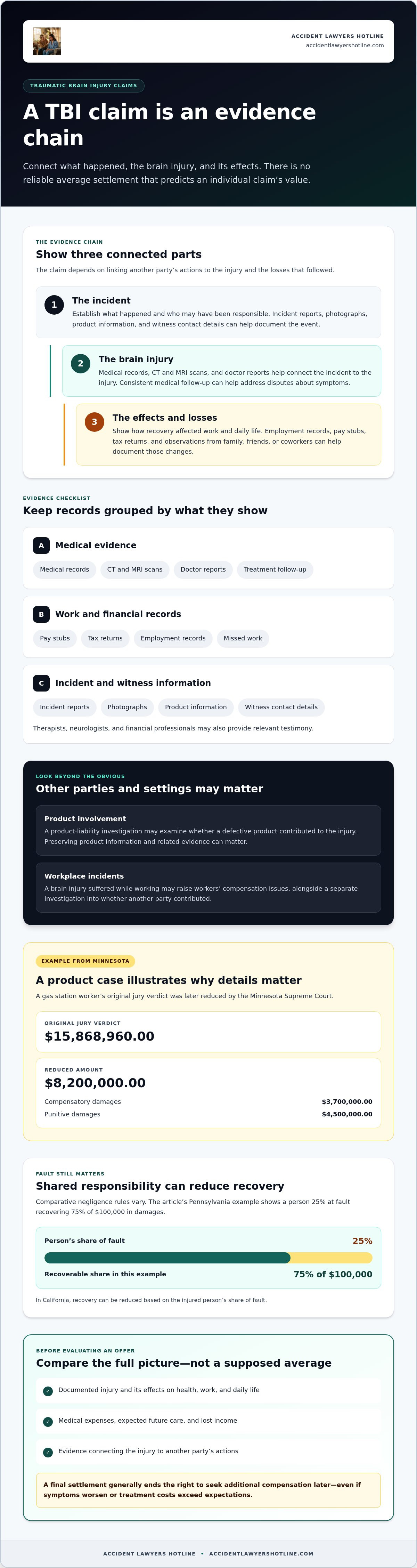
A settlement isn’t fair just because the offer is large. In a traumatic brain injury (TBI) lawsuit, there’s no reliable average settlement that can predict what an individual claim is worth. Before accepting, consider the injury’s effects, the evidence of fault, and whether the proposed amount accounts for future needs.
It’s understandable to want a clear figure and a quick way forward after a serious injury. But settling usually means giving up the right to seek additional compensation later, even if symptoms worsen or treatment costs exceed expectations. A claim also depends on proving that another party was at fault and that their actions caused the injury.
This article explains how to assess a TBI settlement, what evidence can support a claim against a responsible party, and how the type of accident may affect the issues involved. It also explains how contingency fees generally work, so you can better understand the legal costs that may come out of a settlement.
Key Takeaways
- Compare a settlement offer with the injury’s documented effects, expected care, lost income, and other losses, not a supposed average.
- Before settling, understand that a final agreement usually ends the right to seek additional compensation later.
- Medical records, scans, employment documents, and statements about changes in daily life can help support a claim and identify other responsible parties.
- Accident type can shape which parties or insurance coverage may be relevant, while evidence of fault remains central to the claim.
- Contingency-fee arrangements generally deduct legal fees and costs from a settlement rather than requiring payment out of pocket.
Should I Accept a Traumatic Brain Injury Settlement?
Don’t judge an offer by a headline verdict: no reliable average can predict the value of an individual TBI claim. Compare the proposed settlement with the documented injury, its effects, and the evidence of fault.
Settlement Values and Influencing Factors
Settlement value is the compensation an injured person may receive for proven losses, including medical expenses, lost wages, and pain and suffering. Mild-to-moderate TBI settlements and jury verdicts often start in the low six-figure range, but that figure cannot predict a particular outcome. A concussion with temporary symptoms differs from a severe injury causing lasting cognitive impairment. Medical needs, work limitations, daily-life effects, and evidence connecting the injury to another party’s actions all matter.
Risks of Settling Before Injuries Are Known
A settlement may close the claim before the full course of a brain injury becomes clear. Once a settlement is final, the claim generally cannot be reopened if symptoms worsen or treatment costs exceed expectations. For example, an offer covering current appointments may not account for continuing rehabilitation or lasting work limitations. Before accepting, compare the offer with medical evidence and expected future care, not just bills already received.
Jury Verdicts and Settlements
A settlement is an agreement; a jury verdict follows a trial in which the judge or jury evaluates the evidence, liability, and compensation. Outcomes vary widely. These examples are not a reliable average or a promise of similar results.
Qualifying Injuries and Comparative Negligence
A TBI occurs when an external force, such as a blow or jolt, suddenly damages the brain. A concussion can support an injury claim when another person caused it and evidence shows its effects on health, work, or daily life. To file, document the injury and show that another party was at fault and directly caused it. The statute-of-limitations deadline depends on the state and claim; there is no single nationwide deadline.
Comparative negligence can reduce recovery when the injured person shares responsibility. In California, recovery can be reduced based on the injured person’s share of fault. In Pennsylvania, the example in the state’s modified comparative negligence rule allows a person 25 percent at fault to recover 75 percent of $100,000 in damages. A TBI case may settle or proceed to trial; its duration depends on recovery, fault disputes, insurance issues, and whether litigation is needed.
Investigating potential claims against other parties
Outcomes depend on evidence linking another party’s actions to the brain injury and its effects. Insurers may dispute concussion symptoms, while product defects or workplace circumstances may point to additional responsible parties.
Challenges to Concussion Claims
Insurance companies may question whether a concussion caused reported symptoms or affected work and daily life. That matters because compensation depends on connecting the injury to the incident and documenting its impact. A driver’s insurer may focus on gaps between the crash and treatment, prior symptoms, or inconsistent records. Consistent medical follow-up and clear descriptions of changes can help address those disputes.
Claim Evidence and Documentation
Claim evidence includes the records and testimony connecting the incident, injury, and resulting losses. It matters because an attorney must assess both fault and the injury’s consequences. Keep medical records, CT and MRI scans, doctor reports, pay stubs, tax returns, and employment records together. Therapists, neurologists, and financial professionals may provide relevant testimony. Family members, friends, or coworkers can describe changes they observed after the injury.
Investigating other parties means looking beyond the person who directly caused the collision or fall. For example, a product-liability claim may examine whether a defective product contributed to the injury. A Minnesota case involving a gas station worker produced an original jury verdict of $15,868,960.00. The Minnesota Supreme Court reduced it to $8,200,000.00, including $3,700,000.00 in compensatory damages and $4,500,000.00 in punitive damages. The case shows why identifying the product and preserving evidence can matter.
Workplace incidents also need careful review. A brain injury suffered while working may raise workers’ compensation issues, while a separate investigation considers whether another party contributed. The setting and the roles of everyone involved are important details in a brain injury case.
To organize an investigation, preserve incident reports, photographs, product information, and contact details for witnesses. Match each record to a question: what happened, who may be responsible, and how did recovery change daily life or employment? These steps help an attorney evaluate possible claims and identify evidence that may otherwise be lost. For crash-related injuries, a personal injury case evaluation can help assess the evidence and potential responsible parties.
What Is an Average Settlement for a TBI?
No reliable average settlement can predict what an individual brain injury case is worth. Published estimates vary by injury severity and claim type, while medical expenses, future care, lost income, and documented effects shape the actual assessment.
Recoverable damages may include past and future medical expenses, lost wages, and pain and suffering. Future treatment costs may be included when doctors expect continued care because of the injury. Keep bills and records of missed work so the claimed losses are clearly connected to the head injury.
Estimates illustrate why one average can mislead. These are different estimates, not a guaranteed payout or a formula for an individual claim.
The range reflects differences in lasting impairments, income losses, and care needs.
Estimating future care takes more than adding current medical bills. In serious cases, a life-care planner may estimate long-term rehabilitation, assistive equipment, home support, and future medical care. Doctors’ expectations matter: a claim may include continued treatment when medical evidence supports it. This helps distinguish expenses already incurred from projected needs tied to the injury.
Medical care comes first. Guidance for TBI claims recommends seeking expert neurotrauma care before taking legal action. Treatment records can document symptoms, diagnosis, and recovery over time. A concussion may need follow-up even when early symptoms seem manageable, so keep appointment records and note changes affecting work or daily activities.
Medical malpractice claims may involve a different cause than a crash or fall. One reported settlement was $5 million for an Army veteran who suffered profound brain damage after a brain aneurysm ruptured. That example is not an average; it shows how the cause of injury and the resulting harm affect the claim. For any potential settlement, compare documented past bills and lost wages with supported future care and ongoing effects before weighing the amount.
Car, truck, and bicycle accident brain injuries
Car, truck, and bicycle crashes can cause brain injuries, but accident type alone doesn’t establish liability. A claim generally depends on showing how another party’s conduct relates to the injury. The Brain Injury Association of Maryland states that 40% of more than 5,000 traumatic brain injuries occurring annually in Maryland result from auto, truck, and bike accidents. That figure shows the role of traffic crashes in one state, not the likely outcome of an individual case.
In a motor vehicle accident, investigators examine how the collision happened and what evidence identifies the responsible driver. A brain injury settlement can reflect medical harm and other losses, but the available examples vary widely. These outcomes illustrate variation, not a standard value.
Truck and commercial vehicle collisions may raise questions about both the driver and the trucking company. A claim needs evidence linking the party’s actions to the crash and resulting injury. These distinct cases show why the circumstances and evidence matter.
Bicycle crashes can have severe consequences when a rider is struck by a larger vehicle. The verdict concerned permanent injury and specific evidence presented in that case. It cannot predict compensation in another rider’s claim.
Symptoms may affect the liability and damages analysis when medical records connect them to the accident. Keep records showing when symptoms began, how treatment progressed, and which daily activities changed. For a collision involving a truck or car, preserve photographs, incident records, witness details, and information identifying the vehicle or company. These materials help clarify the sequence of events and the parties involved.
For example, a driver may be responsible for a collision, while evidence may also raise questions about a commercial operator. A 2025 bicycle-crash verdict involved a truck, while other examples involved a cement truck and highway collision. Each investigation should distinguish proven facts from assumptions. Medical documentation, crash details, and witness accounts can help show how the accident caused the brain injury and which parties may be liable.
Contingency-fee personal injury lawyers
A contingency fee ties a personal injury lawyer’s fee to the outcome of a claim. Personal injury lawyers commonly receive legal fees and costs from a settlement rather than requiring payment out of pocket. This arrangement can let an injured person pursue a claim without paying legal fees upfront. The written agreement explains how fees and costs are handled, so review its terms before moving forward with a traumatic brain injury (TBI) lawsuit.
Fees and case costs are different items. Legal fees compensate the lawyer for work on the claim; costs may relate to building and presenting it. A TBI case may require medical records, expert opinions, and other evidence. The agreement should explain how expenses are treated if the case settles or proceeds to trial. Ask for a clear explanation of the written terms before signing.
A lawyer handling a brain injury claim may gather records, consult medical experts, negotiate with insurance companies, and represent the injured person in court. Those tasks can connect the accident to the diagnosis and document how symptoms affect work and daily life. In a car accident claim, for example, the lawyer may organize treatment records alongside crash evidence and wage documentation. This evidence-building work can be central to a traumatic brain injury (TBI) lawsuit.
The contingency arrangement also makes the expected recovery important. A settlement is not the same as the amount an injured person ultimately keeps. Legal fees and costs may be deducted from settlement proceeds, so understand how the agreement calculates each deduction. Ask how costs are handled if the claim does not produce a settlement, and whether expenses are paid before or after the fee calculation.
Insurance companies may challenge medical causation, the extent of symptoms, or the amount of claimed losses. A lawyer can evaluate those disputes, present supporting evidence, and negotiate based on the documented injury. If negotiations fail, the case may go to trial, where a judge or jury evaluates the evidence and determines liability and compensation. The agreement should clarify how its fee structure applies at each stage.
Before choosing a lawyer, review the contingency agreement and identify the fee calculation, case costs, and payment terms. Then consider the work involved, such as expert consultations or trial preparation. Clear terms help you understand the financial effect of a settlement before deciding how to proceed. To discuss a motor vehicle injury and possible next steps, request a personal injury case evaluation.
Accident Lawyers Hotline: Car Accident Case Evaluation
Accident Lawyers Hotline provides case evaluations to help people injured in traffic accidents consider possible next steps. If a brain injury followed a car, truck, motorcycle, or pedestrian accident, an evaluation can help connect the circumstances, available evidence, and potential claim with legal assistance from a personal injury or motor vehicle accident attorney.
Bring the information you have, such as medical records, accident details, and insurer communications. These details can help clarify questions about fault, documented losses, and possible recovery. Attorneys accessed through the service work on a contingency basis, meaning legal fees are paid from a successful case outcome rather than upfront.
If you’re ready to discuss an accident-related injury claim, contact Accident Lawyers Hotline or visit accidentlawyershotline.com.
Take the Next Step With a Clear Plan
A traumatic brain injury (TBI) lawsuit is a major decision, and your next step can begin with a focused conversation about your concerns. Consider what you still need to understand before deciding how to proceed, including the injury’s effects on work, family responsibilities, and future plans. A clear list of priorities can help keep that discussion practical.
Accident Lawyers Hotline offers Car Accident Case Evaluation, Truck Accident Case Evaluation, and Motorcycle Accident Case Evaluation. These evaluations help people injured in those types of accidents consider possible claims and access legal assistance. Bring the questions that matter most to you, such as how fault, medical needs, or insurance issues relate to your situation.
You don’t have to resolve every legal question alone. Contact Accident Lawyers Hotline to discuss an accident-related injury and possible next steps. A careful conversation can help you move forward with greater clarity and confidence.
Frequently Asked Questions
How Are TBI Settlement Values Determined?
Settlement value reflects the evidence supporting the claimed losses and responsibility for the injury. To review an offer, compare it with the written demand and note which losses the insurer accepts, disputes, or omits. Then identify the assumptions behind disputed items, such as expected recovery or time away from work. This breakdown can reveal whether the disagreement concerns the injury’s effects, fault, or the amount requested.
Can You Get a Settlement for a Mild Concussion Without Losing Consciousness?
Yes. A person may pursue compensation for a concussion without having lost consciousness if another party caused the injury and its effects can be shown. The claim should connect the accident to the diagnosis and resulting difficulties, such as trouble completing work tasks or managing ordinary routines. A clear timeline of symptoms and medical visits can help explain what changed after the incident.
How Do You Show the Full Impact of a Brain Injury?
Describe concrete changes in everyday function, not just the diagnosis. For example, record when reading, following conversations, cooking, or handling routine tasks became harder. Note the dates, what happened, and how the difficulty affected the day. Comparing these activities with your responsibilities before the injury can make changes easier to understand. Keep the account factual and consistent with treatment records and observations from people who know your routine.
What Are the Biggest Mistakes People Make in Concussion Lawsuits?
Common missteps include treating early improvement as proof that all effects have ended, overlooking changes in ordinary routines, or agreeing to terms without understanding their scope. A person may also give inconsistent descriptions when symptoms fluctuate. Keep a dated record of changes and carefully review any proposed settlement documents. A signed final settlement generally prevents reopening the claim if symptoms worsen or expected care costs increase.
What Is the Average Payout for a Concussion in a Car Accident?
No dependable average predicts an individual concussion payout. Estimates for mild concussion claims in car accidents vary, and a published range cannot account for every claimant’s medical course, work impact, or proof of fault. Focus on whether the proposed amount addresses the documented effects in your case. Compare the offer with the evidence and losses it is intended to resolve.
What Should I Do?
Prioritize medical care, then create a dated record of the accident, symptoms, appointments, and changes in daily responsibilities. Save letters and messages from insurers, and avoid guessing when describing events. Before accepting an offer or signing a release, make sure you understand which claims the document resolves and how it treats future effects. These steps give you an organized basis for evaluating your options.
What Evidence Is Needed to Prove a TBI Lawsuit?
Useful evidence connects the accident, the brain injury, and its effects. Organize records by date, including incident documents, medical visits, work absences, and claim communications. Preserve original photographs and messages where possible, rather than relying only on summaries. A dated symptom log can add context by recording specific difficulties and when they occurred. Together, these materials can help clarify disputed details.
How Much Compensation Can You Get for a Traumatic Brain Injury Lawsuit?
Compensation depends on losses supported by evidence and whether another party is legally responsible. The assessment may account for medical care, income effects, and personal consequences, while available insurance and fault disputes can affect what is recoverable. A large verdict from another case cannot determine your result. Review the evidence, losses, and proposed resolution together to understand how the claim is being valued.
Were You Injured in an Accident?
Get a free, confidential case evaluation. No upfront fees.
Get Free Case Evaluation