Whiplash Injury Claim Value: How Much Could You Receive
Learn what shapes whiplash injury claim value, from injury severity and medical costs to lost wages and evidence, plus settlement ranges and negotiation tips.
The average whiplash settlement in the United States is just under $20,000, while reported claim values commonly range from $2,500 to more than $50,000. The median payout is approximately $7,500. These figures show why the whiplash injury claim value depends on more than an average.
If you’re trying to understand what your whiplash injury claim value could be, the uncertainty can feel overwhelming. The amount may depend on the injury’s severity, the treatment required, its effect on daily life, and the evidence supporting your claim.
This article explains how whiplash grades relate to settlement ranges, which factors can raise or lower compensation, and how negotiation and legal representation may affect a claim. A typical range is a starting point, not a calculation of what any individual will receive.
Key Takeaways
- Compare settlement ranges by injury severity, but look beyond the grade to understand what may shape an individual claim.
- Account for medical expenses, time away from work, and potential future treatment when assessing the losses tied to an injury.
- See how treatment records and evidence of daily-life impacts can strengthen the picture of a claim’s value.
- Understand why accepting a settlement before your medical outlook is clear can affect your ability to seek further compensation.
- Learn how negotiation and a case evaluation can help clarify the next steps after a crash-related injury.
What is the minimum payout for whiplash?
There’s no federally or state-mandated minimum compensation for whiplash claims in the United States. A minor injury with short-lived symptoms and minimal treatment may result in a payout as low as $2,500 to $5,000. That range is an example, not a guaranteed floor. The amount depends on documented losses, the available insurance, and who was responsible for the accident.
Insurance policy limits can restrict what an insurer pays under a particular coverage, but they don’t set the value of the injury itself. A claim may include medical expenses, lost income, and the effect of pain on daily life. If losses exceed the responsible driver’s liability limit, other applicable coverage, such as underinsured motorist coverage, may matter. The policy terms and evidence determine what amounts may be available.
In a no-fault state, an injured person generally starts with their own insurer’s personal injury protection (PIP), regardless of who caused the crash, subject to policy limits. Minnesota and North Dakota use no-fault systems, so residents generally turn first to their own insurance for covered medical costs and lost wages. In an at-fault state such as Iowa, an injured person can file against the driver considered responsible without meeting an injury threshold. Wisconsin is also not a no-fault state.
Georgia’s minimum auto insurance requirements include bodily injury liability coverage of at least $25,000 per person, according to the Georgia General Assembly. Georgia drivers must also carry at least $50,000 per accident in bodily injury liability coverage and $25,000 per accident in property damage liability coverage. These minimums describe required insurance coverage, not a promised settlement amount. A severe injury with continuing treatment may involve losses beyond the available limit.
Insurers assess liability alongside supporting records. A police report, medical notes, bills, proof of missed work, and records of prescribed therapy can connect the accident to the injury and its effects. Gaps in treatment or unclear documentation can make the cause, duration, and impact harder to establish. Keep copies of bills and follow-up records so the claim reflects both immediate care and continuing effects.
Whiplash injury lawsuit deadlines vary by state: Minnesota and North Dakota allow six years, Wisconsin three years, and Iowa, Florida, and Georgia two years; Louisiana generally allows two years for accidents on or after July 1, 2024. Separately, New York no-fault claims must be filed with the claimant’s own insurer within 30 days after the accident. These deadlines concern different legal steps, so identify the state and type of filing involved.
Before judging a proposed settlement, compare documented losses with policy limits and the evidence of fault. Accepting a settlement and signing a release generally prevents you from seeking additional compensation if symptoms later return. Treatment records and the release terms are therefore important when evaluating the claim’s potential value.
What is a whiplash injury, and how does it happen?
Whiplash happens when a collision forces the head and neck to move suddenly, straining soft tissues. Rear-end crashes are a common example, but other impacts can cause the same motion. Symptoms can include neck pain, stiffness, headaches, and reduced movement. They may take 24 to 48 hours after a crash to fully appear, so note when each symptom starts.
Settlement value depends on injury severity, treatment, recovery, lost wages, and evidence connecting the injury to the accident. Medical records can show symptoms and care over time. Pay records and a clear account of changes to daily life can also explain losses beyond medical bills.
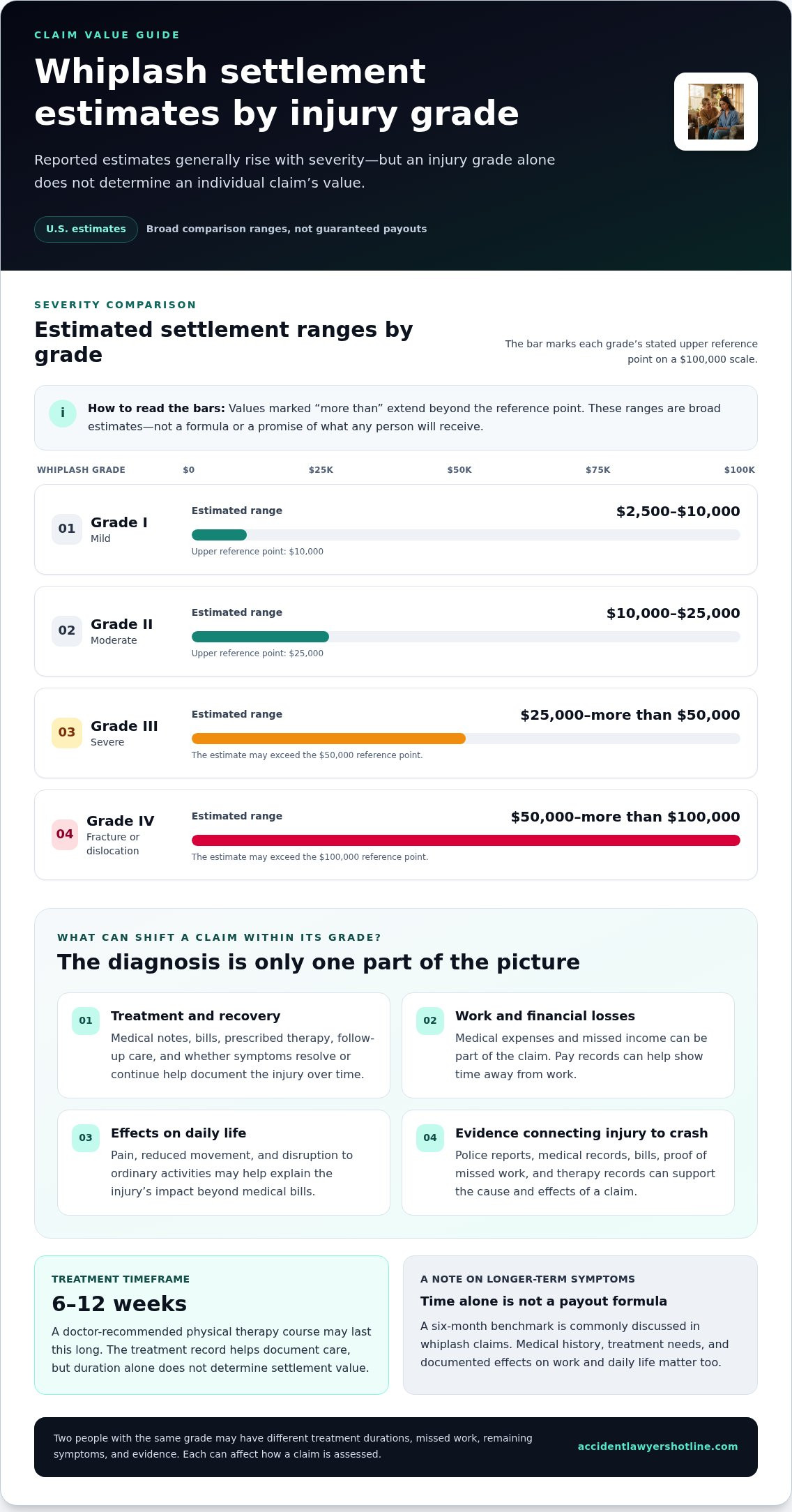
Reported U.S. estimates vary by grade. They offer a broad comparison, not a formula. Evidence, treatment needs, and effects on work and daily activities help explain why claims differ.
- Grade I, mild: Estimates commonly range from $2,500 to $10,000. Symptoms are generally less serious, and the claim’s documentation still matters.
- Grade II, moderate: Estimates range from $10,000 to $25,000. A claim may include more substantial symptoms, treatment, and disruption to ordinary activities.
- Grade III, severe: Estimates range from $25,000 to more than $50,000. Nerve-related symptoms and continuing limitations can affect the evidence and claimed losses.
- Grade IV: Where whiplash involves fracture or dislocation, estimates range from $50,000 to more than $100,000. The diagnosis and related treatment are central to documenting the injury.
These ranges don’t mean every person with the same grade receives similar compensation. For example, two Grade II injuries can differ in treatment duration, missed work, and remaining symptoms. A doctor-recommended physical therapy course may last 6 to 12 weeks. That period can provide a treatment record, but the claim also needs to reflect whether symptoms resolve or continue.
Recovery can take longer when pain or movement limitations persist. Symptoms may emerge or continue over several months, making early records and follow-up notes useful. A six-month benchmark is commonly used in discussions of whiplash claims, but duration alone doesn’t establish a settlement amount. The medical history, treatment plan, and documented effects on work and daily life all contribute.
The type of injury also affects the losses a claim can describe. Soft-tissue pain without complications differs from an injury involving nerve symptoms, a fracture, or dislocation. Lost wages matter when symptoms interrupt work, while treatment expenses reflect care already received. Evidence of ongoing needs can help explain why one claim’s settlement amount differs from another’s, even with a similar diagnosis.
To understand the value of a specific claim, connect the diagnosis to treatment, recovery, and documented losses. A careful review of the evidence behind a whiplash claim can help identify which details support the compensation sought.
How Much Is the Average Whiplash Settlement?
Whiplash settlements in the United States commonly range from $2,500 to more than $50,000. The reported national median is approximately $7,500, while the average is just under $20,000. Medical costs, recovery needs, lost income, and supporting evidence help explain the wide variation. Understanding the whiplash injury claim value starts with reviewing the documented losses and treatment needs.
Medical Expenses and Future Treatment
Medical expenses include bills for care already received, while future treatment costs reflect anticipated care for the injury. Both matter because settling before treatment needs are clear can leave expenses unaccounted for. Whiplash settlements involving physical therapy generally range from $12,000 to $30,000, while non-surgical cases involving therapy, chiropractic care, or injections typically range from $10,000 to $75,000.
These ranges describe reported outcomes, not a price list for treatment. Organize bills by provider and service, then connect each expense to care following the collision. For future treatment, the treatment plan and medical records can help show why further care may be needed. This evidence makes the claimed expenses easier to assess alongside the injury’s effect on daily activities.
Settlement Timing and Maximum Medical Improvement
Maximum medical improvement is the point when a person’s condition has stabilized and further substantial recovery is not expected. It matters because the medical outlook can clarify whether treatment is complete or future care remains likely. Settling before that point may make it harder to account for continuing symptoms or anticipated treatment.
Whiplash symptoms can continue or emerge over several months, and six months is a common benchmark in discussions of these claims. It is not a required waiting period. Medical follow-ups, treatment progress, and remaining limitations can show whether the condition has stabilized. A release signed with a settlement generally prevents additional compensation if symptoms return later.
Medical Bills, Lost Wages, and Pain and Suffering
Medical bills are assessed from documented care, lost wages from income missed because of the injury, and pain and suffering from the injury’s effects. Whiplash injury claim value reflects both financial losses and personal impacts after a car accident. Pay records, employer information, medical bills, and notes about daily limitations can support each part of the claim.
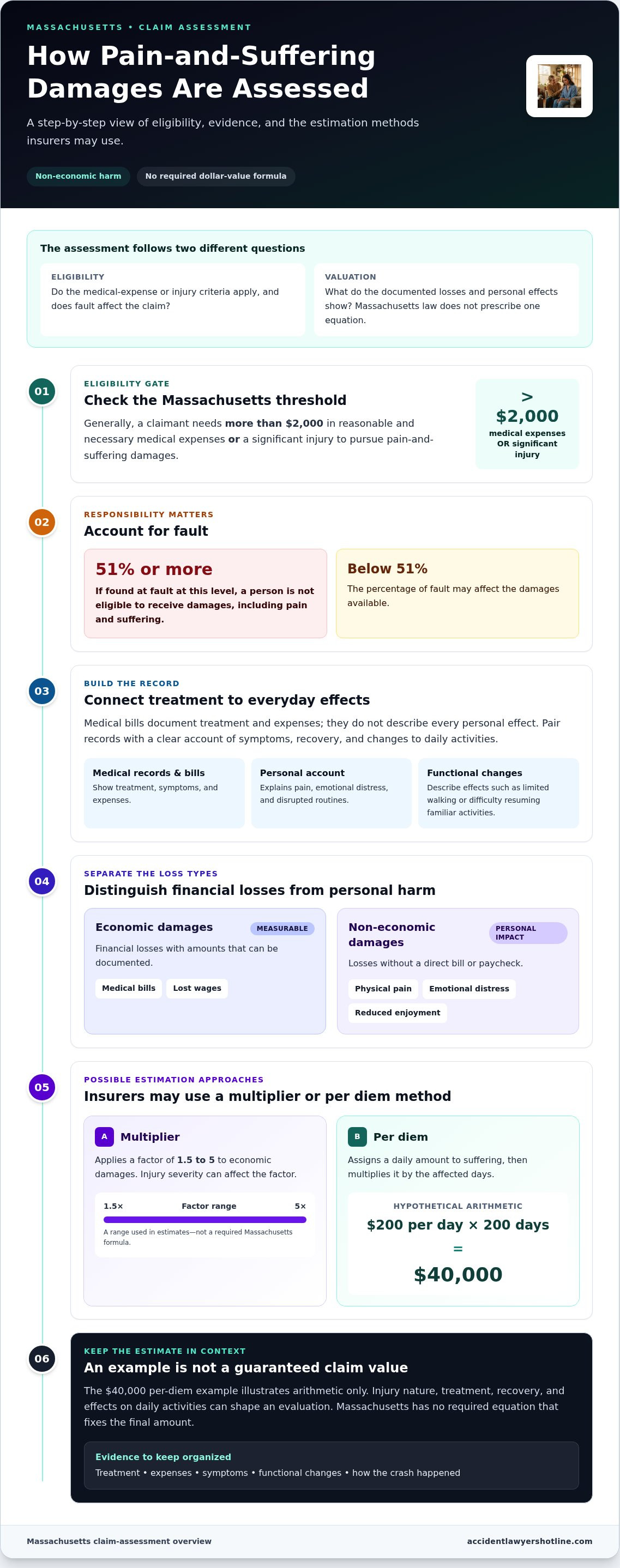
Some settlement calculators estimate pain and suffering by multiplying medical expenses by 1.5 to 5. That method is only an estimating approach, not a fixed calculation for every claim. A serious injury, prolonged symptoms, or disruption to work and daily life may affect the assessment. The connection between the collision, treatment, and claimed losses remains central.
Medical Documentation and Evidence
Medical evidence includes treatment records, diagnoses, bills, therapy notes, and follow-up findings. These documents help establish when symptoms began, what care was provided, and how the injury changed over time. Keep records together and note missed work or activities made difficult by symptoms. A clear timeline helps explain the claimed losses and gives context for whiplash injury claim value.
Pre-existing conditions don’t automatically prevent a claim, but records showing a person’s condition before and after the collision can matter. Delayed treatment may raise questions about when symptoms began or whether the crash caused them. Explain the timing accurately to medical providers and keep records of the first symptoms, later visits, and prescribed care. Consistent documentation can help distinguish earlier health issues from new or worsened symptoms.
Estimated settlement ranges by whiplash grade
Reported U.S. settlement estimates vary by injury grade and by the losses documented in a claim. The figures below offer comparisons, not a fixed schedule for every personal injury case.
- Grade I: Mild whiplash settlements typically range from $2,500 to $10,000.
- Grade II: Moderate whiplash settlements typically range from $10,000 to $25,000.
- Grade III: Severe whiplash settlements typically range from $25,000 to more than $50,000.
- Grade IV: Cases involving fracture or dislocation typically range from $50,000 to more than $100,000.
The grade describes injury severity, but it doesn’t capture every loss. A Grade II injury involving nerve damage, for example, has a reported range of $25,000 to $50,000. Whiplash with a back injury has a reported range of $40,000 to $75,000. These examples show why diagnosis, related injuries, treatment, and documented effects can matter alongside the grade.
Georgia estimates also vary with the injury and the losses involved. A typical car accident whiplash settlement range is $10,000 to $100,000. Minor cases are estimated at $10,000 to $25,000, while severe cases are estimated at $50,000 to $100,000. Soft-tissue claims are estimated at $10,000 to $35,000, and pain-and-suffering settlements at $20,000 to $50,000.
Moderate cases may range from $10,000 to $30,000, while severe claims may reach $25,000 to $75,000 or more. Strong medical evidence can support serious claims exceeding $100,000.
Across the United States, a typical car-crash whiplash payout is often estimated at $10,000 to $50,000, while cases without permanent impairments or complications commonly range from $12,000 to $30,000. These ranges differ because a settlement considers more than the injury label. Medical expenses, recovery time, lost income, pain, and the effect on daily activities help explain the amounts claimed.
An attorney assessing a whiplash settlement can compare the diagnosis and treatment records with the claimed losses and applicable insurance limits. Ongoing symptoms and documented nerve damage, for example, present different evidence from short-lived soreness with minimal treatment. Grade-based estimates offer a starting point for understanding possible ranges, while individual records show how a claim’s specific facts compare.
Legal representation and settlement negotiation
Weigh a settlement offer against documented losses, treatment needs, and evidence of fault. A lawyer can help assess whether the insurer’s position accounts for these parts of the claim.
Settlement and Verdict Examples
Settlement and verdict examples show how case facts can shape outcomes, but they aren’t a price list for an individual injury. In 2025, a Colorado jury awarded $514,047 in a case involving whiplash and several other injuries. A California jury awarded $62,500 that year in a case involving whiplash, a concussion, and other claimed injuries.
Those verdicts included additional injuries, so they don’t isolate compensation for whiplash. A Washington jury awarded $100,000 in 2024 in a case involving claimed whiplash and aggravated pre-existing sciatica. Comparing the injuries, evidence, and claimed losses helps explain why verdicts may differ from an average settlement.
Settlements Without Surgery
Surgery isn’t required for a whiplash claim to include medical expenses, lost income, and pain and suffering. Reported ranges for non-surgical cases involving physical therapy, chiropractic care, or injections run from $10,000 to $75,000. Claims requiring physical therapy or chiropractic care commonly fall between $10,000 and $50,000.
A settlement calculator may estimate pain and suffering by multiplying medical expenses by 1.5 to 5. That shortcut can’t account for every case’s recovery, work disruption, or evidence. Treatment records and documented symptoms give the calculation context. They help show why two people with similar medical bills may have different claim values.
Evaluating an Insurance Settlement Offer
Before accepting an insurance offer, compare it with documented medical bills, lost wages, ongoing treatment, and the effect of symptoms on daily life. A signed release generally ends the claim, even if symptoms return later. A lawyer can review the offer and explain how a lawsuit, liability evidence, and available coverage may affect negotiation.
Legal representation may help organize records, calculate losses, and respond to an insurer’s assessment. One reported estimate says accident victims with attorneys recover 3 to 4 times more compensation on average, even after attorney fees. That figure describes an average, not a guaranteed result. A consultation can help clarify what the offer includes and what remains disputed.
Only 5% to 10% of whiplash cases reportedly proceed to litigation when insurers refuse fair settlements. If you’re weighing an offer, request a car accident case evaluation to discuss the evidence and negotiation issues in your claim.
Accident Lawyers Hotline: Car Accident Case Evaluation
Accident Lawyers Hotline offers a Car Accident Case Evaluation to help you understand the factors affecting your claim after a crash. If whiplash symptoms required treatment, disrupted work, or remain unresolved, an evaluation can help organize the accident details, medical records, and losses for discussion with an experienced attorney.
Accident Lawyers Hotline also offers evaluations for truck, motorcycle, and pedestrian accident cases. These evaluations may be relevant if the collision involved one of these vehicles or road users. A clear summary of what happened and how the injury affected you can help inform the next step.
For help assessing your accident claim, contact Accident Lawyers Hotline.
Take the Next Step With a Clear Record
Your recovery and your claim may follow different timelines. Keep a concise personal record of how symptoms affect your routines, responsibilities, and plans. Note changes as they happen, and include that perspective when discussing your whiplash injury claim value. This helps ensure the conversation reflects more than paperwork alone.
Accident Lawyers Hotline offers Car Accident Case Evaluation, Truck Accident Case Evaluation, and Motorcycle Accident Case Evaluation. An evaluation can help you identify questions to raise about the crash and your claim. It’s a practical next step if you’re unsure how to assess an offer or what information could clarify your position.
Contact Accident Lawyers Hotline to discuss your accident and explore an appropriate next step. You deserve a clear path forward as you focus on recovery.
Frequently Asked Questions
Can a Whiplash Claim Be Refused, and What If the Accident Was Your Fault?
Yes, an insurer may dispute or deny a claim if responsibility, injury causation, or supporting evidence is contested. If you share fault, the effect depends on the state’s negligence rules. In comparative-negligence states, a 20% share of fault would typically reduce compensation by the same percentage. Keep evidence that clarifies what happened, such as photographs, witness details, and records made soon after the crash.
Can I Get Compensation for Pain and Suffering From Whiplash?
Yes, a whiplash claim may include compensation for pain and suffering as well as financial losses. Records describing symptoms, treatment, and limitations can help show how the injury affects ordinary activities. For example, note when pain interferes with driving, sleep, or household tasks, and share these changes with your medical provider. Documented effects help explain the nonfinancial harm being claimed.
Can I Get a Settlement Without Surgery?
Yes, surgery isn’t required for a whiplash settlement. Claims involving non-surgical care, including physical therapy, chiropractic care, or injections, typically range from $10,000 to $75,000. The treatment type alone doesn’t determine the amount. Keep records of appointments, prescribed care, and symptoms that continue between visits. These details help explain the treatment course and its connection to the collision.
How Much Is Whiplash Worth in Accident Cases?
Whiplash claims in the United States may range from $2,500 to more than $50,000, depending on the injury and documented losses. A claim involving a short course of care differs from one with lasting symptoms, missed work, or complications. To understand a particular case, organize medical records, income documentation, and evidence showing how the injury affects daily activities.
What Are the Typical Symptoms of Whiplash?
Whiplash symptoms can include neck pain, stiffness, headaches, and limited movement. They may take 24 to 48 hours after a crash to fully appear, so note when discomfort begins and whether it changes. Tell your medical provider about symptoms and any activities they restrict. A dated record can help connect the timing and progression of symptoms with the collision.
What Is the Average Settlement Value of a Whiplash Injury Claim in the United States?
The reported national average is just under $20,000, while the median payout is approximately $7,500. The average and median describe different points in a range of outcomes, so neither predicts what an individual claim will receive. Compare those figures with the specific treatment history, documented losses, and evidence in the claim rather than treating either as a guaranteed benchmark.
How Do Whiplash Claim Values Differ for Minor, Moderate, and Severe Injuries?
Reported U.S. estimates are $2,500 to $10,000 for Grade I mild whiplash, $10,000 to $25,000 for Grade II moderate injuries, and $25,000 to more than $50,000 for Grade III severe injuries. Grade IV cases involving fracture or dislocation are estimated at $50,000 to more than $100,000. Related injuries and documented effects can influence where a claim falls within a range.
How Do Insurance Policy Limits Affect Whiplash Settlement Amounts?
Policy limits can cap the amount available under a particular insurance coverage, even when documented losses are higher. Other applicable coverage, such as underinsured motorist protection, may also matter. For example, Georgia drivers must carry at least $25,000 per person in bodily injury liability coverage, according to the Georgia General Assembly. Check which policy applies and compare its limits with the documented claim losses.
Were You Injured in an Accident?
Get a free, confidential case evaluation. No upfront fees.
Get Free Case Evaluation