Common Motorcycle Accident Injuries: A Guide to Recovery and Rights
Learn about common motorcycle accident injuries, from road rash to TBI. Our guide helps you understand your rights and secure the support you need for recovery.
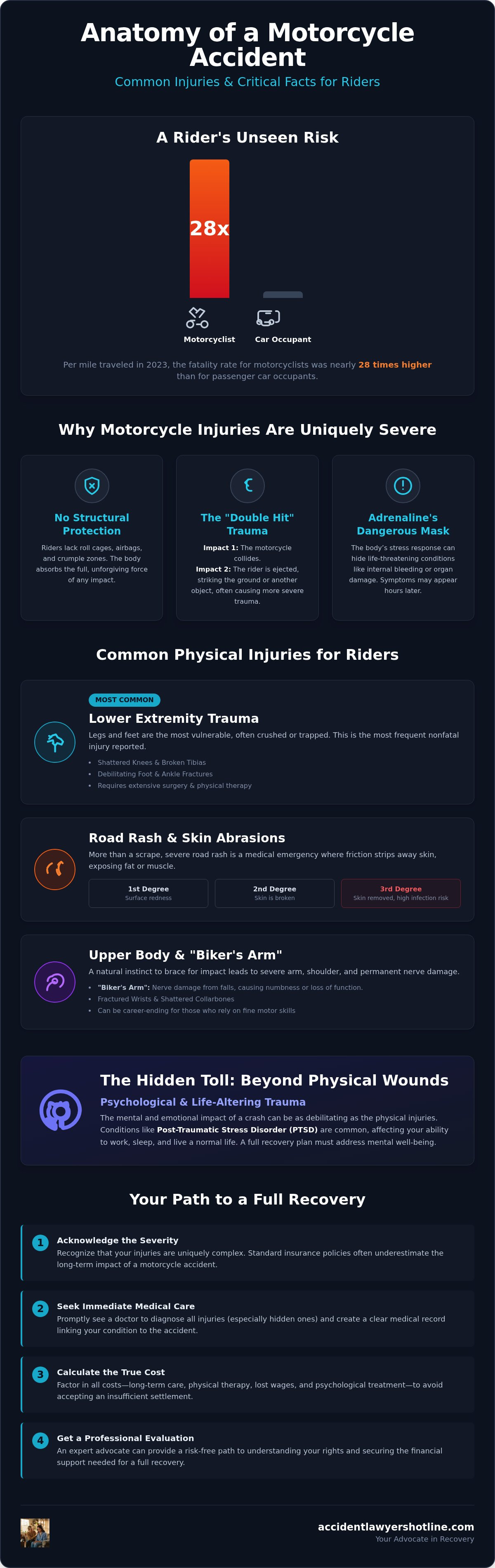
Did you know that per mile traveled in 2023, the number of deaths on motorcycles was nearly 28 times higher than those in cars? This statistic underscores why common motorcycle accident injuries are often uniquely complex and life-altering. You're likely dealing with intense physical pain and the sudden weight of mounting medical bills. It's common to feel overwhelmed by medical terminology while you're trying to focus on your health. We understand that you need clarity and support during this high-stakes time; you shouldn't have to face these challenges without an expert advocate.
You deserve a clear path to recovery that removes the stress of the unknown. This guide identifies the most frequent injuries and explains how to secure the medical and legal support you need for a full restoration. We'll help you understand the severity of your condition and explain how to document your injuries for a potential claim. You'll find a logical, step-by-step way to move toward financial recovery and regain a sense of security; bridging the gap between your current crisis and a professional resolution.
Key Takeaways
- Understand why the lack of structural protection leads to complex trauma that standard insurance often underestimates.
- Identify the most common motorcycle accident injuries, ranging from severe road rash to life-altering traumatic brain injuries.
- Recognize the hidden psychological impact of a crash, such as PTSD, to ensure your recovery plan addresses your mental well-being.
- Learn how specialized advocates calculate the true cost of your care to prevent you from accepting an insufficient settlement.
- Discover how a professional case evaluation provides a risk-free path to securing the financial support you need for a full recovery.
Why Motorcycle Accident Injuries Are Unique and Severe
Common motorcycle accident injuries are physical or psychological trauma resulting from a collision involving a two-wheeled motor vehicle. Unlike car occupants, riders lack the luxury of a steel roll cage, airbags, or crumple zones. This absence of structural protection means your body absorbs the full force of the impact. National motorcycle safety statistics show that while fatalities decreased slightly in 2024, nonfatal injuries actually rose by 5.2%. This trend highlights a growing population of survivors who must face the grueling reality of long-term recovery.
In most collisions, a rider experiences two distinct trauma events. The first impact occurs when the motorcycle strikes another vehicle or object. The second impact, which is often more devastating, happens when the rider is ejected and hits the pavement or a secondary obstacle. This "double hit" is why common motorcycle accident injuries are rarely isolated to one part of the body. You are often dealing with multiple trauma sites simultaneously, requiring a specialized approach to both medicine and law.
The Physics of a Motorcycle Crash
Momentum is a rider's greatest enemy during a crash. When a motorcycle stops abruptly, the rider's body continues moving at the pre-crash speed. This leads to high-velocity ejections. While wearing All The Gear, All The Time (ATGATT) is vital, even the best helmets and leathers cannot negate the laws of physics. Gear is designed to reduce abrasion and provide some impact cushioning; it cannot prevent the internal jarring caused by rapid deceleration. Common points of impact often involve the legs and head, as these are the most exposed during an ejection.
Immediate vs. Delayed Injury Symptoms
Why do some riders walk away from a wreck only to collapse hours later? The answer lies in adrenaline. Your body's natural "fight or flight" response masks pain to ensure survival. This biological mask can hide life-threatening conditions like internal bleeding or organ damage. You might feel fine or just a bit shaken, but silent injuries are common. Never rely on your own assessment in the minutes following a crash. Seeking an immediate medical evaluation is the only way to ensure a hidden injury doesn't become a permanent disability. Prompt medical documentation also creates a clear link between the accident and your health, which is essential for any future legal claim.
The Most Frequent Physical Injuries for Riders
Understanding common motorcycle accident injuries is the first step toward reclaiming your life after a crash. While every accident is unique, the physical toll often follows predictable patterns based on how your body interacts with the road. These injuries range from painful surface wounds to complex internal damage that requires long-term care. Recognizing the specific nature of your trauma ensures you receive the right medical attention and legal support.
Lower Extremity Trauma: The Most Common Injury
Your legs and feet are the most vulnerable parts of your body during a collision. In a side-impact crash, your leg is often trapped between the motorcycle and the other vehicle. If you're forced to "lay the bike down," the weight of the machine can crush your limbs against the asphalt. These events lead to shattered knees, broken tibias, and debilitating foot fractures. According to NHTSA motorcycle injury data, lower extremity trauma is the most frequent nonfatal injury reported. The path to walking again often involves expensive orthopedic surgeries and grueling months of physical therapy.
Road Rash and Skin Abrasions
Road rash is a serious medical condition, not just a simple scrape. It occurs when friction strips away layers of skin during a slide. Doctors categorize this trauma into three degrees of severity. First-degree rash involves surface redness, while second-degree rash breaks the skin. Third-degree road rash is a high-stakes emergency where the skin is completely removed, exposing fat or muscle. "Gravel rash" is particularly dangerous because it embeds road debris deep into your tissue. This causes high infection risks and permanent scarring. Severe cases often require multiple skin grafts to restore the body's protective barrier.
Upper Body and "Biker’s Arm"
The term "Biker's Arm" describes a specific type of nerve damage that occurs during a fall. When you land on your shoulder or upper arm, the force can tear the brachial plexus nerves. This often results in permanent numbness or loss of function in the hand and fingers. Additionally, your natural instinct to brace for impact frequently leads to fractured wrists and shattered collarbones. These common motorcycle accident injuries can be life-altering if your career depends on fine motor skills or physical strength.
Thoracic and abdominal injuries also present a significant threat. Blunt force trauma to the chest can result in broken ribs that puncture the lungs. Internal organ damage to the spleen or liver may not be immediately apparent but requires urgent intervention. If you're dealing with these physical burdens, a motorcycle accident case evaluation can provide the clarity you need to pursue a full financial recovery.
Catastrophic and Life-Altering Injuries
Some collisions result in more than just temporary setbacks. Catastrophic injuries shift the focus from simple healing to long-term adaptation. These events often involve the central nervous system or vital organs, creating a high-stakes medical situation. Because the body is so exposed during a crash, common motorcycle accident injuries can lead to permanent disability or a complete change in your quality of life. Understanding the depth of these injuries is vital for securing the resources you need to move forward.
Traumatic Brain Injuries (TBI)
A TBI can occur even if your helmet remains intact. The sudden deceleration of a crash causes the brain to strike the inside of the skull. This internal impact leads to anything from a mild concussion to permanent cognitive impairment. You must watch for subtle symptoms like memory loss, sudden mood changes, or sensory issues like persistent ringing in the ears. Cognitive rehabilitation is often a lifelong necessity for survivors. A NHTSA study on motorcycle injuries confirms that head trauma remains a leading cause of long-term disability among riders, even when protective gear is used correctly.
Spinal Cord and Neck Trauma
Spinal injuries are particularly devastating because they often result in partial or total paralysis. While whiplash can damage soft tissues, vertebrae fractures are far more serious. These injuries often dictate the long-term value of a legal claim because the associated costs are staggering. Paraplegia or quadriplegia requires comprehensive life-care planning. This process involves accounting for home modifications, specialized medical equipment, and potential 24-hour nursing care. It's not just a medical crisis; it's a total restructuring of your financial future.
Internal bleeding and catastrophic organ failure also present a major threat. High-velocity impacts can cause the spleen, liver, or kidneys to rupture. Unlike a broken limb, you can't see this damage from the outside. It's a "silent" threat that requires immediate surgical intervention to prevent organ failure. When common motorcycle accident injuries reach this level of severity, the burden of proof for your recovery needs becomes much higher. You need an advocate who understands the specialized nature of these claims and can help restore a sense of fairness to your situation.
The Hidden Toll: Psychological and Long-Term Effects
Physical healing is only half the battle. While broken bones eventually knit together, the mental impact of a high-stakes crash can last a lifetime. Many riders find that the most persistent common motorcycle accident injuries aren't visible on an X-ray. These internal scars affect your ability to work, your relationships, and your overall quality of life. You deserve a recovery plan that acknowledges every aspect of your trauma, not just the physical wounds.
A near-fatal collision often leaves riders with Post-Traumatic Stress Disorder (PTSD). You might experience "road phobia," a paralyzing anxiety that prevents you from riding or even sitting in a car. This is a clinical response to a life-threatening event, not a sign of weakness. Psychological injuries are just as compensable as physical ones in a motorcycle accident lawyer evaluation.
Identifying Psychological Trauma
Recognizing the signs of mental distress is crucial for your long-term well-being. Look for symptoms like persistent flashbacks, insomnia, or sudden mood swings that feel out of character. These signs often emerge weeks after the initial adrenaline of the crash fades. Seeking professional mental health support provides a bridge to emotional stability. To support your legal case, you should document your emotional distress carefully. Keep a daily journal of your mental state and maintain all records from therapists or counselors. This documentation ensures your "invisible" injuries are treated with the same seriousness as a physical fracture.
Chronic Pain and Quality of Life
Daily pain is an invisible burden that strains every part of your life. If common motorcycle accident injuries lead to chronic discomfort, you may find yourself unable to participate in family activities or hobbies you once loved. This loss of enjoyment is a significant damage that deserves recognition. Depression often follows when a loss of mobility changes your daily routine. A comprehensive evaluation must include non-economic damages to truly restore the balance in your life. Future medical needs, such as long-term pain management or specialized counseling, should be calculated into your final recovery goal. You shouldn't have to carry the financial weight of these lifelong adjustments alone.
If you are struggling with the mental or physical aftermath of a crash, you can request a risk-free motorcycle accident case evaluation to explore your path toward a full recovery.
Securing Your Recovery: Why a Case Evaluation Matters
The restoration of fairness begins with an accurate valuation of your common motorcycle accident injuries. Insurance adjusters often move quickly to offer early settlements. They might contact you while you're still in the hospital or before you've completed your initial round of physical therapy. You shouldn't sign anything without a professional review. These early offers are designed to save the insurance company money, not to provide for your long-term needs. A quick check might cover your current bills, but it won't account for future surgeries, lost earning capacity, or the chronic pain that often follows a serious crash.
Specialized advocates look beyond the surface of common motorcycle accident injuries to calculate a settlement that covers your entire future. They understand that a shattered knee or a traumatic brain injury requires years of attention, not just a single visit to the emergency room. By connecting with a no fee unless we win your case attorney, you shift the financial risk from your shoulders to a capable expert. This contingency model ensures you have access to high-level legal support without any upfront costs. You only pay if your advocate successfully secures the compensation you deserve.
Connecting with Specialized Legal Advocacy
General personal injury lawyers often miss the specific nuances that define motorcycle accidents. They might not understand the mechanics of a "low-side" slide or how to argue against the unfair bias that many people hold against riders. A national referral network bridges this gap by connecting you with advocates who specialize in motorcycle law. These experts know how to reconstruct a crash scene and interpret the physics of your impact. To prepare for your evaluation, gather the contact information for any witnesses and keep a record of all communication with insurance companies. This preparation allows your advocate to build a formidable case from day one.
Maximizing Your Path to Fairness
The strength of your claim depends on the quality of your evidence. You're likely facing a mountain of paperwork while trying to recover from significant physical trauma. It's vital to document every aspect of your experience. While your legal team handles the complexity of the law, you can support your case by organizing the following items:
- Medical Records: Maintain a complete file of diagnostic images, surgical reports, and prescription receipts.
- Evidence of Property Damage: Take clear photos of your motorcycle, but also include your helmet and protective clothing to show the force of the impact.
- A Pain Diary: Document your daily pain levels and how your injuries limit your mobility or family interactions.
- Employment Records: Keep track of every hour of work missed, including time taken for medical appointments.
Focusing on your physical healing is your primary job. Your legal advocate acts as a protective barrier, managing the high-stakes negotiations with aggressive insurance adjusters. They ensure your voice is heard and your rights are protected. Starting your national case evaluation today is a risk-free step toward reclaiming your stability and securing the financial support necessary for a full recovery.
Reclaiming Your Stability and Rights
Recovering from common motorcycle accident injuries is a complex journey that requires both time and specialized support. You now understand how the physics of a crash impacts your body and why documenting every symptom is vital for your claim. Don't let the weight of medical bills or insurance confusion stall your progress. You deserve a path forward that prioritizes your health and restores a sense of fairness to your life.
Our national network of experienced accident advocates is here to bridge the gap between your crisis and a professional resolution. We offer specialized evaluations for car, truck, and motorcycle victims with no upfront costs or hidden fees. You can shift the burden of legal complexity to a capable expert while you focus entirely on physical healing. It's time to reclaim your security and move toward a full restoration.
Get Your Free Motorcycle Accident Case Evaluation Now
You have the strength to recover, and you don't have to do it alone. We are ready to stand with you as you rebuild your future.
Frequently Asked Questions
What is the most common injury in a motorcycle accident?
Lower extremity trauma, such as broken legs and shattered knees, is the most frequent nonfatal injury. These common motorcycle accident injuries often occur because the legs are exposed during side-impact collisions. Statistics from the NHTSA confirm that while head injuries are more lethal, leg injuries are the most widespread. Seeking an evaluation helps you account for the long-term physical therapy costs associated with these orthopedic challenges.
Can I still file a claim if I was partially at fault for the crash?
You can often still file a claim even if you share some responsibility for the accident. Most states follow comparative negligence rules; these allow you to recover a portion of your damages based on the other party's fault. A specialized advocate can analyze the specific laws that apply to your national location. This process ensures that you aren't unfairly barred from the financial support you need for your recovery.
How long do I have to seek medical attention after a motorcycle accident?
You should seek medical attention immediately, ideally within 24 hours of the collision. Delaying treatment can give insurance companies a reason to argue that your injuries aren't serious or weren't caused by the crash. Prompt medical records are the strongest evidence for your claim. Even if you feel fine at first, a professional evaluation can catch internal issues that haven't shown symptoms yet.
What if my injuries didn’t seem serious at the scene but hurt now?
It is very common for symptoms to appear hours or even days after the initial impact. Adrenaline often masks the pain of common motorcycle accident injuries like soft tissue damage or internal bleeding. If you start feeling pain now, visit a doctor immediately to document the new symptoms. This medical trail is essential for proving the full scope of your trauma during a professional case evaluation.
Does wearing a helmet affect my ability to recover compensation?
Wearing a helmet is a critical safety choice, but your ability to recover compensation depends on your specific state laws. In some jurisdictions, not wearing a helmet might be used to reduce your total settlement if it contributed to your head injuries. However, you can still pursue a claim for other damages like broken limbs or road rash. An expert advocate can help protect your rights regardless of your gear.
How much is a typical motorcycle accident injury claim worth?
There is no single "typical" value for a claim because every accident involves different levels of trauma and financial loss. Your settlement depends on the cost of your medical treatment, the amount of income you lost, and the severity of your pain and suffering. Specialized attorneys use detailed calculations to ensure all future care needs are included. A risk-free evaluation is the best way to understand your specific case's potential.
What does it mean to hire a lawyer on a contingency basis?
Hiring a lawyer on a contingency basis means you pay no upfront costs for legal representation. The attorney only receives a fee if they successfully secure a settlement or court award for you. This model is often described as "no fee unless we win your case." It removes the financial barrier to high-quality advocacy; this allows you to focus on your physical healing while experts handle the legal complexity.
Can I recover money for lost wages if I can’t work due to my injuries?
Yes, you can recover compensation for the income you lost while unable to work. This includes the wages you've already missed and any future earning capacity you lost due to permanent disability. If common motorcycle accident injuries prevent you from returning to your previous career, your claim should reflect that lifelong financial impact. Documenting your work history and medical restrictions is key to maximizing this part of your recovery.
Were You Injured in an Accident?
Get a free, confidential case evaluation. No upfront fees.
Get Free Case Evaluation