Dealing With Insurance Company Intimidation Tactics: How to Respond
Learn smart ways of dealing with insurance company intimidation tactics. Protect your claim, avoid rushed settlements, and respond with confidence today.
What if the safest response to an urgent insurance request is to slow the conversation down? Dealing with insurance company intimidation tactics can feel especially difficult when you’re recovering, facing repeated calls, or considering a settlement before you know the full impact of your injuries. Not every firm request is improper, but you can ask for time to understand what’s being requested before you respond.
A recorded statement, an unclear answer, or a quick settlement decision may affect how your claim is evaluated. This article explains how to recognize pressure without treating every insurer interaction as misconduct. You’ll learn how to communicate carefully, organize relevant records, and avoid rushing into decisions while your medical situation is still unfolding. It also explains when a case evaluation can help you discuss your concerns and possible next steps with an independent attorney. A calm, documented response can help you understand your options as you decide what to do next.
Key Takeaways
- Pressure can feel personal, but an urgent request or first offer alone doesn’t prove misconduct or determine your claim’s final value.
- When dealing with insurance company intimidation tactics, pause, clarify what’s being requested, and ask for the request and deadline in writing.
- Keep relevant communications and claim documents organized, and review the terms carefully before answering, signing, or settling.
- When injuries, liability, or settlement terms are disputed, an attorney can assess your communications and explain possible next steps.
- Accident Lawyers Hotline provides motor-vehicle accident case evaluations and connects accident victims with independent attorneys. Connected attorneys may handle cases on a contingency basis, subject to the agreement and case terms.
What insurance company intimidation tactics can look like after an accident
Pressure from an insurance company can feel personal, especially while you’re injured and trying to recover. You don’t have to decide what an interaction means in the moment. Note what was said, when it happened, and what was requested. A clear record can help you understand the interaction and respond more deliberately.
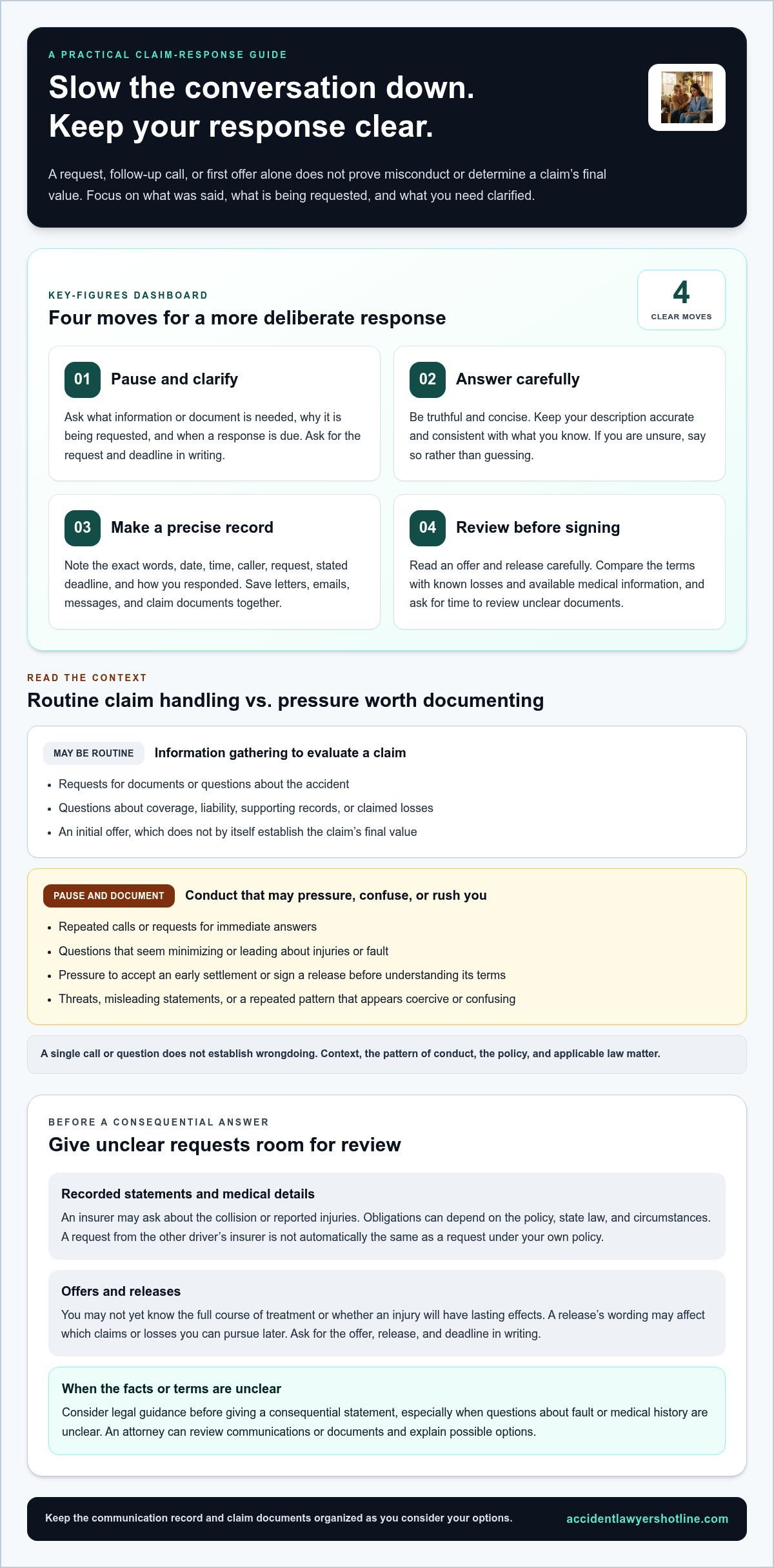
Insurance intimidation is conduct that pressures, confuses, or rushes a claimant in ways that make it harder to understand or respond to a claim. That doesn’t mean every follow-up call, document request, or firm deadline is improper. Insurers may need information to assess coverage, liability, or claimed losses. The context and pattern matter.
Common pressure tactics an accident claimant may encounter
Repeated calls or requests for immediate answers can feel overwhelming. Questions about your injuries or how the crash happened may sound minimizing or leading, particularly if they dismiss symptoms or steer you toward accepting fault. An adjuster might urge you to accept an early settlement or sign a release before you understand which claims or losses the document covers. These interactions deserve attention, but a single call or question doesn’t establish wrongdoing.
If a request catches you off guard, ask what information is needed, why it’s being requested, and when a response is due. Don’t guess if you’re unsure of an answer. Keep your description accurate and consistent with what you know.
When firm claim handling may cross a line
A firm request is different from a threat, a misleading statement, or a repeated pattern that appears designed to coerce or confuse you. Take note if someone says you must sign immediately without explaining the document, or presents a consequence as certain without giving a clear basis. Those details are reasons to pause and seek clarification, not proof by themselves that a law has been broken.
Legal standards can differ by state, policy, and claim circumstances. The term insurance bad faith describes a legal concept involving an insurer’s failure to meet its obligations to a policyholder. Whether it applies depends on the facts and relevant law. Don’t assume every uncomfortable interaction qualifies.
Write down the exact words as soon as you can. Record the date, time, caller, request, and any stated deadline. Save letters, emails, and messages, and note how you responded. When dealing with insurance company intimidation tactics, a precise record can help you explain the situation and ask an attorney to assess what the communications may mean.
Why adjusters use pressure, and what it does not automatically mean
An adjuster gathers and reviews information about a claim, including liability, coverage, supporting records, and potential value. A request for documents, questions about the accident, or an initial offer may be part of that process. None of these alone proves intimidation, and a first offer doesn’t determine what a claim may ultimately be worth.
Routine claim investigation seeks information to evaluate a claim. Pressure that relies on confusion, misleading statements, or coercion deserves careful documentation. The distinction depends on what was said, the surrounding circumstances, and the applicable policy and law. FindLaw offers an overview of examples of bad faith insurance tactics, but whether particular conduct crosses a legal line requires review of the specific facts.
Recorded statements, medical details, and fault questions
An insurer may ask for a statement or medical information to understand how a collision happened and what injuries you’re reporting. Your obligations can depend on the policy, state law, and circumstances. A request from the other driver’s insurer is not automatically the same as a request under your own policy, which may include cooperation requirements.
Don’t ignore a request, but don’t assume every call requires an immediate answer or that every question must be answered on the spot. Ask what the request concerns and when a response is needed. Be truthful and concise. If you’re unsure of an answer, say so rather than guessing. Consider legal guidance before giving a consequential statement, especially if questions about fault or medical history are unclear.
Early settlement offers and releases
A quick offer may seem helpful when bills are arriving. Before accepting, compare its terms with the losses you know about and the medical information currently available. You may not yet know the full course of treatment or whether an injury will have lasting effects, so don’t treat an early offer as a complete assessment of your claim.
Read any release carefully. Its wording may affect which claims or losses you can pursue later. Ask for the offer, release, and any deadline in writing, then take time to review them. Save those documents and related messages together. If the terms are unclear or you’re being pressed to sign, an attorney can review the documents and explain possible options.
When dealing with insurance company intimidation tactics, a written request and time to review it can help you respond without making assumptions about the adjuster’s motives. To discuss pressure concerns and possible next steps, request a motor-vehicle accident case evaluation. Accident Lawyers Hotline connects accident victims with independent attorneys. The platform doesn’t provide legal representation.
Handling insurance company intimidation without escalation
A steady process can help you respond clearly without turning a stressful exchange into a confrontation. When dealing with insurance company intimidation tactics, focus on accuracy, clear requests, and a reliable record of what happens.
- 1. Pause. If a call or message catches you off guard, take a moment before answering. You can ask to continue in writing or arrange a time to respond.
- 2. Clarify the request. Ask what information or document is needed, why it’s relevant, and when it’s due. Try: “Please send the request and deadline in writing so I can review them.”
- 3. Check your obligations. Don’t ignore a request or assume you can delay indefinitely. Policy duties and response deadlines may apply, depending on your policy, state, and claim circumstances.
- 4. Document the contact. Record what was requested and how you responded. Keep related messages and documents together.
- 5. Seek advice if needed. If a question is unclear, a deadline feels unreasonable, or you’re being asked to sign or make a consequential statement, consider asking an attorney to assess the situation.
What to say when an adjuster demands an immediate answer
Stay polite and direct. You might say, “I want to give you accurate information. Please explain the question and send it in writing,” or, “I need time to review this document. Please confirm the response deadline.” These scripts don’t replace any duties under your policy, so check what applies before delaying a required response.
Answer truthfully, but don’t guess about fault, a diagnosis, recovery, or expenses you haven’t confirmed. Don’t exaggerate, hide relevant information, or make threats. Accurate, consistent communication helps maintain a clear record. Reviewing mistakes that can devalue a car accident claim can also help explain why careful communication matters.
A simple recordkeeping system for every insurer contact
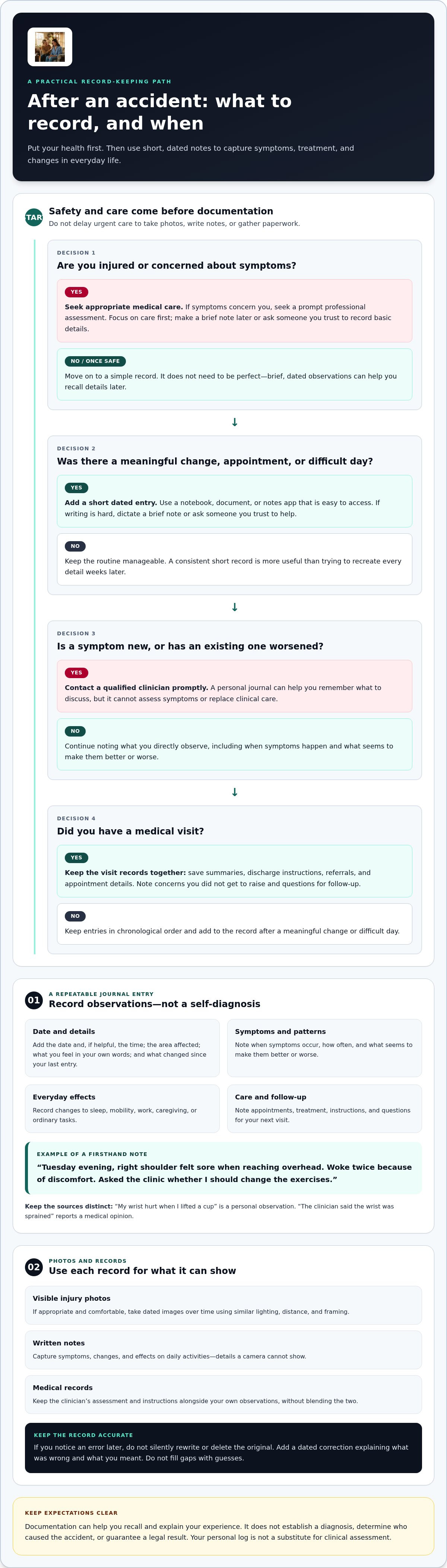
Create one secure folder for claim records, whether digital or paper. After each contact, note the date and time, the person’s name and contact details, the questions asked, and any stated deadline. Save emails, letters, texts, estimates, bills, submitted documents, and signed forms in the same place.
Write a brief factual summary soon after a call, while the details are fresh. Mark exact words as direct quotes, and label your own interpretation separately. A dated call log and organized file can help you track requests, spot inconsistencies, and explain the history if you seek legal guidance.
How to compare your options before answering, signing, or settling
Not every claim needs the same level of support. Routine requests may be manageable if you understand what’s being asked and can provide accurate information. A legal review may be useful if fault is disputed, injuries are significant or ongoing, coverage is unclear, or settlement terms are hard to understand. When dealing with insurance company intimidation tactics, base your next step on the specific issue, not pressure alone.
| Situation | Immediate concern | Documents to gather | Reasonable next step |
|---|---|---|---|
| Routine request for records | What information is needed, and by when? | Written request, relevant bills, treatment records | Review the request and respond accurately within applicable obligations. |
| Disputed fault or multiple parties | How could different accounts affect the claim? | Crash report, photos, witness details, insurer correspondence | Consider asking an attorney to assess the evidence and options. |
| Ongoing injuries or missed work | Are current medical details and losses understood? | Medical records, bills, work and wage documentation | Clarify what remains uncertain before making a settlement decision. |
| Unclear release or repeated settlement pressure | What claims does the release cover, and are the terms final? | Offer, release, messages, and related claim documents | Pause to review the language and seek qualified legal guidance if needed. |
Signs that a legal review may be useful
Disputed liability, multiple involved parties, unclear coverage, significant or continuing injuries, missed work, and repeated pressure to settle can raise questions that are difficult to resolve alone. These factors don’t guarantee a claim or legal representation. An attorney can review the available evidence, explain possible options, and discuss how the applicable law may affect the situation. Any outcome depends on the facts, evidence, and law.
Questions to resolve before accepting a settlement
Before signing, ask what claims, losses, or parties the release covers and whether the agreement is final. Check whether the offer accounts for known medical care, bills, and documented losses. If treatment is continuing, consider what remains uncertain rather than assuming future expenses will be covered. Keep the offer, release, and related correspondence together. If the language or consequences aren’t clear, seek qualified legal review before deciding.
Accident Lawyers Hotline evaluates motor-vehicle accident cases and connects people with independent attorneys. A case evaluation gives you a way to discuss settlement concerns and possible next steps. It doesn’t promise representation or a particular outcome. Request a car accident case evaluation.
Getting support when insurance pressure continues
If calls, requests, or settlement discussions leave you uncertain, pause before making a consequential statement or signing a release. Keep communications and claim documents together, then consider asking an attorney to assess the insurer’s messages or proposed terms. A clear record can help you explain what happened and identify the questions you need answered.
Accident Lawyers Hotline evaluates motor-vehicle accident cases and connects accident victims with independent attorneys. The platform is not a law firm and does not provide legal representation. If an attorney and client decide to work together, their attorney-client relationship depends on direct engagement and the applicable agreement. Connected attorneys may handle cases on a contingency basis, which can mean no attorney fee is owed unless the case is won, subject to the agreed terms and case circumstances.
What to prepare for a case evaluation
You don’t need a perfect file to explain your concerns. Gather what you have, and note what is still missing:
- Basic crash details, claim numbers, and insurer contact information.
- Letters, emails, texts, settlement offers, releases, and other insurer correspondence.
- Available photos, medical records, bills, and documents related to missed work or other losses.
- A short timeline of calls, requests, offers, and stated deadlines, including what you said or sent in response.
- A list of unresolved questions and the specific answer, signature, or settlement decision that feels pressured.
Keep the timeline factual. Note exact statements as quotes when you can, and distinguish them from your own impressions. This helps an attorney focus on the communications, documents, and decisions relevant to your concerns.
What happens after requesting a case evaluation
Accident Lawyers Hotline evaluates the information provided and connects accident victims with independent attorneys. A connection doesn’t guarantee that an attorney will accept a case, that a particular outcome will follow, or that the process will take a specific amount of time. Representation begins only through direct engagement with an attorney and the applicable agreement.
If you’re dealing with insurance company intimidation tactics and want to discuss your options, a case evaluation is a starting point for sharing your concerns and learning whether an attorney may be able to help. Any contingency-fee arrangement depends on the attorney, case, and agreed terms. Start a motor-vehicle accident case evaluation.
Take your next step with a clear record
Pressure doesn’t mean you have to decide on the spot. Keep a record of insurer communications, ask for unclear requests in writing, and review settlement terms before signing. When dealing with insurance company intimidation tactics, calm, accurate documentation can help you understand your options and explain your concerns.
Accident Lawyers Hotline provides motor-vehicle accident case evaluations and connects accident victims with independent attorneys. Connected attorneys may work on contingency-fee terms, depending on the case and agreement. The platform is a referral service, not a law firm, and does not provide legal representation.
Request a motor-vehicle accident case evaluation to discuss your concerns and possible next steps. You deserve clear information as you decide what to do, and you don’t have to sort through every question alone.
Frequently Asked Questions
Can an insurance company force me to give a recorded statement?
It depends on which insurer is asking and what obligations apply to your policy and situation. Your own policy may require cooperation, while the other driver’s insurer may not have the same contractual relationship with you. Ask who will receive the statement, what topics it will cover, and whether it’s required. If you’re unsure or the questions could affect fault or injury issues, get legal advice before responding.
What should I do if an insurance adjuster keeps calling me?
Ask the adjuster to explain the reason for each request and send important details or deadlines in writing. You can also request communication through a preferred channel or ask to arrange a suitable time to talk. Keep a dated log of calls, names, requests, and messages. Don’t ignore written notices or assume a deadline can be missed. Check your policy and applicable requirements so you can respond appropriately.
Can I refuse an insurance company’s settlement offer?
You can generally decline an offer or ask questions before deciding, but review the offer and any release carefully. A signed settlement may limit or end claims covered by its terms. Compare the offer with known medical care, bills, and documented losses, and consider whether your treatment is ongoing. If you don’t understand the release or its consequences, ask a qualified attorney to review it before signing.
Is it illegal for an insurance company to pressure me after an accident?
Not every firm request or persistent follow-up is illegal. Whether conduct violates insurance law depends on the facts, the policy, and the state’s rules. A misleading threat, coercive demand, or pattern that obstructs a fair claim review may deserve closer assessment, but an uncomfortable interaction alone doesn’t establish a violation. Save messages and document exact words, dates, and deadlines, then seek legal guidance about your circumstances.
Should I talk to the other driver’s insurance company after a crash?
You may communicate with the other driver’s insurer, but you can first ask what information it needs and why. Don’t guess about fault, injuries, or recovery, and don’t sign a release you haven’t reviewed. Your duties to your own insurer may differ from requests by another company, so check your policy and applicable requirements. If a request involves a recorded statement or settlement, consider getting legal advice first.
When should I contact a lawyer about insurance company intimidation tactics?
Consider legal guidance if fault is disputed, injuries are ongoing, coverage is unclear, an adjuster repeatedly pressures you to settle, or a release’s scope is confusing. A lawyer can review communications and explain possible options, but no outcome is guaranteed. Accident Lawyers Hotline provides motor-vehicle accident case evaluations and connects people with independent attorneys. The platform isn’t a law firm and doesn’t provide legal representation. Any attorney-client relationship depends on direct engagement and agreed terms.
Were You Injured in an Accident?
Get a free, confidential case evaluation. No upfront fees.
Get Free Case Evaluation