How to Document Your Injuries After an Accident: A Step-by-Step Guide
Learn how to document your injuries after an accident step by step. Track symptoms, take clear photos, and organize medical records to support your recovery.
What if details that feel small today become hard to recall later? After an accident, pain, stress, and medication can make it difficult to track symptoms or remember when they changed. Learning how to document your injuries after an accident doesn’t require perfect notes. A simple, dated record can help you keep track of treatment, symptoms, and changes in your daily life.
It’s understandable to feel unsure about what to save or worry that a missed entry will weaken your account. Focus first on your health: seek medical attention, follow your provider’s guidance, and keep appointments when you can. If you miss one, note why and contact your provider about next steps.
This guide covers a manageable routine for recording symptoms and changes, taking and organizing photos, and keeping medical, expense, and treatment records together. You’ll also learn how to note the effects of an injury on everyday activities and when it may help to seek medical or legal guidance. Start with what you can record today, then add to it as you recover.
Key Takeaways
- Keep an honest, dated record of symptoms, treatment, recovery, and changes in daily activities.
- For how to document your injuries after an accident, record specific observations instead of trying to diagnose yourself.
- Use consistent, dated photos to supplement written notes and medical records, not replace them.
- Organize records by type and keep a chronological index so important details are easier to find.
- Documentation can help explain your experience, but it doesn’t establish a diagnosis, determine fault, or guarantee compensation.
Why documenting your injuries after an accident matters
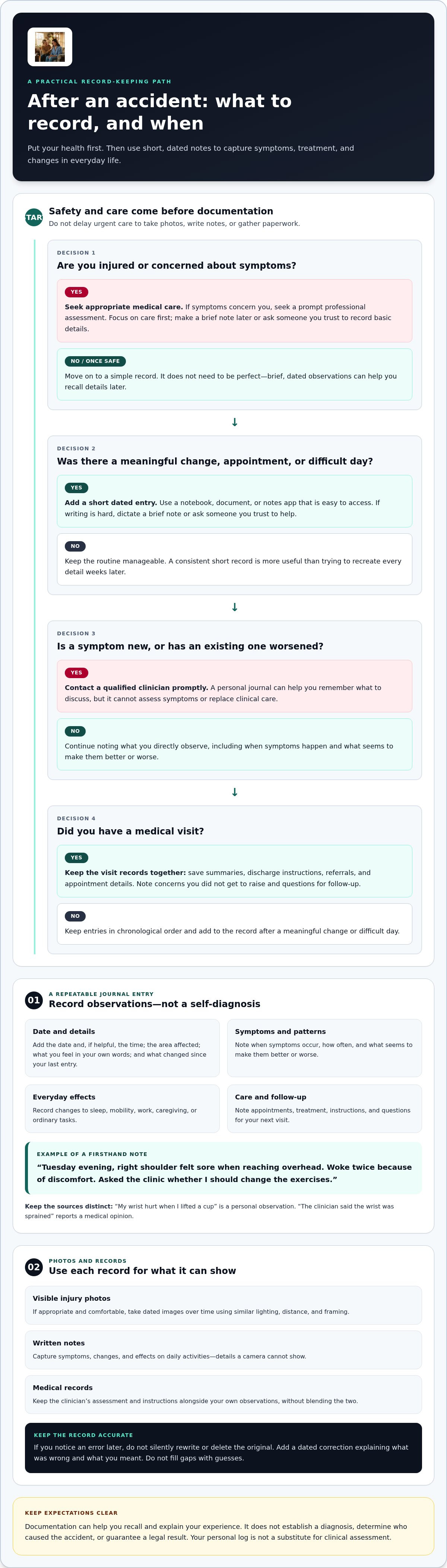
Your health comes first. Get to safety and seek appropriate medical care before worrying about notes, photos, or paperwork. You don’t need a perfect record. Injury documentation is an honest account of your symptoms, treatment, recovery, and the ways an injury affects your life. Even brief, dated notes can help you recall details later and describe changes clearly to healthcare professionals.
Records can also help you explain your experience if you seek a case evaluation or discuss a claim. They may include your written observations, medical records, and photographs. These records can relate to the broader rules of evidence, but keeping them doesn’t prove who caused the accident, establish a diagnosis, or guarantee a legal result. The goal is to preserve information accurately, not draw conclusions for you.
What injury documentation can help you remember
Pain and stress can make details harder to recall consistently. A dated note can help you track when a symptom began, whether it changed, and how it affected ordinary activities. For example, write that standing made your back pain worse rather than guessing what caused the pain.
Keep relevant dates, appointments, treatment details, and questions you want to raise with a clinician. Separate what you personally noticed from what a healthcare professional told you. “My wrist hurt when I lifted a cup” is a firsthand observation. “The clinician said the wrist was sprained” reports a medical opinion. Keeping those points distinct makes your account clearer and more precise.
Why health comes before collecting evidence
If you’re injured or concerned about symptoms, seek a prompt professional assessment. Don’t delay urgent care to take photographs, write a detailed account, or gather paperwork. You can make a brief note later, or ask someone you trust to record basic details while you focus on getting care.
A personal log can help you remember what to discuss, but it isn’t a substitute for clinical assessment. A clinician evaluates your symptoms, determines a diagnosis, and recommends treatment. Be honest about what you feel and any changes, even if a symptom seems minor or appears after the accident. Follow medical guidance, and keep your notes secondary to your care.
That’s the foundation of how to document your injuries after an accident: prioritize safety, seek appropriate care, and record what you directly observe. Next, build a simple routine that makes those notes easier to maintain.
How to document your injuries after an accident day by day
A short, consistent entry is more useful than trying to recreate every detail weeks later. Choose a notebook, document, or notes app you can access easily. Add an entry after a meaningful change, appointment, or difficult day. If pain or medication makes writing hard, dictate a brief note or ask someone you trust to help. Date each entry clearly, and don’t fill gaps with guesses.
What to include in an injury journal entry
Use the same prompts each time to make changes easier to spot. Record the date and, if helpful, the time; the area affected; what you feel in your own words; and what has changed since your last entry. Describe the experience in practical terms, such as “mild soreness” or “sharp pain when bending,” rather than assigning yourself a diagnosis.
- Symptoms: Note when they occur, how often, and what seems to make them better or worse.
- Daily effects: Record changes to sleep, mobility, work, caregiving, or ordinary tasks.
- Care: Note appointments, treatment, instructions, and questions for your next visit.
For example: “Tuesday evening, right shoulder felt sore when reaching overhead. Woke twice because of discomfort. Asked the clinic whether I should change the exercises.” This records what you experienced without claiming a medical cause. If a new symptom appears or an existing one worsens, contact a qualified clinician promptly instead of relying on your journal to assess it.
How to record medical visits and follow-up
After each visit, save the visit summary, discharge instructions, referrals, and appointment details with your records. Write down concerns you didn’t get to raise and questions for follow-up. Add a factual note about what happened, while keeping your own account distinct from the clinician’s assessment or instructions.
Keep entries in chronological order. If you notice an error later, don’t silently rewrite or delete the original. Add a dated correction that explains what was wrong and what you meant. Recordkeeping systems can serve different purposes. For example, OSHA's injury and illness recordkeeping requirements concern employers recording work-related injuries and illnesses. They aren’t a personal injury journal template, but they illustrate the value of organized, dated records.
This routine helps preserve details; it doesn’t diagnose an injury or determine fault or claim outcomes. Accident Lawyers Hotline evaluates motor vehicle accident cases and connects people with independent personal injury attorneys. Learn more about the process through a case evaluation.
How to document injuries with photos and daily-life details
Photos can show visible changes that are difficult to describe, while notes capture symptoms and effects a camera can’t show. Medical records add a clinician’s assessment. Together, these records offer different perspectives on your experience; none replaces the others.
How to take clear, useful injury photographs
If it feels appropriate and comfortable, use your personal device to photograph visible injuries. Take dated images over time, using similar lighting, distance, and framing where practical. Keep original files and timestamps when possible. Avoid filters, edits, or captions that suggest more than the image shows. If an injury is private or photographing it causes discomfort, skip the photo and discuss it with your clinician.
Keep images secure and avoid including other people or identifying details in the frame unless necessary. Get consent before photographing someone else. Don’t postpone care or disregard medical instructions to capture an image. Photos supplement treatment and written notes; they aren’t a reason to examine or manage an injury on your own.
How to record changes in everyday activities
Describe the specific task affected and what happened. “I needed help carrying groceries because lifting hurt” gives more context than “I couldn’t do anything.” Note whether you stopped an activity, changed how you completed it, or needed assistance. Keep the account accurate and matter-of-fact, without exaggerating or minimizing what you experienced.
Everyday effects may include trouble walking a usual distance, waking because of discomfort, difficulty driving, or needing help with caregiving. Record missed work separately from symptom notes. Keep relevant schedules, absence records, or other related documents with your organized files, and avoid including private information about coworkers or family members in your journal.
For a practical approach to how to document your injuries after an accident, pair each image with a brief note: the date, what the photo shows, and any related change in daily activity. Don’t assume a photo proves the cause or severity of an injury. Share symptoms and concerns with a qualified clinician, who can assess them and guide your care.
How to organize injury records and avoid documentation mistakes
A clear filing system makes details easier to find without relying on memory. Choose a secure digital folder or a paper binder you can update consistently. Use categories that match the records you’re collecting:
- Medical: Visit summaries, discharge instructions, referrals, and appointment information.
- Photos: Original image files, organized by date.
- Journal: Dated symptom notes and daily-life updates.
- Expenses and work: Receipts, bills, absence records, and related documents.
- Correspondence: Insurer letters, emails, and notes about calls or other communications.
Build a simple chronological index
Create one list that points to the records in these folders. For each item, note the date, a short description, and its file name or paper location. For example: “May 12, clinic visit summary, Medical/May 12.pdf.” This index helps connect records by date while keeping each file in its proper category. Save copies of receipts and work documents, and keep insurer communications together so you can review what was sent and when.
Protect the collection. Use a secure account or store paper files where others can’t casually access sensitive medical information. Limit access to people who need it, and keep a backup copy in a separate secure location. Leave original files unchanged. If you need to mark up or organize a copy, label it clearly as a working copy.
Avoid changes that create confusion
Keep entries factual. Don’t guess at a diagnosis, exaggerate symptoms, delete an inconvenient note, or alter an original photograph. If you find a mistake, add a dated correction rather than silently changing the original. Avoid posting sensitive injury details publicly; personal information may be shared beyond your intended audience.
Missing a journal entry doesn’t make the rest of your records useless. Resume with the current date. If you want to add a recollection about an earlier day, label it clearly with the date you’re writing and explain that it’s a later recollection. Don’t present it as a note made at the time.
If you’re struggling to follow prescribed care, contact the treating professional to discuss your concerns rather than quietly stopping. A consistent, honest record can help you explain what happened, but it can’t determine fault or guarantee a claim outcome. Accident Lawyers Hotline evaluates motor vehicle accident cases and connects people with independent personal injury attorneys. Learn more about a case evaluation; it doesn’t guarantee representation or a particular result.
What injury documentation can, and cannot, do for your next steps
Well-organized records can help tell a coherent story: what care you received, how symptoms changed, what expenses you tracked, and which everyday activities became harder. A timeline may also help you answer questions more accurately than relying on memory alone. That’s the value of learning how to document your injuries after an accident.
Documentation has limits. Your notes don’t determine who was at fault or establish a medical diagnosis. Photos and receipts don’t guarantee compensation, either. A clinician assesses your health, and legal responsibility or claim outcomes depend on the facts and applicable rules. Deadlines and claim requirements vary by state and circumstance, so don’t assume one general timeline applies everywhere. If you’re concerned about timing, seek qualified legal guidance promptly.
When to seek help understanding your options
If you have questions about how the accident and your records may relate to a claim, consider discussing them with a qualified personal injury attorney. The platform doesn’t provide direct legal representation or decide what a claim is worth. An evaluation can help you understand a possible next step, but it doesn’t guarantee an attorney-client relationship, representation, or a particular outcome.
A short checklist before a case evaluation
You don’t need a perfect file. Gather what you have and identify anything you’re still waiting to receive. These materials can help make a conversation more focused:
- The accident date and a brief, factual summary of what happened.
- Available medical records and a symptom timeline.
- Relevant injury photographs, expense documents, and communications with insurers or other parties.
- Questions about the process, fees, and any attorney-client arrangement.
Keep original records intact and distinguish what you know firsthand from what you’re unsure about. If you don’t have every document, say so rather than guessing or delaying a conversation until your file feels complete. The attorney can explain what information may be useful and discuss any proposed arrangement directly with you.
A case evaluation lets you share your accident details and available records through Accident Lawyers Hotline. An organized account can support a clearer discussion, while a qualified attorney can explain legal options based on the circumstances and applicable rules.
Take the next step with a clear record
You don’t need perfect paperwork to begin. A simple dated record of symptoms, treatment, and changes in daily life can help preserve details and make your experience easier to explain. Photos may add context, while medical records provide clinical information. Keep each record factual, organized, and private.
That’s the practical foundation of how to document your injuries after an accident. Your records can help explain what you’ve experienced, but they don’t determine fault, establish a diagnosis, or guarantee compensation. Prioritize your health, and seek qualified guidance if you’re unsure about your options or applicable deadlines.
Accident Lawyers Hotline provides case evaluations for car, truck, motorcycle, pedestrian, and bus accidents, then connects people with independent personal injury attorneys. A case evaluation can help you explore possible next steps, but it doesn’t guarantee representation or a particular outcome. Request a case evaluation.
Start with the information you have. Add to it as you’re able, and take recovery one step at a time.
Frequently Asked Questions
What should I document after an accident if my injuries appear minor at first?
Record what you notice, even if the symptoms seem mild. Note the date, affected area, discomfort, and any changes over time. Include effects on sleep, walking, lifting, or other ordinary activities. If new symptoms appear or existing ones worsen, contact a qualified clinician. Don’t assume a symptom is unimportant or diagnose its cause yourself. A simple, factual timeline can help you describe what changed.
How soon should I see a doctor after an accident injury?
Seek professional medical assessment promptly if you’re injured or concerned about symptoms. Don’t wait until your documentation or photographs are complete before getting care. If symptoms feel urgent, seek urgent medical help. A clinician can assess your condition, determine a diagnosis, and advise on treatment. Keep visit summaries and follow-up instructions, and share changes in your symptoms with your healthcare professional.
Can I take pictures of my injuries for an accident claim?
Yes, you can take photographs of visible injuries if doing so feels appropriate and comfortable. Use a personal device, keep original files and timestamps when possible, and take dated images over time in similar lighting and framing. Avoid filters, edits, or captions that could misrepresent what an image shows. Photos supplement medical care and written notes; they don’t establish a diagnosis or prove who caused the accident.
What should I write in an injury journal after an accident?
Write the date, affected area, symptoms in your own words, and any changes since your last entry. Describe how often symptoms occur and how they affect daily tasks, sleep, work, or mobility. Record appointments, care received, and questions for your clinician. Keep observations separate from medical opinions. For example, describe pain when lifting rather than assigning yourself a diagnosis. A consistent routine is central to how to document your injuries after an accident.
What happens if I did not document my injuries right away?
You can start documenting now. A missed entry doesn’t make the records you do have useless. Begin with today’s date and continue with honest, specific notes. If you later record a memory from an earlier day, label it as a later recollection rather than a note written at the time. Gather available medical records, photographs, receipts, and communications, and don’t fill gaps with guesses.
Should I keep medical bills and missed-work records after an accident?
Yes. Keep copies of medical bills, receipts, appointment information, and relevant work records, such as absence documentation or schedules. Store them separately from symptom notes, then organize the files by date so you can locate them easily. These documents can help explain treatment, expenses, and time away from work. Keep insurer letters, emails, and other claim-related communications as well, and preserve original records when possible.
Can injury documentation guarantee compensation for an accident claim?
No. Injury documentation can help explain symptoms, treatment, expenses, and effects on daily life, but it can’t guarantee compensation or determine fault. It also doesn’t replace a clinician’s diagnosis or legal guidance. Claim rules and deadlines vary by state and circumstance. If you want to understand possible next steps, consider discussing your situation and available records with a qualified personal injury attorney.
Were You Injured in an Accident?
Get a free, confidential case evaluation. No upfront fees.
Get Free Case Evaluation