California Amputation Lawsuit: Filing Time Limits
Learn California's amputation injury lawsuit deadline, exceptions, damages, and factors that may shape your claim's value after a life-changing injury.
Filing deadlines can be shorter than expected. In many jurisdictions, most personal injury claims involving an amputation must be filed within a specific timeframe set by state law, often ranging from one to three years from the date of the incident or discovery. The applicable deadline depends entirely on the type of claim and the state where the incident occurred.
After a life-changing injury, it can be difficult to know whether the circumstances support a claim or what it may be worth. An amputation injury lawsuit may involve more than immediate medical bills: future treatment, prosthetic needs, lost income, and lasting effects on daily life can all matter.
This article explains what may qualify as an amputation injury claim, how filing deadlines work across different jurisdictions, and which damages and case factors can affect potential value. If you need immediate guidance regarding your specific situation, the legal professionals at Accident Lawyers Hotline are available to help. It also covers how the cause of the amputation, available evidence, and responsibility for the injury can shape the legal picture.
Key Takeaways
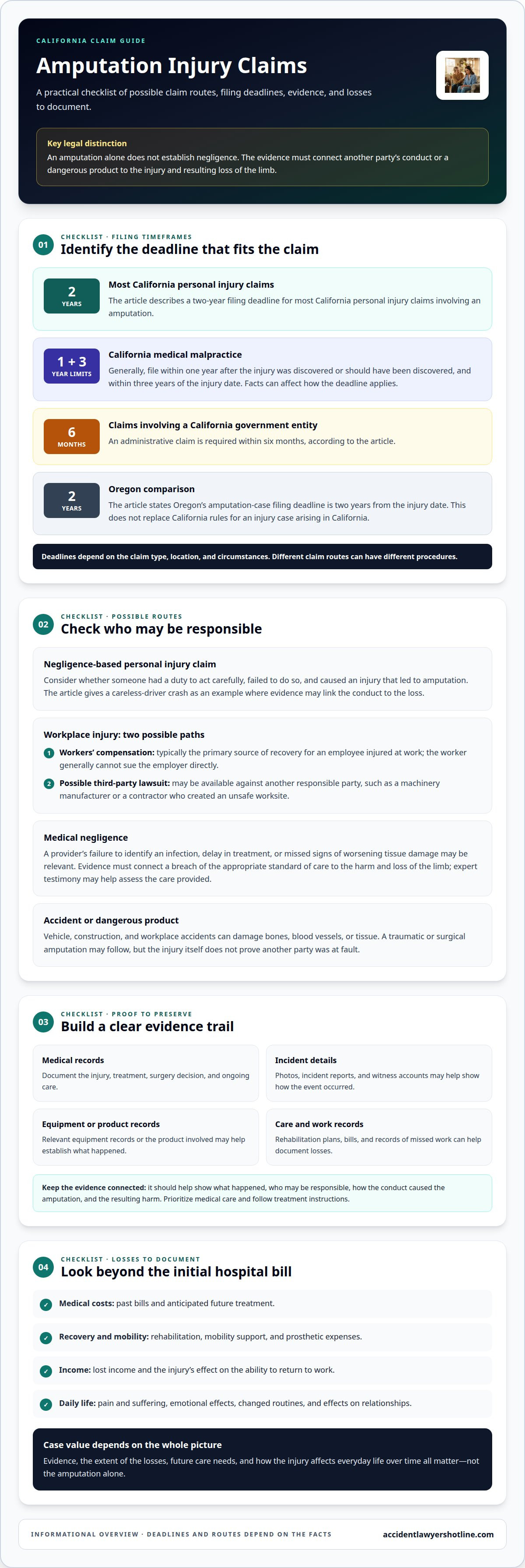
- Most California personal injury claims involving an amputation have a two-year filing deadline, according to the California State Legislature. Medical malpractice claims have different deadlines that can depend on when the injury was discovered.
- A claim may involve a traumatic or surgical amputation, but the key issue is whether another party’s negligence or a dangerous product caused the injury.
- Government-related claims and workplace injuries can follow different paths, so the responsible party and circumstances matter.
- Potential damages may extend beyond immediate treatment to future care, prosthetics, lost income, and the injury’s effect on daily life.
- Case value depends on the evidence, the extent of the losses, and how the injury affects the person over time, not on the amputation alone.
Common accidents and medical mismanagement leading to amputations
Amputations can follow a sudden accident or a medical condition made worse by inadequate care. The National Institutes of Health reports that about 400 Americans lose a limb in an injury accident each day. A crushed leg after a vehicle collision, a hand caught in industrial machinery, or severe burns can cause damage that doctors cannot repair. These examples help explain how an accident may lead to losing part or all of a limb, but the injury alone doesn’t establish negligence.
Car, truck, construction, and workplace accidents can severely damage bones, blood vessels, and surrounding tissue. A collision may cut off blood flow to a limb, or machinery may cause a traumatic amputation at the scene. In other cases, emergency surgery removes a damaged limb to address a serious threat to the patient’s health. The key legal question is whether another party’s careless conduct or an unsafe product caused the injury that led to the amputation.
Medical mismanagement can also contribute. For example, a provider may fail to identify a serious infection, delay appropriate treatment, or overlook signs of worsening tissue damage. An infection that could have been prevented may spread and cause harm so extensive that amputation becomes necessary. In a medical negligence claim, expert testimony may help assess whether a provider’s care fell below an appropriate standard. The evidence must connect that breach to the harm and loss of the limb.
The effects often continue long after surgery. A person may need ongoing medical care, rehabilitation, mobility support, and prosthetic devices. Emotional effects can also change daily routines and relationships, and affect a person’s ability to return to work. These consequences may shape future care needs and the compensation sought in a claim.
A successful claim may seek compensation for past medical bills and anticipated treatment, rehabilitation, and prosthetic expenses. It may also seek lost income and damages for pain and suffering. Hospital bills, surgical notes, rehabilitation plans, and records of missed work can help document these losses. Estimating future costs requires assessing the person’s medical needs and how the amputation affects everyday activities.
Deadlines are especially important in California medical malpractice claims. According to the California State Legislature, a claim generally must be filed within one year after the injury was discovered or should have been discovered, and within three years of the injury date. The facts can affect how a deadline applies. An amputation injury lawsuit may also depend on evidence showing what happened, whether negligence occurred, and how that conduct caused the loss.
What qualifies as an amputation injury in a California personal injury lawsuit?
An amputation may be partial or complete, traumatic or surgical. The key legal questions are how it happened and whether another party’s conduct caused it. A negligence-based personal injury case generally examines whether someone had a duty to act carefully, failed to do so, and caused an injury that led to amputation. For example, a crash caused by a careless driver may support a claim if evidence links the driver’s actions to the limb injury and resulting loss.
Workplace cases can involve two different routes. Workers’ compensation is typically the primary source of recovery when an employee loses a limb at work, and the worker generally cannot sue the employer directly. A separate personal injury lawsuit may be possible against a responsible third party, such as a machinery manufacturer whose faulty equipment caused the injury or a contractor who created an unsafe worksite. Workers’ compensation provides workplace benefits, while a third-party claim seeks damages from another responsible party.
Government involvement can change the timeline. According to the California State Legislature, a claim involving a California government entity requires an administrative claim within six months. For comparison, Oregon’s filing deadline for amputation cases is two years from the injury date. These deadlines apply to different jurisdictions and procedures, so Oregon’s deadline does not replace California’s rules for an injury case arising in California.
Evidence should link the accident, the responsible party’s conduct, and the amputation. Medical records can document the injury, treatment, and decision to operate. Photos, incident reports, witness accounts, and equipment records may help establish how the event occurred. Medical negligence claims may involve expert testimony about whether a provider met the applicable standard of care. Together, this evidence can help establish causation, harm, and the basis for a settlement or lawsuit.
After an accident, prioritize medical care and follow treatment instructions. When possible, preserve relevant photos, witness contact details, incident documents, and any product involved. Keep medical records and bills as they become available. These steps can help preserve evidence of the injury and its consequences without delaying necessary care. For a workplace injury, note whether a contractor, equipment maker, or another outside party may have contributed.
Attorney fees and case costs are separate. The attorney-client agreement should explain how fees are handled and who is responsible for case costs, including what happens if the claim does not succeed. A contingency arrangement means attorney fees are not owed unless the case is won, but the agreement should clarify how costs are treated. Understanding these terms can help you assess an amputation injury lawsuit before proceeding.
Common causes of amputation injuries
Amputations have both medical and traumatic causes. Vascular disease and diabetes account for 54 percent of amputations, while traumatic injuries account for about 45 percent. Disease-related limb loss can follow reduced blood flow, tissue damage, or complications that prevent healing. Traumatic loss, by contrast, may happen suddenly during a severe physical injury. These different causes matter because a personal injury lawsuit generally focuses on harm caused by another party, not limb loss alone.
Catastrophic accidents can crush, sever, or severely damage a limb. Examples include a motorcycle collision, an industrial machine accident, or a construction-site incident involving heavy equipment. A dangerous product may also cause an injury, such as a machine that fails during ordinary operation. Potentially responsible parties may include a driver, an employer or contractor, a product manufacturer, or another party whose conduct contributed to the event. More than one party may share responsibility.
Product-related claims can raise a distinct legal issue. In many product liability cases, an injured person does not have to prove that the company was careless if a defective product caused the injury. This principle is called strict liability. For example, evidence that a defective safety component failed during equipment use may help link the product to the physical injury. The product’s condition, how it was used, and the sequence of events can all affect the claim.
Medical complications can also lead to limb loss. A serious infection may worsen when diagnosis or treatment is delayed, and a vascular condition can restrict blood flow until tissue is no longer viable. A medical negligence claim examines whether a provider’s care fell below the required standard and whether that failure caused additional harm. Medical records and expert testimony can help explain how the condition progressed, the treatment decisions made, and why amputation became necessary.
The cause also shapes the evidence and the parties involved. A machinery injury may call for inspection records and product evidence, while a road collision may require crash reports and witness accounts. In medical cases, treatment timelines can show when symptoms appeared and what care followed. These details help explain how the injury occurred and whether another party may be legally responsible.
Limb loss can cause lasting limitations, including changes to mobility, work, and daily activities. The effects depend on the limb involved, the injury, and the person’s ongoing care needs. A claim can address physical consequences and related losses when evidence links them to someone else’s negligence or a defective product. Identifying the cause is an early step in assessing whether the facts support a personal injury claim.
Economic and non-economic damages
An amputation can create financial losses that continue beyond the initial hospital stay. Economic damages may include emergency treatment, surgery, medication, rehabilitation, prosthetic devices, and future medical care. Prosthetic devices can cost tens of thousands of dollars and may need replacement over time. Treatment records, work absences, and documentation of care needs can help show how the injury affects finances and recovery.
Estimating future losses takes more than adding current bills. A life care plan prepared by Certified Life Care Planners and medical experts can project treatment and support needs over the injured person’s lifetime. A vocational expert can assess how the amputation affects work, considering the person’s skills, education, and job history. An economist can then use that information to estimate long-term financial losses, including reduced earning capacity.
Non-economic damages address harm that does not appear on an invoice. They may include pain, emotional distress, loss of enjoyment of life, and changes to independence or relationships. Up to 80% of amputees experience phantom pain, according to the cited topic facts. A person’s medical records, treatment history, and descriptions of daily limitations can help explain the severity and duration of these effects.
Pain and suffering damages differ from medical expenses because they reflect the human impact of an injury. For example, someone who can no longer do a familiar job or activity may experience losses beyond reduced income. Evidence about physical limitations, emotional effects, and ongoing treatment can help show how the amputation changed that person’s life.
Punitive damages serve a different purpose. California courts may award them in amputation cases involving gross negligence, willful misconduct, or extreme malice. They are not compensation for ordinary medical bills or pain. The conduct and supporting evidence matter, such as proof that a defendant acted with extreme disregard for others’ safety.
Most personal injury claims resolve through negotiation, while about 5% go all the way to trial. The time required depends on evidence gathering, medical assessments, disputes over responsibility, negotiations, and court scheduling. A settlement should account for documented expenses and the injury’s ongoing effects, not only bills already paid. In an amputation injury lawsuit, estimating future care and long-term losses helps frame the damages under discussion.
Amputation case value
There is no standard amount for an amputation case. Outcomes can vary widely, and one result does not set the value of another person’s claim. The injuries, evidence, responsibility, and lasting effects all matter.
Future medical needs can carry substantial weight. The injured person’s age, type of amputation, treatment plan, and expected recovery shape these projections. A life care plan can organize anticipated medical care, rehabilitation, equipment, and support needs over time.
Lost earning ability is another important factor. A vocational expert can examine how the injury affects someone’s ability to do their previous work or pursue another occupation. Skills, education, and job history help explain potential changes in earning capacity. For example, someone whose work required standing or handling tools may face different employment limits after losing a limb.
Non-economic losses also affect potential value. Pain, emotional distress, reduced independence, and loss of activities can be significant parts of the harm suffered. Treatment records, rehabilitation notes, and examples of changes to daily life may help document these effects. A partial finger amputation may affect someone differently than a leg amputation, but the individual impact remains central.
Responsibility can affect potential recovery in California. The state uses pure comparative fault, which reduces an injured person’s recovery by their share of fault. If evidence shows that both the injured person and another party contributed to an accident, their assigned percentages affect damages. An attorney may assess witness accounts, incident records, and expert opinions to evaluate responsibility.
A sound valuation connects each loss to the injury. Medical experts can explain its cause, required treatment, and long-term prognosis. A vocational expert can assess employment effects, while an economist can calculate lifetime economic losses using financial and care-plan information. These assessments help distinguish documented losses from estimates and link present needs to future expenses.
The value of an amputation injury lawsuit depends on how evidence supports the full extent of the losses. An attorney may consider injury severity, future care, earning capacity, pain, and fault together. Settlement discussions can account for current harm and projected needs, rather than focusing only on bills already received. Request a review of your case value to discuss how these factors apply to your situation.
Accident Lawyers Hotline
Accident Lawyers Hotline provides case evaluations to help people understand how an accident may relate to a potential injury claim. If your amputation followed a car, truck, motorcycle, or pedestrian accident, an evaluation can help clarify the evidence, possible responsibility, and losses involved. It can also help you understand potential next steps and connect with an attorney for legal assistance.
An evaluation may help if you’re unsure which parties could be responsible, how to document future care needs, or how a filing deadline applies. The circumstances of the accident and the injury’s effects on your life can guide that discussion.
To discuss your situation, contact Accident Lawyers Hotline for a case evaluation.
Take the Next Step Toward Clarity
Moving forward starts with understanding what evidence may support your claim and how the injury affects your needs. An amputation injury lawsuit may involve medical records, work information, and documentation of ongoing care. Organizing those details can help clarify what to discuss with an attorney.
Accident Lawyers Hotline provides car, truck, and motorcycle accident case evaluations. If your amputation followed one of these crashes, an evaluation can help you discuss the circumstances and possible next steps. An amputation injury lawsuit also depends on how the evidence links the accident to your losses.
You don’t have to sort through every legal and practical question alone. Contact Accident Lawyers Hotline today to discuss your situation and consider an informed next step.
Frequently Asked Questions
How Long Do You Have to File a Lawsuit?
Deadlines vary by state and claim type. Across the United States, traumatic injury filing periods are typically between two and four years from the accident date. In California, most personal injury lawsuits generally have a two-year deadline from the injury date. Medical malpractice and government-related claims may follow different timelines. For an amputation injury lawsuit, identifying the state, defendant, and legal basis helps determine which deadline applies.
Can I receive compensation if my amputation was caused by medical malpractice?
Yes, compensation may be available if negligent medical care caused an amputation or worsened the outcome. In California, expert medical testimony must address whether the provider breached the standard of care. Evidence must also link that breach to the injury and losses. For example, treatment records can establish when an infection appeared, what care followed, and whether the alleged delay contributed to the need for amputation.
How Does Your Own Fault Affect Your Claim?
California’s pure comparative fault rule reduces recovery according to the injured person’s share of responsibility. In an amputation injury lawsuit, evidence may show that both a driver and an injured motorcyclist contributed to a collision. The injured person’s share reduces damages, but does not automatically bar recovery under this rule. Crash accounts, photographs, and witness statements can help clarify how each person’s actions contributed to the event.
What is the statute of limitations for filing an amputation lawsuit in California?
Most California personal injury claims generally must be filed within two years of the injury date, according to the California State Legislature. Medical malpractice claims generally have a one-year deadline after discovery, or when the injury should have been discovered, and a three-year limit from the injury date. A claim involving a California government entity requires an administrative claim within six months, according to the California State Legislature.
Can I sue my employer for an amputation injury at work?
Workers’ compensation is generally the primary recovery path for an employee injured at work, and the employee generally cannot sue the employer directly. A separate personal injury claim may be possible against a responsible third party. For example, if faulty machinery caused the amputation, evidence may support a claim involving its manufacturer. A contractor may also be considered if its conduct created an unsafe worksite condition.
What qualifies as an amputation injury lawsuit in the United States?
A potential claim may involve partial or complete limb loss linked to another party’s negligence or a dangerously unsafe product. The amputation may be traumatic, such as after a collision, or surgical after severe accident-related damage. The key is linking the responsible party’s conduct or product to the injury and resulting harm. Medical records, incident documentation, and other evidence can help establish that connection.
What are common causes of amputation injuries that lead to lawsuits?
Common causes include vehicle collisions, construction incidents, industrial machinery accidents, defective products, and medical negligence. A collision may severely damage a limb, while unsafe equipment may crush or sever it. In a medical claim, evidence may focus on treatment decisions and whether they contributed to preventable harm. The cause helps identify potentially responsible parties and relevant records, such as crash reports, equipment documentation, or treatment notes.
Who can be held liable for an amputation injury, including employers, manufacturers, and property owners?
Potentially responsible parties depend on the facts. A driver may be liable for a collision, or a manufacturer may face a claim if a defective product caused the injury. A contractor or property owner may be considered if evidence links an unsafe condition to the accident. For workplace injuries, workers’ compensation generally applies to the employer, while a separate claim may involve a responsible third party, such as a contractor or equipment maker.
Were You Injured in an Accident?
Get a free, confidential case evaluation. No upfront fees.
Get Free Case Evaluation