Personal Injury Protection PIP: Benefits and No-Fault Rules Explained
Get personal injury protection PIP explained in plain English: learn what it covers, how no-fault rules vary by state, and how PIP works with health insurance.
Fault isn’t always the first question after a crash. Personal injury protection (PIP) can help pay medical expenses and lost wages for you and your passengers, regardless of who caused the accident. If you need personal injury protection PIP explained in plain English, start with this key point: benefits and eligibility depend on state rules and your policy.
It’s understandable to want clear answers about which bills PIP may cover and what happens when treatment costs exceed your policy limit. PIP rules vary by state, so there is no single set of requirements nationwide. Some states require PIP, others make it optional, and some do not offer it.
This guide explains personal injury protection (PIP), including how it affects coverage, claims, and your next decisions. You’ll learn how no-fault rules work, which expenses PIP may cover, and what it generally excludes. It also explains how health insurance may work alongside PIP, so you can compare the coverage and limits of both policies.
Key Takeaways
- PIP can help cover accident-related medical expenses and other eligible costs, even when fault hasn’t been determined.
- No-fault rules and PIP benefits vary by state, so local requirements affect who qualifies and what expenses may be covered.
- PIP generally doesn’t pay for vehicle repairs, theft, or damage to another person’s property; those costs call for different coverage.
- Consider how your health insurance deductible and benefits work alongside PIP when thinking about coverage limits.
- Understand how PIP may address lost wages, household help, rehabilitation, and funeral expenses after an accident.
What isn't covered by PIP insurance?
Personal injury protection (PIP) pays eligible accident-related expenses under your own auto policy, regardless of fault. This no-fault benefit can help cover medical bills for the policyholder and, in many cases, passengers. Depending on state law and policy terms, it may also apply if an insured person is struck while walking or riding a bike. PIP can pay covered costs before drivers resolve who caused the crash.
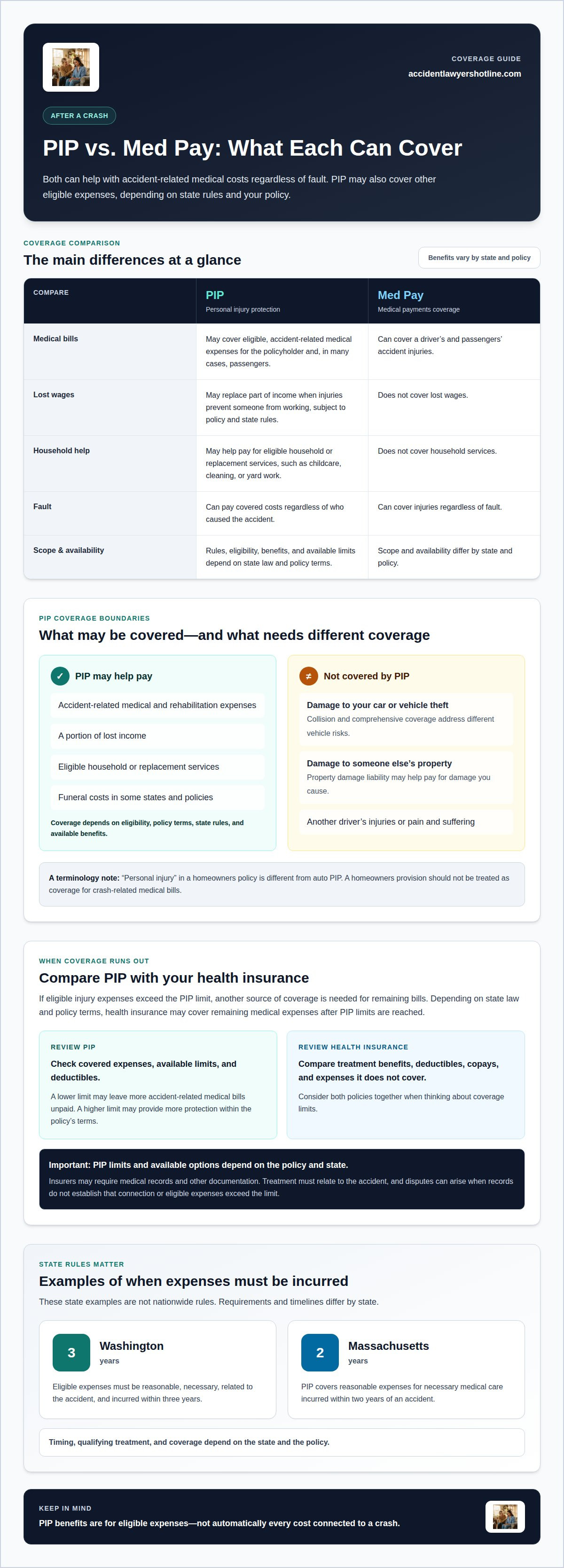
PIP does not cover damage to your car, vehicle theft, or damage to someone else’s property. Collision and comprehensive coverage address different vehicle risks, while property damage liability may help pay for damage you cause to another person’s property. PIP also does not cover another driver’s injuries or pain and suffering. If eligible injury expenses exceed the PIP limit, another source of coverage is needed for the remaining bills.
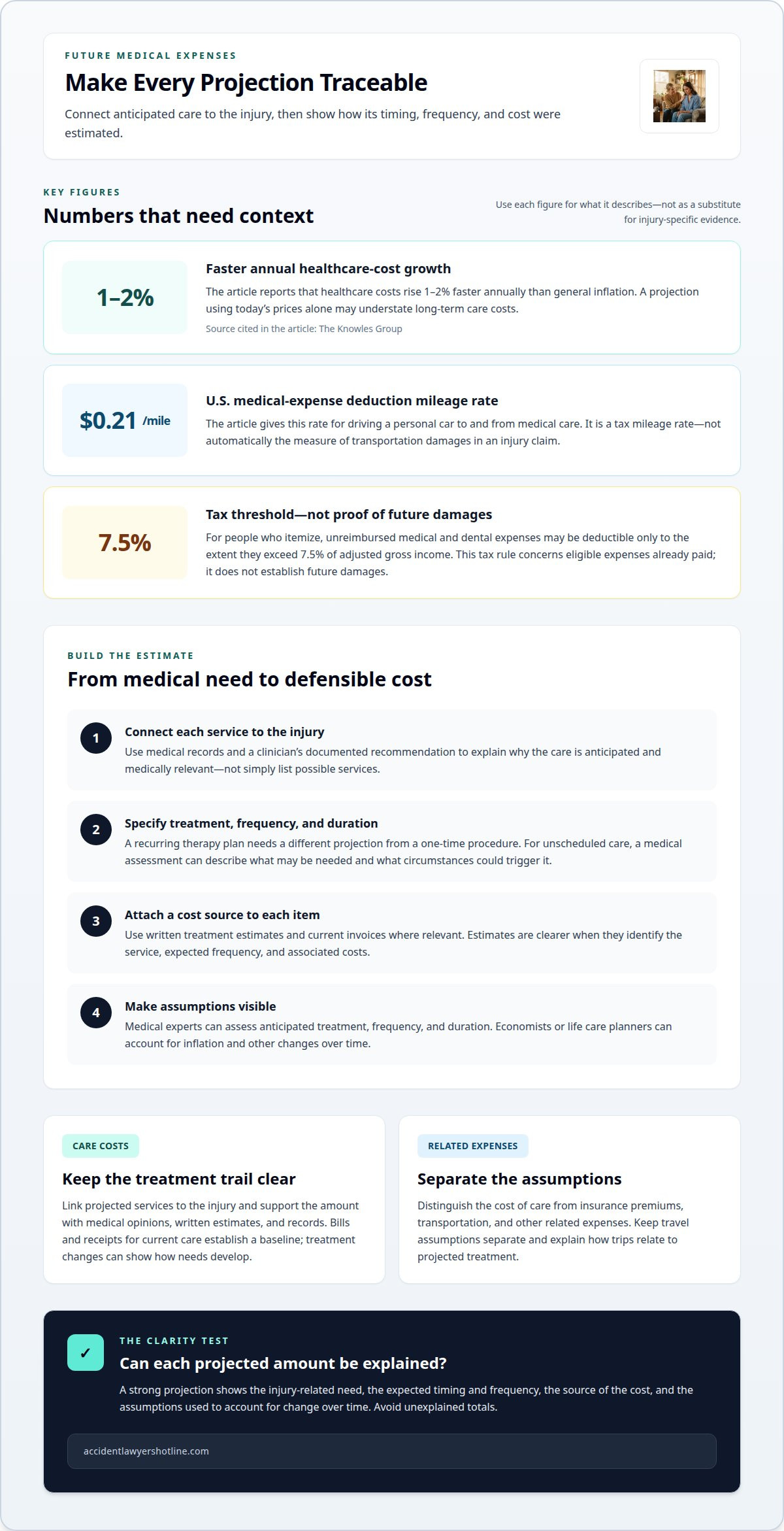
What are typical PIP coverage limits and costs by state? Premiums depend on state requirements, selected limits and deductibles, driving history, ZIP code, and the number of people covered.
What exclusions, disputes, or risks should drivers know about when using PIP? Treatment must relate to the accident, and insurers may require medical records and other documentation. A dispute can arise if records do not establish that connection or eligible expenses exceed the policy limit.
Homeowners personal injury coverage is different
“Personal injury” in a homeowners policy is not the same as personal injury protection in auto insurance. The similar wording can cause confusion, but a homeowners provision should not be treated as coverage for crash-related medical bills. For example, a driver injured in a collision should look to applicable auto coverage, including PIP where available. The type of policy and the event determine which coverage may apply.
PIP and medical payments coverage
Medical payments coverage, often called Med Pay, can cover a driver’s and passengers’ accident injuries regardless of fault. Unlike PIP, Med Pay does not cover expenses such as lost wages or household services. Both types of coverage can help with medical costs, but their scope and availability differ by state and policy. Compare covered expenses, limits, and deductibles when deciding how much PIP coverage fits your needs.
In many states, policyholders can select PIP limits from the options their insurer offers. A lower limit may leave more accident-related medical bills unpaid, while a higher limit can provide more protection within the policy’s terms. Depending on the policy and state law, health insurance may cover remaining medical expenses after PIP limits are reached. Consider both policies together, especially their deductibles and covered expenses.
What is a no-fault insurance state?
A no-fault state uses PIP to pay certain accident-related costs through an injured person’s own auto policy, regardless of fault. Subject to state rules and policy limits, PIP may cover medical expenses, some lost wages, household services, and funeral costs.
Medical and Rehabilitation Expenses
PIP medical benefits may help pay for accident-related care, from emergency treatment and doctor visits to diagnostic tests, prescriptions, and follow-up appointments. Depending on the policy and state, rehabilitation, medical supplies, and hospital costs may also qualify. Treatment can continue after the initial emergency, but coverage remains subject to the policy’s terms and available benefits.
Deadlines differ by state. In Washington, eligible expenses must be reasonable, necessary, related to the accident, and incurred within three years. Massachusetts General Court says PIP covers reasonable expenses for necessary medical care incurred within two years of an accident. These examples show why the state and the timing of care matter.
Which medical expenses, lost wages, and other costs can PIP pay? Depending on state rules and coverage, PIP may pay medical and rehabilitation expenses, a portion of lost income, household or replacement services, and funeral costs. Benefits apply to eligible expenses, not automatically to every cost connected to a crash.
Lost Wages and Household Services
Lost-wage benefits can replace part of someone’s income when accident injuries prevent them from working. The amount and eligibility rules depend on the policy and state. Household or replacement-service benefits may help pay for tasks the injured person can no longer manage, such as childcare, house cleaning, or yard work. These benefits can address practical needs when recovery limits daily activities.
Washington PIP can help pay lost wages and services an insured person cannot provide because of an accident. Eligibility for either benefit depends on the applicable policy terms and state rules. The expense or missed income must relate to the injury and fall within the available coverage.
Funeral expenses may also qualify under PIP in some states and policies. A death benefit may be available to a deceased person’s family, but coverage and eligible costs vary. PIP can therefore address more than medical bills, subject to defined limits.
For example, a person recovering from an accident may need follow-up care, miss work, and require help with household tasks. PIP may address each category separately, if the policy covers it. Understanding how those benefits apply can clarify an injury claim; an accident case evaluation can help assess the claim’s circumstances.
Choosing PIP limits based on health insurance
Your health insurance can help you decide how much PIP coverage fits your needs. Compare how each policy handles medical treatment, deductibles, copays, and expenses that health insurance does not cover.
Which states require PIP or offer it as optional coverage? PIP is required in Delaware, Florida, Hawaii, Kansas, Kentucky, Maryland, Massachusetts, Michigan, Minnesota, New Jersey, New York, North Dakota, Oregon, Pennsylvania, and Utah. Arkansas, the District of Columbia, New Hampshire, South Dakota, Texas, Virginia, and Washington make PIP available but do not require it.
How the policies work together
In most states, PIP is primary for auto accident injuries, while health insurance is secondary. This order can help pay eligible medical expenses without waiting for a decision about fault. After PIP benefits reach the policy limit, health insurance may cover remaining treatment costs, subject to its own terms and limits.
Coordination differs by state. In Massachusetts, PIP coordinates with other health insurance policies, covering remaining costs after other insurance pays its share. The system is intended to prevent payment above 100% of total medical expenses. This makes the interaction between policies important, even when both provide coverage for treatment.
Health insurance generally does not replace income or pay for daily assistance after an injury. Depending on state rules and policy terms, PIP may provide benefits for lost wages or household services. Some policies may also cover funeral expenses. These benefits can matter when comparing limits: health insurance may address medical bills without covering every financial effect of an accident.
What to weigh when choosing limits
Start by reviewing your health plan’s deductible, copays, and coverage for accident-related treatment. Where state law allows a choice, someone with strong health insurance and a low deductible may consider a lower PIP limit. Someone without health insurance, or with a high-deductible plan, may consider at least the minimum available PIP coverage in states where it is optional.
Then consider what your household would need if an injury interrupted work or everyday tasks. Comparing medical coverage alone can overlook lost income and replacement services. PIP limits vary by state and insurer, and policyholders in many states can choose among the available options. Deductibles may also apply in some states, with choices available under certain policies.
Premiums depend on factors such as state requirements, chosen limits and deductibles, driving history, ZIP code, and the number of people covered. A practical choice balances your health plan’s out-of-pocket costs with the additional PIP benefits your household may need. Reviewing both policies together helps clarify which expenses each may cover.
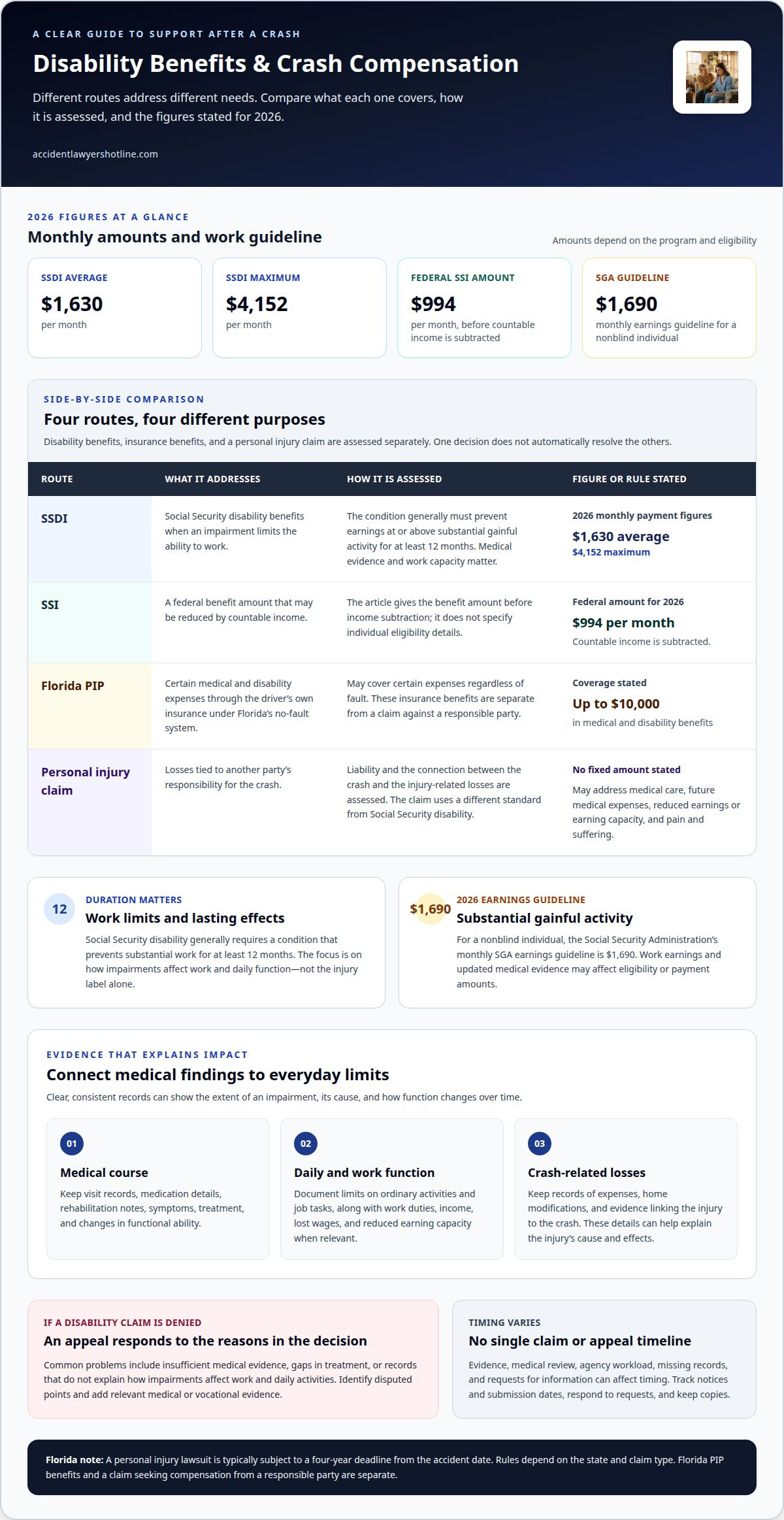
Disability, rehabilitation, and death benefits
PIP may cover more than immediate medical treatment after a car accident. Depending on state rules and policy terms, benefits can include rehabilitation costs, disability-related income payments, and funeral expenses. These benefits address different needs, so a policy’s medical limit may not tell the whole story. For example, an injured passenger who needs rehabilitation and cannot work may face separate eligible expenses, each subject to applicable terms and limits.
Disability and lost-income benefits
Disability benefits may replace part of a person’s income when accident injuries prevent them from working. The amount depends on state law and the policy. Texas PIP pays 80% of lost wages. That percentage shows why the benefit may replace only part of income, rather than the full amount. A person’s remaining lost earnings may require consideration under other available coverage or legal claims.
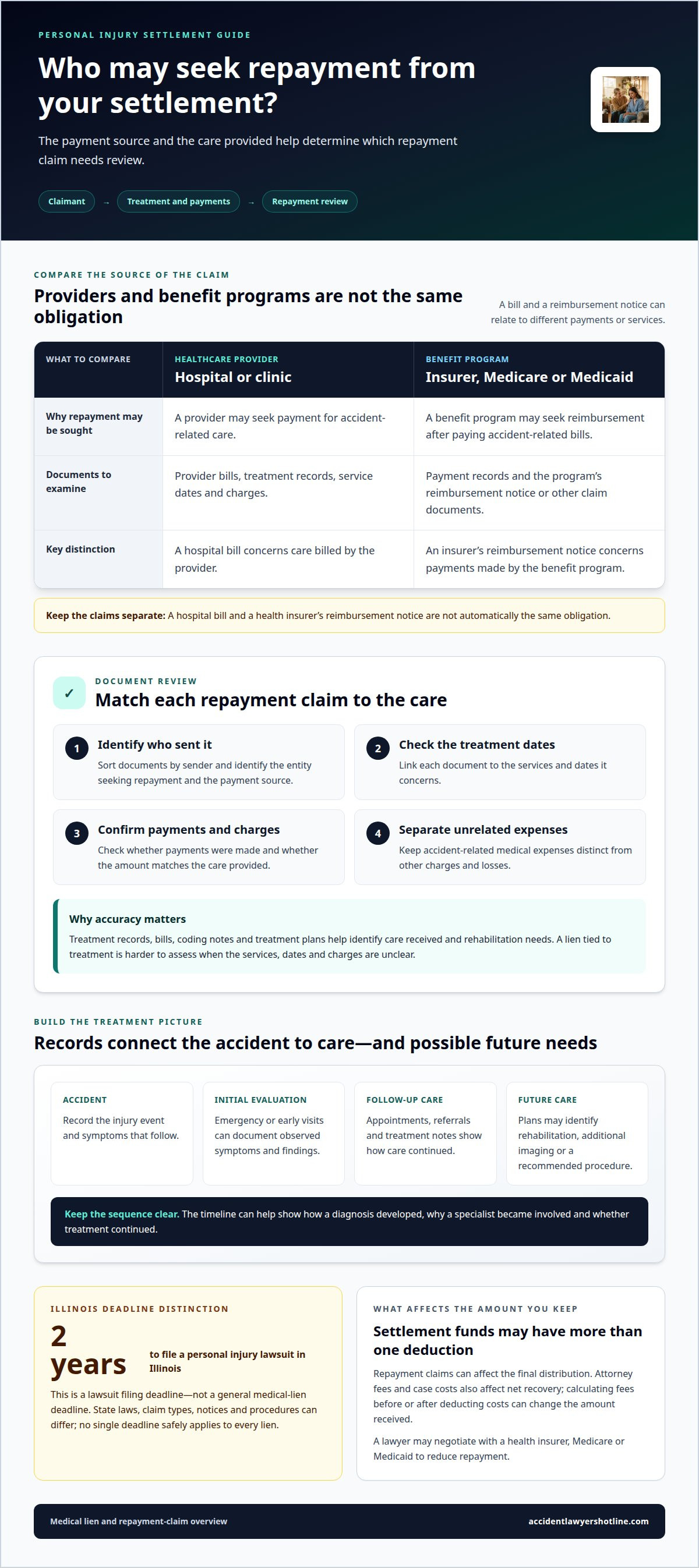
Liability coverage serves a different purpose: bodily injury liability generally addresses injuries a driver causes to other people. PIP, by contrast, applies to eligible expenses for covered people under the policy, regardless of fault. Passengers may qualify under state and policy rules. When several people are injured, each person’s eligibility and available benefits may differ.
Rehabilitation and benefit duration
Rehabilitation may include accident-related care intended to support recovery, such as continuing treatment after an initial hospital visit. PIP benefits generally continue until policy limits are reached or treatment is no longer considered medically necessary. A covered treatment plan can therefore still exceed the policy limit. The available benefit balance and the connection between the care and the accident both affect how long PIP can pay.
Time limits also vary by state. Massachusetts PIP coverage generally extends for up to two years after the date of the accident. That period is separate from the policy’s monetary limits: treatment may fall within the time window but still exceed the available benefit amount. Keeping treatment dates and accident-related records organized can help clarify which expenses fall within the applicable coverage period.
Depending on state rules and policy coverage, a deceased person’s family may be eligible for death benefits after a fatal car accident. Funeral expenses may also qualify, subject to applicable limits. These benefits are separate from liability claims against an at-fault driver. The policy determines who may receive benefits and which expenses qualify, while state law shapes the protections available to injured people and families.
No-fault state requirements and lawsuit restrictions
No-fault auto insurance uses PIP to pay eligible injury expenses through a person’s own policy, regardless of fault. State rules determine whether coverage is mandatory and when an injured person may sue.
How No-Fault Insurance Works
In a no-fault system, an injured driver first turns to their own PIP coverage for eligible accident-related expenses. This can help pay benefits without waiting for a decision about who caused the crash. PIP does not decide liability; it provides benefits under the policy and state rules. Receiving PIP benefits and pursuing a claim against an at-fault driver are separate issues.
No-Fault State Requirements
PIP is mandatory in some states and optional or unavailable in others. Delaware, Florida, Hawaii, Kansas, Kentucky, Maryland, Massachusetts, Michigan, Minnesota, New Jersey, New York, North Dakota, Oregon, Pennsylvania, Puerto Rico, and Utah require it. Arkansas, the District of Columbia, New Hampshire, South Dakota, Texas, Virginia, and Washington make PIP available but do not require it.
Oregon requires at least $15,000 of PIP coverage per person, according to the Oregon Legislature. In Texas, insurers must offer PIP, but the named insured may reject it in writing. These differences show why a state’s auto insurance requirements matter when reviewing what coverage applies after a crash.
Lawsuit Restrictions in No-Fault States
No-fault rules can limit lawsuits against an at-fault driver, usually reserving them for severe injuries or death. The threshold and exceptions depend on state law. Massachusetts, for example, limits personal injury lawsuits, with exceptions that include medical expenses exceeding the minimum limit or certain serious injuries. Whether someone can sue therefore depends on the injury and the state’s specific rules.
These limits do not erase liability or prevent every claim. They affect when an injured person may pursue damages from another driver beyond available no-fault benefits. An auto accident can involve both a PIP claim and a liability question, so the applicable legal threshold matters.
Michigan No-Fault Medical Benefits
Michigan no-fault auto policies provide unlimited medical and rehabilitation benefits. This feature distinguishes Michigan’s system from policies where medical benefits stop at a selected limit. It can matter when serious injuries require extended treatment, although eligibility and other policy terms still apply.
Michigan’s example also shows why no-fault coverage cannot be described by one national rule. State requirements shape PIP benefits, while lawsuit restrictions determine when claims against another driver may proceed. If you’re assessing how those rules affect an auto accident claim, seek a case evaluation for guidance on the claim’s circumstances.
Accident Lawyers Hotline
Accident Lawyers Hotline provides case evaluations for people injured in motor vehicle accidents. If you are unsure how PIP limits, no-fault rules, or a liability claim may affect your situation, a case evaluation can help clarify the issues and potential next steps. The service connects individuals with personal injury and motor vehicle accident attorneys who can provide legal assistance.
Whether your accident involved a car, truck, motorcycle, or pedestrian, the circumstances of the crash and your injuries can shape the questions that matter. You can contact Accident Lawyers Hotline to discuss a case evaluation.
Take the Next Step With Clearer Questions
Having personal injury protection (PIP) explained in the context of your accident can help you prepare for your next conversation. Note any questions about your treatment, insurance, or claim. Understanding PIP can also help you describe what you need to know without requiring you to reach a legal conclusion on your own.
Accident Lawyers Hotline offers case evaluations for car, truck, and motorcycle accidents. If you’re ready to discuss your situation, contact Accident Lawyers Hotline. A focused conversation can help you consider a practical next step.
Frequently Asked Questions
What is personal injury protection?
Personal injury protection, or PIP, is auto insurance that can pay certain accident-related expenses for covered people, regardless of fault. Depending on state law and the policy, eligible costs may include medical treatment, part of lost income, or household assistance. For example, after a crash, a covered person may use PIP for eligible medical bills without first resolving which driver caused the accident.
Do I Need PIP if I Have Health Insurance?
Health insurance does not automatically replace PIP because the policies may cover different needs. In most states, PIP is primary for auto-injury expenses and health insurance is secondary. Health insurance may help with remaining medical costs after PIP benefits are used, subject to its terms. PIP may also cover lost income or household services, which health insurance typically does not replace.
What is the difference between bodily injury coverage and PIP?
Bodily injury liability generally covers injuries a driver causes to other people, while PIP may cover eligible injuries to the policyholder and passengers. For example, if one driver injures someone in another vehicle, liability coverage may apply to that injured person’s claim. PIP focuses on covered people under the relevant policy. A crash can involve both coverages, but they serve different purposes.
Does PIP Cover Passengers in My Vehicle?
PIP covers passengers in many cases, subject to state law and policy terms. For instance, a passenger injured while riding in the insured vehicle may qualify for eligible medical benefits. Who qualifies and which expenses count depend on the applicable coverage rules. The passenger’s connection to the insured vehicle and the policy terms can help determine which insurance applies after the accident.
How much does PIP coverage cost?
PIP premiums vary according to factors such as state requirements, selected limits and deductibles, driving history, ZIP code, and the number of people insured. For example, two drivers who choose different limits may pay different premiums, even in the same state. Consider the premium alongside the benefits and deductible, rather than comparing cost alone. Specific pricing depends on the policy and the driver’s circumstances.
Is PIP Required in Every State?
No. PIP is required in some states, optional in others, and unavailable in certain states. Required states include Florida, Michigan, New York, and Oregon. Arkansas, Texas, and Washington are among the places where PIP is available but not required. Rules also differ within states: Texas insurers must offer PIP, but the named insured may reject it in writing.
Can I customize my PIP coverage limits?
In many states, policyholders can choose from the PIP limits their insurer offers. Available choices depend on state requirements and the policy. For example, someone with a high health insurance deductible may have different coverage needs from someone with lower out-of-pocket medical costs. Deductibles may also apply in some states, so compare both the limit and deductible when assessing coverage.
Can I use PIP even if the accident was not my fault?
Yes. PIP can pay eligible benefits regardless of who caused the accident, including when another driver is at fault. This may help address covered expenses while fault or liability remains unresolved. For example, an insured person may file for eligible medical costs under PIP while responsibility is still being determined. Coverage remains subject to the policy, state rules, and available limits.
Were You Injured in an Accident?
Get a free, confidential case evaluation. No upfront fees.
Get Free Case Evaluation