How Medical Liens Affect a Personal Injury Settlement
Learn how medical liens work in a personal injury case, who may seek repayment, and how records, future care, and medical bills can affect your settlement.
A personal injury settlement may not all go to you. Understanding how medical liens work in a personal injury case starts with knowing that providers or benefit programs may seek repayment from settlement funds for accident-related care, reducing the amount you keep. The amount and process depend on who paid for treatment and what repayment claim applies.
It’s understandable to focus on recovering and securing a fair settlement rather than bills and repayment rules. This article explains how treatment records connect injuries to an accident, why future care and other medical expenses matter, and how direct billing differs from paying bills yourself and seeking reimbursement later. You’ll also see how repayment claims affect the final distribution, so you can understand what happens between reaching an agreement and receiving your share.
Key Takeaways
- Consistent, accurate treatment records can help connect your injuries to the accident and support your claim.
- Future care needs may affect how a settlement is evaluated, so treatment plans and medical documentation matter.
- Separate accident-related medical expenses from other losses to understand what may contribute to a claim’s value.
- Direct billing and paying bills before seeking reimbursement can affect how medical expenses are handled after an accident.
- Identify who may seek repayment from settlement funds before distribution, since liens and other repayment claims can affect what you receive.
Medical records that document treatment and injuries
Medical records create a timeline linking an accident, your symptoms, and your treatment. A visit soon after a collision, for example, can document when neck pain began and what a clinician observed. That timeline helps show why the injury claim concerns the accident rather than an unrelated event.
Follow your provider’s treatment plan and attend scheduled appointments. Tell the provider about every symptom, including mild headaches or numbness, and explain how it affects daily activities. Report improvements in pain, too. Accurate updates help the records reflect your condition over time instead of leaving an incomplete picture.
Gaps in treatment can raise questions. If you miss an appointment or delay care, insurers may argue that the injury was minor, had another cause, or worsened because treatment was postponed. Explain relevant circumstances to your provider so the medical record can reflect them. Don’t exaggerate limitations; clear, consistent descriptions are more useful than overstated symptoms.
Keep a simple record alongside your clinic notes. Note pain levels, medication effects, sleep disruption, and tasks you cannot manage. Save appointment summaries, bills, receipts, and photographs of visible injuries. These details can support your medical file and show how the injury affected everyday activities between visits.
Give your provider and lawyer accurate information about prior injuries, especially earlier treatment in the same area. A previous back condition does not by itself prevent compensation, but records can help distinguish its symptoms from new pain after the accident. Treatment notes, imaging results, and the provider’s findings can clarify the difference.
Medical records also help establish the value of an injury claim. Bills, coding notes, and treatment plans identify care already received and rehabilitation needs. Keep recommendations for additional care with your current records. A lien tied to treatment is harder to assess when the services, dates, and charges are unclear.
Ignoring a lien leaves repayment unresolved when settlement funds are distributed. Attorney fees and case costs also affect your net recovery: calculating fees before or after deducting costs can change the amount you receive. A lawyer may negotiate with a health insurer, Medicare, or Medicaid to reduce repayment.
The Illinois General Assembly amended Illinois’ modified comparative negligence rule: an injured person must be less than 50% responsible for their injuries to receive compensation. Medical records documenting symptoms, treatment, and prior conditions can help explain the injury evidence considered alongside responsibility for the accident.
Medical treatment and future care when evaluating a settlement
Treatment records show an injury’s effects, while evidence of future care identifies needs that remain. Together, they can shape claimed damages, medical bills, and the portion of a settlement subject to repayment.
State Laws and Lien Deadlines
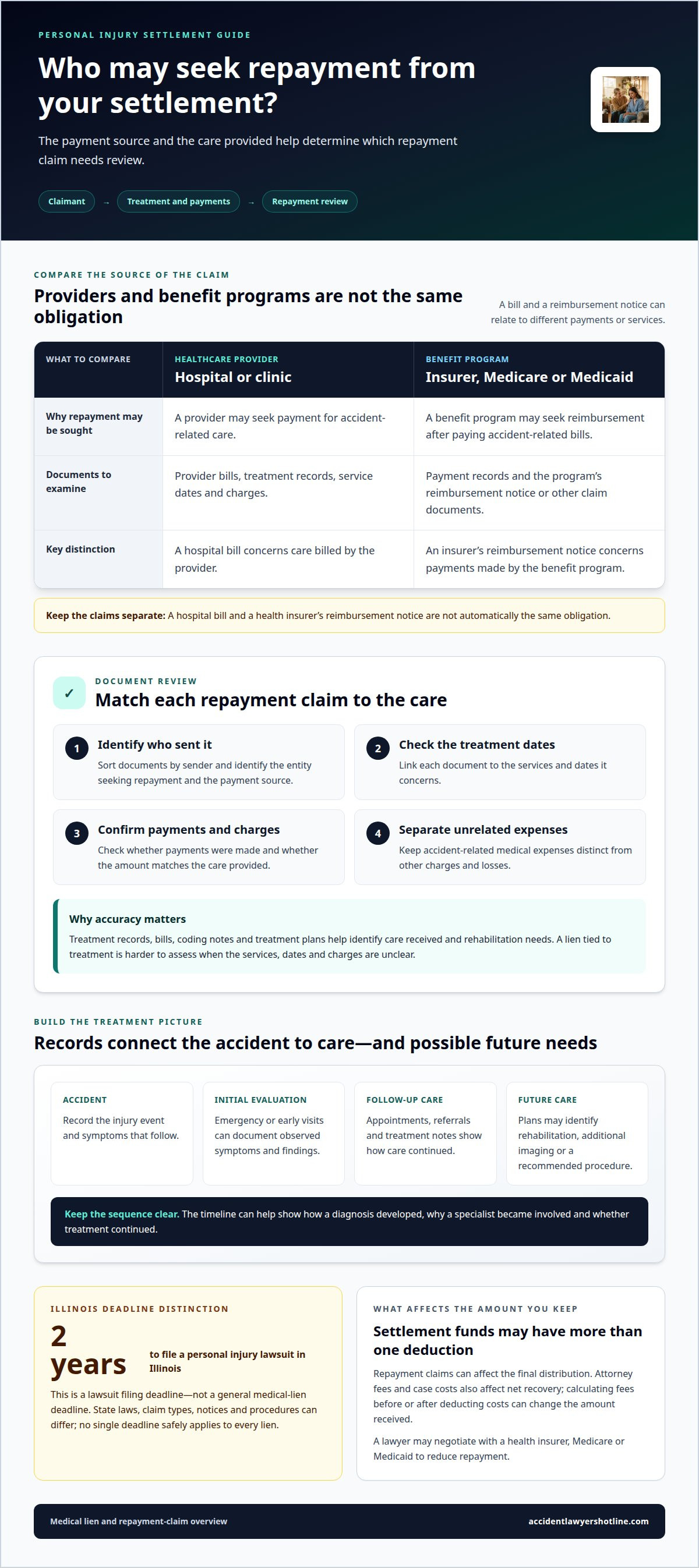
State laws govern how medical liens and repayment claims are asserted, noticed, and resolved. The applicable state and type of claim matter because deadlines and procedures can differ. No single deadline safely applies to every lien. In Illinois, a personal injury lawsuit must be filed within two years, according to the Illinois General Assembly. That is a lawsuit filing deadline, not a general medical-lien deadline.
For your claim, identify the state connected to the injury and the entity seeking repayment. Distinguish any notice or response date on lien paperwork from the lawsuit deadline. An insurer’s repayment claim, for example, may involve different documents from a hospital treatment bill. A personal injury attorney can assess how the relevant rules affect settlement timing.
Who Can Place a Medical Lien
A medical lien or repayment claim may involve a healthcare provider or a benefit program that paid accident-related bills. Hospitals and clinics may seek payment for care, while health insurance, Medicare, or Medicaid may seek reimbursement after a settlement. The entity and payment source matter because they determine which records and repayment terms need review.
Sort each claimant’s documents by sender and treatment date. A hospital bill and a health insurer’s reimbursement notice, for example, are not automatically the same obligation. Confirm which services each document concerns, whether payments were made, and whether the amount matches the care provided. This helps prevent unrelated charges from being treated as accident expenses.
Emergency care belongs in the treatment timeline even when coverage questions remain. Hospitals and clinics in the United States are required by law to provide emergency care to anyone who needs it, regardless of immigration status or health insurance. Keep discharge papers, diagnostic findings, and follow-up instructions from the first visit. These records show what clinicians observed and recommended after the injury.
Build your treatment timeline from dated records: the accident, emergency evaluation, referrals, follow-up visits, and recommended future care. The sequence can show how a diagnosis developed, why a specialist became involved, and whether treatment continued. If symptoms changed or a new procedure was recommended, the related note helps explain why.
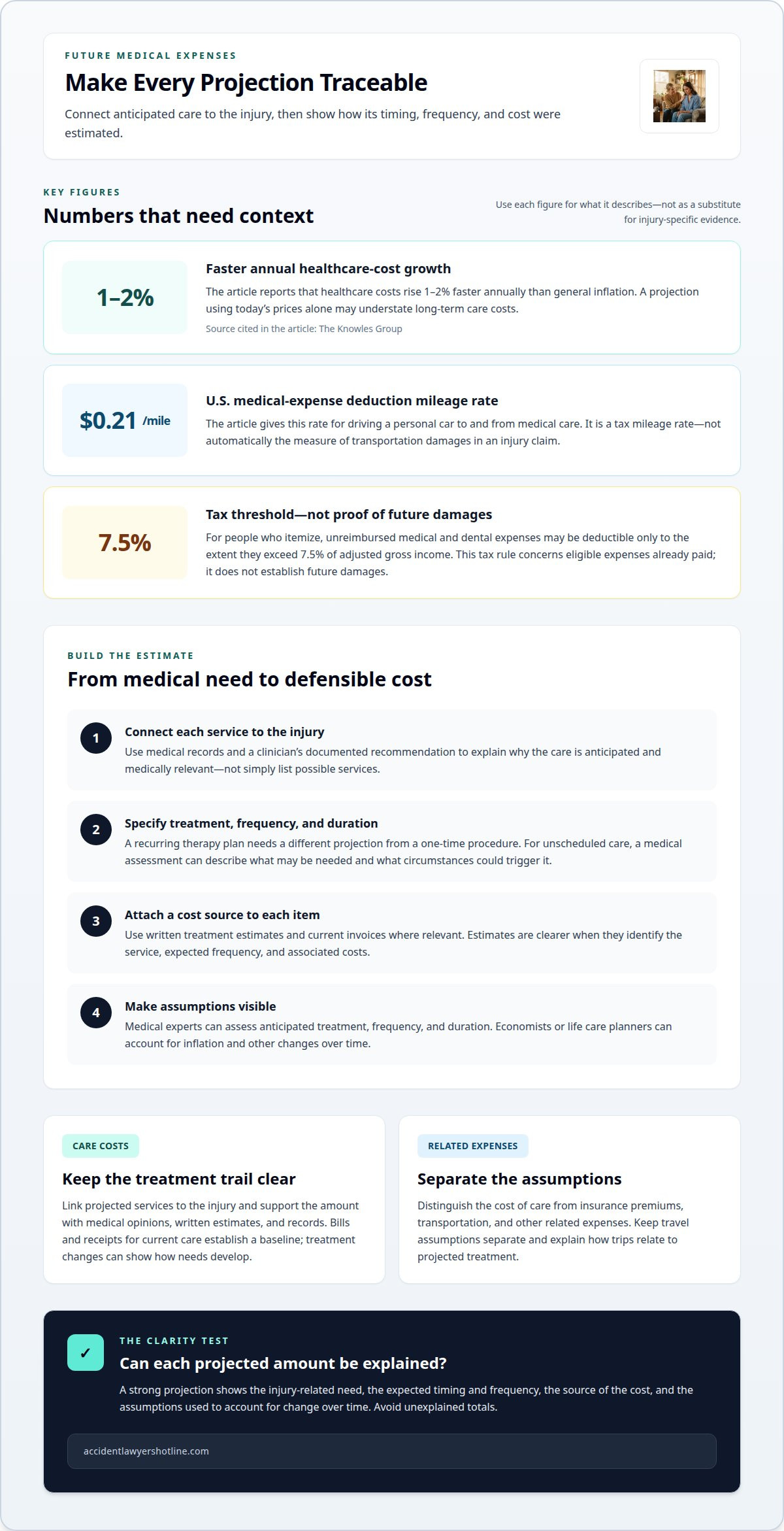
Document future care specifically rather than relying on a vague estimate. A treatment plan may identify rehabilitation, additional imaging, or a recommended procedure. These records help explain why expenses may continue after settlement discussions begin. An insurer assessing the claim can compare the recommendation with completed treatment, current symptoms, and related medical bills.
Coverage and payment records also clarify the settlement picture. Separate charges paid by an insurer from balances billed directly to you, and link each charge to its treatment date. When a personal injury attorney reviews the timeline, organized records can help distinguish care already received from projected care and potential reimbursement demands.
Calculating medical expenses and other losses
A settlement calculation starts by separating accident-related expenses from other losses. Medical bills, treatment records, and coding notes help identify care connected to the incident. A hospital charge for accident treatment, for example, belongs in a different category from care unrelated to the injury. This distinction matters when a provider or benefit program seeks repayment from settlement funds.
Past medical expenses may include ambulance care, hospital stays, doctor visits, surgery, X-rays, nursing care, prostheses, and necessary dental procedures. MedPay may also cover health insurance deductibles or copayments. Match each bill to the service and payment record to show which charges remain unpaid and which an insurer or another benefit source covered.
Medical expenses are only one part of a personal injury claim. A claim may include future medical expenses, lost wages, pain and suffering, and loss of consortium. Punitive damages may apply in cases involving egregious negligence. Keep each category distinct: wage records document income losses, while medical plans describe expected care.
Future expenses need more support than a general expectation of additional treatment. A treatment plan may identify rehabilitation, continuing care, or needs related to a lasting impairment. Medical bills, coding notes, and treatment plans can help assess rehabilitation costs and the effects of permanent disabilities. A documented recommendation for ongoing therapy provides a clearer basis for evaluating future care than an unsupported estimate.
How is the amount of a medical lien calculated, and can it be reduced? The amount generally reflects accident-related care or benefits claimed for repayment, not every medical expense in a person’s history. After settlement, a lawyer may negotiate with a health insurance company, Medicare, or Medicaid to reduce the amount owed.
Compare the claimed amount with the records behind it. Review treatment dates, service descriptions, coding notes, and payment information. If a statement includes care unrelated to the accident, that may affect whether the charge belongs in the injury calculation. Understanding how medical liens work in a personal injury case means separating valid accident-related charges from expenses that do not belong in the claim.
Liens affect your net settlement, not just the total compensation discussed during negotiations. The final distribution may include medical repayment, attorney fees, and case costs. Understanding how medical liens work in a personal injury case helps explain why the gross settlement is not necessarily the amount available to you after distribution.
Negligence and causation also determine which losses belong in the claim. Evidence must connect the defendant’s conduct to the injury and resulting expenses. Organize bills by provider and pair them with relevant treatment records. Keep wage documents separate. This makes it easier to explain how the incident caused specific losses and how repayment demands relate to compensation.
Direct billing and reimbursement
After an accident, some providers bill the auto insurer directly; others bill you, leaving you to seek reimbursement. The billing route affects which records and repayment claims need attention before settlement funds are distributed.
Medical Liens and Letters of Protection
A medical lien seeks payment from settlement funds for care or benefits connected to an injury. A letter of protection is an arrangement for a provider to defer payment while a claim proceeds. The distinction matters: one may be a repayment claim, while the other concerns when a provider expects payment.
For example, a clinic may defer its bill under a letter of protection, while a health plan separately seeks reimbursement for bills it paid. Keep each document with the provider’s name, treatment dates, and stated balance. An attorney can identify the applicable payment arrangement before settlement funds are allocated.
Medicare and Medicaid Liens
When Medicare or Medicaid pays for accident-related care, the program may seek repayment from a later settlement or verdict. The claimed amount should relate to medical expenses connected to the injury. Treatment and payment records help distinguish those charges from unrelated care.
After a claim is resolved, a lawyer may negotiate with Medicare or Medicaid to reduce the amount the injured person must repay. Keep notices and billing records together. This documentation helps show which services relate to the accident and supports review of the requested repayment before distribution.
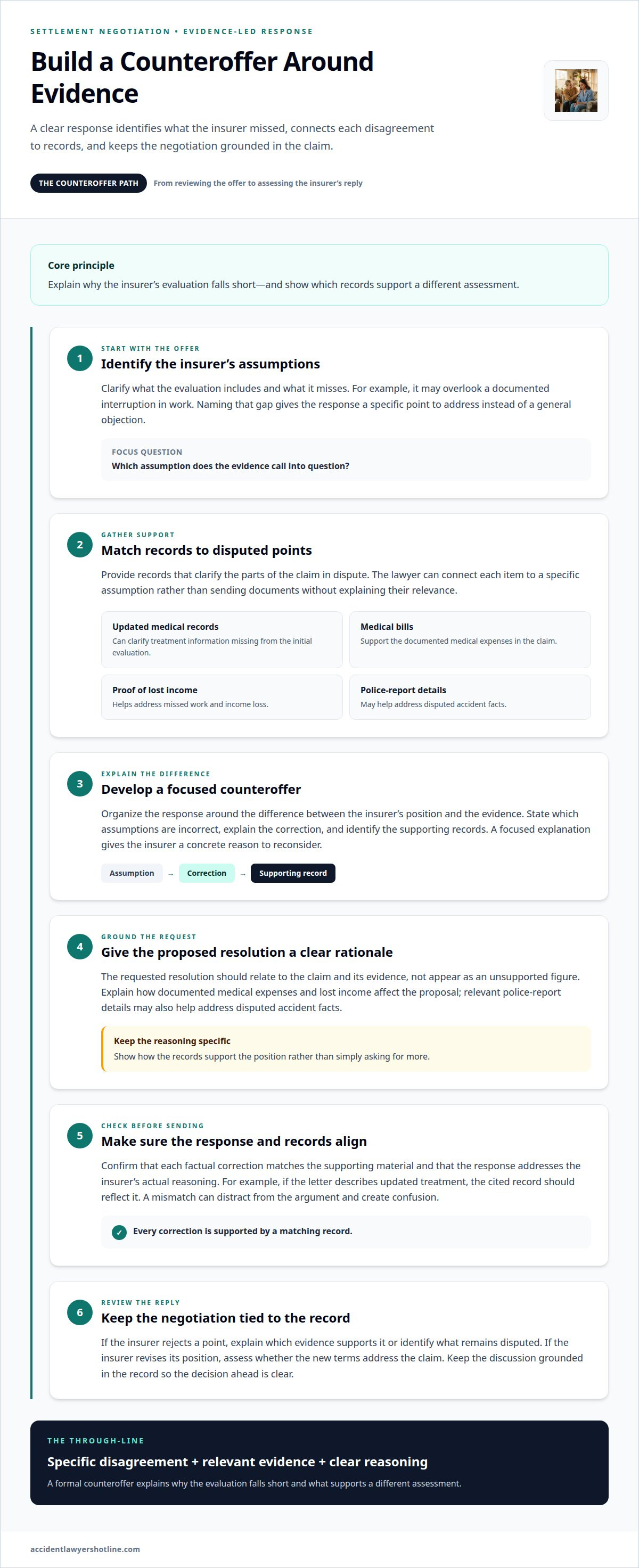
Negotiating and Paying Liens
Medical lien negotiation involves reviewing repayment claims and seeking an agreed amount before settlement funds are distributed. A lawyer can compare the stated balance with treatment records, payments, and settlement terms. This matters because repayment, attorney fees, and case costs can all affect your net recovery.
Once the amounts are addressed, settlement funds can be allocated among the parties or entities with claims. For example, list a provider’s bill and an insurer’s reimbursement demand separately rather than treating them as one charge. The final accounting should show each payment and the amount remaining for the injured person.
Finding Filed Liens
To identify a provider’s or insurer’s lien, review mail and account notices, then compare them with bills from each treatment provider and benefit program. A notice may identify the claimant, services, and amount sought. This matters because a repayment demand can affect distribution even when the provider billed the auto insurer directly.
Ask the provider’s billing department or insurer for an itemized account of accident-related charges and payments. Match each response to service dates and records. If an attorney handles your injury case, share every notice and billing statement. The attorney can request payoff information and address outstanding claims during settlement discussions.
Direct billing does not automatically resolve reimbursement. A provider may bill an auto insurer while a health plan still seeks repayment for benefits it paid. Keep invoices, insurer notices, and payment records together so each demand can be reviewed separately before the settlement is disbursed.
Who can place a medical lien on a personal injury settlement?
Several parties may seek repayment from settlement funds for accident-related medical care. The claimant’s identity matters: a provider’s unpaid bill differs from a health plan’s request to recover benefits it already paid.
A hospital or clinic may seek payment for treatment it provided. For example, an emergency department may have an unpaid charge for services after a collision. Review the statement for the provider’s name, treatment date, service description, and amount claimed. These details help distinguish the bill from other medical expenses and identify the care covered by the repayment request.
A health insurance company may also request reimbursement after paying for care related to the injury. Its claim concerns benefits paid, not necessarily every charge in a provider’s billing records. Compare the insurer’s notice with treatment dates and payment information. If a visit was unrelated to the accident, that distinction matters when deciding which expenses belong in the injury claim.
Medicare and Medicaid may seek repayment if either program paid accident-related medical expenses and the injured person later receives a settlement or verdict. Keep program notices separate from provider invoices. A hospital bill and a Medicare reimbursement notice, for example, may refer to the same treatment but represent different payment records. Review both to avoid confusing the original charge with the amount claimed back.
A provider’s letter of protection may also affect payment, but it is not automatically the same as an insurer’s reimbursement demand. It may describe deferred payment arrangements with a provider while a case proceeds. Read the sender, purpose, treatment references, and payment terms to identify whether the document concerns a provider balance or benefits already paid by a plan.
Who pays the bill can clarify why a repayment request exists. In some injury cases, a doctor or hospital bills the auto insurer directly. In others, the provider bills the patient, who then seeks reimbursement. Keep the auto insurer’s payment records alongside provider statements and health-plan notices. A driver’s insurance paperwork alone may not show every other party seeking repayment.
Build a claimant list from every bill, notice, and account statement. Record the sender, service dates, care involved, payments made, and current amount requested. Compare each entry with medical records and billing documents. An attorney can use this organized documentation to review overlapping charges, identify accident-related care, and address repayment claims before settlement distribution.
Unresolved repayment demands can reduce the amount left after settlement funds are allocated. Health insurers, Medicare, or Medicaid may negotiate repayment after a settlement or verdict, and a lawyer may seek a reduction. Separating each claimant’s request helps clarify which amounts concern treatment, which concern benefits already paid, and what remains to resolve.
Accident Lawyers Hotline
Accident Lawyers Hotline helps people injured in motor vehicle accidents take a practical next step when medical bills or repayment claims complicate a settlement. A case evaluation can help you discuss how the accident, treatment expenses, and settlement concerns fit together. Bring relevant notices or billing records so the discussion can focus on the questions affecting your claim.
If your injuries followed a car, truck, motorcycle, or pedestrian accident, an evaluation can help you understand what to address next. Contact Accident Lawyers Hotline to discuss your accident and claim.
Take the Next Step With a Clearer Plan
A settlement decision can shape what happens after your claim ends. Before moving forward, consider what questions remain about repayment demands, the documents behind them, and how the final distribution may affect you. Understanding how medical liens work in a personal injury case can help you have a more focused conversation about these decisions.
Accident Lawyers Hotline offers case evaluations for car, truck, and motorcycle accidents. If one of these accidents caused your injuries, an evaluation can help you discuss your situation and identify questions to address as your claim moves forward. You don’t need to sort through every detail alone before seeking guidance.
Contact Accident Lawyers Hotline to discuss your accident and possible next steps. A calm, informed conversation can help you move forward with greater clarity.
Frequently Asked Questions
What is a medical lien in a personal injury case?
A medical lien is a claim against personal injury settlement funds for repayment of accident-related medical care or benefits. A provider might seek payment for treatment that remains unpaid, while a health plan might seek reimbursement for care it already covered. These are separate claims, even if they concern the same visit. Reviewing who paid and what remains due helps clarify each demand.
How do health insurance liens and reimbursement rights work after a personal injury settlement?
If a health insurer paid for care connected to an accident, it may seek reimbursement from a later settlement or verdict. Review the request against the treatment and payments involved. For example, compare a reimbursement notice with the insurer’s payment history and dates of care. This can help determine whether a listed service relates to the injury and whether the same expense appears elsewhere.
What happens if a personal injury case settles before medical treatment is complete?
Before agreeing to settle, account for treatment that is planned or ongoing. A settlement can resolve the injury claim while appointments or rehabilitation continue, so consider the documented care needs when evaluating the amount. For example, a treatment plan recommending additional rehabilitation provides context for expected expenses. Discuss how unresolved bills and future care fit into the proposed settlement before accepting its terms.
How do attorney fees and case costs affect medical lien repayment?
Attorney fees and case costs affect your net settlement, and calculating fees before or after costs changes your recovery. A lawyer may negotiate with health insurers, Medicare, or Medicaid to reduce repayment.
Were You Injured in an Accident?
Get a free, confidential case evaluation. No upfront fees.
Get Free Case Evaluation