How Long After a Car Accident Can You File a Claim? 2026 Guide
Wondering how long after a car accident can you file a claim? Learn key deadlines, insurance notice rules, and statute of limitations in this clear guide.
What if the deadline you found online applies to a lawsuit, not an insurance claim? If you’re asking how long after a car accident can you file a claim, the answer depends on where the crash happened, the type of claim, and who must receive notice. Different deadlines may apply, and waiting for symptoms to appear or treatment to begin can make the timeline harder to assess.
It’s understandable to want one clear timeline, especially when online advice points in different directions. This guide explains how insurance notice deadlines differ from lawsuit filing deadlines, why state rules and special circumstances can change the timeline, and what to do if your injuries weren’t obvious right away.
You’ll also learn which dates and records to gather for a case evaluation, including the crash date, insurance communications, and treatment history. Claims involving government entities or wrongful death may follow separate rules, so general timelines aren’t a substitute for advice about your situation. A timely case evaluation can help you discuss relevant deadlines with an independent attorney.
Key Takeaways
- There’s no single answer to “how long after a car accident can you file a claim”; the deadline depends on your state and the type of claim.
- An insurance notice deadline is separate from the deadline to file a lawsuit. Identify which step applies to your situation.
- Special circumstances, including delayed symptoms or a government entity’s involvement, may affect the timeline.
- Gather the crash date and location, information about the parties, policy details, and insurer correspondence for a case review.
- A case evaluation can help you discuss relevant dates and possible exceptions with an independent attorney.
How long after a car accident can you file a claim? Start with the right deadline
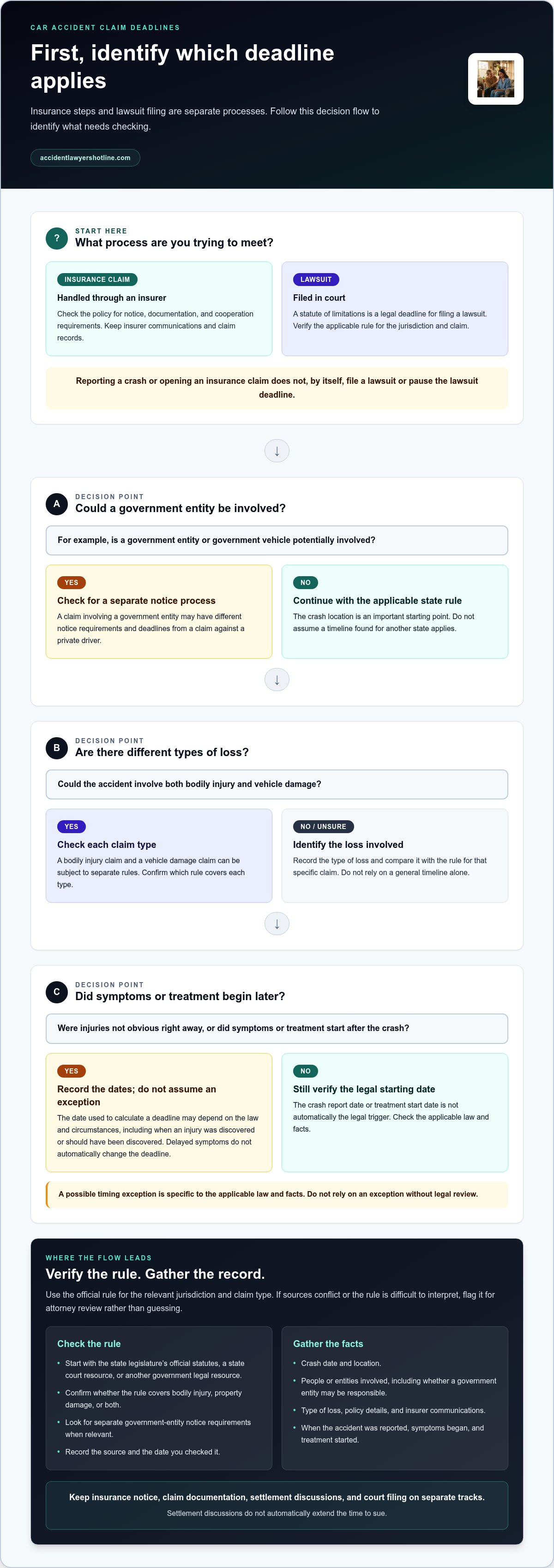
There is no single deadline for every U.S. car accident claim. The answer to “how long after a car accident can you file a claim” depends on the jurisdiction, the type of claim, and the circumstances. A statute of limitations is a legal deadline for filing a lawsuit in court. It does not set every deadline for dealing with an insurer.
Keep the different steps separate. You may need to notify an insurer, submit information or forms to support an insurance claim, discuss a possible settlement, or file a lawsuit. Each can have its own rules and timeline. Telling an insurer about the crash is not the same as filing a court complaint, and settlement discussions do not automatically extend the time to sue.
Verify the filing deadline for the jurisdiction that applies to your accident before relying on a general timeline.
Does filing an insurance claim mean filing a lawsuit?
No. An insurance claim is handled through an insurer; a lawsuit is filed in court. Your policy may set notice, documentation, or cooperation requirements, so review its terms carefully. Reporting the crash or opening a claim does not, by itself, start a lawsuit or pause the lawsuit deadline. Keep copies of your policy, claim records, and insurer correspondence to track each process separately.
Why is there no single nationwide filing deadline?
State law generally sets the limitation period for personal injury lawsuits, but the rule can depend on the claim and who may be responsible. An accident involving a government entity, for example, may involve a different notice process from a claim against a private driver. The crash location is an important starting point. If more than one jurisdiction may be involved, the issue may need closer legal review. Don’t assume a timeline you saw for another state applies to your case.
Different claims arising from one accident may also have different deadlines. A bodily injury claim and a vehicle damage claim can be subject to separate rules. The date used to calculate a deadline may depend on the applicable law and circumstances, such as when an injury was discovered or should have been discovered. Exceptions are specific and may not apply in every state, so delayed symptoms do not automatically change the deadline.
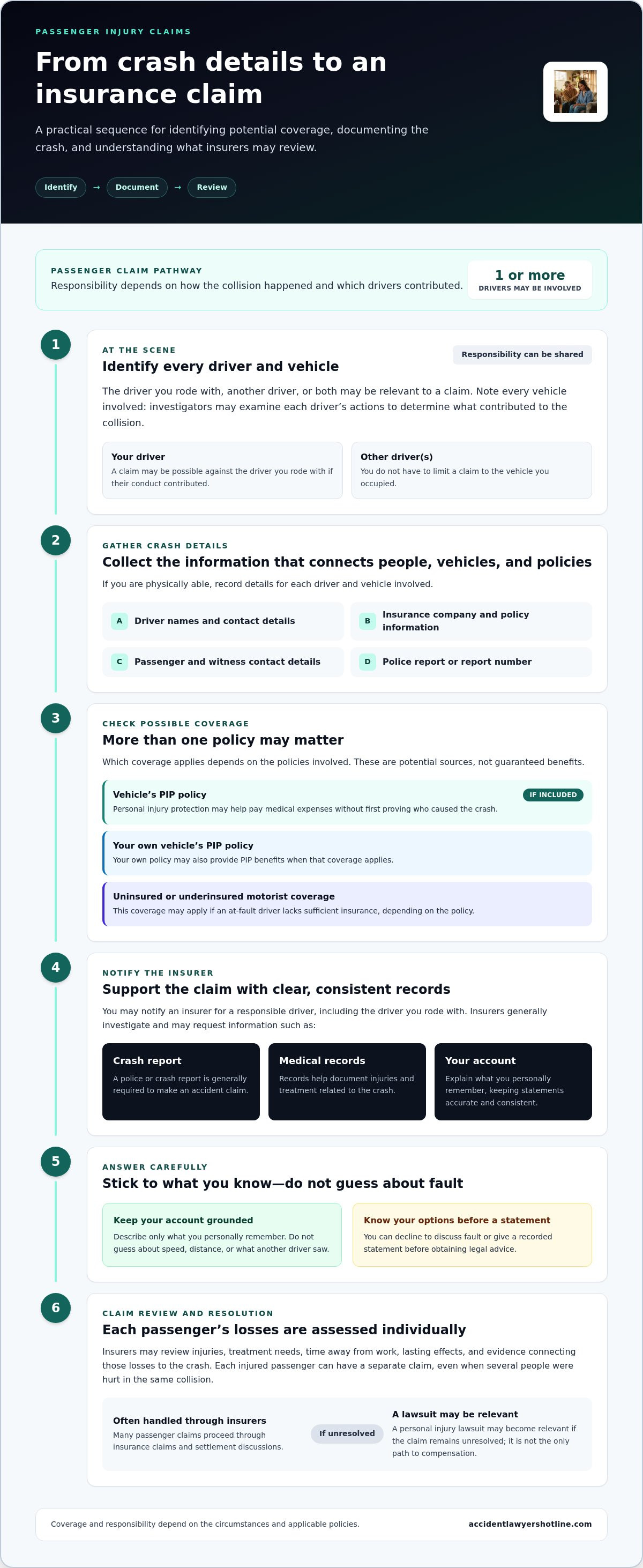
For a practical first review, write down the crash date and location, identify the people or entities involved, and gather policy details and insurer communications. Note when you reported the accident and when symptoms or treatment began. These facts can help identify which deadlines need attention. If you’re unsure which process applies, a case evaluation can help you discuss the jurisdiction, claim type, dates, and possible exceptions with an independent attorney.
Which car accident claim deadline applies in your state?
The deadline depends on the law that applies to your accident and the type of claim you may bring. A state-by-state chart is useful only if each entry is checked against current official sources. A number copied from a general guide may leave out differences between injury and property damage claims, changes in the law, or special procedures for claims involving public entities.
Publication note: October 2026. Verify the rule and its source before relying on a state-specific deadline. A useful chart should identify the claim type, the event that starts the legal clock, the official statute or government source, and any issue that needs legal review. If those details haven’t been verified, treat the entry as unresolved rather than as a confirmed deadline.
How to verify the deadline where the crash happened
Start with the state legislature’s official statutes, a state court resource, or another government legal resource. Find the rule for the specific claim, then confirm whether it covers bodily injury, property damage, or both. If a government entity may be responsible, look for separate notice requirements and deadlines. A general limitations period may not describe those additional steps.
Record the source and the date you checked it. If the statute is difficult to interpret or official sources appear to conflict, flag the issue for an attorney rather than guessing.
What date starts the legal clock?
The starting date depends on the applicable law and facts of the claim. Don’t assume the date you reported the crash to an insurer or started treatment controls the lawsuit deadline. Those dates may matter to other parts of a claim, but they aren’t automatically the legal trigger. Write down each relevant date and keep supporting records.
Delayed discovery or another special timing rule may affect some cases. Whether an exception applies is a legal question, not a reason to assume the deadline starts later. Have an attorney review the facts and applicable rule before relying on an exception.
To assess how long after a car accident can you file a claim, gather the crash date and location, the parties involved, the type of loss, and any records showing when an injury was discovered. Compare those facts with the official rule for the relevant jurisdiction. If the crash crossed state lines or involved a government vehicle, note that for review. This information can help identify which rule needs closer attention.
Accident Lawyers Hotline evaluates motor vehicle accident cases and connects people with independent attorneys for legal assistance. A car accident case evaluation can help you discuss the jurisdiction, claim type, dates, and possible exceptions with an attorney. It’s a practical way to seek case-specific guidance rather than relying on a general chart as legal advice.
Insurance notice, injury claims, and lawsuits: compare the deadlines
“Claim deadline” can mean different things, and meeting one deadline doesn’t necessarily meet another. Use this comparison to identify what you need to check. The actual time limit depends on the policy, claim type, jurisdiction, and facts of the accident.
| Step | What the deadline concerns | What to verify |
|---|---|---|
| Notice to an insurer | Reporting the crash under an applicable policy or insurance process | Policy notice terms and any applicable state requirements |
| Bodily injury lawsuit | Filing a court case seeking compensation for injuries | State law, the claim’s facts, and any special rules |
| Property damage lawsuit | Filing a court case for damage to a vehicle or other property | Whether the jurisdiction sets a separate deadline from injury claims |
Notifying an insurer is not necessarily the same as filing suit. An insurance claim, settlement demand, or negotiation may proceed outside court. Don’t assume that starting those discussions pauses or extends the deadline to file a lawsuit. A demand letter or ongoing negotiations may not preserve the right to sue. If a court deadline could apply, identify it separately and get case-specific guidance.
When should you report the crash to an insurer?
Prompt notice can help document the event and begin the insurer’s claim-handling process. The correct timing depends on the policy and any applicable state reporting rules, so there’s no universal number of days to rely on. Review the policy’s notice and cooperation terms, follow applicable reporting requirements, and keep a copy of what you submit, the date you submit it, and any response.
Can property damage and injury claims have different deadlines?
Yes. A jurisdiction may set different lawsuit deadlines for bodily injury and property damage claims. Don’t treat the vehicle damage process as a substitute for preserving an injury claim. An insurer may address repairs while symptoms develop or treatment continues, but that process doesn’t automatically preserve a separate lawsuit deadline. Check each claim category under the law that applies.
If you’re asking how long after a car accident can you file a claim, first clarify which step you mean: notifying an insurer, pursuing an insurance claim, or filing a lawsuit. Then confirm the relevant policy terms and legal deadline separately. Keep insurer letters, claim numbers, repair records, medical records, and notes of settlement discussions together. These records can help an independent attorney review the timelines that may apply, especially if both injury and property damage issues are involved.
What can change a car accident claim deadline: and what should you do now?
A deadline may depend on more than the usual time limit for a lawsuit. The type of claim, the parties involved, and specific facts can affect which rules or procedures need attention. Delayed symptoms can make it harder to know what information matters, but treatment dates or insurer communications should not be treated as automatically changing a legal deadline.
Use this plan to organize the facts and preserve your options:
- Write down the crash date and location. Include the state and, if known, the road or address where the collision occurred.
- Identify everyone involved. Record the drivers, vehicle owners, employers, and any public agency that may be connected to the crash.
- Gather insurance records. Save policy details, claim numbers, notices, letters, emails, and notes from calls with insurers.
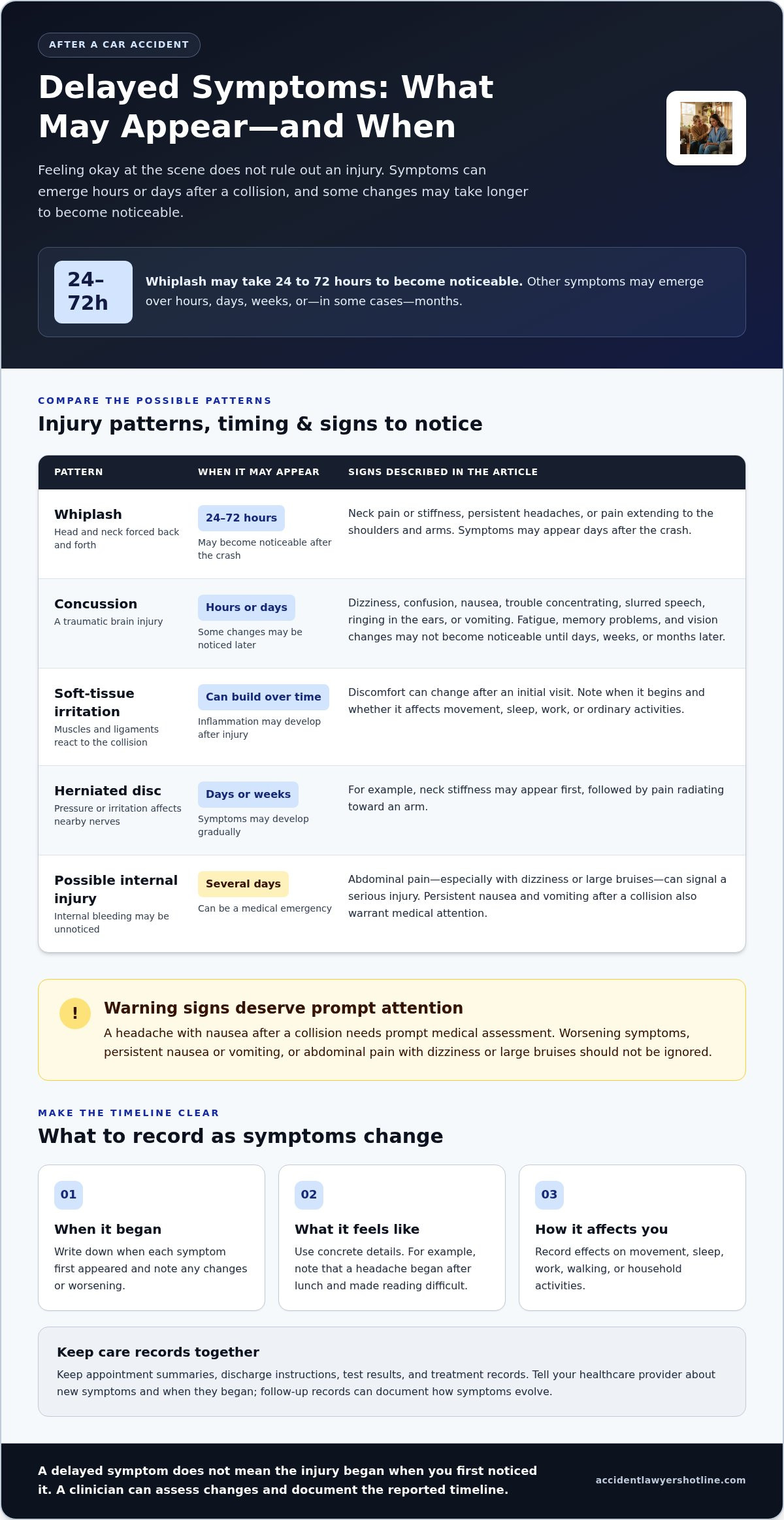
- Track symptoms and care. Note when symptoms began, appointment and treatment dates, and changes in your condition. These dates can help explain the timeline, but don’t assume they reset or extend a deadline.
- Preserve supporting records. Keep original documents and messages, along with photos, bills, medical records, witness details, and any police or incident report number.
Do delayed injuries or special circumstances extend the deadline?
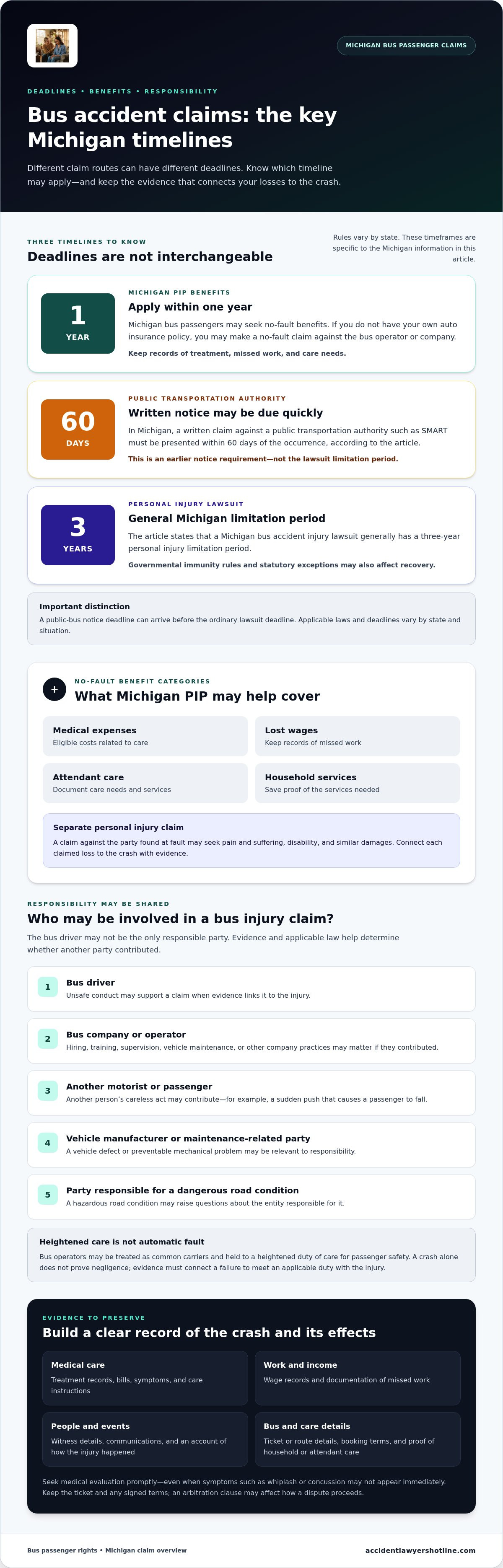
Not automatically. Some jurisdictions may have rules for delayed discovery, minors, or people with legal incapacity, but the requirements and effect vary. A death may involve a separate wrongful death claim with its own deadline. Claims involving a government defendant can also require a distinct notice process, sometimes on a shorter timeline. Treat these circumstances as reasons to seek prompt, state-specific review, not as proof that an exception applies.
What information should you organize before seeking guidance?
Put the records in date order and create a simple timeline. Include the crash, insurer notices, symptom onset, medical visits, and important communications. Keep the originals unchanged and store copies securely. A clear timeline can help an attorney identify which dates may matter and which rules need review.
If you’re still gathering crash-scene details, the guide to what to do immediately after a motor vehicle accident can help you organize relevant information. Don’t delay getting deadline-specific guidance while you collect records, especially if a government entity may be involved or someone injured was a minor.
Accident Lawyers Hotline evaluates motor vehicle accident cases and connects people with independent attorneys for legal assistance. A car accident case evaluation can help you discuss the crash details, relevant dates, and possible special rules with an independent attorney. The evaluation doesn’t establish that an exception applies, but it can help identify what needs review.
Get a car accident case evaluation before time limits become urgent
Deadlines can be difficult to sort out while you’re managing injuries, repairs, and insurer communications. A case evaluation can help turn scattered information into focused questions about your situation. It’s a referral service, not a law firm. An evaluation doesn’t guarantee that an attorney will take a case or that a claim will succeed.
What can a case evaluation help clarify?
An attorney can review where the crash happened, what type of claim may be involved, the dates you’ve recorded, and whether special circumstances need closer attention. That review can help identify questions about deadlines and claim procedures for further legal assessment. Share what you know, even if some details are missing. Clear dates and documents can focus the discussion, but only an attorney reviewing the relevant law and facts can assess how they apply to your circumstances.
How to take the next step without guessing at a deadline
You don’t need to wait for symptoms to fully develop, settlement talks to end, or an insurer to make a decision before seeking guidance about time limits. Those events don’t necessarily determine or extend a lawsuit deadline. If you’re unsure how long after a car accident can you file a claim, a case-specific review can help you identify the questions that need answers. Gather the crash location and date, parties involved, policy information, insurer messages, and any medical timeline you have.
An attorney can review the jurisdiction, claim type, relevant dates, and possible exceptions. No review can promise a particular outcome, but discussing these questions sooner can help you make an informed decision. Request a car accident case evaluation to discuss your circumstances.
Connected attorneys handle injury cases on a contingency basis, meaning there are no fees unless the case is won. The specific terms are set out in the attorney-client agreement, so review that agreement with the attorney rather than assuming every arrangement works the same way. The contingency fee guide explains the general structure and questions to consider.
You don’t have to resolve every legal question on your own before asking for help. Start with the facts and dates you have, and let an independent attorney review which rules may apply. A timely conversation can provide direction without mistaking general information for legal advice.
Take the next step with clarity
Uncertainty about a deadline shouldn’t leave you feeling stuck. If you’re still asking how long after a car accident can you file a claim, focus on guidance about your specific circumstances rather than relying on a general timeline. Accident Lawyers Hotline evaluates car accident cases and connects people with independent attorneys. An attorney can review the facts and explain which questions need attention, without promising a particular result.
Connected attorneys handle cases on a contingency basis, meaning there are no fees unless the case is won. Review the specific terms in the attorney-client agreement before deciding how to proceed.
Request a car accident case evaluation to take a practical next step. You can begin with the information you have and move forward with greater clarity.
Frequently Asked Questions
How long do I have to file a car accident claim in the United States?
There’s no single deadline for every U.S. car accident claim. If you’re asking how long after a car accident can you file a claim, first identify whether you mean an insurance claim or a lawsuit, then check the law tied to the crash and claim type. Bodily injury and vehicle damage claims, for example, may have different lawsuit deadlines. Note the crash location, date, and types of loss before seeking case-specific guidance.
Is the deadline for an insurance claim the same as the statute of limitations?
No. An insurance policy or state rule may set a timeline for reporting an accident or cooperating with an insurer. A statute of limitations generally sets a deadline to start a lawsuit. Submitting a claim to your own insurer doesn’t automatically mean you’ve filed a case in court. Keep the policy, claim confirmation, and dated communications together, and track any court deadline separately.
Can I file a car accident injury claim if symptoms appeared later?
You may still have options, but symptoms appearing later don’t automatically change the legal deadline. Write down when you first noticed each symptom and when you sought care. For example, if neck pain began days after a collision, dated treatment notes can help document that sequence. They don’t establish when the legal clock began. Ask an attorney to review the timing under the law that applies to your case.
What happens if I miss the deadline to file a car accident lawsuit?
Missing a filing deadline can put your ability to pursue a lawsuit at risk, but the legal effect depends on the applicable law and facts. Don’t assume a deadline has passed based only on an online date calculator, or assume an exception will rescue a late claim. Gather court papers, insurer letters, and accident records, then seek prompt legal guidance. An attorney can assess the relevant rule and any potential exception.
Does filing an insurance claim protect my right to sue later?
Not necessarily. A claim number or an adjuster’s ongoing review doesn’t, by itself, show that a lawsuit was filed or that its deadline is paused. That remains true if the insurer has requested records or made a settlement offer. Save each communication and note when it arrived. If negotiations continue, ask an attorney to review the court filing deadline rather than treating insurer activity as an extension.
Do car accident claims against a government entity have different deadlines?
They may involve a separate notice process or a shorter timeline, depending on the jurisdiction and public entity involved. A collision with a government-operated vehicle is one reason to identify who owns or operates it, if known, and preserve any incident number or agency correspondence. Don’t rely on the usual deadline for a claim against a private driver. Seek prompt legal review of the relevant government-claim procedures.
Should I wait for my medical treatment to end before filing a car accident claim?
Don’t wait for treatment to end before checking which deadlines may apply. You can continue following your care plan while organizing appointment dates, bills, and records of changes in your symptoms. For example, keep a dated record if your treatment plan changes or a new provider becomes involved. These details can help explain your recovery, but they don’t automatically extend a lawsuit deadline. Get legal guidance about timing separately from treatment decisions.
Were You Injured in an Accident?
Get a free, confidential case evaluation. No upfront fees.
Get Free Case Evaluation