Passenger in a Car Accident: Who Pays Your Medical Bills, and Lost Wages
Wondering what happens if you are a passenger in a car accident? Learn who pays medical bills, how insurance claims work, and how to recover lost wages now.
If you’re wondering what happens if you are a passenger in a car accident in the United States, you may be able to seek compensation from the driver you rode with, another driver, or both, depending on who caused the crash. Personal injury protection (PIP) may help pay medical expenses without requiring you to prove fault, if the applicable policy includes it. Passengers generally aren’t responsible for a collision, but conduct such as distracting the driver or interfering with the vehicle may affect liability.
It’s understandable to worry about who will pay for treatment and missed income, especially when the crash involved someone you know. Being related to or friends with a driver doesn’t automatically prevent you from pursuing a claim. This article explains how responsibility and insurance may work, what compensation can include, and what practical steps can help protect your rights after a crash.
Key Takeaways
- You may be able to pursue an injury claim against the driver you rode with, the other driver, or both, depending on who caused the crash.
- Personal injury protection may help cover medical expenses without requiring you to prove fault. Other coverage may also apply based on the policies involved.
- Compensation may include medical bills, lost income, reduced earning capacity, and pain and emotional distress.
- Seek medical care promptly and keep records, receipts, photos, witness details, and the police report to support your claim.
- Before discussing fault or giving a recorded statement to an insurer, understand your rights and consider getting legal guidance.
Potentially responsible drivers and insurance coverage
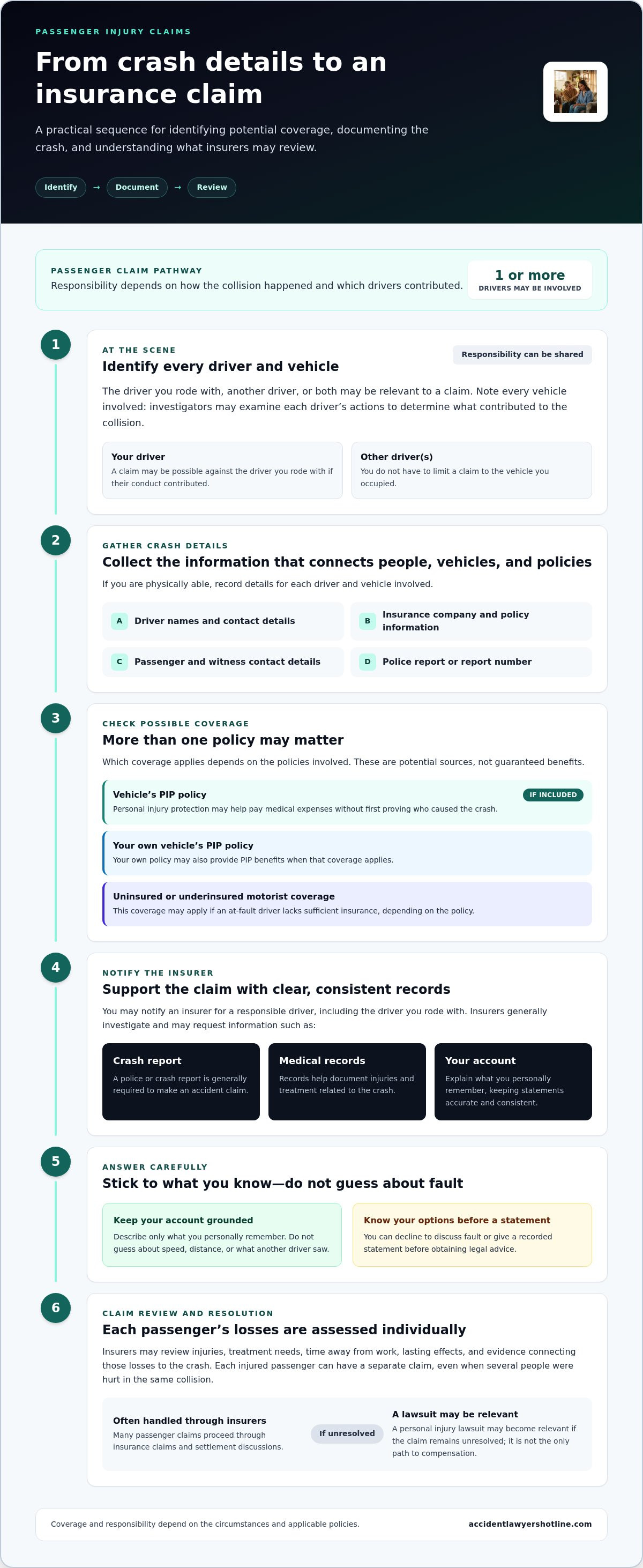
When considering what happens if you are a passenger in a car accident, responsibility for your injuries depends on how the collision happened and which drivers contributed to it. The driver you rode with and another driver may both face claims, so identify every vehicle and insurer involved.
Could a passenger be partly responsible for injuries, for example, for not wearing a seat belt? A passenger may share responsibility if their conduct contributed to the crash, such as distracting the driver or interfering with the vehicle. Seat-belt use is a separate issue from identifying who caused the collision, so don’t assume it automatically makes you responsible for the crash.
Identifying Potentially Responsible Drivers
Identifying potentially responsible drivers means determining whose actions contributed to the collision and your injuries. As a passenger, you may generally make a claim against both the driver of the vehicle you occupied and another driver involved. For example, if one driver runs a red light while your driver also acts negligently, investigators may examine both drivers’ conduct. This matters because each driver’s insurance may be relevant to your claim.
Requesting Driver and Insurance Details
Requesting driver and insurance details means collecting the information needed to identify policies and document the crash. If you’re physically able, get each driver’s name, contact details, insurance company, and policy information. Ask for contact details from other passengers and witnesses, too. You may also request the official police report or report number. These details help connect your account of the crash with the drivers and vehicles involved.
Insurance Coverage for Passengers
Passenger coverage may include benefits under the vehicle’s personal injury protection (PIP) policy, if it has one. Your own vehicle’s policy may also provide PIP benefits when that coverage applies. These benefits can help pay medical expenses without first proving who caused the crash. If an at-fault driver lacks sufficient insurance, your uninsured or underinsured motorist coverage may also apply, depending on the policy.
Filing Claims Against Drivers’ Insurers
Filing a claim means notifying an insurer that you were injured and seeking payment for covered losses. You may pursue a claim through the insurance of a responsible driver, including the driver you rode with. Insurers generally investigate the crash and may request the police report, medical records, and your account. Insurance companies generally require a police or crash report to make an accident claim. Keep your statements accurate and consistent.
An adjuster may ask for a recorded statement or ask you to discuss fault. You can decline to discuss fault or give a recorded statement before obtaining legal advice from professionals at Accident Lawyers Hotline. Don’t guess about speed, distance, or what another driver saw; explain only what you personally remember. Many passenger claims proceed through the involved auto insurers and settlement discussions. A personal injury lawsuit may become relevant if the claim remains unresolved, but filing one is not the only path to compensation.
What Happens If You Are a Passenger in a Car Accident?
A passenger can pursue an injury claim against one or more drivers, depending on who caused the crash. In Texas, the driver you rode with may be responsible, even if another vehicle was also involved.
Claims Involving Multiple Passengers or Drivers
These claims involve injuries to passengers in one or more vehicles and the drivers whose conduct contributed to the crash. Each injured passenger can have a separate claim based on their injuries and losses. If several drivers may share liability, insurers investigate each driver’s actions and the evidence. Identifying every potentially responsible driver helps show which insurance policies could apply to your losses.
Claims When the Passenger’s Driver Is at Fault
If the driver you rode with caused the crash, you can generally pursue a claim against that driver’s insurer for your injuries. Being friends with, related to, or acquainted with the driver doesn’t automatically remove your right to make a claim. For example, a passenger hurt when their driver loses control may have a claim based on that driver’s conduct. The insurer will review the evidence and injury records when assessing liability.
Claims Against the Other Driver
You may also bring a claim against another vehicle’s driver if their actions contributed to the collision. You don’t have to limit a claim to the driver of the vehicle you occupied. For example, if another driver’s unsafe turn caused the crash, that driver’s insurer may investigate your injuries and the circumstances. If both drivers contributed, evidence about each person’s conduct can affect how the claims proceed.
Potential Values of Passenger Injury Claims
A claim’s potential value reflects the injuries, treatment, lost income, lasting effects, and evidence connecting those losses to the crash. These figures describe broad estimates, not a formula for your claim.
Insurers assess each passenger’s losses individually, even when several people were hurt in the same crash. Medical records, treatment needs, time away from work, and long-term limitations help explain why claims can differ. A lawyer reviewing the evidence can help assess the claim’s value and whether a settlement or personal injury lawsuit may be appropriate.
A single-vehicle crash can still lead to a passenger injury claim. If the driver caused the collision, you may pursue a claim against that driver’s insurer. The absence of another vehicle doesn’t, by itself, decide liability or prevent a claim. The investigation focuses on how the vehicle left the road or collided with an object, and whether the driver’s conduct caused your injuries.
When several drivers or passengers are involved, keep your own medical and wage records separate from other people’s. A review of your passenger injury claim can help clarify which drivers and policies may be relevant.
Compensation for medical bills, lost wages, and pain and suffering
An injured passenger may seek compensation for medical expenses, missed income, reduced earning potential, and physical or emotional harm. The losses depend on the injury, treatment, impact on work, and available insurance coverage.
Medical Expense Compensation
Compensation for medical expenses may cover crash-related care, from emergency treatment to physical therapy. Bills can arrive before an insurance claim or settlement is resolved. Eligible expenses may include medications, medical tests, procedures, and hospital care. Keep bills, receipts, and treatment records together, and note which provider treated each injury.
MedPay may cover a passenger’s medical bills before an accident settlement. Personal injury protection may also help pay medical expenses under an applicable policy. These benefits can help address treatment expenses while a liability claim is under review. Track any payments you receive so they can be considered alongside other compensation.
Lost Wages and Reduced Earning Potential
Lost-wage compensation addresses income missed while an injury prevents you from working. Reduced earning potential concerns a lasting injury that limits your ability to earn as before. Both may matter when your recovery affects current pay or future work. Save pay records and ask your employer to document missed shifts, duties you cannot perform, and any change in hours.
For example, a passenger with a wrist injury may miss work during treatment, then struggle with tasks that require regular lifting. Records connecting the injury to missed income help explain the loss. If the injury affects future work, evidence of continuing limitations and their effect on your occupation can clarify the claim.
Pain and Emotional Suffering
Compensation for pain and emotional suffering addresses the physical discomfort and emotional effects of an injury. A passenger’s losses can extend beyond bills and paychecks. Ongoing pain, disrupted sleep, anxiety about travel, or difficulty returning to daily activities may describe the impact. Treatment notes and a personal record of symptoms can help show how those effects change over time.
Describe specific changes rather than relying on general labels. For instance, record when pain interrupts sleep or prevents a usual activity. Share those effects during medical appointments so they appear in your treatment record. This evidence helps show the human impact alongside financial expenses.
Potential Compensation for Passenger Injuries
Potential compensation may include documented losses tied to the crash, such as medical expenses, lost wages, future medical costs, diminished earning capacity, pain, and emotional distress. The injury’s severity, treatment needs, duration, and effect on work all matter. A passenger with long-term limitations may have different damages from someone whose injury heals after brief treatment.
Organize records by category: medical bills and receipts, proof of missed income, and notes about lasting symptoms. Insurers assess documented losses and applicable coverage when evaluating a claim. Keeping each category clear helps show how the injury affected your health, finances, and daily life.
What Do I Do if I Was Injured as a Passenger in a Car Crash?
Get medical care promptly, preserve evidence, and keep records related to your injuries and losses. If the crash happened in Maryland, specific rules may affect your right to pursue a personal injury lawsuit.
Medical Care and Injury Documentation
Getting medical care and documenting your injuries means being evaluated and keeping a clear record of your symptoms, treatment, and expenses. Prompt treatment can help connect an injury to the crash, even when symptoms seem minor at first. Some serious injuries can become apparent hours or days later, so don’t ignore new pain or changes.
Save medical records, bills, receipts, and instructions from your healthcare providers. Photograph visible injuries as they change, and keep notes about symptoms that affect sleep, movement, or daily tasks. If a witness saw the crash, keep their contact details with your police report and insurance information.
Legal Help After a Passenger Injury
Legal help can clarify the claim process when an insurance company disputes fault, questions your treatment, or offers a settlement. An attorney can review the evidence, explain how personal injury law applies, and assess whether an offer accounts for your documented losses. This can matter when several drivers or insurers are involved, or when injuries continue to affect work and daily activities.
In Maryland, a passenger may bring a claim against the driver they rode with or another driver, depending on who caused the crash. Maryland follows contributory negligence rules, so a finding that you contributed to the accident can affect your right to recover. Most civil lawsuits in Maryland must be initiated within three years from the date the claim arises, according to the Maryland General Assembly.
Making an Injury Claim Without a Lawyer
Does a passenger need a lawyer to make a car accident injury claim? No. You can contact an insurance company, provide supporting records, and pursue a settlement without filing a lawsuit. An attorney isn’t a required first step for every claim.
Still, consider legal advice if the fault driver denies responsibility, an insurer challenges your injuries, or the proposed settlement fails to address ongoing care and lost income. Before accepting an offer, compare it with your medical bills, wage records, and treatment outlook. In Maryland, timing and any dispute about your own conduct can also affect a lawsuit, so act promptly when those issues arise.
Keep communications organized: record the insurer’s name, claim number, adjuster’s contact details, and each document you send. Don’t guess about details you can’t remember. If an adjuster asks for a recorded statement, understand what the insurer is asking and how your account may affect its investigation before responding.
Passenger rights after a Texas car accident
In Texas, an injured passenger may seek compensation even when the driver they rode with caused the crash. You may generally make a claim against that driver, another involved driver, or both. The key issues are who caused the collision, what losses the crash caused, and which insurance coverage applies.
You have a right to pursue an insurance claim for your injuries. A passenger generally isn’t responsible for a crash simply because they were in the vehicle. However, conduct such as distracting the driver, encouraging reckless driving, or interfering with the vehicle may lead to partial liability. Texas does not treat a passenger as solely responsible based only on being a passenger.
Medical expenses may be reimbursed through the vehicle’s medical coverage or personal injury protection (PIP), if available, without first proving who caused the crash. A Texas passenger may also be able to seek PIP benefits under their own vehicle’s policy when they have that coverage. These benefits may help address medical bills while the liability investigation continues. Keep records of bills and payments to track which losses remain unpaid.
Evidence helps establish how the crash happened and how it affected you. If you’re able, collect every driver’s name and insurance details, along with witnesses’ contact information. Request the police report or report number. Preserve photographs of vehicle positions, road conditions, and visible injuries, as well as medical records and receipts. These details can help explain your account if an insurer disputes who caused the collision.
You can make an insurance claim without immediately filing a lawsuit. An insurer may investigate the crash, review your records, and discuss a settlement. Accepting a settlement may provide compensation sooner than going through court, but consider whether it accounts for your documented losses before agreeing. You may decline to discuss fault or provide a recorded statement to an adjuster before speaking with an attorney.
Keep the claim organized with a simple record of:
- The police report or report number, and each driver’s insurance information.
- Medical visits, bills, receipts, and missed work related to your injuries.
- Insurer communications, including requests for documents or statements.
If evidence is disputed or an insurer questions your injuries, get help reviewing your Texas passenger claim before deciding how to respond. A careful review can help you understand the coverage, evidence, and losses involved.
Accident Lawyers Hotline: Car Accident Case Evaluation
Accident Lawyers Hotline offers a Car Accident Case Evaluation to help you understand the issues affecting a passenger injury claim. This can be a useful next step when drivers dispute responsibility, insurance coverage is unclear, or injuries have disrupted your work and treatment.
An evaluation can help organize the key questions: which drivers may be responsible, what insurance policies could apply, and what evidence supports your losses. Accident Lawyers Hotline connects people with experienced personal injury and motor vehicle accident attorneys who provide legal assistance. This can help you understand possible claim options and what information may matter as you decide how to proceed.
If your injuries followed a Texas car crash and you want help assessing your claim, contact Accident Lawyers Hotline or visit accidentlawyershotline.com.
Take the Next Step With Confidence
Understanding what happens if you are a passenger in a car accident can help you make informed decisions after a frightening event. Keep your records organized and consider what support would help you assess your options. Accident Lawyers Hotline offers case evaluations for car, truck, and motorcycle accidents. An evaluation can help you review the circumstances and identify questions to consider as you decide what comes next.
You don’t have to sort through every detail at once. Start with the facts you have, then take the next step at a pace that feels manageable. Contact Accident Lawyers Hotline today to discuss a case evaluation and move forward with greater clarity.
Frequently Asked Questions
Can You Recover Compensation as a Passenger?
Yes, an injured passenger may seek compensation from drivers whose actions caused the crash. A claim can involve the driver of your vehicle, another driver, or both. For example, if one driver caused the collision and another driver’s actions contributed, insurers may investigate each person’s role. Your own actions may also matter if they contributed to the crash, so preserve evidence showing what happened inside and around the vehicle.
Do You Have to Sue Your Friend or Family Member?
No, you don’t have to start by suing a friend or family member. Passenger claims are generally handled through the relevant auto insurance policies, and many resolve through an insurance claim and settlement. For example, you may submit an injury claim to the driver’s insurer without first filing a lawsuit. Your relationship with the driver generally doesn’t remove your right to make a claim, though it may affect how the claim is handled.
How can a car accident attorney help?
A car accident attorney can assess how the crash happened, review your records, and help identify relevant insurance coverage. For example, if two insurers blame each other, an attorney can organize witness accounts, vehicle photographs, and medical documentation to address the dispute. An attorney may also handle insurer communications, compare a settlement offer with documented losses, and explain whether pursuing a lawsuit is appropriate for your circumstances.
What Insurance May Be Available?
Available coverage may include the at-fault driver’s bodily injury liability policy, personal injury protection, medical payments coverage, or uninsured or underinsured motorist coverage. Which policies may respond depends on the vehicles involved, the insurance terms, and who was responsible. For example, PIP or MedPay may help with medical bills while the liability claim is being investigated. Review each applicable policy’s coverage and limits before deciding how to proceed.
What about serious injuries?
Serious injuries make it especially important to document both current treatment and expected long-term effects. A spinal injury, permanent impairment, or fracture may require follow-up care, affect work, and limit daily activities. Keep records of specialist visits, prescriptions, rehabilitation, and changes in your ability to work or manage routine tasks. These details help explain the injury’s full impact beyond the first emergency-room visit or initial medical bill.
What can I do if PIP doesn’t pay?
If PIP doesn’t pay, review the insurer’s explanation and identify the reason for its decision. Check the policy and claim documents, then provide relevant records or respond to requests addressing the stated issue. You can also explore other applicable coverage, such as MedPay or a liability claim against a responsible driver. Keep copies of bills, letters, and submission dates so you can track what the insurer received and how it responded.
What if the driver was a rideshare driver?
Rideshare coverage may depend on what the driver was doing in the app when the crash occurred. Save trip details and ride receipts to help establish the driver’s activity at the time.
What if the drivers are uninsured?
If no involved driver has insurance, check whether your own uninsured motorist coverage or a household family member’s policy may apply. This coverage may help with accident losses even when neither driver is insured. If an at-fault driver has insurance but not enough to cover your losses, underinsured motorist coverage may also be relevant. Gather policy information, the police report, and medical records so the insurer can assess the available coverage.
Were You Injured in an Accident?
Get a free, confidential case evaluation. No upfront fees.
Get Free Case Evaluation