Delayed Injury Symptoms After a Car Accident: Why They Happen
Delayed injury symptoms after car accident can emerge hours or days later. Learn why they happen, warning signs to watch for, and when to seek medical care.
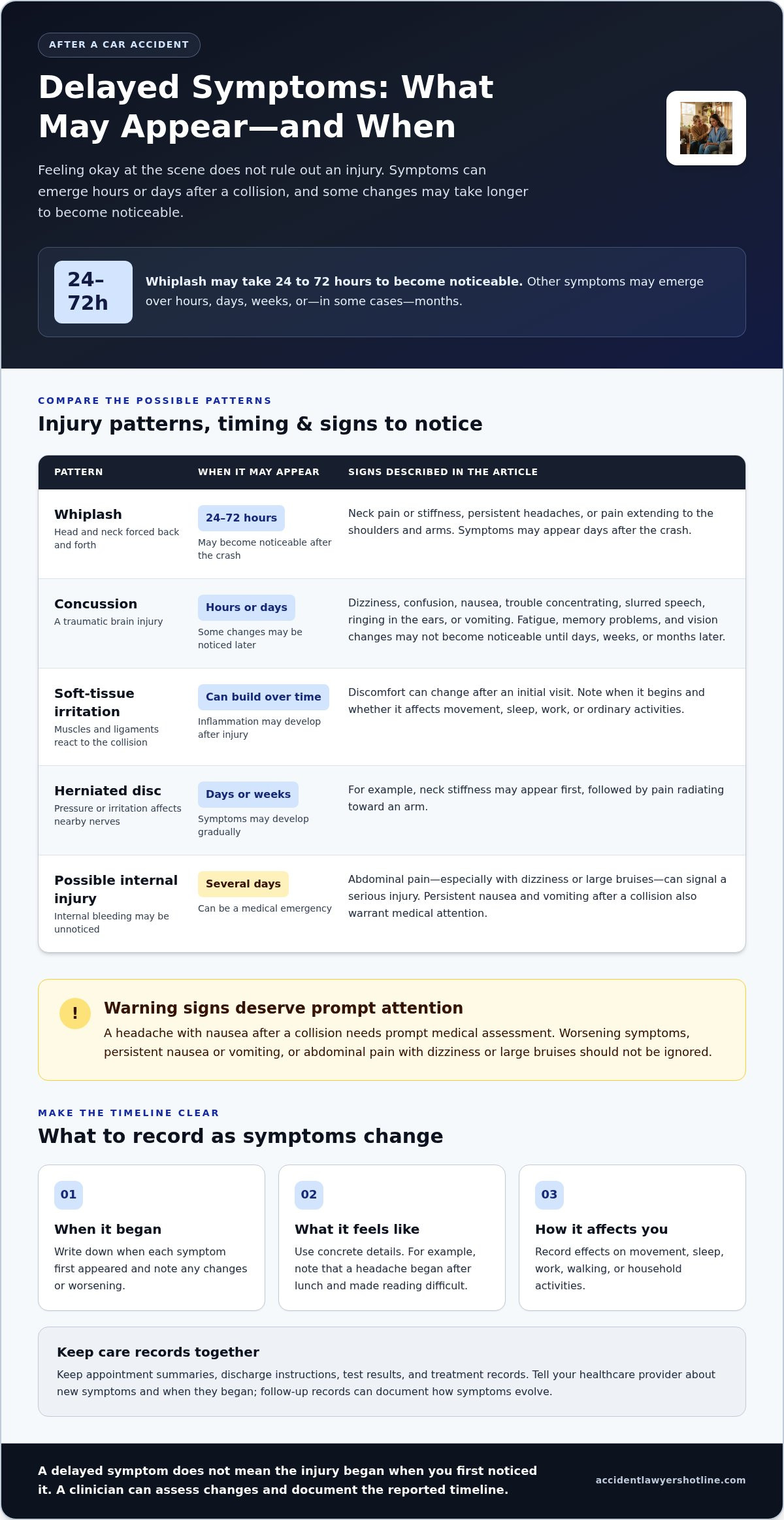
Delayed injury symptoms after a car accident can appear hours or days after the crash, rather than at the scene. Whiplash symptoms may take 24 to 72 hours to show up. Feeling okay at first doesn’t always mean you escaped injury.
It’s unsettling when pain or other symptoms begin after you thought the worst was over. The body’s stress response, including adrenaline, can make pain harder to notice at first, and some injuries take time to become apparent. This article explains why symptoms may be delayed, what signs to watch for, and why prompt medical evaluation and clear documentation matter. A record of your symptoms and treatment can help show when an injury became noticeable and how it affects you.
Key Takeaways
- Pain and other symptoms can surface hours or days after a crash, so feeling fine at first doesn’t rule out an injury.
- Adrenaline and shock can make it harder to recognize pain immediately, while some injuries take time to become noticeable.
- Abdominal pain with dizziness or large bruises can signal a serious injury and needs immediate medical attention.
- Seek medical care when symptoms begin and keep a record of changes, treatment, and how injuries affect daily activities.
- Clear medical documentation can help establish a timeline between the collision and your symptoms.
Why Do Some Injuries After a Car Accident Have a Delay in Symptoms?
Symptoms can emerge hours or days after a collision, even when you felt okay at the scene. Whiplash may take 24 to 72 hours to become noticeable, while concussion symptoms can also develop later.
Delayed Concussion Symptoms
A concussion is a traumatic brain injury that can cause symptoms to appear hours or days after a crash. That delay matters because a person may initially seem well, then notice dizziness, confusion, nausea, or trouble concentrating. Some symptoms, including fatigue, memory problems, and vision changes, may not become noticeable until days, weeks, or months later. A headache with nausea after a collision needs prompt medical assessment.
Whiplash and Concussion Symptoms
Whiplash occurs when the head and neck are forced back and forth. Neck pain, stiffness, persistent headaches, or pain extending to the shoulders and arms may appear days after a crash. Concussion symptoms can include dizziness, confusion, slurred speech, ringing in the ears, nausea, and vomiting. Because symptoms can overlap or appear separately, report each new one to a healthcare provider.
A delayed symptom doesn’t mean the injury began when you first noticed it. Soft tissue irritation and inflammation can build as injured muscles and ligaments react to the collision. A herniated disc may also cause symptoms over days or weeks as pressure or irritation affects nearby nerves. For example, someone might first notice neck stiffness, then develop pain radiating toward an arm.
Pay attention to changes after the crash, not just pain at the scene. New headaches, balance problems, vision changes, or memory difficulties may point to a concussion or another traumatic brain injury. Worsening symptoms, or persistent nausea and vomiting, need medical attention. A clinician can assess your symptoms and document what you report, including when each change began.
Delayed symptoms can also complicate a compensation claim. An insurance company may argue that symptoms began later because they resulted from another cause. A medical record describing the collision, your symptoms, and their timing can help establish a clearer timeline. Be specific: note whether a headache began after the crash, whether it worsened, and what other symptoms appeared with it.
In Oklahoma, according to the Oklahoma Legislature, an injured person may recover compensation under modified comparative negligence rules if their share of fault is 50% or less, with any award reduced by that share. This makes accurate records of the collision and resulting symptoms relevant when fault and injury are considered. Medical documentation can describe the injury timeline; it does not, by itself, determine who was at fault.
Medical documentation and legal implications
Delayed symptoms need medical attention, even if the crash initially seemed minor. A clinician can evaluate your symptoms, document when they began, and determine whether further assessment or treatment is needed.
Medical Evaluation and Diagnosis
A medical evaluation connects your reported symptoms with an examination and your account of the collision. Delayed neck pain, headaches, or soft tissue discomfort can change after your first visit, so tell the clinician what feels different, when each symptom started, and how it affects movement, sleep, or work. Follow-up visits can document changes and guide care.
For example, if neck pain appears after an initial checkup, contact your healthcare provider through a patient portal or arrange a follow-up visit. Describe where the new pain is and whether it affects turning your head or lifting objects. The provider can update your record and assess the change. Don’t omit new symptoms just because they began after the first appointment.
Symptom Documentation and Medical Records
Symptom documentation is a dated record of physical changes, care, and effects on daily activities. A clear sequence helps distinguish symptoms that appeared later from those reported at the scene. Keep appointment summaries, discharge instructions, test results, and treatment records together. A brief journal can note when each symptom began, its intensity, and its effect on ordinary tasks.
Use concrete descriptions instead of broad labels. For instance, write that a headache began after lunch and made reading difficult, rather than recording only “headache.” Note when a soft tissue injury limits walking, sleep, or household activities. Share relevant updates with your healthcare provider so the medical file reflects how symptoms evolve and what care you received.
Medical records can help explain how an injury developed, while medical experts can explain why some injuries cause delayed symptoms. In a claim, an insurance company may argue that symptoms came from another cause. Consistent clinical notes, follow-up records, and a symptom journal can help clarify what changed and when. They don’t replace a clinician’s assessment or independently establish who caused the collision.
Deadlines also matter. According to the South Carolina Legislature, the statute of limitations for most personal injury claims arising from a car accident is three years from the accident date, even if symptoms appear later. Delayed diagnosis doesn’t change that stated deadline. If you need help understanding how records and timing relate to a claim, a Car Accident Case Evaluation can provide a next step.
Why Do Some Car Accident Injuries Show up Later?
Yes. Internal bleeding may go unnoticed for several days after a car accident. Because it can be a medical emergency, seek medical help immediately if you suspect an internal injury.
Internal Injury Warning Signs
Warning signs of internal injury are symptoms that may indicate harm beneath the skin after a crash. Internal organ damage can become life-threatening without treatment. Watch for abdominal pain, especially alongside dizziness or large bruises. Persistent nausea and vomiting after a collision also warrant consultation with a physician.
A seat belt can protect you in a collision, but force against the abdomen can still injure muscles or damage internal organs. For example, a belt pressed hard into the abdomen during impact may leave bruising and pain. Tell a medical professional where you were hit and how forceful the impact was, even if the first visible effect seems limited.
Abdominal Pain and Internal Bleeding
Abdominal pain after a collision can result from muscle injury or internal organ damage, including internal bleeding. Pain may not immediately reveal the severity of an injury. Abdominal pain accompanied by dizziness or large bruises needs immediate medical attention. Describe where it hurts and whether the discomfort changes with movement.
Internal bleeding can go unnoticed for several days, so an initially calm period doesn’t rule it out. If abdominal pain develops later, treat it as a new warning sign and seek medical help promptly. Persistent nausea or vomiting is another symptom to report. A clinician can assess these symptoms and determine what examination or treatment is needed.
Some crash effects show up as changes in function rather than obvious wounds. Difficulty breathing, weakness, balance problems, or loss of bladder or bowel control can indicate a spinal injury. Numbness or pins-and-needles after hitting your head also warrants immediate medical attention. Report these symptoms clearly rather than waiting to see whether they pass.
Monitor yourself closely for several days after a crash, then stay alert to new or worsening symptoms in the following weeks. Record when abdominal pain, dizziness, bruising, nausea, or vomiting begins. Include details about the collision, such as a seat belt pressing into your abdomen. This timeline gives healthcare professionals concrete information to assess.
Don’t use the absence of visible bruises to judge whether an internal injury occurred. Abdominal pain after a collision still deserves attention, even without a large bruise. Likewise, report symptoms that worsen with movement or occur with dizziness. Prompt assessment matters because undetected internal organ damage can become life-threatening if left untreated.
Adrenaline and endorphins masking pain
Immediately after a collision, shock and the body’s stress response can make it difficult to judge an injury’s full extent. Adrenaline may also blunt awareness of pain in the aftermath. You might focus on exchanging information or checking on passengers, then notice soreness once things calm down. Feeling little pain at the scene doesn’t show how you’ll feel later.
Pain can become clearer as the stress response fades and you return to ordinary movement. For example, turning your head to drive home may reveal neck stiffness that wasn’t obvious at the scene. A sore back might stand out later when you sit, bend, or lift something. Pay attention to these changes rather than dismissing them as ordinary tension.
Soft tissue injuries affect muscles, ligaments, or tendons, and their symptoms can emerge after the collision. Most soft tissue injury symptoms appear around 24-48 hours after an accident. A person may initially notice only mild tightness, then experience more persistent pain as muscle spasms relax. The timing and pattern can help a doctor assess what changed and when.
Whiplash is one reason neck and shoulder pain may develop hours or days after impact. The neck moves forcefully back and forth, and symptoms can include stiffness, headaches, or pain extending into the shoulders and arms. You may feel comfortable at the scene but struggle to turn your head the next morning. Describe each change to a doctor.
Back pain may also become noticeable after you resume normal activity. Someone might feel little discomfort while sitting after the crash, then notice pain while walking or bending later. Some underlying injuries become apparent as muscle spasms relax, sometimes days to weeks after the incident. A herniated disc can also cause symptoms over days or weeks.
Track what you notice instead of relying on memory. Write down when neck pain, headaches, or back pain begins, what movement affects it, and whether it changes during the day. For example, record whether shoulder pain appears while reaching overhead or a headache follows neck stiffness. Share those details during a medical evaluation, including symptoms that developed after an earlier visit.
Delayed pain can also complicate a personal injury claim because an insurance company may question why symptoms weren’t reported immediately. A clear sequence helps explain the gap: the collision occurred, shock limited early awareness, and pain developed later. Medical records can add the doctor’s findings and treatment plan. The most useful account is specific about symptoms, timing, and effects on daily activities.
Why accident injury symptoms may be delayed
A car crash can affect several body systems at once, and signs of injury may emerge on different timelines. Delayed injury symptoms after car accident can have different causes. Someone might notice muscle soreness first, then restricted movement as they return to normal activities. Other changes, such as concentration problems after a traumatic brain injury, may be harder to identify immediately. The delay reflects how symptoms develop, not necessarily when the injury occurred.
Soft tissue symptoms often appear around 24-48 hours after an accident. Inflammation can build in injured muscles, ligaments, or tendons, making stiffness and pain more noticeable over time. For example, someone may initially move comfortably, then find that reaching, bending, or turning becomes difficult the next day. The activity that exposes discomfort can make a developing symptom easier to recognize.
Muscle spasms can also affect when symptoms become noticeable. As spasms relax, underlying injuries may become apparent days to weeks later, and sometimes months later. Someone might first experience tightness, then persistent pain during ordinary movement. Describe this changing pattern during medical care: the location, timing, and effect of each symptom help explain what has changed.
Some injuries involve structures that cause symptoms as they affect nearby areas. A herniated disc may produce symptoms over days or weeks. Pain or other problems can become more apparent as the injured area moves or presses on surrounding nerves. If you develop new back pain or radiating discomfort after a car crash, report when it began and how it has progressed to a healthcare provider.
Brain injuries can follow a different course. Concussion symptoms may take hours or days to appear, while fatigue, memory problems, or vision changes can become noticeable days, weeks, or months later. Someone may initially manage routine tasks, then struggle to concentrate at work. Changes in balance, memory, or speech deserve medical attention, even if they weren’t obvious right away.
Emotional effects may emerge on their own timeline, too. Post-traumatic stress disorder symptoms after a car accident may not appear until weeks later. You might notice changes in sleep or reactions to traffic after returning to familiar routines. Track when symptoms start, what triggers them, and how they affect daily activities for a clearer account than memory alone can provide.
Recognizing delayed injury symptoms after car accident starts with noticing how the timing and pattern vary by injury. A delayed symptom still deserves attention; don’t assume its later appearance means it is unrelated to the collision. If the timeline raises questions about a claim, request a Car Accident Case Evaluation to discuss the collision and documented injuries.
Accident Lawyers Hotline: Car Accident Case Evaluation
Accident Lawyers Hotline offers a Car Accident Case Evaluation for people dealing with symptoms that appeared after a collision. You can discuss the crash, your medical documentation, and questions about how delayed symptoms may affect a claim. The service connects individuals with legal professionals who offer legal assistance.
Consider an evaluation if you’re unsure how to organize medical records, explain when symptoms began, or understand next steps after an accident. Bring a clear account of the collision and your symptom timeline. If your accident involved a truck, motorcycle, or pedestrian collision, the corresponding case evaluation may fit your situation.
Contact Accident Lawyers Hotline to discuss a case evaluation and questions raised by your delayed symptoms.
Take the Next Step With a Clear Plan
Delayed injury symptoms after a car accident can leave you weighing medical concerns alongside questions about what to do next. You don’t have to sort through paperwork and claim questions all at once. Gather your treatment records, a brief symptom timeline, and any documents about the collision so you can explain your situation clearly.
Accident Lawyers Hotline offers Car Accident Case Evaluation, Truck Accident Case Evaluation, and Motorcycle Accident Case Evaluation. An evaluation gives you a chance to discuss how your injury documentation relates to questions raised by the accident. The right next step depends on the details of your circumstances.
If you’re ready to talk through your situation, contact Accident Lawyers Hotline to discuss a case evaluation. Taking one informed step can make the path ahead feel more manageable.
Frequently Asked Questions
What should you expect physically and mentally after being in an accident?
Physical and mental effects can vary, and some become noticeable after you leave the crash scene. You might first notice stiffness when returning to normal activities, or later find concentration more difficult. Post-traumatic stress disorder symptoms may not appear until weeks after a car accident. Record changes affecting sleep, work, driving, or routine tasks, and share them with a healthcare provider for assessment in context.
Can you still get compensated for your injuries?
Compensation may be available, depending on the facts of the collision, your injuries, and the law that applies. In Oklahoma, according to the Oklahoma Legislature, an injured person may recover compensation under modified comparative negligence rules if their share of fault is 50% or less, with any award reduced by that share. Keep records that clarify how the crash happened, the care you received, and how your injuries affect daily activities.
What if your pain was delayed?
Delayed pain doesn’t automatically rule out a connection to the collision. Tell your healthcare provider when it began, where you feel it, and what activities make it better or worse. For example, describe whether shoulder pain appears when reaching overhead or back pain increases while walking. Keep a dated record of changes and follow-up care. That timeline can help your provider understand how symptoms developed after the crash.
Can You Still File a Personal Injury Claim if Injuries Appear Later?
Injuries that appear later don’t automatically prevent a claim, but the filing deadline depends on the state. In Oklahoma, according to the Oklahoma Legislature, a person has two years from the accident date to file a car accident lawsuit. In South Carolina, the South Carolina Legislature states that the deadline for most car-accident personal injury claims is three years from the accident date, even if symptoms appear later. A later diagnosis doesn’t itself extend those periods.
Can you get PTSD from a car accident?
Yes. Post-traumatic stress disorder symptoms after a car accident may not appear until weeks after the crash. If you notice distress or changes that make driving, work, sleep, or daily routines difficult, tell a healthcare provider and explain when they began. A dated record can help you describe how those changes affect you over time. Mental health concerns deserve attention alongside physical injuries, even when they emerge after the immediate aftermath.
How Can You Tell if Delayed Symptoms Are Serious?
Seek immediate medical attention for warning signs such as difficulty breathing, weakness, balance problems, or loss of bladder or bowel control. After a head impact, numbness or pins-and-needles also needs urgent attention. Abdominal pain with dizziness or large bruises can point to a serious internal injury. A headache with nausea after a collision should be assessed promptly. Don’t wait for symptoms to worsen before responding to these warning signs.
How Can a Lawyer Help With a Delayed Injury Claim?
A lawyer can review how the collision, symptom timeline, and medical records relate to a potential claim. Accident Lawyers Hotline provides case evaluations and connects people with personal injury and motor vehicle accident attorneys who offer legal assistance. Bring your treatment records, crash details, and notes about symptoms that appeared later. This gives the legal professional a clearer picture to assess and helps identify questions about fault, documentation, and next steps.
How Long Can It Take for Car Accident Injuries to Become Noticeable?
There isn’t one timeline for every injury. Whiplash symptoms may appear 24 to 72 hours after a crash, and soft tissue symptoms commonly appear around 24-48 hours after an accident. Concussion symptoms may take hours or days to emerge, while some fatigue, memory, or vision problems may become noticeable days, weeks, or months later. Track new changes as they arise and report them during medical care.
Were You Injured in an Accident?
Get a free, confidential case evaluation. No upfront fees.
Get Free Case Evaluation