How to Write a Demand Letter for a Car Accident: 2026 Guide
Learn how to write a demand letter for a car accident step by step. Organize your evidence, calculate damages, and negotiate a fair settlement effectively.
What makes a car accident demand letter persuasive is not the size of the number you request, but the evidence supporting each part of your claim. If you’re unsure how to write a demand letter for a car accident, start by organizing the facts and records that explain what happened and how the crash affected you. You may be balancing treatment, paperwork, and decisions that could affect your claim.
This guide walks through the typical sections, from the crash summary and explanation of responsibility to an itemized account of medical costs, lost income, vehicle damage, and other losses. You’ll learn how to organize records, support the amount you request, and keep your tone clear and professional without overstating facts or making harmful admissions. We’ll also cover common negotiation missteps and when an attorney’s review may help. A well-prepared letter can make your position easier to understand, but it can’t guarantee payment or a particular result. Accident Lawyers Hotline evaluates motor vehicle accident cases and connects people with independent attorneys who can assess their circumstances. Any legal advice or representation comes from an attorney under a separate agreement.
Key Takeaways
- Learn how to write a demand letter for a car accident by following a clear sequence from claim details to the resolution you’re requesting.
- Connect each loss you describe to supporting records, and identify documentation that’s still outstanding.
- Use a factual, professional tone. Avoid unsupported claims, threats, or statements that could complicate negotiations.
- Consider attorney review when responsibility is disputed, injuries are ongoing, or the claim involves complex documentation or legal issues.
- Keep copies of your records and understand any proposed agreement before signing. A case evaluation can connect you with an independent attorney to assess your circumstances.
What a Car Accident Demand Letter Does, and What It Cannot Guarantee
A car accident demand letter is a written account of your claim and the resolution you’re requesting from an insurer or another responsible party. It brings the key facts, claimed losses, and supporting records together so the recipient can understand the basis for your request. This Demand letter overview explains the general concept.
A demand letter is not a lawsuit or a court filing. It communicates your position outside the courtroom and may help frame discussions before or during negotiations. For example, you might describe how the crash happened, summarize treatment, and provide records supporting medical expenses or time away from work. The letter organizes the evidence; it does not replace it.
Sending a letter doesn’t guarantee that the recipient will agree with your account, make an offer, or pay the amount you request. A well-organized letter can make your position clearer, but it can’t control the other party’s or insurer’s response. The goal is to present a supported claim, not to promise an outcome.
Who receives the letter, and when might it be sent?
The recipient depends on the claim, available insurance coverage, and circumstances of the crash. A third-party liability claim generally involves seeking payment from the other party’s insurer. A communication with your own insurer is different and may relate to coverage under your policy, such as a claim involving your own benefits. Identify which claim you’re making and who should receive the letter before drafting.
Timing depends on the situation. You may need time to gather records or understand how an injury and its treatment are progressing. Applicable state rules can affect deadlines and other claim issues. Don’t assume that preparing or sending a demand letter pauses a legal deadline. An attorney can explain the rules that apply to your circumstances.
Why a demand letter is not a settlement calculator
There’s no universal formula that turns an injury or a stack of bills into a standard settlement amount. Claim value can depend on the available evidence, the effects of the injury, disputed responsibility, insurance coverage, and governing law. The same expense or injury description may have different significance in different cases.
A letter can explain your account and request a resolution, but it can’t establish disputed facts or prove losses on its own. Medical and wage records, witness information, and other supporting material help substantiate what you describe. If documentation is missing or responsibility is contested, an attorney’s assessment may help you understand how those issues could affect your claim before you negotiate.
Gather the Evidence Before You Write Your Car Accident Demand Letter
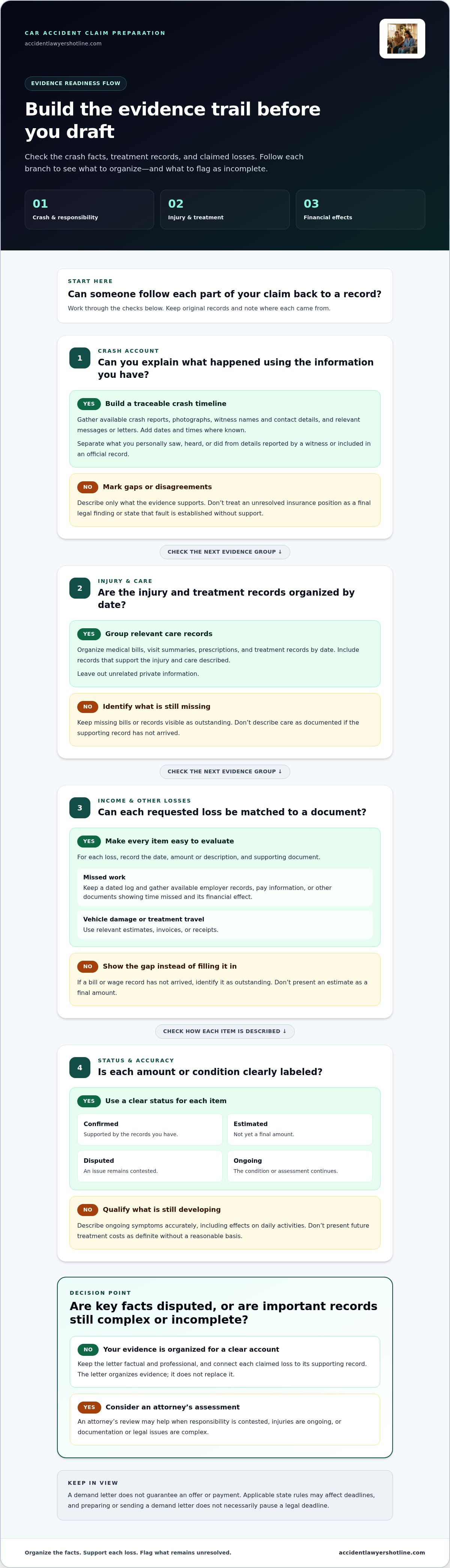
Before drafting, build a record that lets someone follow the crash, the injuries, and the financial effects in order. A folder system or spreadsheet can help. Group materials by crash details, responsibility, injury and treatment, and financial impact. Cornell Law School’s legal definition of a demand letter describes its role in presenting a claim and seeking resolution. Your supporting records show the basis for the losses you describe.
Make each requested loss easy to evaluate. For every item, record the date, amount or description, and the document that supports it. Mark items as confirmed, estimated, disputed, or ongoing. If a bill or wage record hasn’t arrived, identify it as outstanding instead of presenting an estimate as a final amount.
Build a clear account of the crash and responsibility
Collect available crash reports, photographs, witness names and contact details, and relevant messages or letters. Create a timeline with dates and times where you know them. Separate what you personally saw, heard, or did from details reported by a witness or included in an official record. This makes your account easier to follow and helps you spot gaps or disagreements.
Describe only what the evidence supports. Don’t state that another driver was legally at fault simply because an insurer hasn’t disputed your account, or treat an unresolved insurance position as a final legal finding. Keep copies of original records and note where each came from.
Document injuries, treatment, income, and other losses
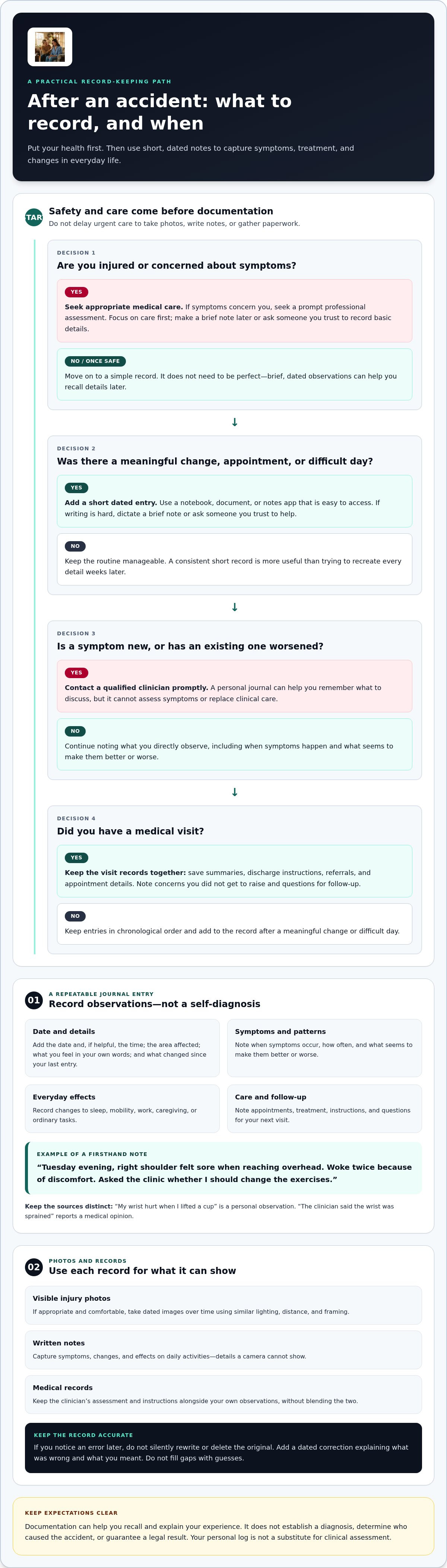
Organize medical bills, visit summaries, prescriptions, and treatment records by date. Include records that support the injury and care described, but avoid sharing unrelated private information. For missed work, keep a dated log and gather available employer records, pay information, or other documents showing the time missed and its financial effect.
Track other losses, such as vehicle damage or necessary travel for treatment, with relevant estimates, invoices, or receipts. State whether each amount is final or still being assessed. Describe ongoing symptoms accurately, including their effect on daily activities, but don’t present future treatment costs as definite without a reasonable basis. If the claim feels difficult to organize, a car accident case evaluation can connect you with an independent attorney to assess your circumstances.
How to Write a Car Accident Demand Letter: A Practical Sequence
A useful demand letter is a clear account of your claim linked to supporting evidence. Keep it factual, organized, and professional. Follow the sequence below, using placeholders as you draft and replacing them only with accurate information supported by your records.
- 1. Address the right recipient. Use the insurer’s or responsible party’s correct name and mailing address. Include a claim reference number if you have one. Identify yourself and provide contact information so the recipient can match the letter to the claim.
- 2. State the letter’s purpose. Open with a direct line such as: “I am writing about the collision on [date] involving [brief description] to request [specific resolution].” Adapt the wording to your claim, and don’t imply that the recipient has already accepted responsibility.
- 3. Summarize the crash. Give the date, location, and a concise account of what happened. Describe facts supported by records or your own observations. If responsibility is disputed, say so rather than presenting an unresolved issue as settled.
- 4. Explain injuries and treatment. Briefly connect the crash to the injuries and care described in your records. Include relevant dates and providers when supported. Describe ongoing symptoms carefully, and don’t state that future treatment or costs are certain if they remain unknown.
- 5. Itemize losses and request a resolution. Separate documented expenses and other losses into clear categories. Check your records and arithmetic before stating the amount you’re requesting. If a figure is an estimate or a detail is unresolved, label it rather than presenting it as final.
- 6. Identify the supporting records. List the materials enclosed, such as photographs, bills, wage records, or a crash report. Make sure the list matches the attachments. Keep copies of the complete letter and everything you send.
Make every statement accurate and easy to verify
Use only dates, names, and figures that your records support. Before sending, check that the timeline is consistent, the totals add up, and every attachment is included and labeled. Confirm the recipient’s details and your contact information, too.
Choose a calm tone. Threats, exaggerated descriptions, and speculation about what the insurer or another party will do can distract from the evidence. A simple closing can restate the resolution you’re seeking and invite a response. For example: “Based on the records enclosed, I request [resolution]. Please direct your response to [contact information].” This is sample language, not a promise of acceptance or payment. Review each placeholder and adapt the wording to the facts of your claim before sending.
Should You Send the Letter Yourself? Risks, Responses, and Negotiation
You may be able to prepare a straightforward letter yourself when responsibility is clear, treatment is complete, and records are well organized. Attorney review may be useful if fault is disputed, injuries are ongoing or complex, several parties are involved, or the claim’s value is contested. The right approach depends on the facts of your claim.
State law and claim circumstances can affect deadlines, fault rules, and other legal issues. Don’t assume a letter pauses a deadline. If you’re unsure which rules apply, an attorney can assess your situation before you send it.
| Factor | Self-drafting | Attorney review |
|---|---|---|
| Claim complexity | May suit a claim with a clear account and organized records. | Can help assess claims involving multiple parties or disputed facts. |
| Injury and treatment | You’ll need to explain treatment and losses using your records. | An attorney can review how ongoing care or uncertain losses may affect the claim. |
| Accuracy and completeness | You’re responsible for checking statements, attachments, and calculations. | Review can help identify gaps, unsupported statements, or issues needing attention. |
What to consider before sending a demand
If treatment continues or the full effects of an injury remain uncertain, a demand sent too soon may not reflect the complete picture. Check each statement against the records, confirm the attachments match the letter, and avoid disclosing private information that doesn’t support the claim. Consider legal review if responsibility, injuries, multiple parties, or the claim’s value is disputed.
How to handle an insurer’s response
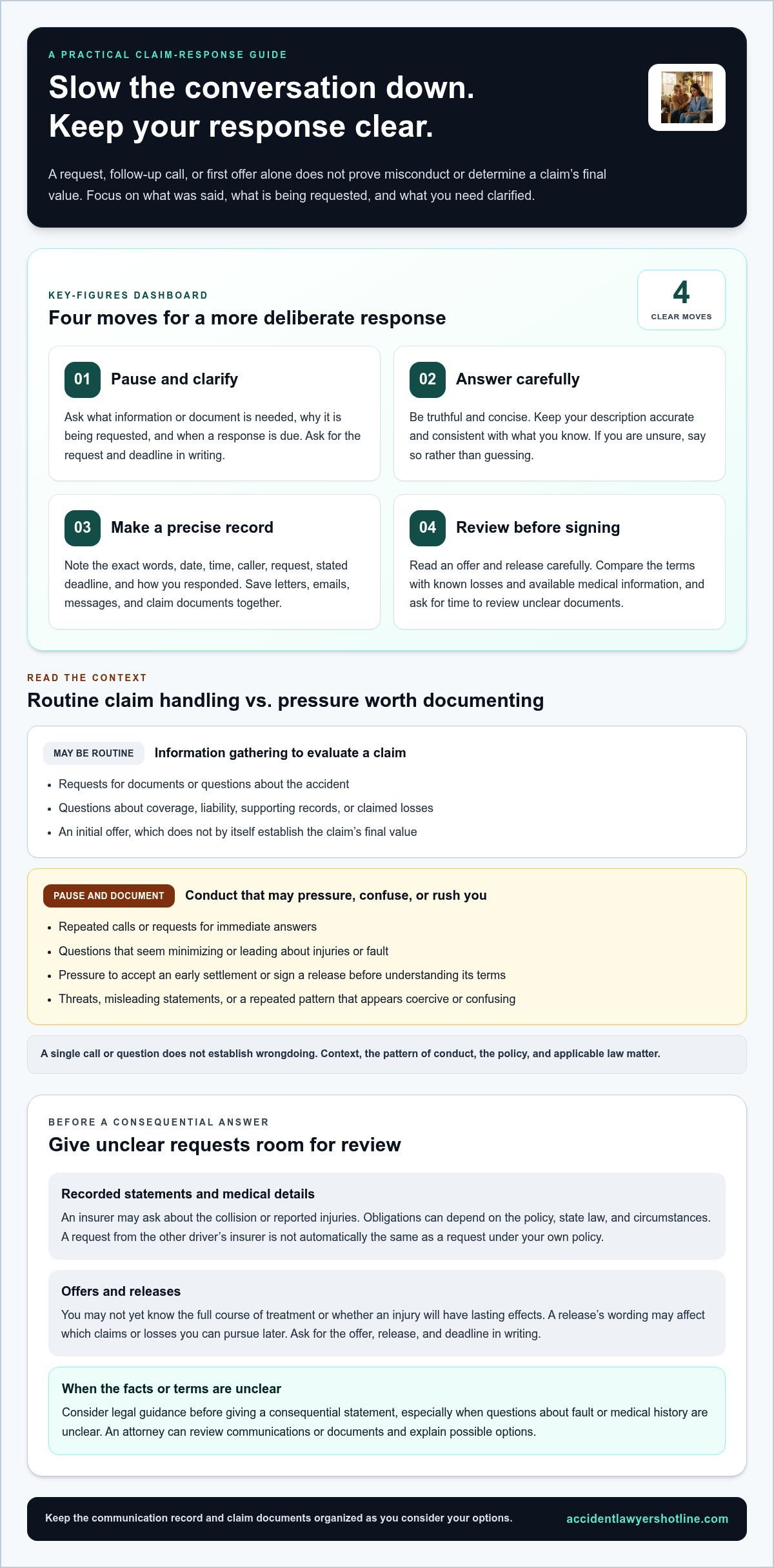
An insurer may ask for more information, dispute part of the account, make an offer, or decline the request. These are possibilities, not required steps, and responses don’t follow one fixed timeline. Keep the letter, attachments, delivery confirmation, and later communications together. If you receive an offer or release, read it carefully and understand what rights or claims it may affect before agreeing or signing.
If you’re considering attorney review, learn how contingency-fee arrangements work. Terms depend on the attorney-client agreement. A car accident case evaluation connects you with an independent attorney to assess your circumstances. Accident Lawyers Hotline is a referral platform, not a law firm. Any legal advice or representation comes from an independent attorney under a separate agreement.
Get Help Reviewing Your Car Accident Claim Before Taking the Next Step
Before sending a demand, keep your records together, check that your account matches the available evidence, and note expenses or details that remain uncertain. If an insurer makes an offer, read the terms carefully. Don’t sign an agreement until you understand what it resolves and how it may affect your claim.
A clear letter can help you present your position, but questions about fault, losses, or an insurer’s response may call for another perspective. Accident Lawyers Hotline evaluates motor vehicle accident cases and connects people with independent attorneys. The platform isn’t a law firm and doesn’t provide legal advice or representation. An independent attorney provides those services under a separate agreement.
When a case evaluation may help
A case evaluation may help if you’re unsure how to address disputed fault, whether your records support the losses you’ve listed, or how to respond to an insurer. It can help identify questions for an independent attorney, such as what information is still needed or which issues deserve closer review. An evaluation or referral doesn’t guarantee representation, payment, or a particular outcome.
What to prepare for a case evaluation
Gather what you have, even if the file isn’t complete. A short, organized summary can help you explain the situation and identify what you’d like to ask. Consider preparing:
- The crash date and a brief, factual account of what happened.
- Available insurance details and any claim reference number or insurer correspondence.
- Relevant records, such as the crash report, photos, medical documents, bills, and income records.
- Questions about the attorney’s role, how communication works, fees, and the written engagement terms.
You don’t need to resolve every question before seeking an evaluation. Start with the facts and records you have, and be clear about what’s missing or uncertain. This gives an independent attorney a useful starting point for assessing your circumstances.
Learn more through a car accident case evaluation, which can connect you with an independent attorney. The attorney, not the referral platform, provides any legal advice or representation under a separate agreement.
Take Your Next Step With Clearer Information
A strong demand letter connects the facts of the crash to documented injuries and losses. Keep your records organized, use accurate language, and make sure you understand any proposed agreement before signing. Knowing how to write a demand letter for a car accident can help you present your claim clearly, but it can’t guarantee payment or a particular result.
If you still have questions about fault, evidence, or an insurer’s response, Accident Lawyers Hotline evaluates motor vehicle accident cases and connects people with independent attorneys nationwide. The platform isn’t a law firm and doesn’t provide legal advice or representation. An independent attorney provides those services under a separate agreement. When an attorney works on a contingency basis, fees and terms depend on that agreement.
Request a car accident case evaluation to have your circumstances assessed and explore a connection with an independent attorney.
Frequently Asked Questions
What should be included in a car accident demand letter?
Include the claim and recipient details, crash date, a factual account of what happened, and a clear summary of injuries, treatment, and losses. State the resolution you’re requesting and list the records you’re including, such as bills, photographs, or wage documentation. Keep each statement accurate and connect claimed losses to supporting evidence. Label estimates or unresolved details clearly, and keep a copy of the letter and its attachments.
Can I write a car accident demand letter myself?
Yes. You can draft your own letter, especially if the facts are straightforward, treatment is complete, and your records are organized. Use a professional tone and check every date, amount, and attachment before sending. Attorney review may help if fault is disputed, treatment is ongoing, multiple parties are involved, or losses are difficult to document. If you’re learning how to write a demand letter for a car accident, focus on facts and evidence rather than forceful language.
How do I calculate a demand amount after a car accident?
There’s no universal formula or settlement amount that applies to every claim. Start by totaling documented expenses and identifying other supported losses, such as income missed from work. Separate confirmed amounts from estimates, disputed items, and costs that may continue. The appropriate request can also depend on injury effects, evidence, responsibility, available coverage, and governing law. Avoid relying on a generic multiplier or treating the total of bills as a guaranteed measure of claim value.
Should I send a demand letter while I am still receiving medical treatment?
Consider whether ongoing treatment means your injuries, care needs, or related losses remain uncertain. Sending a demand before you understand those effects may leave important information out, but timing depends on your circumstances and applicable rules. Don’t assume waiting or sending a letter changes a legal deadline. Keep documenting treatment and expenses, and consider asking an independent attorney to assess timing if you’re unsure how unfinished care may affect your claim.
What happens after I send a car accident demand letter?
The recipient may respond with questions, request more records, dispute parts of your account, make an offer, or decline your request. There’s no guaranteed response or fixed timeline. Keep your letter, attachments, delivery confirmation, and later communications together. Review any proposed offer or release carefully before agreeing or signing, so you understand what the document covers and how it could affect your claim.
Do I need a lawyer to negotiate a car accident settlement?
Whether to get legal help depends on the claim’s complexity, disputed fault, injuries, and documentation. You may feel prepared to communicate directly in a straightforward matter, while an attorney’s review may help with contested or complicated issues. Accident Lawyers Hotline evaluates motor vehicle accident cases and connects people with independent attorneys. The platform isn’t a law firm. An independent attorney provides legal advice and representation under a separate agreement, and fees and terms depend on that agreement.
Were You Injured in an Accident?
Get a free, confidential case evaluation. No upfront fees.
Get Free Case Evaluation