Internal Bleeding After a Car Accident: Symptoms and Emergency Steps
Spot internal bleeding after car accident symptoms early. Learn hidden warning signs, crucial emergency steps to take, and when to get immediate medical care.
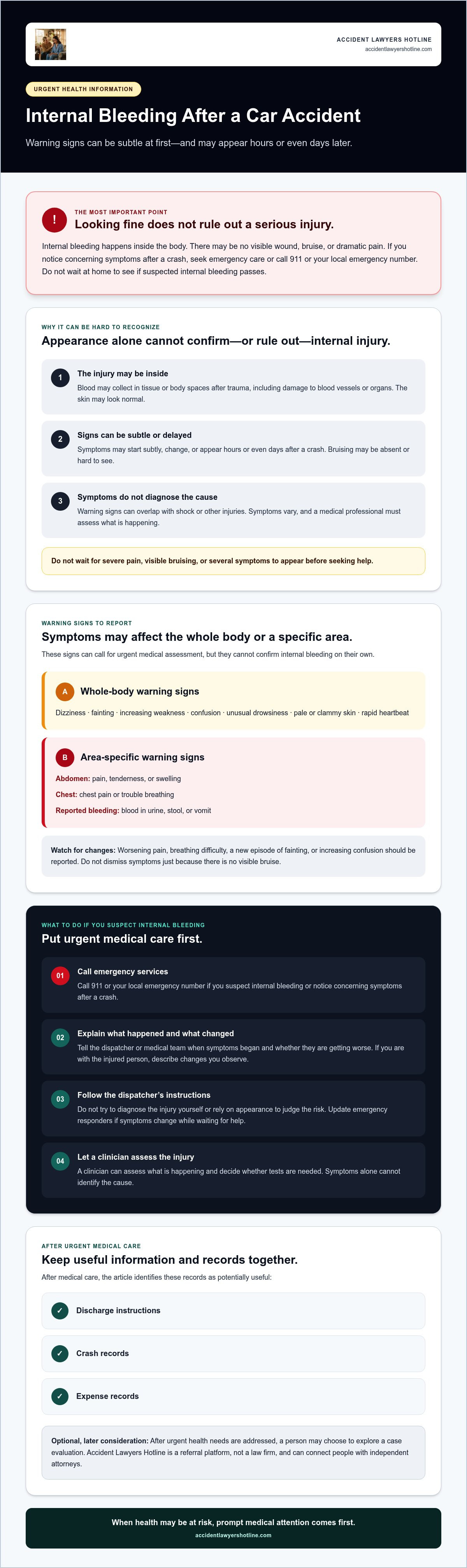
Could you have internal bleeding after a car accident and still look fine? Yes. Internal bleeding after car accident symptoms may be subtle at first, and warning signs can appear hours or even days later. No visible wound doesn’t rule out a serious injury.
It’s understandable to feel unsure when pain, dizziness, or nausea could have several causes. But suspected internal bleeding isn’t something to monitor at home and hope it passes. If you notice concerning symptoms after a crash, call emergency services or seek emergency care now. Don’t try to diagnose the injury yourself.
This article explains warning signs to watch for, why internal injuries can be difficult to recognize, and what to do if symptoms appear. It also covers what to tell responders, what medical evaluation may involve, and which records may be useful after urgent care. When your health may be at risk, prompt medical attention comes first.
Key Takeaways
- Learn which body-wide and area-specific warning signs may call for urgent medical assessment.
- Understand why internal bleeding after car accident symptoms can vary, and why no bruising or severe pain doesn’t rule out internal injury.
- Know the immediate steps to take if you suspect internal bleeding, including when to call 911 or your local emergency number.
- See what information to keep after medical care, from discharge instructions to crash and expense records.
- Explore how an optional case evaluation may fit after urgent health needs are addressed.
Internal Bleeding After a Car Accident: Why Symptoms Need Urgent Attention
Internal bleeding is blood loss inside the body, where blood may collect in tissue or body spaces instead of flowing from a visible wound. After trauma, it can result from damage to blood vessels or organs. Suspected internal bleeding requires urgent medical assessment because it can become life-threatening. The medical overview of Internal bleeding describes hemorrhage as blood escaping from the circulatory system.
An injury to the abdomen, chest, or head may not cause an obvious external wound. The skin may look normal, and someone who appears alert may still need prompt medical care. A crash or a single symptom does not prove internal bleeding, however. Symptoms can have other causes, and only a medical professional can assess what is happening.
What does internal bleeding mean after a crash?
Blood may collect inside the body after blunt force or another injury, even when there is no cut or visible bleeding. The location and severity depend on the injury, and how a person feels may not reveal which area is affected. Treat symptoms as warning signs, not as a way to diagnose the injury at home.
Why can an internal injury be difficult to recognize?
Appearance alone can’t confirm or rule out an internal injury. Bruising may be absent or hard to see, and symptoms may start subtly, change, or appear later. Some warning signs can also overlap with shock or other injuries. The internal bleeding after car accident symptoms a person notices won’t necessarily form a clear or complete pattern.
Don’t wait for severe pain, visible bruising, or several symptoms to appear before seeking help. If you suspect internal bleeding after a crash, call 911 or your local emergency number and follow the dispatcher’s instructions. Explain what happened and what has changed, even if you’re uncertain. A clinician can assess the injury and decide whether tests are needed. Judging risk by appearance or symptoms alone can delay necessary care.
Internal Bleeding Symptoms After a Car Accident: Warning Signs to Know
Recognizing internal bleeding after car accident symptoms can help you respond quickly, but symptoms alone can’t confirm what’s wrong. They vary from person to person, and no checklist can diagnose internal bleeding. If concerning changes follow a crash, report them to emergency professionals and seek urgent medical assessment.
General signs that may signal a serious injury
Blood loss can affect the whole body. Dizziness, fainting, increasing weakness, confusion, or unusual drowsiness after a crash needs urgent attention. Pale or clammy skin and a rapid heartbeat can also occur with serious blood loss. Don’t wait for several signs to appear together or for symptoms to become severe.
- Changes in alertness: Confusion, fainting, or unusual drowsiness can make it harder to communicate or seek help.
- Signs of physical distress: Weakness, dizziness, pale or clammy skin, and a rapid pulse may signal a serious problem that needs prompt assessment.
Tell the dispatcher or medical team what happened, when symptoms began, and whether they’re getting worse. If you’re with the injured person, describe changes you observe, such as a new episode of fainting or increasing confusion. Clear details about when symptoms started and how they changed can help responders understand what you’ve noticed.
Pain and other symptoms depend on the injured area
Symptoms can also depend on where the body was injured. Abdominal pain, tenderness, or swelling after a crash deserves prompt medical assessment. Chest pain or trouble breathing is also an emergency warning sign. Blood in urine, stool, or vomit after an accident should be reported to medical professionals without delay.
These signs can overlap with other injuries, so they don’t identify the cause on their own. Don’t dismiss worsening pain or breathing difficulty because there’s no visible bruise. A clinician must assess the injury and determine what care is needed. If symptoms change while you’re waiting for help, update emergency responders.
Once urgent medical needs are addressed, you may choose to explore a motor vehicle accident case evaluation. Accident Lawyers Hotline is a referral platform, not a law firm, and can connect people with independent attorneys.
Can You Have Internal Bleeding Without Bruising or Severe Pain?
Yes. The absence of bruising or dramatic pain does not reliably rule out internal injury. Bleeding may occur inside the body without leaving a visible mark, and pain can vary with the injury and the person. Looking well, being able to walk, or speaking clearly also doesn’t prove someone is medically safe.
Does no bruising mean there is no internal injury?
No. A bruise is not a dependable test for internal bleeding. Some injuries may have no obvious external sign, while a bruise can appear without internal bleeding. A clear-looking body or lack of an external wound can’t confirm what happened inside.
That uncertainty can be unsettling, especially if you feel mostly normal after a crash. Don’t use appearance alone to decide whether care is needed. If the collision or any symptoms raise concern, seek prompt medical assessment. If you suspect internal bleeding or the person seems seriously unwell, call 911 or your local emergency number.
Can symptoms appear or worsen later?
They can. Symptoms may be present right away, change over time, or become noticeable later, but this doesn’t happen the same way for everyone. Don’t rely on a fixed waiting period or assume that feeling steady at first means no injury occurred.
Being able to stand, walk, or answer questions is not medical clearance. Someone may still have an injury that needs evaluation. If new, worsening, or severe symptoms develop after a crash, get emergency help rather than waiting at home to see what happens. Tell responders what changed and when.
Warning signs can raise concern, but they cannot establish a diagnosis. Cleveland Clinic’s patient guidance describes internal bleeding as potentially difficult to recognize from the outside, with assessment requiring medical evaluation. The phrase internal bleeding after car accident symptoms refers to possible warning signs, not a way to determine on your own whether bleeding is present. Clinicians assess the person and decide whether tests are needed.
If you’re uncertain, ask emergency professionals for guidance rather than relying on the absence of pain or bruising. Don’t delay care when internal bleeding is suspected.
What to Do for Internal Bleeding After a Car Accident
If you suspect internal bleeding, call 911 or your local emergency number now. Severe or worsening symptoms after a crash also warrant emergency help. Examples include fainting, confusion, increasing weakness, severe pain, or trouble breathing. These examples aren’t a complete checklist. Don’t wait for every sign to appear, and don’t delay emergency care to contact an insurer, attorney, or referral service.
What should you do first?
- Call for emergency help. Tell the dispatcher there’s been a crash and describe why you’re concerned about a serious injury.
- Follow the dispatcher’s instructions. Stay on the call if directed, and don’t try to diagnose the injury or provide treatment beyond what emergency professionals advise.
- Don’t drive yourself if you’re seriously injured. Ask the dispatcher what to do while help is on the way. If you’re assisting someone else, follow the instructions you receive.
- Share new information promptly. Tell responders if symptoms change or worsen while you wait or during care.
Choosing the right next step can feel difficult when symptoms are unclear. Explain the concern to emergency professionals and let them guide you. Symptoms associated with internal bleeding after car accident may overlap with other injuries, so trying to judge their cause yourself can delay the assessment you need.
What information should you share with responders?
Give a clear account of what you know. Mention when the crash happened, where the person feels pain, and when symptoms started. Describe what has changed, such as pain becoming worse or new dizziness or confusion. If you know the person’s medications or relevant medical conditions, share that information when it’s readily available. Don’t delay the call or search for records before asking for help.
Be direct, even if you’re unsure whether a detail matters. Describe what you observed rather than trying to label the injury. Follow emergency professionals’ directions instead of using a symptom list to assess the person’s condition. Their priority is evaluating immediate health needs.
After urgent medical care and follow-up are addressed, you can consider your options after the crash. Accident Lawyers Hotline provides motor vehicle accident case evaluations and is a referral platform, not a law firm. If you’d like to explore that option, request a car accident case evaluation. The platform doesn’t directly represent you, and a case evaluation does not replace medical care.
After Medical Care: Documenting the Crash and Considering Legal Support
Medical treatment and follow-up come first. Don’t postpone care to collect paperwork, contact an insurer, or explore a potential claim. Once immediate health needs are addressed, keeping relevant records organized may make it easier to explain what happened and track your recovery. Documentation can be useful later, but it doesn’t guarantee a particular legal outcome.
What records may be useful after treatment?
Keep documents you already have or receive during care. Store them together, such as in a folder or secure digital file. Follow your clinician’s instructions for tracking symptoms, and note changes if they recommend doing so. Don’t return to a crash scene or delay medical care to gather evidence.
- Medical paperwork: Save visit summaries, test or treatment records you receive, and follow-up instructions.
- Crash information: Keep available incident or insurance documents and relevant communications.
- Expenses: Organize bills, receipts, and records of other crash-related costs as they become available.
- Recovery notes: If advised by your clinician, record symptoms, changes, and how they affect daily activities.
These details may help you provide a clearer account of your injury and its treatment. Discharge instructions, for example, can help you remember recommended follow-up, while dated notes may help you describe how symptoms developed. The signs associated with internal bleeding after car accident symptoms call for medical attention first. Documentation should never replace professional care or your clinician’s guidance.
When might a case evaluation help?
After you’ve addressed treatment and follow-up, you may choose to discuss whether you have a potential motor vehicle injury claim. Accident Lawyers Hotline is a legal referral platform, not a law firm. It provides case evaluations and can connect people with independent attorneys who operate on a contingency basis, meaning there are no fees unless the case is won. The platform does not directly represent clients, and an evaluation does not promise a particular result.
If you’re ready to consider that option, request a car accident case evaluation. Your health remains the priority. Keep following medical advice while you decide what support, if any, you want for the next steps.
Put Your Health First, Then Consider Your Next Steps
Internal bleeding after a crash may not be visible, and the internal bleeding after car accident symptoms can’t confirm or rule out an injury on their own. If you suspect internal bleeding or symptoms are severe or worsening, call 911 or your local emergency number. Don’t wait for bruising or dramatic pain before seeking help.
After medical care, follow your clinician’s instructions and keep available records, such as discharge papers, crash information, and expense documents. These may help you explain what happened later, but gathering them should never delay treatment.
If you want to explore possible legal options after urgent health needs are addressed, Accident Lawyers Hotline is a national referral platform that provides motor vehicle accident case evaluations. It can connect individuals with independent attorneys who operate on a contingency basis. The platform is not a law firm and doesn’t directly represent clients.
Request a car accident case evaluation when you’re ready. Focus on your recovery first, and take the next step at a pace that feels manageable.
Frequently Asked Questions
Can you have internal bleeding after a car accident without bruising?
Yes. You can have internal bleeding without a visible bruise or external wound. Appearance alone can’t confirm or rule out an injury inside the body. If the crash or symptoms raise concern, seek medical assessment promptly rather than waiting for a mark to appear. Call 911 or your local emergency number for suspected internal bleeding or severe symptoms, and follow the dispatcher’s instructions.
How soon do internal bleeding symptoms appear after a car accident?
Symptoms may be noticeable right away or emerge or change later, but timing varies by person and injury. There isn’t a reliable schedule you can use to rule out internal bleeding. Don’t wait for a particular number of hours or days if you’re concerned. Seek emergency help for new, severe, or worsening symptoms, and tell responders when the crash occurred and how symptoms have changed.
What are the first signs of internal bleeding after a car accident?
Possible warning signs include dizziness, fainting, weakness, confusion, unusual drowsiness, pale or clammy skin, and a rapid heartbeat. Abdominal pain or swelling, chest pain, trouble breathing, or blood in urine, stool, or vomit may also need urgent assessment. These internal bleeding after car accident symptoms can have other causes and can’t confirm a diagnosis. Call emergency services if serious symptoms occur or bleeding is suspected.
Should I go to the ER if I feel fine after a car accident?
Feeling fine doesn’t always establish that you’re medically safe. Seek emergency assessment if you suspect an internal injury or develop concerning symptoms, such as fainting, confusion, severe or worsening pain, or trouble breathing. If you’re unsure after a crash, contact emergency professionals for guidance rather than relying on appearance alone. Don’t drive yourself if seriously injured, and follow the dispatcher’s instructions.
Can internal bleeding happen without severe pain?
Yes. The amount of pain can vary, and severe pain isn’t required for an internal injury to be present. A lack of dramatic pain, bruising, or an external wound can’t reliably rule out internal bleeding. Symptoms also overlap with other conditions, so they can’t identify the cause on their own. If internal bleeding is suspected after a crash, seek urgent medical assessment instead of waiting for pain to intensify.
What should I do if internal bleeding is suspected after a car accident?
Call 911 or your local emergency number first. Tell the dispatcher there was a crash and describe the symptoms or changes you’ve noticed. Follow their instructions, and don’t drive yourself if seriously injured. Share when the crash happened, where the person hurts, and any known medications or relevant medical conditions if readily available. Don’t delay emergency care to contact an insurer, attorney, or referral service.
Can internal bleeding be diagnosed at home?
No. Home checks, including looking for bruises or judging how someone feels, can’t reliably diagnose or rule out internal bleeding. A medical professional must assess suspected injury and determine whether tests or treatment are needed. Don’t wait for a complete set of symptoms before seeking care. If bleeding is suspected or symptoms are severe or worsening, call 911 or your local emergency number and follow the dispatcher’s directions.
Were You Injured in an Accident?
Get a free, confidential case evaluation. No upfront fees.
Get Free Case Evaluation