Lyft Accident Attorney: Your Guide to Rideshare Claims in 2026
Injured in a Lyft crash? Our guide explains 2026 insurance changes. Find a Lyft accident attorney to navigate your claim and secure the compensation you dese...
Did you know that the $1 million insurance policy you see in Lyft’s marketing might not actually cover your accident? Most people assume rideshare claims are straightforward until they're stuck between a personal insurer and a corporate legal team. If you're currently facing rising medical bills and aggressive adjusters, you likely feel overwhelmed. It's exhausting to fight for fairness when you should be focusing on your health. Finding a dedicated lyft accident attorney is the most effective way to shift this burden onto a professional who knows how to win.
You aren't alone in your confusion, especially with 2026 legal shifts like California’s SB 371 slashing certain coverage limits to $300,000. This guide simplifies the process so you can secure the maximum recovery for your lost wages and injuries. We will demystify the multi-tiered insurance system, explain how your driver's app status dictates your claim, and provide a clear path to connecting with a legal expert who specializes in rideshare law. Let's take the first step toward restoring the balance in your life.
Key Takeaways
- Understand how Lyft’s multi-tiered insurance system changes based on the driver's app status and how 2026 regulations impact your potential recovery.
- Learn the critical legal differences between rideshare companies and independent contractors to determine who is truly responsible for your medical bills.
- Discover why hiring a specialized lyft accident attorney is essential for accessing internal app data that standard car accident lawyers might overlook.
- Identify the immediate steps to take after a crash, from securing a police report to seeking medical care, to protect your right to a fair settlement.
- See how a risk-free case evaluation can connect you with a national network of motor vehicle accident specialists on a contingency-fee basis.
Navigating Lyft’s Multi-Tiered Insurance System in 2026
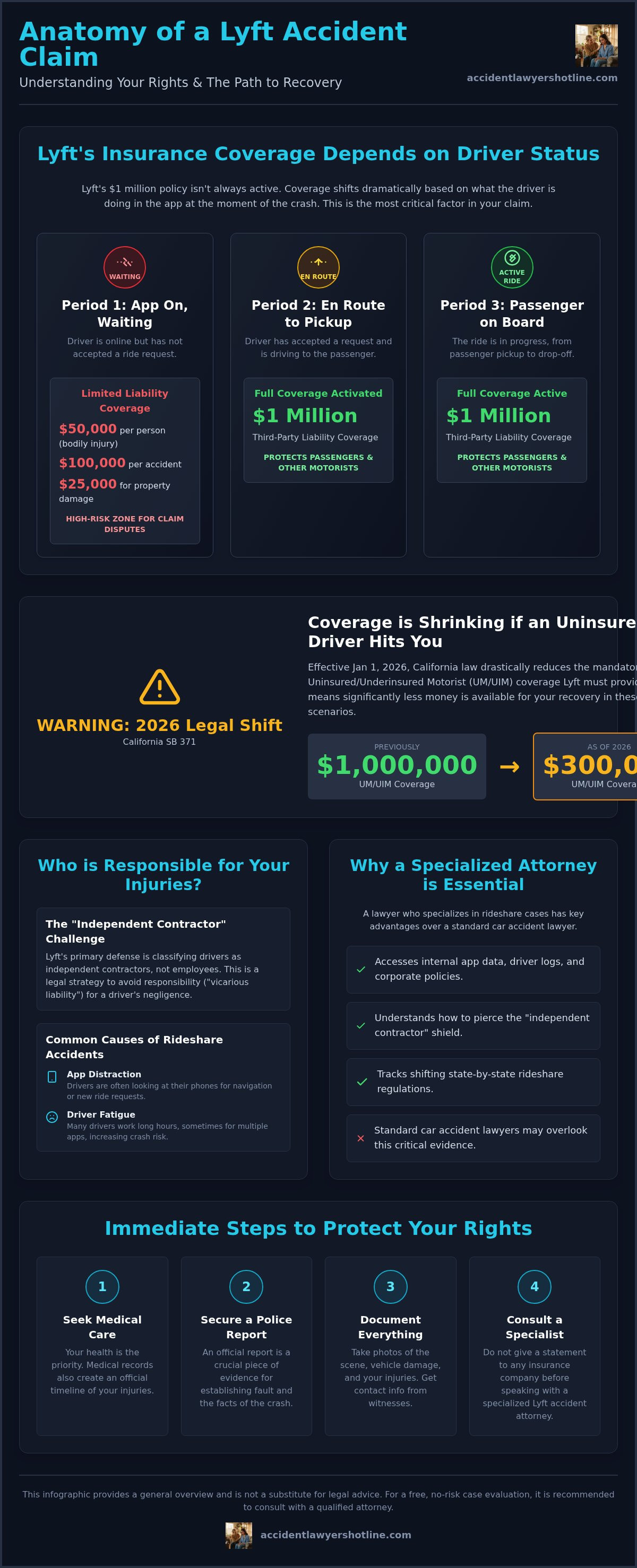
Understanding Lyft’s insurance coverage requires looking at both the clock and the driver's app. Most passengers and drivers assume they are always protected by a massive corporate policy. That isn't the case. Coverage shifts through three distinct phases based on the driver's activity. If you're injured, the first question your lyft accident attorney will ask is: "What was the driver's status at the exact moment of impact?" This status determines which insurance company is responsible for your bills. Your personal auto policy likely contains a "commercial use" exclusion. This means your own insurer will often deny your claim the moment they discover a ridesharing company app was involved. This leaves you in a vulnerable position where specialized legal knowledge is required to force the right company to pay.
Period 1: App On, Waiting for a Request
In Period 1, the driver is active on the app but hasn't accepted a passenger yet. Lyft provides limited liability coverage during this phase. Standard limits include $50,000 per person for bodily injury, $100,000 per accident, and $25,000 for property damage. This is a high-risk zone for insurance disputes. Personal insurers often argue the driver was working and refuse to pay. Meanwhile, Lyft may argue the driver wasn't yet on a specific "trip." You need clear digital evidence to bridge this gap. In states like Arizona and Nebraska, these limits are even tighter, often matching the state minimums of $25,000 per person and $50,000 per accident. This transition from personal to corporate liability is where most claims stall without professional intervention.
Period 2 and 3: The Active Ride Phases
Period 2 begins when a driver accepts a request and is en route to the pickup. Period 3 is the ride itself, from pickup to drop-off. During these phases, Lyft typically provides at least $1 million in third-party liability coverage. This protects passengers and other motorists if the Lyft driver is at fault. However, 2026 brought critical changes to how these policies function. For instance, Maryland requires $125,000 in liability insurance while a driver is en route. More importantly, California’s Senate Bill 371, effective January 1, 2026, reduced mandatory Uninsured/Underinsured Motorist (UM/UIM) coverage from $1 million down to $300,000 per accident. If an uninsured driver hits your Lyft, there is now significantly less money available for your recovery than in previous years. A specialized lyft accident attorney tracks these shifting regulations to ensure you don't settle for less than the law allows. They help you navigate these tiers to secure the maximum recovery for your medical bills and lost wages.
Determining Liability: Who Is Responsible for Your Injuries?
Identifying the responsible party after a crash is often the most difficult part of a rideshare claim. In a typical accident, you deal with another driver. In a Lyft accident, you're facing a multi-billion dollar corporation with a massive legal team. Most victims assume Lyft is automatically responsible, but the company often argues otherwise. They use the "independent contractor" label to distance themselves from driver mistakes. This strategy aims to protect their bottom line while leaving you to deal with the aftermath. Understanding these legal hurdles is the first step toward securing fairness.
Common causes of these accidents often stem from the unique nature of ridesharing. Drivers frequently experience "app distraction" because they must interact with their screens to accept new rides or follow navigation. Fatigue is another significant factor. Many drivers work long hours or across multiple platforms to meet financial goals. If you were partially at fault for the accident, comparative negligence laws might apply. This means your total compensation could be reduced by your percentage of fault. A skilled lyft accident attorney helps ensure you aren't unfairly blamed for a crash you didn't cause.
The Independent Contractor Challenge
Lyft’s primary defense is that their drivers aren't employees. By classifying them as contractors, the company tries to avoid "vicarious liability" for driver negligence. Vicarious liability is a legal doctrine that holds an employer responsible for the actions of an employee performed within the scope of their employment. To pierce this corporate shield, your legal advocate must prove that Lyft exerted enough control over the driver to be held accountable. This requires a deep dive into app data, driver logs, and corporate policies that a standard lawyer might overlook.
Third-Party Liability in Rideshare Crashes
What happens if another driver hits the Lyft vehicle you're riding in? In these cases, you're dealing with third-party liability. You may need to file claims against both the at-fault driver’s personal insurance and Lyft’s corporate policy. This is where the TNC Insurance Framework becomes essential for your recovery. It provides a safety net when the other driver is uninsured or underinsured. Navigating multiple insurance carriers at once is overwhelming. You may be able to stack policies to ensure your medical bills and lost wages are fully covered. If you feel stuck between different insurance companies, a professional case evaluation can help you identify every available source of compensation.
Standard Car Accident Lawyer vs. Specialized Lyft Accident Attorney
Experience in general personal injury is a good foundation, but it's often insufficient for the complexities of a rideshare claim. Traditional car accidents involve two personal insurance policies. A Lyft crash involves a multi-layered insurance structure that shifts based on digital triggers. If your lawyer isn't familiar with State Rideshare Insurance Requirements, they may struggle to identify which policy is active at the time of impact. A dedicated lyft accident attorney knows that the case lives and dies by the data stored on the company’s servers. They understand how to bridge the gap between a driver's personal life and their professional "on-clock" time to find the highest available coverage.
Expertise in Digital Evidence and Telematics
Proving liability in these cases requires more than just photos of the scene. It requires telematics. Specialists know how to subpoena GPS coordinates, speed data, and braking patterns directly from the app. Was the driver looking at a new ride request when the impact occurred? Did they accept the ride three seconds before the crash? This digital breadcrumb trail is essential to counter claims of distracted driving. It also protects you if the rideshare company tries to claim the driver was in "Period 1" when they were actually in "Period 2." By securing this data early, your lyft accident attorney prevents the rideshare company from overwriting critical evidence that proves your app status.
Negotiation Tactics with Corporate Insurers
Corporate insurers like James River or Progressive handle rideshare claims with a specific set of aggressive tactics. They don't treat you like a neighbor; they treat you like a liability on a balance sheet. These adjusters are trained to find gaps in your story that allow them to shift the claim back to a personal policy. For drivers, the fear of "deactivation" is a major barrier to seeking justice. You might worry that reporting the crash or hiring a lawyer will get you kicked off the platform forever. This fear is exactly what corporate legal teams count on to keep their payouts low. A specialized legal advocate acts as a protective shield. They understand the terms of service and can advocate for your rights without jeopardizing your ability to work. Their track record with these specific carriers gives them the leverage needed to secure a maximum recovery for your medical bills and lost wages. You deserve an advocate who understands the machine you are fighting.
Immediate Steps to Protect Your Legal Rights After a Crash
The minutes following a rideshare collision are chaotic. Your adrenaline is high, and you might feel fine. However, you must prioritize medical care immediately. Soft tissue injuries often take days to manifest. A doctor's visit creates a contemporary medical record that links your injuries directly to the crash. Without this, an insurance adjuster will likely argue your pain is unrelated to the accident. Your next priority is the police report. This document serves as the foundation for your lyft accident attorney to build a winning case. It provides an objective account of the scene, weather conditions, and initial liability assessments.
You should expect a call from Lyft’s "Trust and Safety" team or their insurance adjusters. They often sound empathetic and helpful. Don't be fooled. Their primary goal is to protect the company. Never provide a recorded statement or sign any documents without legal advice. These recordings are frequently used to twist your words and minimize your payout. If they push for a quick answer, tell them you are seeking a lyft accident attorney to handle all future communications. This move immediately shifts the power dynamic back in your favor.
Preserving Digital and Physical Evidence
The digital nature of ridesharing makes evidence volatile. You must follow the "Screenshot Rule" before leaving the scene. Capture your ride details, the driver’s profile, and the trip map immediately. Once the ride is canceled or completed, this information can become harder to access. Take clear photos of all vehicles involved, the surrounding intersection, and any visible traffic signs. If witnesses are present, gather their names and phone numbers. Their independent accounts are often the deciding factor in disputed liability claims.
Avoiding Common Pitfalls for Victims
Protecting your claim requires discipline. Maintain absolute social media silence until your case is resolved. Insurance investigators actively monitor your profiles for any photos or posts that contradict your injury claims. Be wary of "quick" settlement offers. These are almost always low-ball amounts designed to make you sign away your right to future compensation before the full extent of your medical needs is known. Gaps in medical treatment devalue your case because they allow insurance adjusters to argue that your injuries were not caused by the accident or were not serious enough to require compensation. If you are unsure of your next move, get a free rideshare case evaluation to ensure your rights are protected from day one.
Finding the Right Legal Advocate Through Accident Lawyers Hotline
Finding the right support after a collision shouldn't be a secondary trauma. You've already endured the crash and the initial confusion of dealing with insurance adjusters. Now, you need a clear path forward. The Accident Lawyers Hotline serves as a bridge between your moment of crisis and a professional resolution. Our national case evaluation process is designed to demystify the legal landscape for victims. We connect you with a specialized lyft accident attorney who understands the nuances of rideshare litigation. This removes the guesswork from your search and ensures you have a formidable advocate in your corner.
Financial stress often prevents victims from seeking the help they deserve. We operate on a contingency-fee basis to eliminate this barrier. This means there is no fee unless we win your case. You can access high-stakes legal expertise without any upfront costs or out-of-pocket expenses. This risk-free model allows you to focus entirely on your physical and emotional recovery while your legal team handles the heavy lifting. Connecting with a specialized lyft accident attorney is the most important decision you can make for your financial future.
Personalized Legal Matching
A general practitioner might not have the tools to challenge a tech giant. Matching your specific accident type with the right specialist is critical for a successful outcome. For example, if your collision involved a commercial vehicle, you might need a truck accident lawyer who understands federal trucking regulations. Similarly, rideshare cases require an advocate who can navigate digital telematics and corporate insurance tiers. Our national network includes motor vehicle accident specialists across various categories. We ensure your case is handled by someone with the exact experience required for your unique situation. This precision matching is what sets our referral service apart from a generic search.
The Road to Recovery and Compensation
Your first consultation with a matched attorney is a straightforward, supportive experience. They will review your evidence, explain your rights, and outline a strategy for maximum recovery. This referral service simplifies the search for high-quality counsel by vetting advocates for you. If you were injured on a different type of vehicle, such as a bike, a motorcycle accident lawyer can provide the specialized guidance needed for those specific injury profiles. The goal is always the same: restoring fairness and securing the compensation you need for medical bills and lost wages. Your journey toward justice starts with a single, risk-free case evaluation. Don't let a corporate legal team dictate your recovery when professional help is a simple step away.
Securing Your Recovery After a Rideshare Crash
You now understand how Lyft’s insurance tiers function and why 2026 legislative changes make specialized representation vital. Navigating a corporate liability claim shouldn't be your burden while you're trying to heal. A dedicated lyft accident attorney uses digital evidence to shift the power back to you and secure the compensation you deserve. By prioritizing medical care and protecting your digital evidence, you've already built a strong foundation for your claim.
Now, let a professional take it the rest of the way. Our national network of rideshare specialists offers a risk-free consultation with no upfront legal fees. You can move forward with confidence knowing that an expert is protecting your interests. Get Your Free Lyft Accident Case Evaluation Now and start the journey toward restoring fairness. You've been through enough; it's time for a seasoned advocate to take charge of the situation and fight for your future.
Frequently Asked Questions
Can I sue Lyft directly if I was injured as a passenger?
You can pursue a claim through Lyft’s $1 million liability policy if your driver was at fault for the crash. Suing the corporation directly is complicated because Lyft classifies drivers as independent contractors rather than employees. You typically file a claim against the driver, which triggers Lyft’s insurance coverage. A specialized lyft accident attorney can determine if corporate negligence, such as a failure in background screening, allows for a direct lawsuit against the company.
What happens if my Lyft driver was not at fault for the accident?
If a third-party driver caused the collision, you will primarily seek compensation from that driver’s insurance provider. If the at-fault driver is uninsured or doesn't have enough coverage, Lyft’s Uninsured/Underinsured Motorist (UM/UIM) policy kicks in to protect you. In 2026, California limits for this coverage are capped at $300,000 per accident. Your legal advocate will help you navigate these multiple policies to ensure your medical bills and lost wages are fully covered.
How much is the average settlement for a Lyft accident case?
Settlement amounts vary significantly based on the severity of your injuries and the specific insurance limits available. There is no set average because every case depends on unique factors like your total medical expenses and lost earning capacity. A minor injury will result in a different payout than a life-altering collision. A lyft accident attorney will evaluate your specific damages to seek the maximum recovery possible under the most current 2026 insurance regulations.
Can a Lyft driver claim workers’ compensation after a crash?
Most Lyft drivers are unable to claim workers’ compensation because they are classified as independent contractors. Workers’ compensation is generally reserved for traditional employment relationships. However, drivers may still be protected by Lyft’s occupational accident insurance or third-party liability coverage depending on the circumstances of the accident. It’s vital to review your platform agreement and state laws to understand which supplemental protections apply to your specific situation and recovery process.
What if the Lyft driver’s personal insurance denies my claim?
It’s very common for personal insurers to deny claims involving rideshare activity due to "commercial use" exclusions in their policies. If this happens, Lyft’s corporate insurance is designed to provide coverage as long as the driver was active on the app. The amount of coverage depends on whether the driver was waiting for a request or was on an active trip. Your attorney will handle the disputes between insurers to ensure you aren't left without coverage.
Does Lyft cover my medical bills immediately after an accident?
Lyft does not pay your medical bills as they arrive. Their insurance coverage typically pays out as a single lump sum settlement or judgment after your claim is fully resolved. You are responsible for your immediate costs through health insurance or personal "med-pay" coverage. A legal expert can often help you secure a medical lien. This allows you to receive necessary treatment now and pay the providers later from your final settlement proceeds.
How long do I have to file a lawsuit after a Lyft accident?
Your deadline depends on the state where the crash occurred. In Florida, for accidents after March 24, 2023, you have two years to file your case. California and Virginia also follow a strict two-year statute of limitations. In contrast, Maryland and Washington D.C. provide three years for personal injury claims. Missing this deadline permanently bars you from seeking compensation. You should consult a specialist early to ensure all legal filings meet these requirements.
What should I do if Lyft deactivates my driver account after a crash?
Deactivation is a standard safety protocol for Lyft following a reported accident. You should immediately document the incident details and avoid making any admissions of fault to the "Trust and Safety" team during their investigation. Contact a legal advocate who understands the platform’s terms of service. They can help you communicate with Lyft to protect your rights. If the accident wasn't your fault, they can work toward restoring your access to the platform.
Were You Injured in an Accident?
Get a free, confidential case evaluation. No upfront fees.
Get Free Case Evaluation