Personal Injury Statute of Limitations by State: 2026 Guide
Find the 2026 statute of limitations for personal injury by state. Our guide lists filing deadlines and key exceptions to protect your right to compensation.
What if the only thing standing between you and the settlement you deserve isn't the facts of your accident, but a calendar date you didn't know existed? It's a heavy burden to carry when you're already struggling with mounting medical bills and physical pain. You likely believe that justice should be straightforward, but the legal system operates on a very strict, unforgiving clock. Knowing the exact statute of limitations for personal injury by state is the most vital step you can take to protect your future and restore fairness to your life.
We know you're looking for clarity in a moment of total uncertainty. You need to know exactly how much time is left to hold the responsible party accountable before your rights expire. This 2026 guide removes the guesswork by providing a clear, state by state breakdown of filing deadlines. We will outline the specific rules for your area, explain how legal exceptions might apply to your situation, and provide a simple way to get a professional evaluation of your accident claim without any upfront cost.
Key Takeaways
- Understand why the legal clock exists and how it protects the integrity of evidence and witness testimony in your case.
- Identify the specific statute of limitations for personal injury by state to ensure you don't lose your legal right to file a claim.
- Discover how the Discovery Rule or legal tolling might pause your deadline if your injuries were not immediately apparent.
- Find out why securing a professional case evaluation early gives your legal team the time they need to build a strong complaint.
- Learn how to access a risk-free way to verify your deadline and start your journey toward restoring fairness.
Understanding the Personal Injury Statute of Limitations
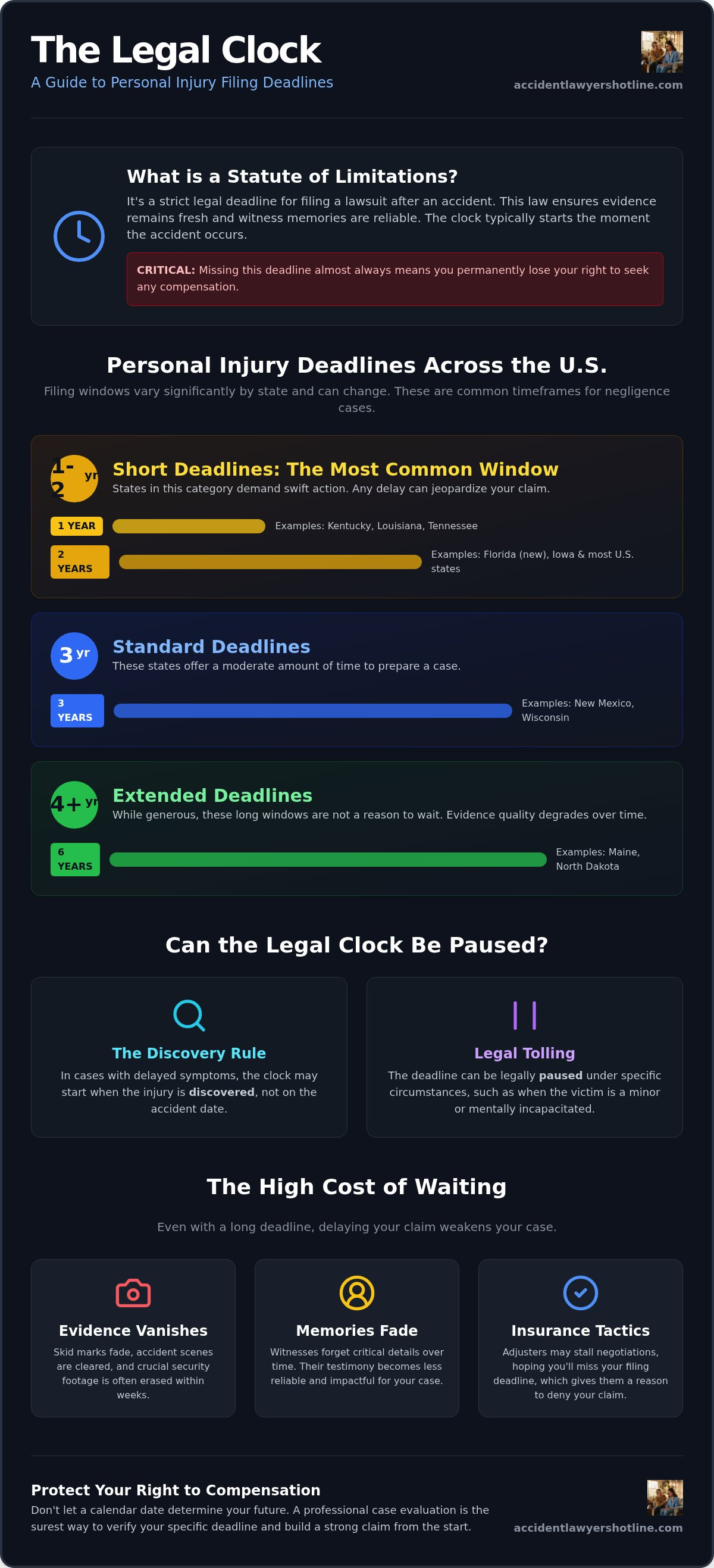
A statute of limitations is a legal deadline. It represents the maximum time you have to file a lawsuit after an accident occurs. These laws aren't meant to be hurdles. Instead, they ensure that cases are decided fairly. When a claim is filed years later, evidence disappears. Witnesses forget details. Physical proof at the scene degrades. By setting a firm limit, the legal system ensures that the facts remain as accurate as possible.
It's vital to realize that these timelines aren't universal for every type of injury. For example, the statute of limitations for personal injury by state might allow two years for a car crash but a different timeframe for medical malpractice or a bus accident. This variation makes it easy to get confused. Missing the deadline usually results in a permanent loss of your right to seek any compensation.
Why the Clock Starts at the Moment of Impact
Accrual is the moment a legal claim becomes enforceable. For most motor vehicle accidents, the countdown begins immediately. This point in time is known as the date of accrual. In a truck or motorcycle accident, the clock typically starts the second the collision happens. You don't get extra time because you were in the hospital or because you were waiting for a police report. The date on your accident exchange form is usually the date the clock starts ticking.
The Consequences of Waiting Too Long
The law is remarkably strict about these dates. If you try to file your paperwork even one day after the deadline, the court will likely dismiss your case immediately. There are very few ways to recover once that window closes. Insurance adjusters are well aware of these dates. They may act helpful and engage in long negotiations, only to stop responding once the deadline passes. They use the calendar as a tool to deny valid claims.
This is why early action is your strongest shield. Understanding the statute of limitations for personal injury by state is the first step in securing your future. A professional evaluation confirms your specific state deadline in minutes. It shifts the burden of tracking the calendar from your shoulders to a seasoned expert. You need to focus on healing. Let a professional handle the high stakes of the legal clock.
Personal Injury Deadlines in All 50 States
State laws regarding legal deadlines vary significantly across the country. While some jurisdictions give victims several years to act, others require immediate filing. The statute of limitations for personal injury by state can range from as little as one year to as long as six. It is critical to recognize that these rules are not static. For example, Florida recently shortened its deadline for most negligence cases from four years to two. This change highlights why relying on old information can be a costly mistake for your recovery.
States with Short Deadlines (1-2 Years)
If you live in a state with a short filing window, the pressure to act is intense. Kentucky, Louisiana, and Tennessee are among the strictest; they generally requiring you to file within just one year of the accident. Most other states, including Iowa and the newly updated Florida, follow a two-year standard. This is the most common timeframe in the U.S. for motor vehicle accidents. In these short-window jurisdictions, every day spent waiting for medical bills to settle is a day closer to losing your rights. You must move quickly to ensure your claim remains valid.
States with Extended Deadlines (3+ Years)
A handful of states offer a more generous timeline. Maine and North Dakota, for instance, provide up to six years for certain personal injury claims. Other states like New Mexico or Wisconsin typically allow three years. While these longer windows might feel like a safety net, they can be deceptive. Even if the legal clock is still ticking, your case can suffer from cold evidence. Skid marks fade. Security footage is erased. Witnesses move away or lose their clarity of memory. Filing early is always the safer path to a fair outcome.
Understanding these differences is the best way to protect your claim. Some states even distinguish between a standard injury and a wrongful death claim, setting different dates for each. Because these rules are complex and technical, getting a professional car accident case evaluation is the fastest way to confirm your specific deadline. It ensures you don't miss a critical date while you focus on your physical recovery. Shifting this burden to an expert allows you to breathe easier knowing your right to compensation is secure.
Common Exceptions: When the Legal Clock Pauses or Resets
While the deadlines discussed earlier are strict, the law recognizes that some situations require flexibility. This flexibility is called "tolling." Tolling allows the legal clock to stop or pause under specific circumstances. It's a vital protection for victims who cannot physically or legally file a claim right away. However, these exceptions are rare and highly technical. You should never assume an exception applies to you without professional verification. Navigating these rules is complex; a no fee unless we win your case attorney can investigate these exceptions for you. This allows you to explore every legal avenue without any financial risk or upfront costs.
Claims Involving Minors or Incapacitated Persons
When a child is injured in a car accident, they cannot legally file a lawsuit themselves. In many jurisdictions, the clock is "stayed" or paused until the minor turns 18. This ensures their rights are protected until they reach the legal age of adulthood. Similar rules often apply to victims who are mentally incapacitated at the time of the crash. However, some states impose a "statute of repose." This is a hard deadline that limits how long the clock can stay paused, regardless of the victim's status. Even with tolling, time remains a critical factor in your recovery. A professional can help you determine if tolling changes the statute of limitations for personal injury by state in your specific situation.
Suing a Government Entity: The 6-Month Rule
Accidents involving government vehicles create a completely different set of rules. If a city bus, police car, or mail truck hits you, the standard statute of limitations for personal injury by state might not be your biggest concern. Most government entities require a "Notice of Claim" before you can even begin a lawsuit. This administrative deadline is often as short as 60 to 180 days. If you miss this 6-month window, you may be barred from seeking compensation forever. This notice requirement is a common trap for victims who assume they have years to act. It can kill a case before it even reaches a courtroom.
These exceptions represent the "fine print" of personal injury law. They can either save your claim or provide a false sense of security if they are misunderstood. Because the rules for government claims are so much shorter, immediate action is necessary. Seeking a professional evaluation is the only way to ensure these hidden deadlines don't destroy your chance at a fair settlement. We are here to help you move from a state of uncertainty to a position of strength.
The Discovery Rule and Delayed Symptoms
Adrenaline is a powerful mask. In the immediate aftermath of a collision, your body’s natural response can hide significant trauma. You might walk away from the scene thinking you’re fine, only to experience debilitating pain weeks later. This is where the Discovery Rule becomes essential. The Discovery Rule is an exception to the standard "date of accident" trigger. It can effectively delay the start of the clock until your injury is actually found or diagnosed. Understanding how this rule interacts with the statute of limitations for personal injury by state is often the difference between a dismissed case and a successful recovery.
Courts apply a "Reasonable Person" standard to these situations. They ask a simple but high-stakes question: Would a reasonable person in your exact position have known they were hurt? If a typical person wouldn't have noticed the symptoms, the legal clock shouldn't penalize you for the delay. This rule protects victims of internal trauma who acted in good faith but simply didn't know the extent of their damage.
Hidden Injuries in Car and Truck Accidents
Massive collisions, especially those involving heavy commercial vehicles, often cause "invisible" injuries. Traumatic brain injuries (TBI), spinal disc herniations, and internal organ damage rarely show up as bruises or broken bones. Symptoms like memory loss, chronic headaches, or radiating nerve pain might take a month to surface. A truck accident lawyer uses specialized medical experts to prove this delay. They demonstrate that the medical timeline is consistent with the physics of the crash. You should seek medical attention immediately after any collision, even if you feel okay. An early doctor’s visit creates the baseline needed to apply the Discovery Rule later.
Proving Delayed Discovery in Court
Establishing a delayed discovery is a technical battle. Your medical records serve as the primary evidence in this fight. A lawyer must convincingly argue that your condition was not "reasonably discoverable" during the days following the accident. Insurance companies fight the Discovery Rule aggressively because it keeps their liability alive. They will scour your social media and early medical notes to find any hint that you knew you were hurt sooner. Having a professional advocate to manage this narrative is vital. If you’re unsure when your legal clock actually started, a car accident case evaluation can clarify your timeline and protect your right to compensation.
Beating the Deadline: Why Immediate Case Evaluation is Vital
The clock doesn't just measure time. It measures opportunity. Every hour that passes without a formal legal strategy is an hour where physical evidence can disappear and witness memories can fade. A professional evaluation is the fastest way to confirm your specific deadline in minutes. It replaces paralyzing fear with actionable facts. While you might know the general statute of limitations for personal injury by state, a lawyer needs substantial lead time to build a winning case. They don't just file a piece of paper. They investigate the scene, analyze medical data, and draft a comprehensive complaint that stands up in court.
Acting immediately ensures your motorcycle accident lawyer has the window required to secure vital black box data or recorded statements. If you wait until the final weeks, you risk having your case rejected by top firms who simply don't have enough time to do the job right. Speed is your greatest ally in the pursuit of fairness.
The 15-Minute Rule: Getting Legal Help Fast
Searching for the right firm while dealing with physical pain is overwhelming. Our referral process bypasses the stress of "lawyer hunting" by connecting you directly with a professional suited for your specific accident type. We act as an efficient facilitator between your moment of crisis and a professional resolution. Instead of calling dozens of offices and repeating your story, you get matched with an expert who understands the statute of limitations for personal injury by state in your jurisdiction. Waiting until the last month is a recipe for a rejected case. Most experienced attorneys require at least 60 to 90 days to conduct a thorough pre-filing investigation and secure necessary experts.
Contingency Fees: Legal Protection with No Upfront Cost
Financial stress shouldn't be a barrier to justice. The legal teams in our network operate on a contingency basis, meaning there are no fees unless they win your case. This financial model allows you to start your legal journey immediately, regardless of your current bank balance. It removes the risk and shifts the heavy burden of tracking deadlines from your shoulders to a professional advocate. You deserve the peace of mind that comes from knowing a seasoned expert is protective of your rights. By moving quickly, you restore a sense of balance to a situation that has felt out of control. Don't let a calendar date be the reason you lose your chance at a fair settlement.
Take Control of Your Legal Timeline Today
Navigating the aftermath of an accident is enough of a burden without the added stress of a ticking legal clock. You now understand that the statute of limitations for personal injury by state is a strict deadline that can permanently bar your recovery if missed. Whether you're dealing with a standard two-year window or a complex government claim with a 6-month notice requirement, your right to fairness depends on taking immediate action. The law provides protections like the Discovery Rule, but these technicalities require a seasoned expert to navigate successfully.
Don't let uncertainty prevent you from seeking the compensation you deserve. Our national network of motor vehicle accident specialists is ready to provide a fast, professional referral to protect your rights. You can connect with lawyers who charge no fee unless they win; this ensures that financial barriers don't stand in the way of justice. Get Your Free National Accident Case Evaluation Now and shift the burden of the legal process to a capable advocate. You've taken the first step by getting informed; now take the final step that secures your future. You don't have to face this storm alone.
Frequently Asked Questions
What is the statute of limitations for a car accident in my state?
It depends on your specific state, with most jurisdictions allowing two years from the date of the crash. However, some states like Kentucky only allow one year, while others like Maine offer up to six. The exact statute of limitations for personal injury by state varies based on local legislation. You should verify your state's current 2026 rules immediately through a professional case evaluation to ensure you don't miss the filing window.
Can I still sue if the statute of limitations has expired?
Generally, no; once the deadline passes, your legal right to file a lawsuit is permanently barred. Courts are incredibly strict and will likely dismiss your case without hearing the facts. The only exceptions involve very rare circumstances like the "Discovery Rule" or "tolling" for minors. If you believe your window has closed, a professional can investigate if any technical exceptions apply to your unique situation before you give up on your recovery.
Does the statute of limitations apply to insurance claims or just lawsuits?
These deadlines specifically apply to filing a lawsuit in court, but they indirectly control insurance negotiations. Insurance adjusters know exactly when your legal clock expires. If you haven't settled or filed a suit by the deadline, they lose all incentive to pay you because you can no longer threaten legal action. It's a common tactic for adjusters to delay conversations until the statute of limitations for personal injury by state has passed.
How does the discovery rule work in personal injury cases?
The Discovery Rule pauses the legal clock until you actually know, or reasonably should have known, that you were injured. This is vital for conditions like internal trauma or brain injuries that don't manifest symptoms immediately. Instead of the clock starting on the day of the crash, it starts on the day a doctor diagnoses the injury. This ensures that victims aren't penalized for injuries that were physically impossible to detect at the scene.
What is tolling of the statute of limitations?
Tolling is a legal mechanism that temporarily stops the countdown of the filing deadline. This typically happens when the victim is a minor, mentally incapacitated, or if the defendant has fled the state to avoid a lawsuit. Once the specific condition ends, such as the minor turning 18, the clock resumes. Tolling is highly technical and requires a professional to confirm if your specific circumstances qualify for this pause in the legal timeline.
Are there different deadlines for suing a government agency?
Yes, suing a government entity often involves much shorter administrative deadlines known as a "Notice of Claim." While a standard personal injury case might give you two years, an accident involving a city bus or mail truck could require you to file formal notice within 60 to 180 days. Missing this initial administrative window can destroy your case even if the standard statute of limitations hasn't expired yet. Immediate action is vital in these cases.
Is the statute of limitations the same for wrongful death and personal injury?
Not always; many states set different deadlines for these two types of claims. A personal injury clock usually starts on the date of the accident, while a wrongful death clock might start on the date of the individual’s passing. Because these dates can be months apart, the deadlines often differ. It is critical to have an expert review the specific timelines for your state to avoid confusing these two distinct and high-stakes legal paths.
What happens if I miss the filing deadline by only one day?
Missing the deadline by even 24 hours usually results in the total loss of your right to seek compensation. Judges rarely have the discretion to "forgive" a late filing, regardless of how severe your injuries are or how clear the other party's fault is. The law views these dates as absolute cut-offs. This is why getting a referral to a lawyer early is the only way to protect your claim's validity and your future.
Were You Injured in an Accident?
Get a free, confidential case evaluation. No upfront fees.
Get Free Case Evaluation