Rideshare Accident Claim Process: A Step-by-Step Guide
Understand the rideshare accident claim process with our guide. Learn how driver app status, insurance policies, and evidence impact your injury compensation.
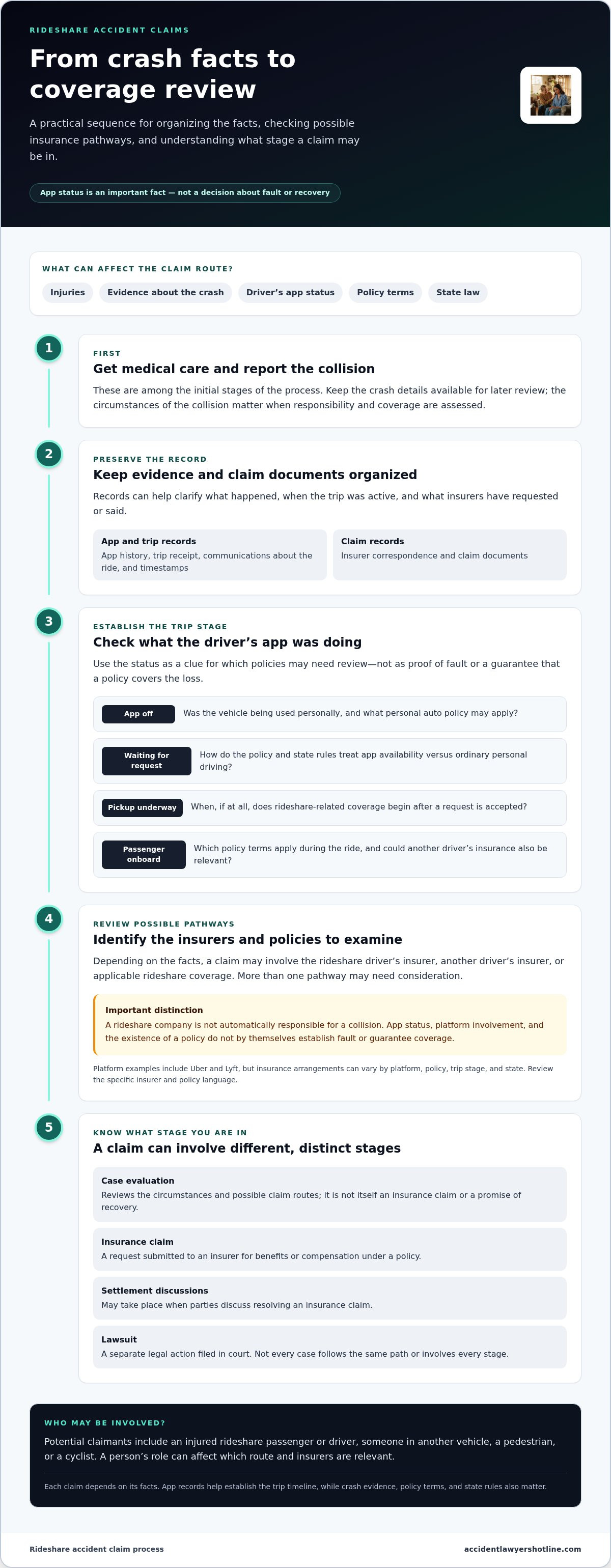
What if the rideshare driver’s app status matters as much as who caused the crash? After an accident, it can be hard to know which insurer to contact, what coverage may apply, or how to respond when an insurer asks for information. The rideshare accident claim process depends on the facts, including whether the driver was waiting for a request, heading to pick someone up, or completing a ride.
You don’t have to sort out every insurance question at once. This guide explains the main stages, from getting medical care and reporting the collision to preserving evidence and reviewing possible coverage pathways. You’ll also learn how app records, crash details, and state rules may affect which policy could respond.
Each claim is different, and an insurer’s first answer may not resolve every question about responsibility or coverage. If the facts or insurance pathways are unclear, a case evaluation can help organize the relevant questions and identify possible next steps. Accident Lawyers Hotline evaluates motor vehicle accident cases and connects people with independent personal injury attorneys. The platform does not directly represent claimants.
Key Takeaways
- The rideshare accident claim process depends on the specific facts, including injuries, evidence of fault, app activity, policy terms, and state law.
- Compare the driver’s app status at the time of the crash with the available insurance policies. Coverage questions can differ between waiting for a request and carrying a passenger.
- A rideshare company isn’t automatically responsible for a collision. A claim may involve the driver’s insurer, another driver’s insurer, or applicable rideshare coverage.
- Keep app records, insurer correspondence, and claim documents organized so you can track reports, requests, and responses.
- Disputed fault, serious injuries, or several potential insurers may make a case evaluation useful for identifying possible claim routes, though it can’t guarantee recovery.
What Does the Rideshare Accident Claim Process Involve?
A rideshare collision can raise questions that don’t come up in the same way after a typical two-car crash. The driver may have been offline, waiting for a request, heading to pick up a passenger, or carrying someone. App activity can affect which insurance policies need review, but it doesn’t determine fault or guarantee that a particular policy will cover a loss.
A rideshare accident claim is a request to pursue recovery through insurance or, when appropriate, the legal system after a collision involving a rideshare trip. The available route depends on factors such as injuries, evidence about how the crash happened, the driver’s app status, insurance policy terms, and state law. More than one coverage pathway may need to be considered, particularly when multiple drivers or insurers are involved.
Keep the different stages distinct. A case evaluation reviews the circumstances and possible claim routes; it isn’t itself an insurance claim or a promise of recovery. An insurance claim is a request submitted to an insurer for benefits or compensation under a policy. If the parties discuss resolving that claim, they may enter settlement discussions. A lawsuit is a separate legal action filed in court. A claim may involve one or more of these stages, but not every case follows the same path.
Who may bring a rideshare accident claim?
Potential claimants include an injured rideshare passenger, the rideshare driver, someone riding in another vehicle, a pedestrian, or a cyclist. Each person’s role matters. A passenger’s potential route, for example, may differ from the route available to a driver working through the app or a cyclist struck by a vehicle. The relevant insurers and policy terms can also vary. Being involved in a rideshare crash doesn’t automatically make the rideshare company responsible or establish that a claimant can recover from it.
Why is a rideshare claim different from an ordinary car claim?
The commercial app relationship adds questions: Was the driver using the app, and what trip stage was active? Ridesharing describes a broader transportation model, but an individual accident claim turns on its own facts and applicable policy language. The driver, rideshare company, other motorists, and several insurers may all become relevant. Their involvement doesn’t establish fault. Evidence and policy terms need review before anyone can assess which route may apply.
A rideshare accident claim process isn’t a single form or an automatic company payment. It involves fact-finding and claim decisions. A careful review can help identify which questions to raise with insurers and whether a case evaluation or legal guidance may help clarify possible next steps.
How App Status Can Affect Rideshare Accident Insurance
A rideshare driver’s app activity can help identify which insurance policies may be relevant. But app status alone doesn’t show who caused the crash or determine whether a claim will be covered. App status is a key fact, but it does not alone decide fault or recovery. Policy language and applicable state rules still matter.
Use this comparison to identify questions for a claim review, not to assume a specific insurer must pay:
| Driver’s status | Insurance questions to investigate |
|---|---|
| App off | Was the driver using the vehicle personally, and what personal auto policy may apply? |
| App on, waiting for a request | Does the policy distinguish app availability from ordinary personal driving? What coverage applies during this period under the policy and state rules? |
| Request accepted, traveling to pick up a passenger | Does the accepted trip activate rideshare-related coverage, and when does that coverage begin? |
| Passenger in the vehicle | Which policy terms apply during the ride, and could another driver’s insurance also be relevant? |
Uber and Lyft are examples of rideshare platforms, but don’t assume their insurance arrangements are identical. Terms can vary by platform, policy, trip stage, and state. A claim review should identify the specific insurer and policy language rather than rely on a general description of rideshare coverage.
What if the driver was offline or waiting for a request?
If the app was inactive, the driver’s personal auto policy may be relevant, subject to its terms and applicable law. An app that’s on but waiting for a request is a different situation and may raise separate questions about rideshare-related coverage and the driver’s policy. Preserve available app records, trip details, and timestamps. These can help establish whether the app was off, available, or already connected to a ride.
What if a ride was accepted or a passenger was onboard?
An accepted request or passenger in the vehicle can raise additional questions about rideshare coverage. Check the trip receipt, available app history, and insurer documents to help confirm the trip stage and timing. Don’t assume a particular coverage limit applies everywhere. Policy terms and state requirements differ, so the relevant documents need to be reviewed for the specific crash.
Keep records that can clarify the timeline, including the trip receipt, communications about the ride, and claim correspondence. If the driver’s account of app activity differs from available records, note the discrepancy and include it in the claim review. The rideshare accident claim process can involve more than one insurer, so a clear timeline helps distinguish which coverage questions relate to each policy.
If app status or policy pathways remain unclear, a rideshare accident case evaluation can help identify questions and potential routes. Accident Lawyers Hotline evaluates motor vehicle accident cases and connects people with independent personal injury attorneys. Any legal representation is provided by an independent attorney, not the platform.
Who May Be Responsible, and Which Claim Route Fits?
A rideshare crash doesn’t automatically make the platform liable. Responsibility depends on what caused the collision, who was involved, and what the evidence shows. The driver’s rideshare status may affect which policies need review, but it doesn’t establish fault or guarantee that rideshare coverage applies.
Potential routes can include a claim under the rideshare driver’s personal auto policy, a claim against another driver’s insurer, or a claim involving rideshare coverage. More than one route may need examination. Identifying a potentially relevant policy is only a starting point. Its terms, the facts of the crash, and state rules determine whether it may cover a particular loss.
| Claimant | Potentially relevant insurer | Facts to review |
|---|---|---|
| Rideshare passenger | Rideshare-related insurer, rideshare driver’s insurer, or another driver’s insurer | Trip status, collision evidence, injuries, and policy terms |
| Rideshare driver | Another driver’s insurer or a potentially applicable rideshare or personal policy | Who may have contributed to the crash, app activity, and applicable coverage terms |
| Occupant of another vehicle | Rideshare driver’s insurer, rideshare-related insurer, or another involved driver’s insurer | Driver conduct, app status, damage evidence, and policy language |
| Pedestrian or cyclist | One or more insurers for the involved drivers | Crash location, witness accounts, available video, and the drivers’ actions |
How does the at-fault driver's role shape the claim?
The rideshare driver, another motorist, or multiple parties may have contributed to a collision. For example, the movement of both a rideshare vehicle and another car may be relevant to how the crash occurred. Photos, witness accounts, vehicle damage, and available video can help clarify the sequence. Don’t infer fault from rideshare status alone. State rules on shared fault vary and may affect whether, or how, a person can recover.
Can more than one insurance policy matter?
Yes. A crash involving several drivers or overlapping coverage questions may require review of multiple policies. But identifying a potentially relevant insurer doesn’t prove that its policy covers the loss. Coverage depends on policy wording and the specific circumstances. Keep a simple record of each insurer’s name, claim reference, contact details, and correspondence. This helps you track who has been notified, what each insurer is reviewing, and which questions remain.
The rideshare accident claim process can involve two separate inquiries: who may be legally responsible, and which policy, if any, may respond to a particular claim. Those questions can overlap, but they aren’t interchangeable. An insurer may review fault and coverage separately, and one party’s involvement doesn’t settle either issue.
Keep records tied to each route together. A crash report or witness account may help assess responsibility, while app or trip records may help establish the driver’s activity. Organizing both types of evidence alongside policy and claim information makes it easier to explain the situation accurately and identify what still needs review.
How to Move a Rideshare Accident Claim Forward
Once you’ve identified possible claim routes, keep the paperwork and communication organized. A clear record helps you respond to insurer requests and spot missing information. Because the rideshare accident claim process can involve several parties, handle each claim as a separate file while keeping one overall timeline.
- Preserve records in their original form. Save the trip receipt, relevant app screenshots, emails, text messages, and any documents showing the ride’s date and timing. Keep copies of crash photos, the police report, and witness details. Don’t edit original files. Make separate notes if you need to explain what they show.
- Identify the insurers and open claim records. Gather the names of the rideshare driver’s insurer, any other involved driver’s insurer, and the rideshare-related insurer identified in available documents. Record each claim reference and the contact information for the person handling it. An insurer’s involvement doesn’t establish that its policy covers the loss.
- Report the collision through the relevant channels. Follow the reporting instructions provided by the involved insurer or rideshare platform. Keep a copy of each report and note when you submitted it. If you’re unsure whether a communication is a formal claim notice or only an incident report, record what you sent and ask the recipient to clarify in writing.
- Track progress and check deadlines. Maintain a timeline of reports, requests, responses, and unresolved questions. Lawsuit deadlines vary by state and may depend on the type of claim and circumstances. Don’t rely on a general online deadline to calculate your own. Prompt, case-specific review can help identify which time limits may apply.
What information can help support a claim?
Build a file that connects the collision to its consequences. Include trip details, app records, crash information, photographs, witness names, and the police report if available. Keep medical records, treatment dates, bills, receipts, and documentation of missed work or other work impacts together. Separate confirmed facts from estimates, label notes with dates, and preserve copies of messages and insurer correspondence. A simple digital or paper folder system can make requested documents easier to locate.
How should you handle insurer requests and claim updates?
For every interaction, log the date, sender, request or update, your response, and the claim reference. Save attachments and note any stated response date. Read forms and releases carefully before signing. Their wording and scope can affect what information is shared or what rights may be addressed. If a request or document is unclear, ask for an explanation before responding. An early settlement offer doesn’t necessarily mean all injuries, expenses, or work impacts are understood, so review what the offer covers before deciding how to proceed.
If coordinating records and several insurer communications feels difficult, request a motor vehicle accident case evaluation to discuss possible claim pathways. Accident Lawyers Hotline connects people with independent personal injury attorneys. Any representation is provided by an independent attorney, not the platform.
When to Seek a Rideshare Claim Evaluation
A case evaluation may help if you’re unsure which insurer to approach or what to do next. It can be especially useful when drivers dispute fault, injuries are serious, more than one insurer is involved, or policy coverage is unclear. These issues can affect how the rideshare accident claim process moves forward, but they don’t automatically determine whether you can recover compensation.
An evaluation is a starting point for organizing questions, not a promise of payment or a legal outcome. The platform is not a law firm and doesn’t directly represent claimants. If you’re connected with an attorney, that independent professional can discuss whether representation is appropriate and explain possible next steps.
What can a case evaluation help clarify?
Start with the facts that shape the claim: your role in the collision, the date and trip details, the injuries reported, records you’ve gathered, and the insurers already involved. An evaluation can help identify gaps or questions about potential coverage pathways. An independent attorney may assess applicable law, review relevant policy information, and discuss possible next steps. The evaluation and attorney connection are distinct from legal representation.
If an attorney discusses fees, ask how the proposed arrangement works and what it covers before making a decision. Independent attorneys may work on a contingency basis, meaning there are no fees unless the case is won, but the terms should be explained by the attorney. The article No Fee Unless We Win Your Case Attorney: Understanding Contingency Fees in 2026 can provide additional context about fee arrangements. The referral platform doesn’t provide legal representation or set an attorney’s terms.
What should you prepare before discussing your case?
You don’t need to solve every coverage question before requesting an evaluation. A concise summary and the records you already have can make the discussion more focused. Gather what’s available, and note what remains uncertain rather than guessing. Helpful materials may include:
- The crash date, location, trip receipt, and any details showing the app or ride status
- The names of involved drivers or other parties and any known insurer or claim references
- Insurer letters, emails, forms, and other claim-related correspondence
- Injury and treatment records, bills, receipts, and notes about missed work
- A brief account of what happened, separating what you observed from what you don’t know
Keep originals and share copies when possible. If records are missing, say so; an incomplete file can still help identify questions that need attention. A case evaluation can clarify potential routes, but it can’t guarantee that a claim qualifies for representation or that compensation will be recovered. If you’re facing disputed fault, significant injuries, or confusing insurer responses, request a rideshare accident case evaluation through Accident Lawyers Hotline to discuss possible next steps.
Take the Next Step With More Clarity
You don’t need every answer before deciding what to do next. Focus on the question that matters most right now, whether that’s understanding a coverage response, making sense of an insurer’s request, or deciding whether to discuss your options with an attorney. A thoughtful review can help you approach that next conversation with greater clarity.
The rideshare accident claim process can raise questions that are difficult to resolve from paperwork alone. Accident Lawyers Hotline provides case evaluations for motor vehicle accident claims and connects people with independent personal injury attorneys. The attorneys operate on a contingency basis, so there are no fees unless the case is won. A connection or evaluation doesn’t guarantee representation or recovery.
To discuss possible next steps, request a rideshare accident case evaluation. You can get your questions in order and consider the options available to you.
Frequently Asked Questions
Can I file a rideshare accident claim if I was a passenger?
Yes. An injured passenger may have a claim, but the rideshare accident claim process depends on who caused the collision, the driver’s app status, available policies, and state law. Save your trip confirmation, receipt, and any messages about the ride. Keep medical records and note when symptoms or treatment began. Passenger status alone doesn’t establish fault or guarantee payment. A case-specific review can help identify which questions to address.
What if the rideshare driver was not logged into the app?
An offline driver may raise different insurance questions than one waiting for a request or completing a trip. The driver’s personal auto coverage may be relevant, subject to policy terms and applicable law. Keep records that could help establish timing, such as trip confirmations, messages, or other dated information. A driver’s account of app activity alone doesn’t prove which policy applies or require an insurer to cover the loss.
Do I need a police report to make a rideshare accident claim?
A police report can help document details such as the people involved, location, and reported circumstances, but it isn’t the only useful evidence. Preserve photographs, witness contact details, trip records, medical documentation, and insurer messages. Requirements and the report’s role can vary by jurisdiction and case. If no report was made, that fact alone doesn’t automatically defeat a claim. Keep other records organized and note how you obtained them.
How long does a rideshare accident claim take?
There’s no standard timeline. Injury treatment, disputed fault, policy review, evidence gathering, insurer responses, and any court process can all affect how long a claim takes. A deadline to file a lawsuit is separate from the time spent negotiating with an insurer, and deadlines depend on jurisdiction and claim type. Keep a dated record of communications, and seek prompt case-specific guidance about deadlines rather than assuming negotiations pause them.
Can I make a claim against more than one driver or insurer?
Possibly. If the evidence suggests that more than one driver’s conduct contributed to the collision, or several policies may be relevant, multiple routes might need review under applicable state law. That doesn’t mean every insurer must pay or that the same loss can be recovered more than once. Track each insurer’s name, claim number, requests, and responses. If fault or coverage is disputed, a case-specific assessment can help clarify the issues.
Should I give a recorded statement to an insurance adjuster?
An insurer may ask for information, but first understand who is requesting the statement, its purpose, and its scope. Give accurate answers, avoid guessing, and keep a copy of any written follow-up. Whether you have obligations to provide information can depend on the policy and circumstances, so a blanket rule may not fit. If injuries, fault, or coverage are disputed, an attorney can explain the implications of that specific request.
What if my injuries appear after the rideshare crash?
Seek appropriate medical attention if symptoms appear after the collision, and describe when they began and how they change. Keep appointment dates, treatment records, and notes about symptoms or activities they affect. This documentation can help explain the timeline, but it doesn’t guarantee an insurer will accept a claim. Don’t minimize new or worsening symptoms. Because applicable deadlines vary, get prompt guidance about the time limits that may apply to your situation.
Were You Injured in an Accident?
Get a free, confidential case evaluation. No upfront fees.
Get Free Case Evaluation