Uninsured Motorist Claim: 2026 Step-by-Step Guide
Navigate the uninsured motorist claim process with our 2026 guide. Learn how to file, preserve evidence, handle investigations, and protect your legal rights.
What if the insurance company handling your crash claim is your own? That’s often where the uninsured motorist claim process begins: with a claim under your policy, not the uninsured driver’s. It can still feel uncertain. Coverage depends on your policy and state rules, and your insurer may investigate fault, injuries, and losses before deciding what it will pay.
You’re right to want clear steps before making decisions. Notice requirements and deadlines can vary, and missing records or details may complicate a claim. This guide explains the usual stages, what evidence to preserve, and how state laws and policy terms can affect the process.
You’ll learn what to report, how an insurer may investigate, and how to document medical care, vehicle damage, and lost income. If you’re unsure how the rules apply to your situation, a case evaluation can help you organize the facts and understand possible next steps. Accident Lawyers Hotline evaluates motor vehicle accident cases and connects people with independent attorneys who handle these matters. The attorneys provide any legal representation.
Key Takeaways
- UM coverage may apply when an at-fault driver lacks qualifying insurance, but eligibility depends on your policy, the crash facts, and state law.
- The uninsured motorist claim process often moves through notice, evidence gathering, coverage review, investigation, claim evaluation, and resolution or dispute.
- Policy declarations, endorsements, crash records, medical documentation, and proof of financial losses can help clarify the claim.
- Review your policy promptly, keep copies of records you submit, and log your communications with the insurer.
- A case evaluation can help organize your questions and possible next steps. Accident Lawyers Hotline connects people with independent attorneys; it does not provide legal representation.
What is an uninsured motorist claim, and when might it apply?
Uninsured motorist (UM) coverage is part of an auto insurance policy that may help cover certain losses after a crash caused by a driver who lacks qualifying insurance. Depending on the policy, it may address bodily injury, vehicle damage, or both. It can provide a route to seek compensation through your own policy, but it does not guarantee payment.
Whether a claim qualifies depends on several details: the policy’s definitions and exclusions, what happened in the crash, the available evidence, and the law that applies. Two crashes that seem similar may be treated differently if the drivers’ insurance status, available proof, or policy wording differs. Start by identifying the potential coverage trigger rather than assuming coverage automatically applies.
What situations may qualify for uninsured motorist coverage?
A common potential trigger is a crash where another driver caused the collision and has no qualifying insurance. Some policies may also address crashes involving an unidentified driver, including certain hit-and-run incidents. The terms matter: policies and state laws can set specific proof requirements, and some jurisdictions may require physical contact in particular hit-and-run claims. If the driver left the scene, preserve available details, such as witness information, photographs, and any police report. Don’t assume every unidentified-driver crash qualifies.
How does uninsured coverage differ from underinsured coverage?
Underinsured motorist (UIM) coverage may apply when the at-fault driver has insurance, but the available liability limits are insufficient for the covered losses. The policy and state rules can affect how UIM coverage coordinates with the other driver’s insurance, including what amounts may be considered before UIM coverage applies.
In short, UM coverage may address a qualifying crash with an uninsured driver, while UIM coverage may address a qualifying crash where the at-fault driver’s insurance limits fall short. Neither label means payment is automatic. Eligibility, covered losses, limits, and coordination rules depend on the policy and applicable law.
For an initial review, locate the declarations page, which summarizes selected coverages and limits, and the full policy, including endorsements that change or explain coverage. Check how the documents define an “uninsured” or “underinsured” vehicle, identify exclusions, and describe notice or proof requirements. A declarations page alone may not contain every condition that affects a claim.
As you assess what happened, keep the distinction between UM and UIM coverage in mind. If the other driver’s insurance status is unclear or a hit-and-run may be involved, record what you know without guessing. The insurer’s investigation and applicable rules will help determine which coverage, if any, fits the circumstances. A case-specific review can help you organize the crash facts and policy questions before deciding what to do next.
How does the uninsured motorist claim process usually work?
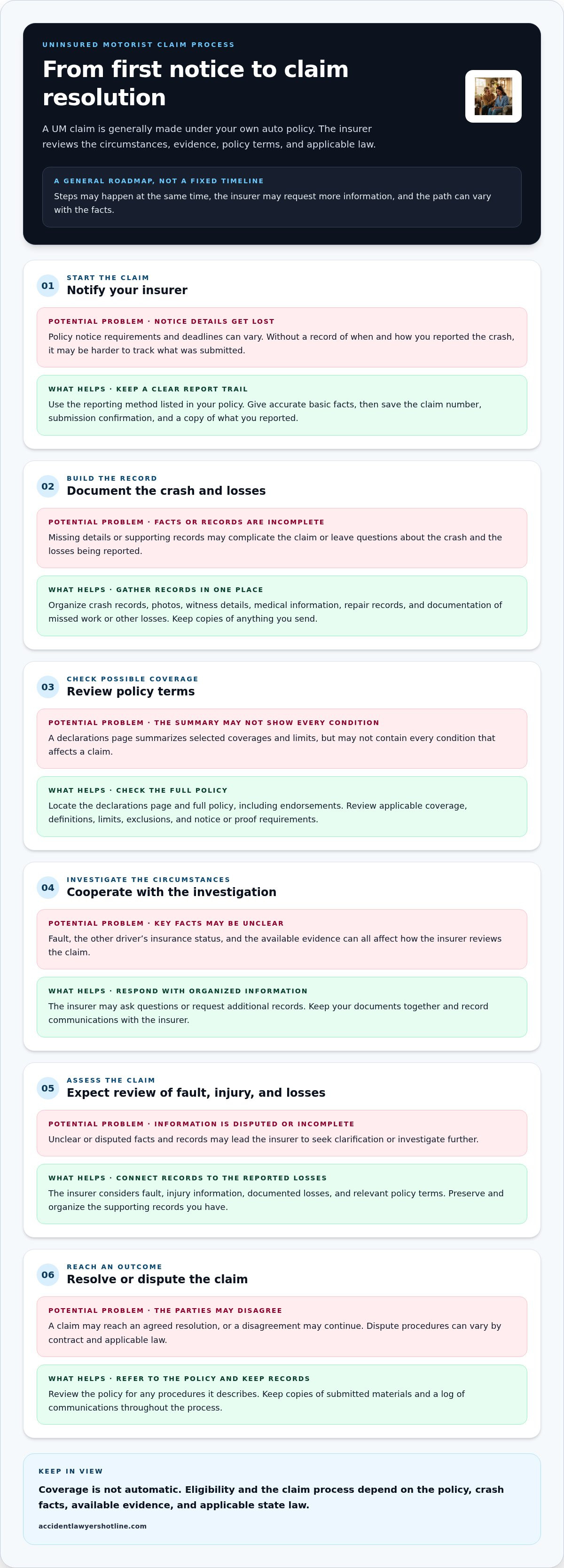
A UM claim is generally made under your own auto insurance policy, not the uninsured driver’s. Your insurer reviews the claim under the policy terms and applicable law. The steps below offer a general roadmap, not a guaranteed order or fixed timeline. The insurer may handle steps at the same time, request more information, or take a different path based on the facts.
- Notify your insurer. Report the crash through the channel listed in your policy, such as its claims phone line, app, or online portal. Give accurate basic facts and keep the claim number, submission confirmation, and a copy of what you reported.
- Document the crash and your losses. Organize crash records, photos, witness details, medical information, repair records, and documentation of missed work or other losses. Keep copies of anything you send.
- Establish possible coverage. The insurer reviews your policy, including applicable coverage, definitions, limits, and conditions. This coverage review asks whether the policy may apply to the reported circumstances.
- Cooperate with the investigation. The insurer may examine how the crash happened, the other driver’s insurance status, and the available evidence. It may ask questions or request additional records.
- Evaluate the claim. The insurer considers fault, injury information, documented losses, and relevant policy terms. It may seek clarification or investigate further if facts or records are incomplete or disputed.
- Resolve or dispute the claim. The claim may reach an agreed resolution, or a disagreement may continue. The policy may describe procedures for disputes, which can vary by contract and applicable law.
What happens after you notify your insurer?
Use the reporting method your policy identifies, and note when and how you gave notice. Save emails, portal receipts, letters, and the name of anyone you spoke with. The insurer may ask for your policy information, a crash report, statements, or supporting records. Review the policy’s notice requirements promptly. If you’re unsure what a request means or how to respond, seek case-specific legal guidance rather than guessing.
How are coverage, fault, and damages reviewed?
These are related but distinct questions. The insurer may assess whether the policy could cover the event, investigate responsibility for the crash, and evaluate claimed injuries and losses. Medical records, bills, repair estimates, wage documentation, photographs, and witness accounts may all inform its review. A disagreement about coverage, fault, or the value of losses can lead to requests for more evidence or policy-based dispute procedures.
Keep a dated communication log. Record who contacted you, what they requested, what you sent, and any stated next steps. This helps you track open questions and preserve details during a lengthy review. The sequence and pace depend on the claim, policy, and applicable rules, so don’t treat a typical stage as a deadline or a promise of resolution.
If you want help organizing the crash facts and questions before deciding what to do, consider a motor vehicle accident case evaluation. Accident Lawyers Hotline connects people with independent attorneys who handle motor vehicle injury matters. The platform does not provide legal representation.
What evidence and policy details can shape a UM claim?
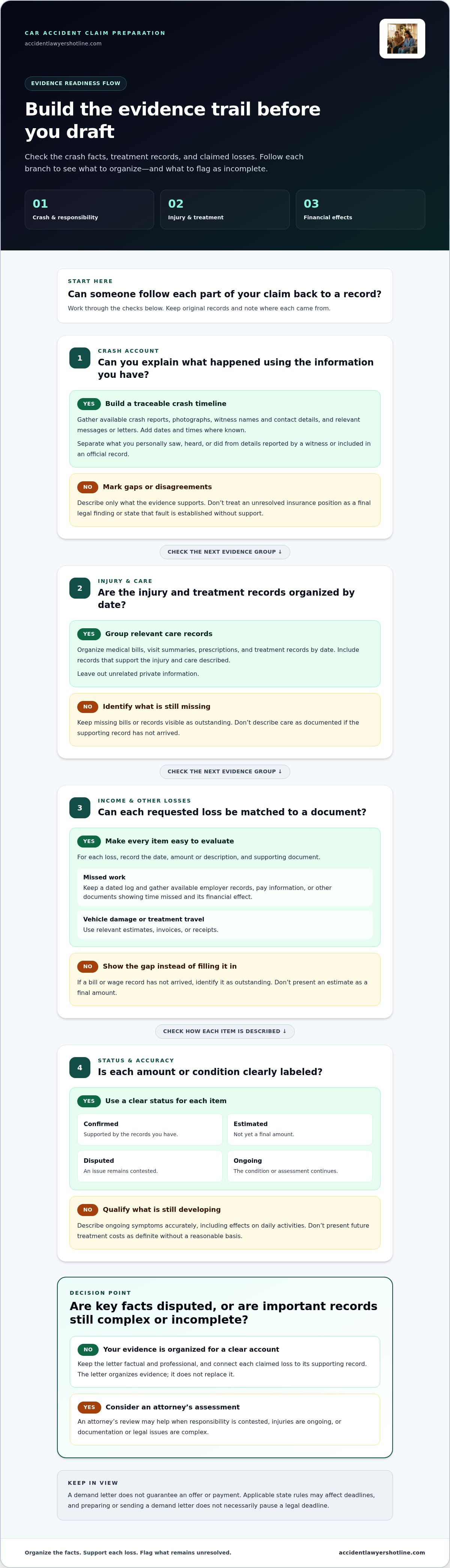
Useful documentation helps explain what coverage may apply, how the crash happened, and what losses followed. The records that matter depend on the disputed facts, the injuries involved, and the policy language. No single document proves every part of a claim. Keep records together and note what each one may help establish as you move through the uninsured motorist claim process.
| Record type | What it may help show |
|---|---|
| Policy documents | Selected coverage, limits, definitions, conditions, and changes to the policy. |
| Crash records | How and where the collision occurred, vehicle damage, and accounts from witnesses. |
| Medical records | Reported symptoms, treatment, and the connection between care and claimed injuries. |
| Loss documentation | Expenses or missed income related to the crash, when relevant. |
Which documents help establish coverage and claim history?
Gather the declarations page, the full policy, any amendments or endorsements, and letters or emails from the insurer. The declarations page summarizes selected coverages and limits; endorsements may add, change, or explain policy terms. Read these records together, but don’t assume one page settles eligibility. Save your notice to the insurer, claim number, delivery confirmations, and dated notes of calls. These records help you track what was reported and what information the insurer requested.
Limits matter because they show the maximum amount available under a particular coverage, subject to the policy and applicable rules. The declarations page may identify a limit, while the full policy explains how it applies, which conditions must be met, or how other coverage affects the claim. A document checklist can organize your review, but interpreting a specific policy may require case-specific guidance.
Which records may support fault and injury losses?
Crash reports, scene and vehicle photographs, witness names and contact details, and relevant vehicle records can help describe what happened. Medical records and bills may document treatment and claimed injury-related losses. If the crash affected your income, keep relevant wage or work records. Preserve originals when possible and make copies before submitting documents so you can refer back to what the insurer received.
Filing with your own insurer doesn’t guarantee payment or prevent disagreement. The insurer may question whether coverage applies, who caused the crash, whether an injury relates to the collision, or how claimed losses are documented. Different questions call for different records. For example, photographs or witness accounts may be especially relevant to a dispute about how the impact occurred, while a dispute about treatment may focus attention on medical documentation.
Organize your records by date and topic, and send information that responds to the insurer’s request or helps explain your claim. Evidence needs can change as questions arise. A well-organized file makes it easier to identify missing information and keep your account consistent.
What should you do to protect your uninsured motorist claim?
Start by reviewing your policy and notifying your insurer promptly. Don’t assume one deadline applies everywhere. Notice requirements and claim time limits can depend on your policy and state law, so read the relevant policy language and act without unnecessary delay. If you’re unsure what a requirement means, get case-specific legal guidance rather than relying on a general rule.
Be accurate and consistent in every report, form, and conversation. Describe what you remember, distinguish facts from estimates, and say when you don’t know an answer. Don’t guess about speed, distance, or another person’s actions. If new information changes your understanding, explain the correction clearly. Accurate records can prevent confusion as the insurer reviews the claim.
How can you stay organized during the claim?
Create one paper or digital folder for the policy, insurer notices, crash records, treatment records, and correspondence. Keep originals when possible and provide copies when practical. A simple log helps track details without relying on memory:
- Record the date, time, and name of each person you speak with.
- Note what the insurer requested and any response date it gave you.
- List the records you submitted, when you sent them, and how you sent them.
- Save claim numbers, emails, letters, portal receipts, and delivery confirmations.
Before sending a document, keep a copy and confirm that it’s readable. If you submit records through an online portal, save the confirmation. These habits create a clear timeline and make it easier to see which requests remain open.
When might legal guidance help with a claim?
Consider getting legal guidance if the insurer denies coverage, disputes fault, questions the connection between treatment and the crash, or delays responding while important issues remain unresolved. Serious injuries can also make it harder to assess the full effect of a crash while treatment is ongoing. An attorney can review the policy language and applicable state rules in light of the specific facts.
Pause before giving a recorded statement, signing a release, or accepting a settlement offer if you don’t understand the request or its possible effect. These steps may affect how the claim proceeds. Ask for the request in writing, keep a copy, and seek case-specific advice before committing. The same care can help if the insurer raises a coverage dispute or you’re unsure what a proposed resolution covers.
A focused review can help you organize your questions and understand possible next steps. Request a motor vehicle accident case evaluation to discuss the circumstances of your crash. Accident Lawyers Hotline connects people with independent attorneys who handle motor vehicle injury matters. It’s a referral platform, not a law firm, and it does not provide direct legal representation.
How can a case evaluation help you choose your next step?
An unfamiliar policy, an insurer’s questions, and uncertainty about what to do next can feel like a lot to manage after a crash. A case evaluation can help bring order to the situation. Reviewing the basic accident information, known insurance details, and your questions can help identify issues to discuss and possible next steps in the uninsured motorist claim process.
Accident Lawyers Hotline evaluates motor vehicle accident cases and connects accident victims with independent attorneys who handle these matters. The platform is a referral service, not a law firm or legal representative. It does not decide whether an insurer must pay or provide direct legal representation. Attorneys offer legal assistance and work on a contingency basis, meaning there are no fees unless the case is won.
What information should you prepare for a case evaluation?
You don’t need a complete file to explain what happened. Share what you know and identify information that’s still missing. A short written summary can make it easier to explain the situation clearly.
- The crash date and a brief account of how the collision happened.
- Any known details about the other driver’s insurance and your own policy.
- The injuries you experienced and treatment received so far.
- Notices, insurer requests, claim decisions, or disputes you’ve already received.
- Any deadline mentioned in a policy notice or insurer communication.
If you don’t have the policy, medical records, or crash report in front of you, that shouldn’t stop you from requesting an initial evaluation. Be clear about what you know and what you still need to locate. Avoid guessing about details. You can note questions you want to resolve, such as whether a notice requires a response or what an insurer’s coverage decision means.
What happens after you request help?
Accident Lawyers Hotline reviews the accident information you provide and connects people with independent attorneys who handle motor vehicle injury matters. The attorney and client decide whether to enter a representation relationship. Representation terms and the fee agreement are between them. Attorneys work on a contingency basis, meaning there are no fees unless the case is won. An evaluation or referral does not guarantee representation, coverage, compensation, or a particular outcome.
Use the evaluation to explain the specific point where you feel stuck. For example, you may have received a coverage denial, have questions about an insurer’s request, or need help understanding which facts matter. Clear questions help focus the discussion. An independent attorney can review the policy and applicable rules for your circumstances and explain potential options.
If you’re ready to organize your situation and consider a next step, request a car accident case evaluation. Bring the information you have, even if some records are still missing.
Take the next step with a clearer plan
You don’t have to resolve every policy question before asking for help. Start with the issue that feels most urgent, whether it’s a notice you received, a coverage decision, or what to do before responding to the insurer. A focused review can help turn uncertainty into questions you can address one at a time.
Accident Lawyers Hotline provides case evaluations for motor vehicle crashes and connects accident victims with independent attorneys who handle these matters. The attorneys work on a contingency basis, meaning there are no fees unless the case is won. The platform is a referral service, not a law firm, and does not provide legal representation.
For a case-specific next step, request a car accident case evaluation. You can begin with the information you have and build a clearer path forward from there.
Frequently Asked Questions
Is uninsured motorist coverage required in every state?
No. Requirements differ by state. Some states require insurers to offer or include certain coverage, while others handle it differently. A requirement to offer coverage doesn’t necessarily mean it appears in every policy. Check your declarations page and policy wording, then compare them with current requirements that apply to your situation. If you’re unsure how those rules affect a specific crash, a case-specific review can help clarify the question.
Can I file an uninsured motorist claim if the other driver left the scene?
Possibly, but a hit-and-run claim depends on your policy and applicable state law. Requirements can differ on reporting, identifying the vehicle, and proving that contact occurred. For example, a policy or state rule may require evidence beyond simply reporting that another driver left. Preserve available details, such as witness information or a nearby camera location, and review the policy promptly. Don’t assume every hit-and-run qualifies automatically.
How long does an uninsured motorist claim take?
There’s no single timeline for every claim. The review may take longer if the insurer is still investigating how the crash happened, waiting for treatment records, or assessing injuries that are not yet clear. Disputes about coverage or fault can also add steps. Ask the insurer to explain outstanding requests and expected next actions in writing. Keep those updates with your claim records, but don’t treat an estimate as a legal deadline.
What happens if my insurer denies an uninsured motorist claim?
A denial doesn’t explain itself, so request the reasons in writing if they aren’t clear. Compare the explanation with the policy provisions it cites, and note whether the issue concerns coverage, fault, or missing information. Preserve the denial and any records the insurer considered. Review procedures and deadlines can differ, so consider getting legal guidance promptly. An attorney can assess the stated reason and applicable rules against the facts of your claim.
Do I have to accept the insurer’s first uninsured motorist settlement offer?
No, an offer doesn’t automatically require you to settle. Before deciding, understand which injuries and losses the offer covers and whether signing a release would end your ability to seek further payment for them. Consider whether treatment is ongoing or the insurer disputes part of your claim. Because a signed release can have lasting consequences, seek case-specific legal advice before accepting a final offer or signing settlement documents.
Can I make an uninsured motorist claim if I was a passenger?
Possibly. Coverage may depend on whose vehicle you occupied, your relationship to the policyholder, the crash circumstances, and the policy terms. More than one policy could be relevant, but which policy applies first can depend on the contract and state rules. Write down the vehicle owner’s and drivers’ known insurance details, and keep any claim notices you receive. Reviewing the specific policies can help identify questions about coverage and coordination.
Will an uninsured motorist claim raise my insurance rates?
There’s no universal answer. Whether a claim affects your premium can depend on state law, insurer practices, policy terms, and the circumstances of the crash. Don’t assume filing will either raise your rate or leave it unchanged. Ask your insurer for an answer specific to your policy, preferably in writing, and keep its response. A case evaluation can help you consider claim-related questions separately from the insurer’s premium explanation.
Were You Injured in an Accident?
Get a free, confidential case evaluation. No upfront fees.
Get Free Case Evaluation