What Is a Fair Pain and Suffering Settlement?
Wondering what is a fair settlement for pain and suffering? Learn how non-economic damages are calculated, what affects your claim, and how to evaluate offers.
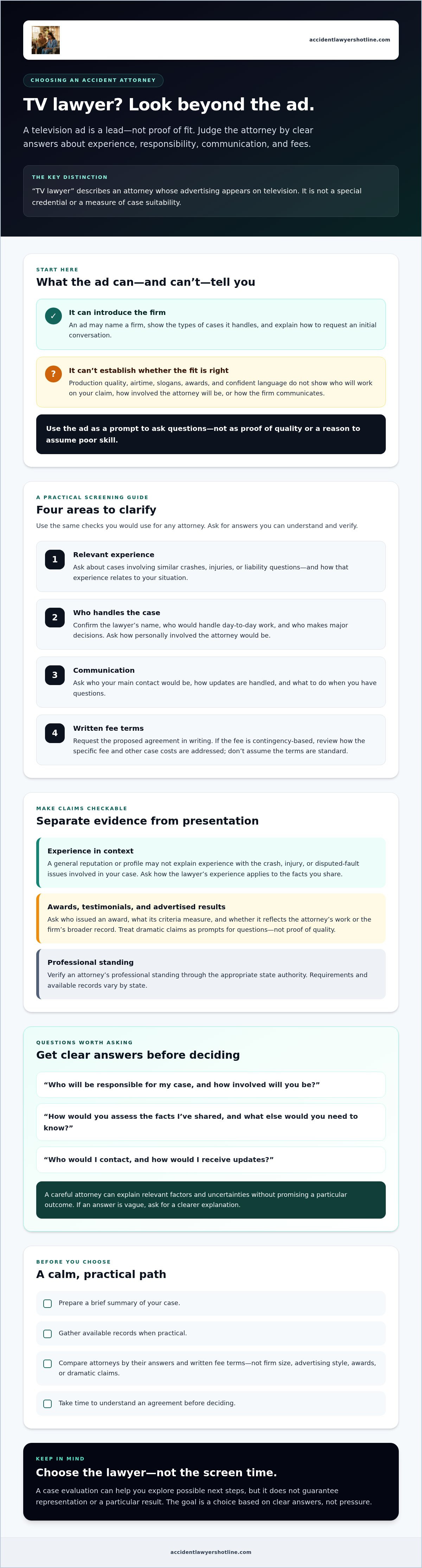
If you’re asking “what is a fair settlement for pain and suffering,” a generic average won’t give you a reliable answer. Even an offer that looks substantial may not reflect the full effect of your injury. Your claim depends on the evidence, the injury’s lasting impact, and who was responsible.
It’s understandable to want a clear number, especially if an insurer makes an offer before you know how your recovery will unfold. Pain and suffering is non-economic damage, separate from bills and lost income, and settlement language can make it hard to tell what an offer covers. There’s no single formula that can determine what your experience is worth.
This guide explains the factors that shape compensation and the evidence that can help show how an injury affects daily life. You’ll also learn why liability and available insurance coverage matter, what to check before accepting an offer, and when it may help to discuss your case with an independent personal injury attorney. The goal is to assess an offer based on your circumstances, not a misleading average.
Key Takeaways
- There’s no universal figure for what is a fair settlement for pain and suffering. Assess your circumstances and supporting evidence instead of relying on averages.
- Consider how the injury, treatment, recovery, and lasting limits affect everyday activities, work, sleep, and relationships.
- Keep accurate, consistent records of treatment and how your injuries affect daily life.
- Review the written offer alongside your recovery status, evidence of fault, and any known coverage before deciding what to do.
- Organize your records and ask an independent attorney about liability, damages, coverage, deadlines, and release terms if you’re unsure.
What Is a Fair Settlement for Pain and Suffering After a Car Accident?
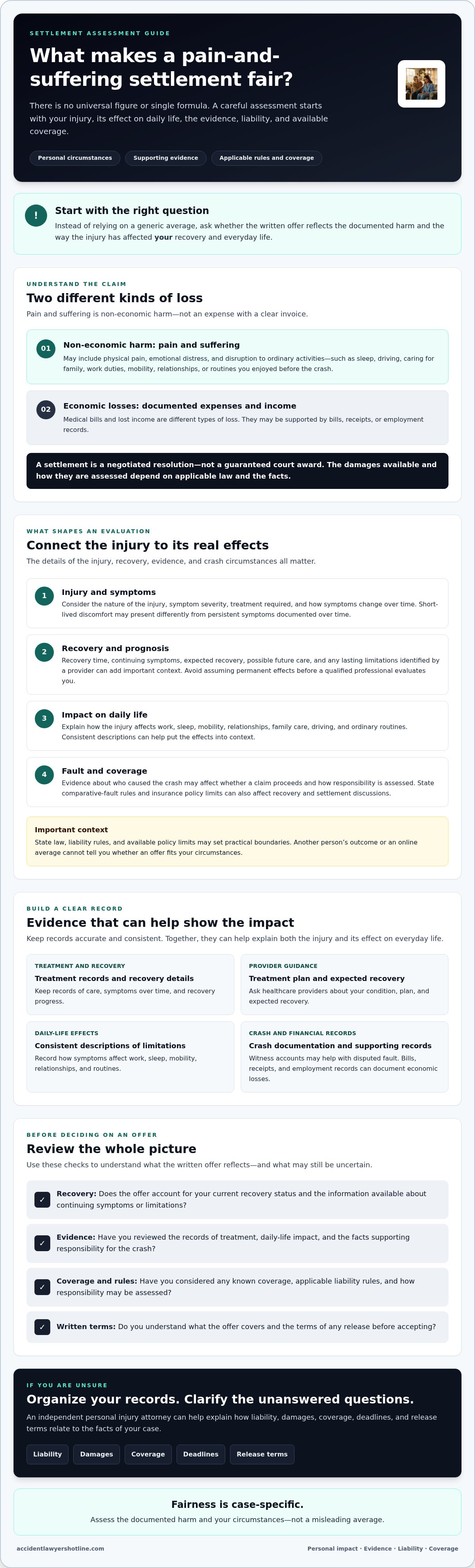
There’s no standard price for the physical and emotional toll of a crash. If you’re asking what is a fair settlement for pain and suffering, the answer depends on how the injury affected you and what the available evidence can show. A fair assessment considers your circumstances, not a number borrowed from someone else’s case.
Pain and suffering is a form of non-economic harm. It refers to the human impact of an injury, rather than expenses with a clear dollar amount, such as medical bills or documented lost wages. These losses may be considered separately when evaluating a claim, but the damages available and how they’re assessed depend on applicable law and the facts.
In legal discussions, pain and suffering is commonly treated as part of general damages. This overview of the legal concept of pain and suffering offers background, but it can’t determine the value of a specific claim. A settlement is a negotiated resolution between parties, not a guaranteed court award. If the parties don’t agree, the outcome may depend on further legal proceedings and the evidence presented.
What does pain and suffering include?
It may include physical pain, emotional distress, and disruption to ordinary activities. For example, an injury might make it difficult to sleep, drive, care for family, or take part in routines you enjoyed before the crash. These effects are personal, and not every claim includes the same types of harm or supports recovery for them in the same way.
Medical expenses and lost income are different. They’re economic losses that may be documented through bills, receipts, or employment records. Pain and suffering has no equivalent invoice. Its relevance and value must be considered in light of the injury, its effects, and the evidence.
Why is there no single fair settlement amount?
Injuries and recoveries vary. A temporary injury with a short recovery may have different effects from one that requires extensive treatment or leaves lasting limitations. The strength of the records, clarity of liability, and effect on daily life also matter. No online average can determine an individual’s fair settlement.
State law and insurance policy limits may set practical boundaries on what can be recovered. Liability rules can also affect how responsibility is assessed. A headline figure or another person’s outcome can’t tell you whether an offer fits your circumstances. A careful review starts with the facts of your crash, the documented harm, and the rules that apply to your claim.
Which Factors Shape a Fair Pain-and-Suffering Settlement?
A settlement evaluation should connect the injury to its real effects, then account for the evidence and legal circumstances of the crash. The useful question isn’t just how much treatment you received. It’s what your records and recovery show about the injury’s intensity, duration, and impact on your life.
How do injury severity and recovery affect an evaluation?
The nature of an injury, symptom severity, treatment required, and recovery time can all shape an evaluation. Short-lived discomfort may present differently from persistent symptoms documented over time. Neither automatically sets a value. The details matter: treatment records, the course of recovery, and whether a provider identifies lasting limitations.
Prognosis can be especially important if symptoms continue or future care may be needed. Ask your healthcare providers about your condition, treatment plan, and expected recovery. Avoid assuming an injury will cause permanent effects before a qualified professional evaluates it.
Daily-life effects add context. Records and consistent descriptions may help explain how pain affects work duties, sleep, mobility, or relationships. Cornell Law School’s Legal Information Institute describes pain and suffering as potentially compensable as noneconomic damages, including loss of enjoyment of life. Evidence can help show those effects, but it doesn’t guarantee a particular settlement.
How do liability and insurance coverage affect the outcome?
Evidence about who caused the crash can affect whether a claim proceeds and how responsibility is assessed. If fault is disputed, crash documentation and witness accounts may matter. States also have different comparative-fault rules, which can affect recovery when more than one person may share responsibility. An attorney can explain how the rules in your state apply to the facts.
Coverage is another practical consideration. An insurance policy’s limits may constrain settlement discussions, but they don’t measure the seriousness of your injury or the disruption you experienced. Consider available coverage and applicable state rules alongside the evidence of harm.
These factors work together, so review an offer in context rather than judging it by one detail. If you’re still asking what is a fair settlement for pain and suffering, a case evaluation can help you organize the facts and discuss them with an appropriate independent attorney. Accident Lawyers Hotline evaluates motor vehicle accident cases and connects people with independent personal injury attorneys. It doesn’t provide direct legal representation. Discuss your accident case to explore that next step.
What Evidence Helps Show the Impact of Pain and Suffering?
Good documentation helps tell a clear, accurate story of how an injury developed and affected your life. Keep relevant records together, note changes as they happen, and make sure your descriptions are consistent with what you’ve told healthcare providers. Pain and suffering may be considered among compensatory damages, but records can support an evaluation without guaranteeing a particular settlement.
Which records can help document your experience?
Build a simple record in sequence. Keep copies of treatment records, provider instructions, prescriptions, and relevant follow-up information. Add a dated symptom journal describing what you felt and which activities were affected. A journal can provide useful context, but it doesn’t replace medical records or professional assessment.
Photographs may help show visible injuries or changes during recovery. Statements from people who observed those changes can also add context. Ask them to describe what they personally noticed, rather than speculate about a diagnosis or legal outcome.
How can you document daily disruption clearly?
Be specific and factual. Instead of writing “I couldn’t do anything,” note that on a particular date pain interrupted your sleep or made a usual household task difficult. Record changes to mobility and work routines, as well as activities you had to stop or adapt. Consistent records help explain how an injury affects daily life.
Use a practical routine:
- Write dated entries and describe what changed in your day.
- Keep observations consistent with treatment and other records. Correct mistakes transparently rather than changing or backdating entries.
- Save relevant photographs and communications, and limit who can access sensitive personal information.
Accuracy matters. Don’t exaggerate symptoms, alter records, or delay needed medical care to create evidence. Seek care based on your health, and tell providers honestly what you’re experiencing. If you’re unsure which materials may be relevant or how to preserve them, ask an attorney for guidance. Evidence can help explain your experience, but it can’t by itself determine what is a fair settlement for pain and suffering.
How Can You Evaluate a Pain-and-Suffering Settlement Offer?
An offer is difficult to assess if you don’t know what it resolves. Start with the complete written proposal, not just the dollar amount in a call or message. Check which claims and damages it addresses, whether it includes medical expenses, lost income, and pain and suffering, and whether any part of the dispute remains open.
What should you check before responding to an offer?
Compare the offer with the documented injury, treatment to date, current recovery, evidence about fault, and any known insurance coverage. Then read the release carefully. A settlement may require you to give up the right to pursue claims covered by the agreement. The scope and consequences depend on its exact language and applicable state law.
Before signing, consider whether your treatment and prognosis are clear enough to understand the effect of settling now. If symptoms continue or future care is uncertain, ask an attorney what that could mean for a final resolution. Also ask about any response deadline, what the release covers, and whether accepting it could affect other claims. Don’t rely on a verbal summary when the written terms may control.
Can a formula tell you whether an offer is fair?
No formula can establish a guaranteed legal amount. Insurers and negotiators may use methods such as a multiplier applied to economic losses or a per-diem estimate for the duration of pain. These are starting points for discussion, not legal rules. They can also miss important details, such as disputed fault, lasting limitations, or the strength of supporting records.
Online calculators and settlement averages have the same limitation. They can’t account for every fact, state rule, or policy constraint in your case. Use them, at most, as rough context, not as a reason by themselves to accept or reject an offer.
A focused review can help you understand the trade-offs before deciding. Gather the written offer, release, treatment information, and crash records, then discuss liability, damages, coverage, and deadlines with an independent attorney. Accident Lawyers Hotline evaluates motor vehicle accident cases and connects people with independent personal injury attorneys. It isn’t a law firm and doesn’t provide direct legal representation. Request a car accident case evaluation to discuss the facts and potential next steps.
What Should You Do Next if You Are Unsure About a Settlement?
If an offer feels hard to assess, pause and organize the information before responding. A clear file can help an attorney understand the crash, your recovery, and what the insurer has proposed. It can also help you ask focused questions about whether the offer resolves your claims and what rights you may give up by signing.
What information should you prepare for a case evaluation?
Gather the documents you already have. You don’t need a perfect file before asking for guidance. Start with:
- The crash date and a brief, factual account of what happened.
- Available crash or incident reports, photos, and insurer communications.
- Treatment received, current symptoms, and known effects on daily activities.
- The complete written offer and any release or settlement documents.
Keep originals and copies of relevant records. Don’t alter, discard, or backdate anything. If information is missing, note that rather than guessing. Be ready to ask about liability, the types of damages involved, known coverage, applicable deadlines, and the exact effect of any release. Deadlines and legal rules can vary by state, so ask an attorney how they apply to your situation.
How can an attorney referral help you understand your options?
An independent attorney may review the facts and discuss possible legal options with you. Accident Lawyers Hotline is a national referral platform that evaluates motor vehicle accident cases and connects people with independent personal injury attorneys. It is not a law firm and does not provide direct legal representation.
If you’re connected with an attorney, confirm directly whether they can represent you, what the representation terms are, and how fees or other obligations work. Terms may differ, so ask questions before deciding whether to proceed. An evaluation or referral doesn’t guarantee representation, a settlement, or a particular result.
Still unsure what is a fair settlement for pain and suffering in your case? A case evaluation can be a practical way to discuss your crash details and offer with an appropriate independent attorney. Request a motor vehicle accident case evaluation to explore that next step.
Take a Clear Next Step Before You Decide
A fair pain-and-suffering settlement depends on the evidence and circumstances of your claim, not a universal average. Consider how your injury and recovery have affected daily life, and review the written offer alongside liability evidence, available coverage, and any release terms. If you’re still asking what is a fair settlement for pain and suffering, a case-specific discussion can help clarify what to ask before you accept or reject an offer.
Accident Lawyers Hotline is a national case evaluation and attorney referral platform. It evaluates car, truck, motorcycle, pedestrian, and bus accident cases, then connects people with independent personal injury attorneys. It isn’t a law firm and doesn’t provide direct legal representation. Confirm representation terms and fee arrangements directly with the attorney.
Gather your records and the complete offer, then take the next step at your own pace. Request a motor vehicle accident case evaluation to discuss your situation and potential next steps.
Frequently Asked Questions
How do insurance companies calculate pain and suffering?
Insurance companies may consider medical records, treatment, recovery, documented daily-life effects, and evidence about who caused the crash. Some adjusters or negotiators use a multiplier or per-diem estimate as a starting point. Neither method is a universal legal formula, and an insurer’s assessment may differ from yours. Ask how the written offer accounts for your documented harm, liability evidence, and the claims it would resolve.
Can I receive pain-and-suffering compensation without a broken bone?
Possibly. A broken bone isn’t necessarily required for a person to claim pain and suffering after an accident. Other injuries may cause pain, emotional distress, or disruption to ordinary activities. Whether those effects support compensation depends on the facts, available evidence, and applicable law. Medical records, provider notes, and consistent descriptions of how symptoms affect your routine can help explain the injury’s impact.
What evidence helps prove pain and suffering?
Useful evidence may include treatment records, provider instructions, follow-up notes, dated symptom journal entries, appropriate photographs, and statements from people who observed changes in your daily life. Describe specific effects, such as disrupted sleep or difficulty with a routine task, and keep accounts accurate and consistent. These materials can help explain your experience, but they don’t guarantee a particular settlement or replace medical records.
Should I accept the first pain-and-suffering settlement offer?
Don’t decide based only on whether it’s the first offer or on the dollar amount. Read the complete written proposal and check which claims it resolves, what the release covers, and whether your treatment and prognosis are clear. Ask about any response deadline and the consequences of signing. An attorney can review the exact terms and discuss how the offer compares with your evidence before you make a decision.
Does my state affect a pain-and-suffering settlement?
Yes. State law can affect which damages may be available, how fault is assessed, and whether limits apply to certain claims. Rules and deadlines also vary, and coverage can shape the practical options for resolving a claim. The law that applies depends on the circumstances. Ask an attorney familiar with the relevant state rules to explain how they may affect your claim and any settlement documents.
Can I still recover pain-and-suffering damages if I was partly at fault?
Possibly, but the effect of shared fault depends on the law that applies to your claim. State rules can change whether recovery is allowed and how a person’s share of responsibility affects it. Don’t assume that partial fault automatically ends a claim or has no effect. Gather the crash details and available evidence, then ask an attorney to assess liability under the relevant state rules.
Do I need a lawyer to evaluate a pain-and-suffering offer?
You may review an offer yourself, but an attorney can help explain liability, damages, coverage, deadlines, and release terms. Accident Lawyers Hotline is a national referral platform that evaluates car, truck, motorcycle, pedestrian, and bus accident cases and connects people with independent attorneys. Confirm representation terms and any fee arrangement directly with the attorney.
Were You Injured in an Accident?
Get a free, confidential case evaluation. No upfront fees.
Get Free Case Evaluation