What to Do After a Car Accident: A Step-by-Step Guide
In an mva accident-what to do when in a car accident? Follow our step-by-step guide to protect your safety, document the crash, and handle insurance claims.
What should you do first when a crash leaves you shaken and unsure what matters most? If you’re searching “mva accident-what to do when in a car accident,” start with safety, not paperwork. Check for immediate danger, call emergency services if needed, and avoid rushing into decisions while you’re still in shock.
It’s understandable to worry about injuries, missing important details, or saying the wrong thing. A clear order of actions can help you protect your health and preserve useful information. This guide covers what to do at the scene, what to document, why medical follow-up matters, and how to handle insurance questions without guessing about details you don’t know.
You’ll also learn how to organize your records and consider possible next steps. Reporting rules and legal deadlines vary by state, so guidance can depend on where the crash happened and what occurred. Accident Lawyers Hotline provides motor vehicle accident case evaluations and connects accident victims with independent personal-injury attorneys. First, focus on getting everyone to safety.
Key Takeaways
- If you’re asking “mva accident-what to do when in a car accident,” follow a safety-first order: stop, assess danger, call for help, and follow instructions.
- When it’s safe, record objective details such as the time, location, vehicle damage, road conditions, and witness information without guessing about fault.
- Seek prompt medical guidance if you have symptoms or concerns. Some symptoms may appear after the collision.
- Review your insurance policy and applicable state rules, then report the crash factually through your insurer’s designated process.
- Organize your records and consider a case evaluation to understand possible next steps. Fault, eligibility, and deadlines depend on individual facts and state law.
What to do immediately after an MVA: put safety first
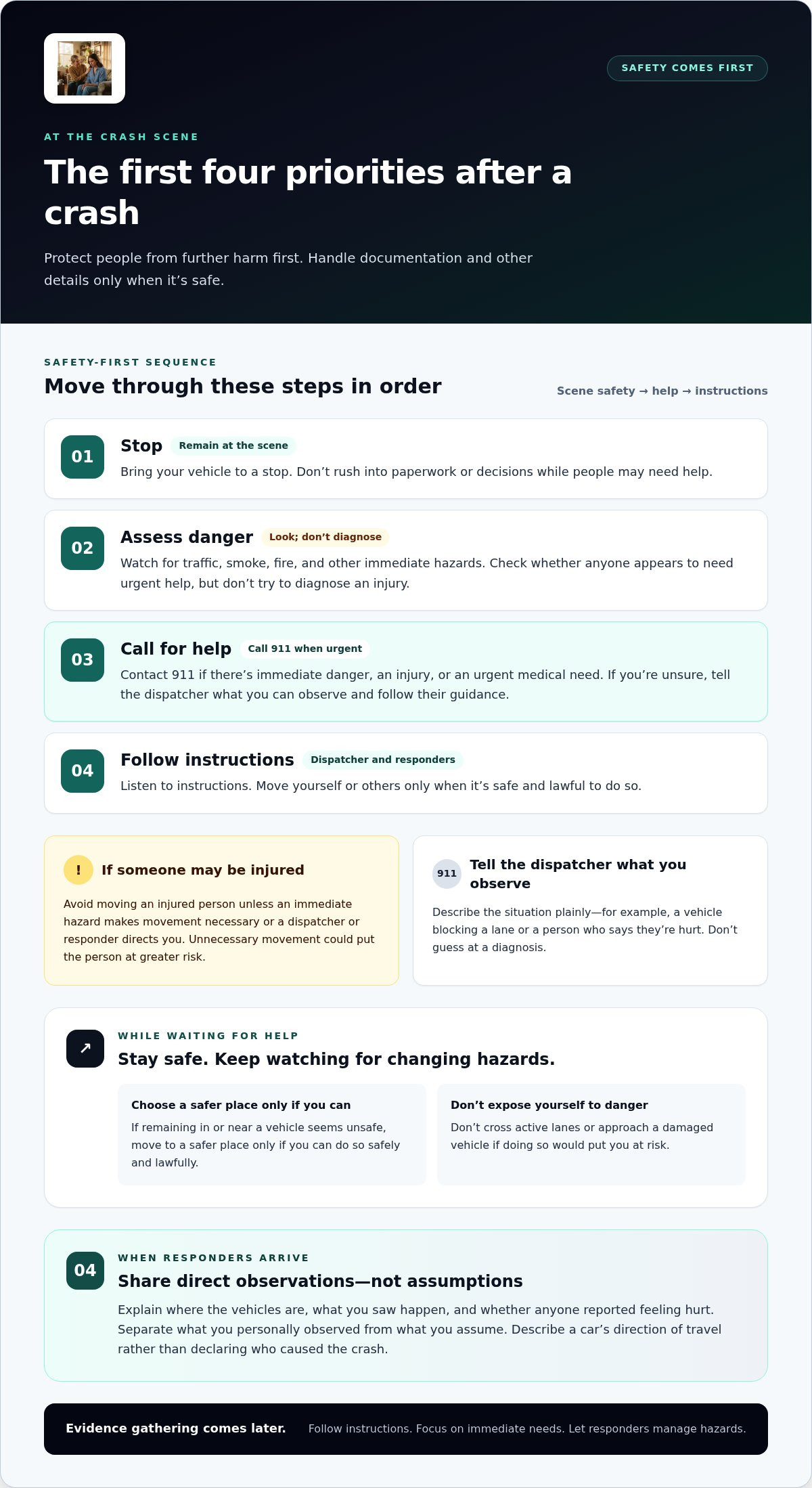
A crash can leave you shaken. You don’t need to solve everything at once. If you’re asking “mva accident-what to do when in a car accident,” begin with a simple priority: protect people from further harm, then handle documentation and other details when it’s safe. A traffic collision can create hazards beyond the initial impact, so stay alert to traffic, smoke, fire, and other immediate dangers.
Use this safety-first sequence:
- Stop. Bring your vehicle to a stop and remain at the scene.
- Assess danger. Look for immediate hazards and check whether anyone appears to need urgent help. Don’t try to diagnose an injury.
- Call for help. Contact 911 if there’s immediate danger, an injury, or an urgent medical need.
- Follow instructions. Listen to the dispatcher and responders. Move yourself or others only when it’s safe and lawful to do so.
When to call 911 and how to protect people at the scene
Call 911 when anyone may be injured or needs urgent medical attention, or when the scene presents immediate danger. If you’re unsure whether a situation is urgent, tell the dispatcher what you can observe and follow their guidance. Describe what happened plainly, such as a vehicle blocking a lane or a person who says they’re hurt. Don’t guess at a diagnosis.
Avoid moving an injured person unless an immediate hazard makes movement necessary or a dispatcher or responder directs you. Unnecessary movement could put the person at greater risk. The scene comes first: don’t take photos, exchange insurance details, or try to resolve questions about fault while people may need help. Those tasks can wait until it’s safe.
What to do while waiting for help
Stay in a safe location and keep watching for changing hazards, including moving traffic, smoke, or fire. If remaining in or near a vehicle seems unsafe, move to a safer place only if you can do so safely and lawfully. Don’t cross active lanes or approach a damaged vehicle if doing so would expose you to danger.
When responders arrive, share direct observations: where the vehicles are, what you saw happen, and whether anyone reported feeling hurt. Separate what you personally observed from what you assume. For example, describe a car’s direction of travel rather than declaring who caused the crash. Clear, factual information helps responders understand the scene without turning an uncertain moment into a conclusion.
Leave evidence gathering for later. Don’t step into traffic, inspect damaged vehicles in a hazardous area, or put yourself at risk to collect names, photos, or other information. Once help has arrived and the scene is safe, you can consider what details to record. For now, follow instructions, focus on immediate needs, and let responders manage the hazards.
How to document an MVA: collect facts without guessing about fault
Once the scene is safe and urgent needs are addressed, write down what you directly observed while details are fresh. If your question is “mva accident-what to do when in a car accident,” clear records can help you explain what happened later. They don’t establish legal fault. Record facts and leave conclusions about responsibility to the appropriate process.
Note the time and location, including nearby street names or landmarks. Describe each vehicle by make, model, color, and license plate if visible. Record visible damage, road and weather conditions, traffic signals, lane positions, and anything that may have affected visibility. Mark uncertainty clearly. For example, write “I heard a horn before impact” rather than assuming why it sounded.
- Time and place: Note when and where the collision occurred.
- Vehicles: Record identifying details and where each vehicle was positioned, if known.
- Scene conditions: Describe visible damage, road surface, lighting, weather, signs, and hazards.
- People and records: Save contact details for drivers and witnesses, plus any report reference you receive.
What information to exchange with other drivers
Keep the exchange calm and limited to practical details. Record each driver’s name and contact information, vehicle details, and insurance information when available. Share only information appropriate for handling the collision. Don’t photograph or circulate sensitive documents unnecessarily, and don’t post identifying records publicly. Avoid arguing about responsibility or guessing what another person saw or intended.
If you’re unsure how to answer a question, stick to what you know. Describe what you observed without agreeing to someone else’s version of events. Don’t speculate about speed, injuries, or fault. If a detail is unclear, say so rather than filling in gaps. Factual communication helps keep the exchange focused and reduces the chance that a stressed guess will be mistaken for a reliable observation.
How to preserve photos, witness details, and crash records
Only take photos or video from a safe position, and don’t delay care or put yourself in danger to get them. If it’s safe, capture vehicle positions, damage from more than one angle, visible hazards, and relevant surroundings such as lane markings or signs. Ask witnesses for their names and contact details, but don’t pressure them to give a statement or remain at the scene.
Keep original photos and videos, messages, receipts, and any report reference together in a folder or another organized place. Avoid editing original files. If you make notes, add them separately with the date and what you remember. A simple record can help you find details later without relying on memory alone.
When the immediate facts are organized, a car accident case evaluation can help you understand possible legal next steps. Accident Lawyers Hotline evaluates motor vehicle accident cases and connects accident victims with independent personal-injury attorneys. An evaluation doesn’t determine fault or guarantee an outcome, but it can help clarify questions to address as you organize records and follow up.
Medical care and crash reports: create an accurate record after the collision
After a collision, your health deserves attention even if you’re focused on the vehicles, insurance, or what to do next. If you’re searching “mva accident-what to do when in a car accident,” include medical follow-up in your plan. Seek prompt assessment from a qualified medical professional if you have symptoms or concerns. You don’t need to decide for yourself what a symptom means.
Why to take symptoms seriously after a car accident
Feeling shaken can make it difficult to notice or describe how you feel at the scene. Some symptoms may appear later, so pay attention to changes after you leave. If a new concern develops, worsens, or worries you, seek professional medical guidance. A healthcare professional can assess your situation and advise you on appropriate care.
Be direct and accurate when explaining what you’re experiencing. Describe what you noticed, when it began, and how it has changed. Don’t minimize a concern, but don’t assume that a particular symptom proves an injury or establishes its cause. Let the medical professional evaluate it.
Keep a simple, dated record as you arrange care. It can help you remember what happened and find documents later. Save:
- Visit summaries, referrals, and instructions from medical professionals.
- Prescriptions and receipts related to care after the collision.
- Notes on when symptoms began and how they changed over time.
- Any crash-report reference or related communication you receive.
Keeping medical and official records organized
Create one folder, digital or paper, and add records as you receive them. Date your notes and keep them factual. For example, record “neck discomfort began the next morning” rather than adding a diagnosis. If your understanding changes, make a new dated note instead of editing an earlier entry. This preserves a clearer timeline for you and the professionals reviewing your records.
Crash-report procedures vary. Whether a report is available, who maintains it, and how to request it can depend on the location and agency involved. Follow the relevant state or local law-enforcement agency’s official instructions for access. If responders give you a report number or other reference, store it with your records. Don’t assume that receiving a reference means you already have a copy of the report.
Medical and official records serve different purposes. Care records document appointments, guidance, and expenses. A crash report may document information gathered by responding authorities. Neither replaces your own careful notes, and neither alone determines fault or the outcome of an insurance or legal matter. Keep copies together so you can provide accurate details when appropriate, and follow the instructions of medical professionals and relevant agencies.
Insurance after an MVA: what to report and what not to rush
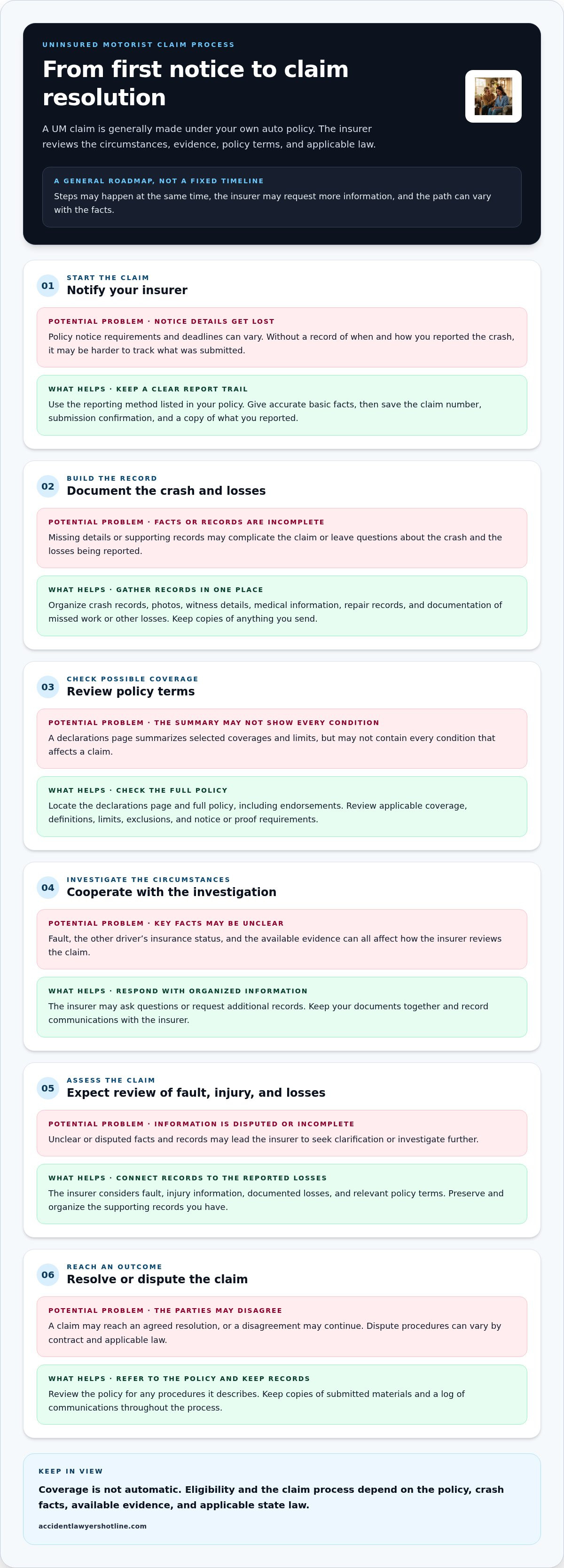
After a crash, it can be hard to know which insurance step comes first. If you’re asking “mva accident-what to do when in a car accident,” start by reviewing your policy and its instructions for reporting a collision. Policy language and notice requirements differ, and applicable rules can vary by state. Notify your insurer promptly through its designated process, while following the terms that apply to your policy.
An initial report is not the same as accepting fault or agreeing to a final settlement. Share known facts without guessing about details you haven’t confirmed. If you don’t know an answer, say so. Don’t make statements you know are inaccurate, but don’t conceal relevant information either.
How to make an initial insurance report
Use the insurer’s designated method and keep the report factual. Give the date and general location of the collision, identify the vehicles involved, and describe damage or injuries you know about. If a detail is uncertain, make that clear rather than trying to fill in the gap. Keep a note of the date, contact method, representative’s name, and any claim reference.
- Share: Basic facts you know about the collision, vehicles, and observed damage or injuries.
- Clarify: Distinguish what you saw from what you assume or have not yet confirmed.
- Record: Keep the claim reference and a brief log of insurer contacts and next steps.
- Review: Check your policy and relevant state rules for notice instructions and requirements.
Reporting facts doesn’t require you to decide who was legally responsible. It also doesn’t mean you must settle a claim during the first conversation. Ask what information the insurer needs next, note any requested documents, and keep copies of what you send. Follow policy instructions and respond accurately if new information becomes available.
What to pause before signing or agreeing
Read any release, settlement offer, or other document carefully before signing. The effect depends on the document’s terms and your circumstances. Don’t treat a request for basic information as a requirement to accept a final resolution immediately. If you have questions about what a document means or how an agreement could affect your options, seek guidance from an independent attorney before agreeing.
You don’t need to finalize every decision in the first call. An insurer may ask questions or provide documents for review, but take time to understand what you’re being asked to accept. Keep a copy of any document and make a note of questions that remain. Case-specific conclusions about fault, coverage, or settlement depend on individual facts and applicable law.
For legal questions about an insurance offer or possible next steps, a car accident case evaluation can connect you with an independent personal-injury attorney. Accident Lawyers Hotline evaluates motor vehicle accident cases and facilitates access to legal professionals who offer representation on a contingency basis, with no fees unless the case is won. The platform doesn’t provide legal representation, and an evaluation doesn’t guarantee that a case qualifies or determine its outcome.
After the immediate steps: organize your options and get case-specific guidance
Once urgent needs are addressed, a short follow-up plan can make the next steps easier to manage. If you searched “mva accident-what to do when in a car accident,” keep moving one step at a time. Organize your records, track medical care, follow your policy’s instructions, and write down legal questions you want answered.
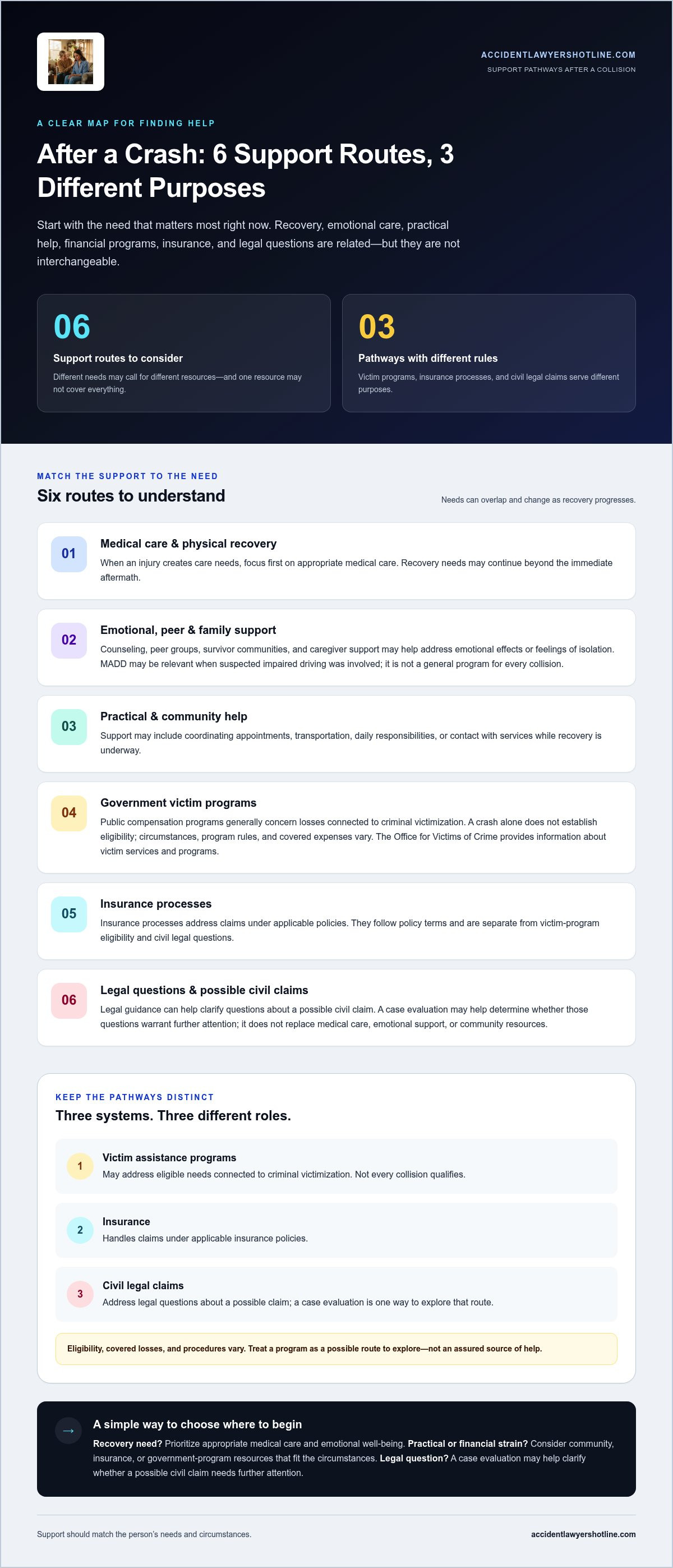
- Gather your records. Keep your timeline, photos, report details, insurer messages, and medical documents together.
- Track care. Save appointment summaries and note new symptoms or changes. Follow medical guidance.
- Follow policy steps. Track requested information and insurer communications, and review your policy’s applicable instructions.
- Identify unanswered questions. Note concerns about fault, coverage, a settlement document, or what to do next.
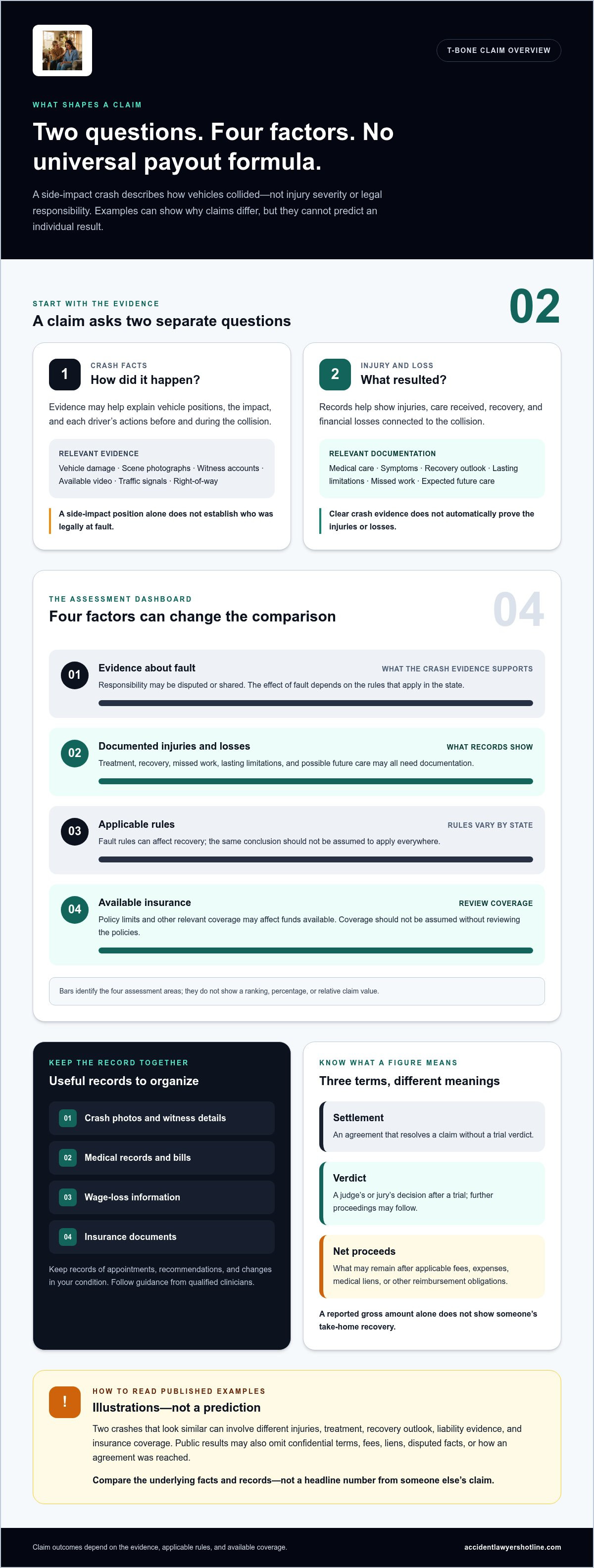
There isn’t one outcome or deadline that applies to every collision. The value of a case, questions of fault, eligibility for a claim, and legal deadlines depend on individual facts and state law. An independent attorney can provide case-specific guidance about possible options.
When an attorney evaluation may help
An evaluation may be useful if someone was injured, drivers disagree about what happened, several people or vehicles are involved, or the insurer’s response is unclear. These circumstances don’t guarantee a claim qualifies or predict its value or outcome. Accident Lawyers Hotline evaluates motor vehicle accident cases and connects people with independent personal-injury attorneys. It isn’t a law firm and doesn’t provide direct legal representation. Any representation and fee terms are established with the independent attorney.
Prepare for a case evaluation without delaying care
You don’t need a complete file to begin organizing your questions. Gather what you already have: a basic timeline, available report details, insurer and claim information, photos, and medical records. Note what’s missing rather than delaying care to find it. Emergency and ongoing medical needs come first.
For a clearer picture of what a case evaluation may involve, review this car accident case evaluation guide. If you need help thinking through practical support after a collision, the car accident victim assistance guide offers another place to start.
When you’re ready to consider legal next steps, Accident Lawyers Hotline can evaluate your motor vehicle accident case and connect you with an independent attorney. An evaluation can help clarify questions, but it doesn’t guarantee representation, eligibility, or a particular result.
Take the next step at your own pace
A crash can leave you facing questions that don’t have instant answers. If you searched “mva accident-what to do when in a car accident,” remember that you can take the next step without having every detail resolved. Focus on what you need to understand now, and keep a written list of questions as they arise.
If legal questions are weighing on you, a case evaluation can help you explore possible next steps. Accident Lawyers Hotline provides case evaluations for car, truck, motorcycle, pedestrian, and bus accident victims and connects them with independent attorneys. It isn’t a law firm and doesn’t provide legal representation. Referred attorneys may work on a contingency basis, with specific fee terms set by the attorney agreement.
Request a car accident case evaluation to discuss possible next steps with an independent attorney. You deserve clear information as you decide what to do next. Take it one step at a time.
Frequently Asked Questions
What happens if the other driver leaves the scene?
If the other driver leaves, don’t follow or confront them. Move to safety and contact law enforcement to report what happened. If you can do so safely, note the vehicle’s description, direction of travel, and any partial license plate number. Ask nearby witnesses whether they saw the vehicle, and note whether businesses or homes nearby may have cameras. Reporting procedures vary, so follow instructions from the responding agency.
Can I have an injury even if I feel fine immediately after a car accident?
You may notice symptoms after the crash rather than at the scene. Feeling fine at first doesn’t establish whether you’re injured. If a concern develops, seek guidance from a qualified medical professional and explain when you first noticed it. For the question “mva accident-what to do when in a car accident,” remember that a delayed symptom is a reason to seek advice, not a basis for self-diagnosis.
What should I do if I was a passenger in the car accident?
As a passenger, prioritize your safety and seek medical guidance for symptoms or concerns. You can record what you personally observed, such as where each vehicle was before impact, without deciding who was responsible. Keep the names of drivers and witnesses, and note which vehicle you occupied. Depending on the circumstances and state law, possible insurance sources may differ, so avoid assuming only one policy could apply.
Can I make a claim if I do not have car insurance?
Possibly. Not having your own car insurance doesn’t automatically answer whether you may have a claim. The available options can depend on who was involved, how the collision happened, your role in the vehicle, other applicable coverage, and state law. Don’t assume you have no options or that a claim is guaranteed. Keep relevant records and consider requesting a case evaluation to connect with an independent attorney who can review the specific facts.
What if the accident happened in a parking lot or on private property?
Still document what happened and seek help for immediate danger or injury. Record the lot’s name or address, the vehicles’ positions, nearby signs, and any visible damage. Reporting requirements and police response can differ based on location and circumstances, so follow instructions from the appropriate local agency. If a business may have camera footage, you can promptly ask how to request that it be preserved, since access procedures vary.
Can dashcam footage help after a car accident?
Dashcam footage may capture vehicle movements, traffic signals, or events leading up to impact, but what it shows depends on the camera’s position and settings. Save the original file and make a separate backup. Avoid trimming, editing, or posting it publicly. Note the recording time and camera involved, and share it through an appropriate process if requested. Footage is one source of information, not a complete determination of fault.
Should I accept the first settlement offer after a car accident?
Don’t feel pressured to accept an offer before you understand its terms and what rights a release may affect. A settlement’s meaning depends on the document and your circumstances. Ask for time to review it, keep a copy, and write down any unclear terms. If you have legal questions, an independent attorney can explain how the agreement may apply to your situation. No general answer can determine whether an offer is right for you.
Were You Injured in an Accident?
Get a free, confidential case evaluation. No upfront fees.
Get Free Case Evaluation