Catastrophic Injury: How Severity Shapes Care and Compensation
Learn what is considered a catastrophic injury, which injuries may qualify, and how lasting effects shape care, future needs, and compensation claims.
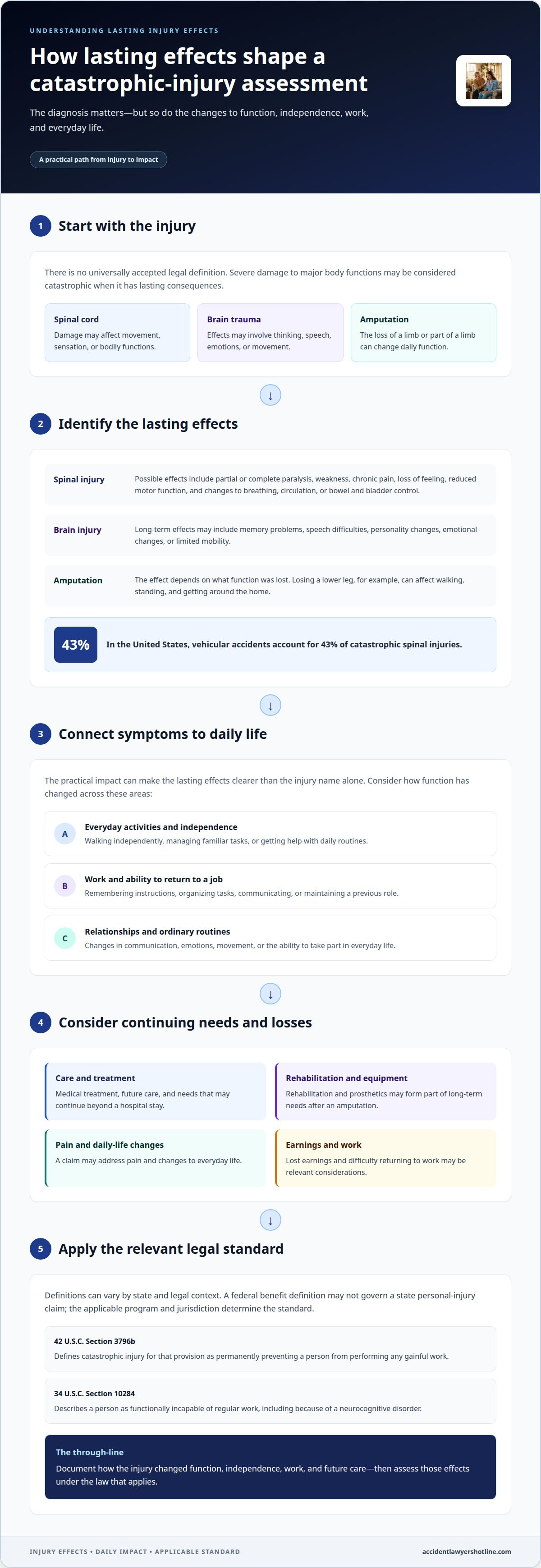
The most serious injuries are defined by what they change, not just what they’re called. There’s no universally accepted legal definition, so what is considered a catastrophic injury often depends on its lasting effects. Severe damage to the brain, spinal cord, or other major bodily functions may qualify, especially when it causes permanent disability, long-term care needs, or major changes to daily life.
If you’re facing a serious injury, it can be difficult to know what the diagnosis may mean for the future. The injury’s effects on health, independence, work, and everyday activities all matter.
This article explains which injuries may be considered catastrophic, how accidents can cause them, and how compensation claims may address medical care, pain, and lost earnings. It also explains why an injury’s long-term effects can shape how a claim is assessed.
Key Takeaways
- Severity alone doesn’t tell the whole story; lasting effects on function, independence, and work can shape whether an injury is considered catastrophic.
- Spinal cord damage and traumatic brain injuries may affect movement, thinking, communication, and the need for ongoing care.
- Amputations can change mobility and daily tasks, with rehabilitation and prosthetics potentially forming part of long-term needs.
- Claims may account for medical treatment, future care, pain, lost earnings, and changes to everyday life.
- Understanding how an accident happened can help clarify which issues matter when evaluating a serious injury claim.
When is an injury considered ‘catastrophic’?
There’s no universally accepted legal definition of catastrophic injury. Understanding what is considered a catastrophic injury starts with its lasting effects, which may include severe spinal cord damage, paralysis, or lasting loss of bodily function.
Spinal Cord Injuries and Paralysis
A spinal cord injury damages the nerve pathway that carries signals between the brain and body. Vehicle collisions can cause this damage, and resulting paralysis may be partial or complete. In the United States, vehicular accidents account for 43% of catastrophic spinal injuries.
The injury’s location and severity shape its effects. A spinal cord injury can cause paraplegia, affecting sensation and function in the pelvic region and legs, or tetraplegia, involving paralysis of all four limbs. These changes can restrict movement and independence. Their effects on daily activities and future care help show why an injury’s lasting consequences matter in a claim.
Loss of Function and Injury Effects
Loss of function means an injury limits a person’s ability to move, sense, or control bodily functions. Spinal cord damage may cause weakness, chronic pain, loss of feeling, or reduced motor function. It can also affect breathing, circulation, and bowel or bladder control, creating needs that may continue after the hospital stay.
For example, someone who can no longer walk independently after a collision may need help with daily tasks. Another person may retain some movement but experience severe pain or spasms. What is considered a catastrophic injury may therefore depend on how lasting effects change a person’s work, relationships, independence, and everyday routines.
Spinal cord injuries can also affect a person’s ability to return to a previous job or maintain their former quality of life. Disfigurement may matter when an injury changes appearance, while loss of sensation may complicate routine tasks. Describing these concrete changes helps show the injury’s practical impact beyond its medical name.
Definitions Across States and Areas of Law
The meaning of catastrophic injury can vary by state and legal context. A definition used for a federal benefit may not govern a state personal injury claim. In practical terms, what is considered a catastrophic injury depends partly on the specific law or program involved.
Federal statutes use definitions for particular purposes. Under 42 U.S.C. Section 3796b, a catastrophic injury permanently prevents a person from performing any gainful work. Under 34 U.S.C. Section 10284, it leaves a person functionally incapable of regular work, including because of a neurocognitive disorder.
These provisions do not create one universal definition for every workers’ compensation or disability matter. The applicable program and jurisdiction determine which standard applies. In a vehicle-related injury claim, relevant questions include how the harm affects function, work, and future care under the governing law.
Traumatic brain injuries
A traumatic brain injury can follow a violent blow, jolt, or forceful head movement. Its effects may involve thinking, speech, emotions, or movement, and can last well beyond initial treatment.
Severe Brain and Head Injuries
A severe head injury may damage the brain when impact or sudden movement causes it to strike the inside of the skull. In an acceleration-deceleration injury, the brain may sustain localized or widespread trauma. This matters because visible wounds alone may not show the injury’s full effect on memory, speech, behavior, or mobility.
A collision can cause brain, spinal, and facial injuries at the same time. For example, a person may sustain a brain injury alongside spinal damage that causes paralysis. Facial injuries may add further harm and treatment needs. The combined effects can determine whether the overall injury causes lasting disability, not simply the diagnosis for one body part.
Brain trauma can disrupt daily tasks in ways that are easy to miss at first. Someone who previously managed work independently may struggle to remember instructions, organize tasks, or communicate clearly. Another person may have limited mobility after a serious head injury. These practical changes help show how an injury affects independence and the ability to return to ordinary routines.
Long-Term Effects of Brain Trauma
Long-term effects are changes that continue after the initial injury and treatment. Traumatic brain injuries can cause cognitive, emotional, and physical impairments, including memory problems, speech difficulties, personality changes, or limited mobility. These effects matter because they can change a person’s work, relationships, and everyday activities.
One person may need help following conversations or managing familiar tasks. Another may experience emotional changes that affect close relationships. Severe brain injuries can also result in a vegetative state. Effects vary, so a useful account connects documented symptoms with concrete changes in daily life.
For an injury claim involving alleged negligence, records can help show the diagnosis, treatment, symptoms, and continuing limitations. A clear timeline can connect the original trauma with later difficulties, such as persistent speech problems or a reduced ability to work. An attorney may assess how those effects relate to the claim and its evidence. Specific examples are more informative than relying on the term “severe” alone.
Amputations
An amputation is the loss of a limb or part of a limb, such as an arm, leg, hand, foot, finger, or toe. After a serious accident, the impact depends on what function was lost and how that loss changes daily life. Losing a lower leg, for example, can affect walking, standing, and getting around the home.
Collisions and workplace incidents can cause crush injuries severe enough to require emergency surgical amputation. A badly crushed hand may lose fingers or part of the palm, while damage to a leg may lead to its removal. The injury’s circumstances matter, as do its consequences: whether the person can use the limb, perform familiar tasks, or return to work.
Mobility limitations can reshape ordinary routines. A person who loses a foot may need to adapt how they walk, climb stairs, or travel to appointments. Someone who loses a hand may find dressing, cooking, or handling tools more difficult. The affected body part, remaining function, and individual needs all influence the support and rehabilitation required.
Prosthetics and rehabilitation may help some people adapt after limb loss. Rehabilitation can address movement and practical tasks, while a prosthetic device may help replace some lost function. Neither removes the substantial physical and emotional demands adjustment can involve. For instance, returning to a job that requires standing or using both hands may require changes to duties or routine.
Losing a small body part does not have the same effect for everyone as losing an entire limb. Legal significance can depend on function: losing a finger or toe is generally not considered catastrophic unless the hand or foot becomes entirely unusable. A finger injury that prevents someone from gripping tools, for example, may affect work differently from a loss that leaves the hand fully functional.
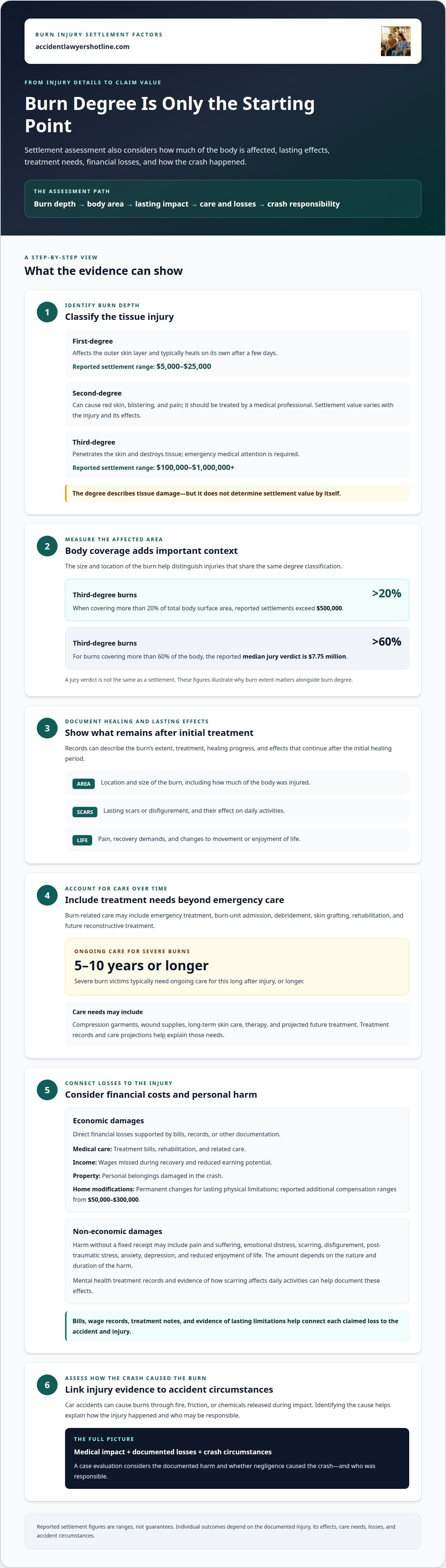
Severe burns are another serious injury, though they are not the same as an amputation. Extensive burns can damage tissue, cause scarring and long-term pain, and require multiple surgeries and continuing treatment. Someone with severe burns to the hands, for example, may face limits in movement or daily tasks even without limb loss. The lasting effects help show the injury’s full impact.
For an injury claim, useful evidence can connect the accident to the amputation and describe resulting limitations. Medical records can document the injury and treatment, while rehabilitation records may show difficulties with walking, dressing, or work tasks. A clear account of these changes helps explain how limb loss affects function, independence, and future needs.
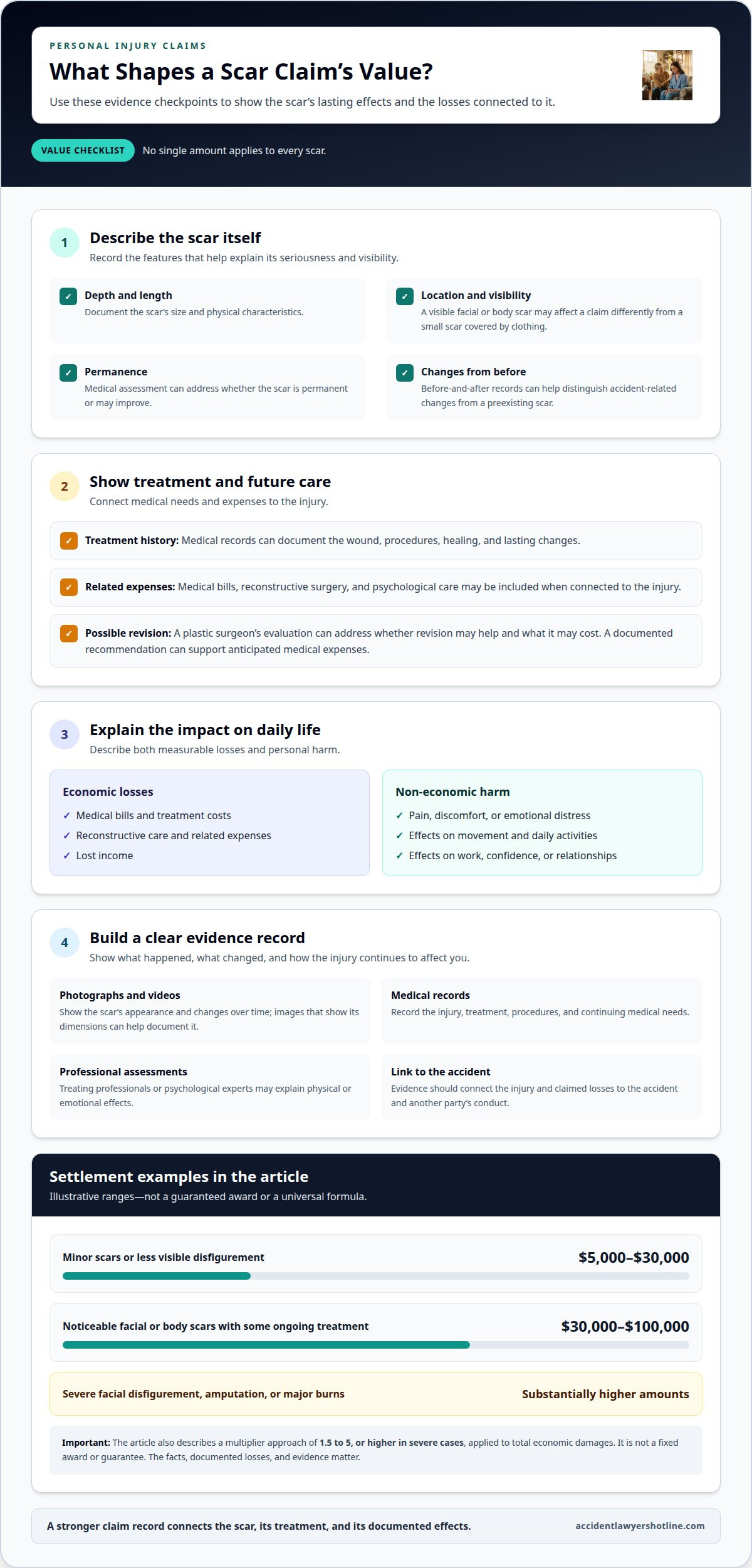
Compensation for medical care, pain, and lost earnings
A catastrophic injury can create immediate bills and long-term financial needs. Compensation claims may seek medical expenses, lost wages, pain and suffering, and future losses.
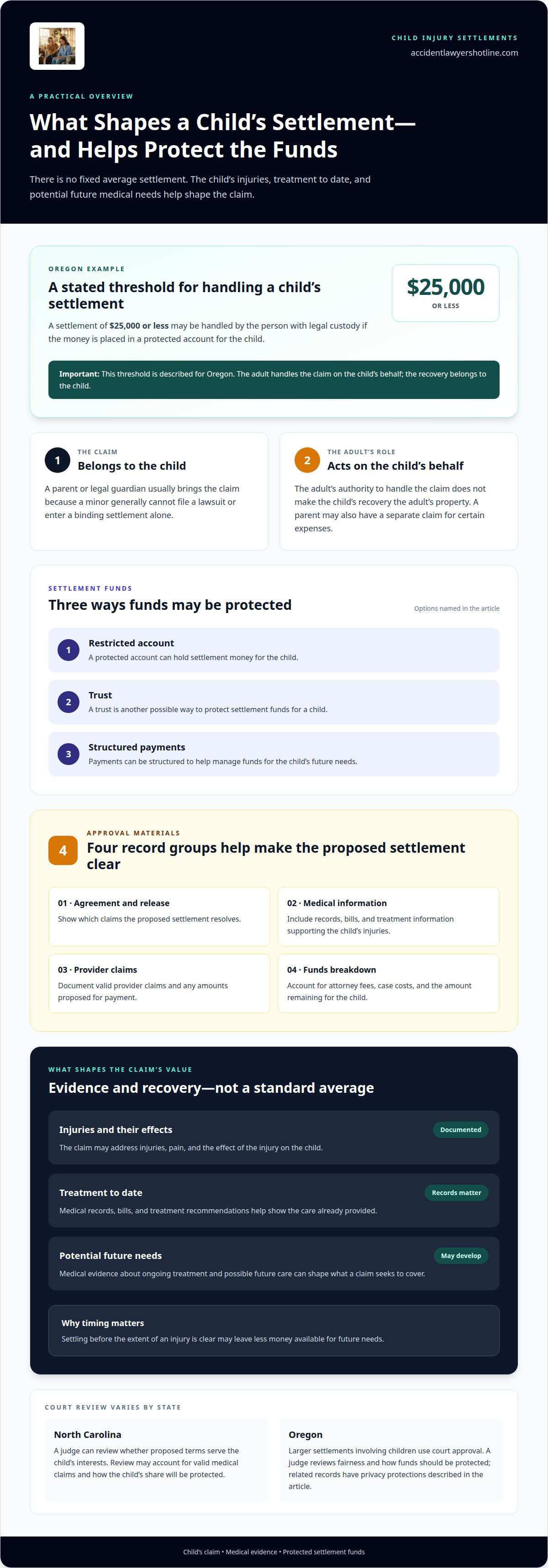
After an injury, prioritize medical care and follow the treatment plan. Keep medical records, bills, rehabilitation documents, and work-related wage information together. Record specific changes, such as needing help to dress or being unable to return to a physical job. These details can connect the injury’s effects to the losses described in a claim.
Medical Treatment and Rehabilitation
Medical treatment and rehabilitation address the injury and help document its effects over time. Hospital care, corrective surgery, physical therapy, occupational therapy, and psychological support may all be part of recovery. For example, someone with limited mobility may need therapy and professional caregiving after leaving the hospital.
Care needs can continue after acute treatment ends. Records of appointments, prescribed treatment, progress, and ongoing symptoms help explain why care remains necessary. Keep receipts and bills for treatment and related accessibility changes, such as adapting a home for wheelchair access. These expenses can show how the injury affects daily life.
Future Expenses and Lost Earning Capacity
Future expenses are anticipated costs for continuing treatment, rehabilitation, caregiving, or accessibility needs. Lost earning capacity refers to income a person may be unable to earn because the injury limits their ability to work. A worker who cannot return to a job involving heavy lifting, for example, may face lasting changes to employment.
Estimating these losses requires evidence about the injury, expected care, and work limitations. Medical records can describe ongoing treatment needs, while financial consultants may help assess future earnings. Expert testimony from professionals such as the injured person’s doctors and financial consultants is typically used to help establish a catastrophic injury case.
Compensation may also account for pain and suffering, including the physical discomfort and emotional strain caused by the injury. A daily record can capture concrete effects, such as interrupted sleep, difficulty completing household tasks, or missed family activities. These examples add context to medical records and help explain how the injury changed a person’s life.
Common causes of catastrophic injuries
The same type of accident can cause very different injuries. A high-speed collision, for example, may cause a traumatic brain injury, spinal damage, or multiple fractures, depending on the impact and the person’s position. The cause helps explain how the injury happened, while its lasting effects shape recovery and a potential personal injury claim.
Vehicle crashes are a major source of catastrophic harm. In the United States, vehicular accidents account for 43% of catastrophic spinal injuries. A rollover may injure the brain and spine, while a pedestrian struck by a vehicle may suffer serious internal injuries. Motorcycle crashes can also expose riders to severe impacts that affect mobility, vision, or other major functions.
Falls can cause catastrophic injuries when a person strikes a hard surface or falls from a significant height. For example, a fall from a ladder may result in a traumatic brain injury or complex fractures. The consequences depend on which body parts absorb the impact, whether internal organs are damaged, and how the injuries affect movement or independence.
Workplace and construction accidents may involve heavy machinery, falling objects, or hazardous materials. A machine can crush a limb, while exposure to toxic chemicals can cause severe burns. These incidents may require emergency surgery, ongoing treatment, and rehabilitation. The specific mechanism matters because it helps connect the event to the injuries and the care they require.
- Fires, explosions, and hot fluids can cause extensive burns, scarring, and lasting pain.
- Sports and recreational activities can involve forceful impacts, falls, or equipment-related injuries.
- Medical mistakes, defective medical devices, or drugs may cause serious harm during treatment or use.
These causes can affect more than one part of the body. An explosion, for instance, may cause burns alongside hearing loss or internal injuries. A vehicle crash may combine facial trauma with brain damage. Multiple injuries can complicate treatment because each condition may require different care, and one injury can limit recovery from another.
The cause alone doesn’t establish the full extent of harm or determine responsibility. The injury’s diagnosis, treatment, continuing limitations, and connection to the event all matter. For example, records showing how a collision led to spinal damage can help explain the event’s consequences. Details about the incident and resulting injuries can also clarify the issues in a claim.
If an accident caused a serious injury, request a personal injury case evaluation to discuss how the event and its effects may relate to a claim.
Accident Lawyers Hotline
Accident Lawyers Hotline provides case evaluations to help people understand how a serious accident and its lasting effects may relate to an injury claim. If a catastrophic injury followed a vehicle crash, an evaluation can help clarify questions about the injury, treatment, and its impact on daily life.
Evaluations cover car, truck, motorcycle, and pedestrian accidents. They focus on the connection between the accident and the harm, including ongoing care needs, reduced ability to work, or changes to independence. This can help bring key issues into clearer view during a difficult time.
If you’d like to discuss an accident-related injury claim, contact Accident Lawyers Hotline for a case evaluation.
Take the Next Step Toward Clarity
Understanding what is considered a catastrophic injury can help frame the questions ahead, but the next step is connecting the legal and personal impact. A useful evaluation considers how the accident happened, how the injury affects daily life, and what ongoing needs could shape a claim. You don’t need to reduce a complex experience to a single label before seeking that perspective.
Accident Lawyers Hotline provides case evaluations for car, truck, and motorcycle accidents. These evaluations help accident victims discuss how serious injuries and their effects relate to a potential claim. Sharing the basic circumstances and the impact on care, work, or independence can start a focused conversation.
If you’re ready to discuss your situation, contact Accident Lawyers Hotline today. Taking that step can help you move forward with a clearer understanding of the questions that matter.
Frequently Asked Questions
What Does Catastrophic Mean?
“Catastrophic” describes harm with profound, lasting effects on a person’s health or ability to live independently. The term can describe the impact of an injury, not just its immediate medical severity. For example, someone may survive a crash but need ongoing help with everyday tasks. In legal or benefit settings, the precise meaning depends on the rule or claim being considered.
What is the legal definition of a catastrophic injury in the United States?
The United States has no single legal definition that applies to every injury claim or benefit program. Some federal laws define catastrophic injury for specific purposes. For example, 42 U.S.C. Section 3796b describes an injury that permanently prevents gainful work, while 34 U.S.C. Section 10284 includes functional inability to perform regular work, including due to a neurocognitive disorder. Those definitions don’t automatically govern every state claim.
What types of injuries are commonly considered catastrophic?
Examples include traumatic brain injuries, spinal cord injuries, paralysis, amputations, severe burns, serious eye injuries, and damage to internal organs. The injury’s effects help show its seriousness. For instance, an eye injury that causes lasting vision loss may affect someone’s ability to read, drive, or work. Multiple fractures may also have lasting consequences if they cause chronic pain or permanent disability.
How do catastrophic injuries differ from serious or severe injuries?
A serious or severe injury describes the harm’s intensity, while “catastrophic” often emphasizes lasting effects on function and daily life. A fracture may be severe during recovery but heal without long-term limitations. A less visible brain injury, by contrast, may disrupt memory, communication, or independent living over time. The distinction depends on the consequences, including lasting disability, ongoing care needs, and changes to work or routine.
How do courts and insurance companies determine whether an injury is catastrophic?
Courts and insurers may consider medical findings, treatment history, functional limitations, expected future care, and effects on earning ability. The applicable legal standard also matters because definitions can vary by claim type and jurisdiction. For example, evidence that someone can no longer perform their previous work may be relevant under one standard, while another may focus on broader daily functioning or continuing medical needs.
What medical evidence is used to establish a catastrophic injury?
Evidence can include treating professionals’ records, diagnoses, treatment plans, rehabilitation notes, and documentation of continuing symptoms. A clear account of how limitations affect everyday activities adds context. For example, records may show that someone needs help with tasks they managed independently before the accident. Doctors and financial consultants may also provide expert testimony about medical effects and related losses in a claim.
What compensation and benefits may be available after a catastrophic injury?
Depending on the claim and applicable law, compensation may include medical expenses, lost wages, reduced earning capacity, and pain and suffering. Future losses may matter when an injury requires continuing care or limits a person’s ability to work. Benefits and eligibility differ across legal programs, and a personal injury claim is distinct from disability or workplace benefits. Documented effects help explain the losses being claimed.
What are typical medical and long-term care costs for catastrophic injuries?
There isn’t one typical amount that fits every catastrophic injury. Costs depend on the injuries, treatment plan, rehabilitation, surgeries, caregiving, and accessibility changes a person needs. Someone requiring repeated procedures and help at home will face different expenses from someone needing outpatient therapy and limited home adjustments. A useful estimate accounts for current bills and anticipated future care, rather than relying only on initial hospital expenses.
Were You Injured in an Accident?
Get a free, confidential case evaluation. No upfront fees.
Get Free Case Evaluation