Settlement for a Child Injured in a Car Accident: How It Works
Learn how a settlement for a child injured in a car accident works, including court approval, claim value, and ways to protect funds for future medical care.
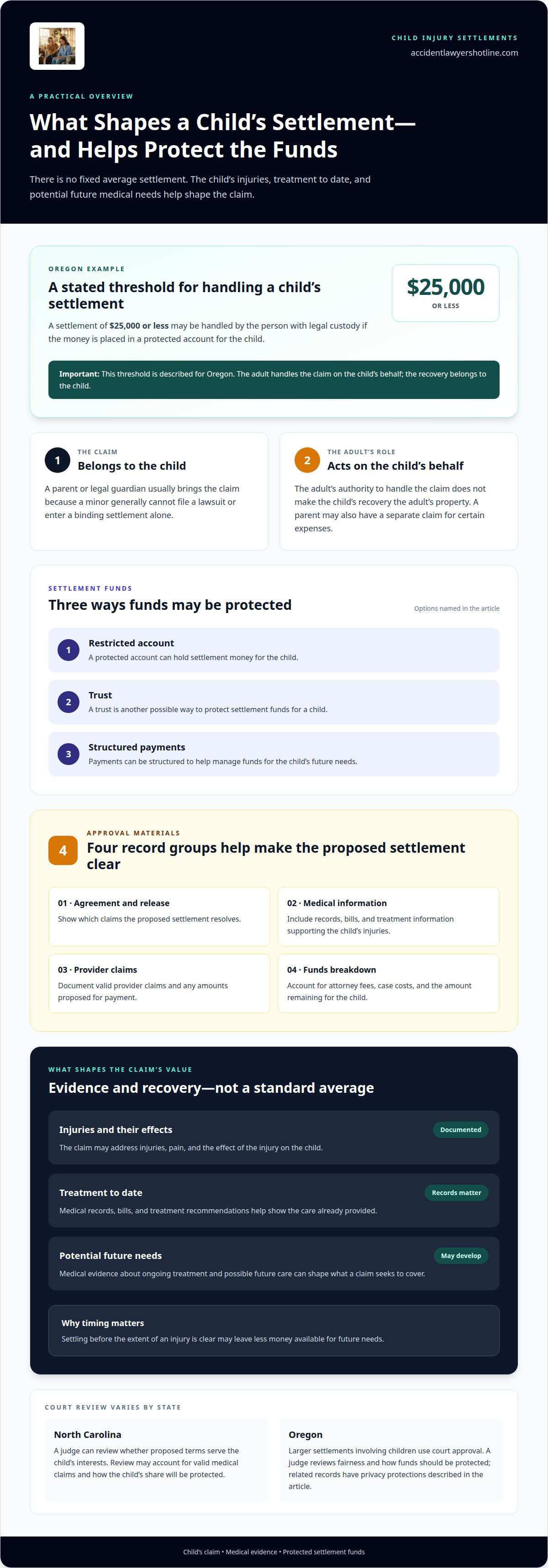
A parent or legal guardian usually brings a claim for a child injured in a car accident because minors generally can’t file lawsuits or enter binding settlement agreements on their own. There is no fixed average settlement for a child injured in a car accident. The value depends on the child’s injuries, treatment to date, and potential future medical needs.
It’s understandable to want a clear figure while focusing on your child’s recovery. But settling before the extent of an injury is clear may leave less money available for future needs. Settlement procedures also include protections intended to preserve a child’s funds for the child’s benefit.
This article explains who can bring the claim, when court approval may be needed, and how settlement funds can be managed for future medical care. It also explains why the amount depends on the child’s injuries and recovery, not a standard average.
Key Takeaways
- A parent or legal guardian usually brings a claim for an injured child, but the rules for handling the settlement can depend on the state.
- Court review can help protect a child’s interests and determine how settlement funds are managed.
- Medical evidence about ongoing treatment and possible future needs can shape what a claim seeks to cover.
- Restricted accounts, trusts, and structured payments are among the ways settlement funds may be protected for a child.
- There’s no fixed average settlement amount; the injuries, recovery, and expected future care all matter.
Who Can File a Claim for a Child Injured in a Car Accident?
A parent or legal guardian usually brings a claim for a minor injured by a driver. The injury claim belongs to the child, even when an adult handles it. A child generally can’t file a lawsuit or enter a binding settlement agreement alone. The adult acts on the child’s behalf but does not own the recovery. This distinction matters when an insurer proposes settlement terms or requests a signed release.
In Oregon, a parent or legal guardian usually files the child’s claim. If both parents share custody, either parent usually may bring it. The money recovered through the child’s Oregon claim belongs to the child. According to Oregon Legislative Assembly, a settlement of $25,000 or less may be handled by the person with legal custody if the money is placed in a protected account for the child. That rule links the adult’s authority to manage the settlement with safeguards for the child’s funds.
A crash may also give rise to separate claims for the child and a parent. The child’s claim can address injuries, pain, and medical care. In Pennsylvania, parents may have a separate claim for medical expenses incurred during their child’s minority. For example, a parent who paid treatment bills may have a claim distinct from the child’s injury-related losses. The claims may rely on overlapping evidence, such as treatment records, but belong to different claimants. Keeping them separate helps clarify whose losses an insurer’s offer addresses.
Read any proposed release closely before signing for a child or parent. It may identify the child’s injury claim, a parent’s expense claim, or both. The claimants and the claims being resolved should be clearly named. A parent’s signature on the child’s behalf does not make the child’s claim the parent’s personal claim. If the insurer’s paperwork combines claims, clarify which claims the payment is intended to resolve.
An insurer may undervalue a child’s claim if it considers only current bills or early recovery notes. A young child may have difficulty describing pain or explaining how an injury affects daily activities. Evidence may also develop as doctors assess treatment needs and recovery. For example, an offer based only on emergency care records may not account for later treatment or ongoing symptoms. A careful claim review considers the records, the driver’s responsibility, and the injury’s effect on the child.
Organize evidence by claimant. Keep the child’s medical records, bills, and treatment recommendations separate from documents showing expenses paid by a parent. Note which parent or guardian has legal custody, since that affects who may act for the child in Oregon. Before accepting a settlement, identify whether the proposed release covers the child’s claim, a parent’s claim, or both. This helps prevent an adult’s authority to handle paperwork from obscuring the child’s separate interests.
Why does a child need court approval for a settlement?
Attorney fees and case costs are handled under the fee agreement, separately from the child’s injury damages. Settlement documents should identify proposed deductions and the amount remaining for the child. This breakdown shows the net recovery being considered.
A child needs protection during settlement because a minor generally cannot sign a binding release for their own claim in North Carolina. A parent may negotiate, but a judge can review whether the proposed terms serve the child’s interests. This matters when an insurer seeks a final release involving serious injuries or uncertain future medical needs. Court approval also provides formal review of the settlement amount and how the child’s share will be protected.
In North Carolina, review of a minor’s settlement should account for valid medical claims as well as the child’s recovery. North Carolina law addresses retaining settlement funds for valid medical claims and limits provider liens under 44-50. For example, a hospital bill or treatment balance may affect how much remains after approved claims are addressed. Families should distinguish those obligations from the child’s compensation for pain, impairment, or other injury-related losses. A settlement review can clarify which amounts pay providers and which funds remain for the child.
Oregon uses court approval for larger settlements involving children. A judge reviews whether the amount is fair and how the funds should be protected. Oregon law also provides privacy protections: sworn statements filed to seek approval of a minor’s settlement remain confidential, and related court records remain sealed unless a judge orders otherwise. These protections let families present sensitive medical and financial details without making those records generally public.
Approval materials should make the proposed agreement easy to understand. They can organize key evidence and explain the financial effect of the settlement. Useful records include:
- The proposed settlement agreement and release, showing which claims it resolves.
- Medical records, bills, and treatment information supporting the child’s injuries.
- Documentation of valid provider claims and any amounts proposed for payment.
- A clear accounting of attorney fees, case costs, and funds remaining for the child.
These materials help the court assess the child’s condition, the settlement terms, and the proposed handling of funds. If the paperwork omits a parent’s separate claim or a medical balance, the distribution may be unclear. A careful review links each record to a specific part of the proposed resolution.
Families dealing with a car crash can use a car accident case evaluation to organize the issues affecting a child’s claim and settlement review.
Settlement funds for future medical needs
A child’s settlement should account for documented treatment and potential future needs. Medical records help connect the crash to the child’s condition and the damages being claimed.
Future Medical Care and Long-Term Needs
Future medical care means treatment or support a child may need after current care ends. Growth can reveal problems related to brain or spine injuries years later, so ongoing monitoring may be recommended. Medical evidence can support claims for future physical therapy, special equipment, or additional surgeries as the child grows. These needs matter because a settlement made before future care is understood may leave the child without resources for later treatment.
Medical Bills and Medicaid Reimbursement
Medical bills and reimbursement records show which treatment costs have been paid and which may remain outstanding. Keep bills, treatment records, and payment information together so the claim can account for the child’s care. North Carolina Medicaid has repayment rights from certain third-party injury recoveries. Under North Carolina law, 108A-57 provides a procedure for court review when the repayment amount is disputed. This matters because reimbursement can affect the funds remaining after medical claims are addressed.
Recoverable Damages for a Child
A child’s damages may include past medical expenses, future medical care, pain and suffering, physical impairment, and permanent disability. Depending on the claim, compensation may also address parental lost wages, educational support, and developmental support. Medical records and other evidence help show how the crash affected the child and what care or support may be needed. A lawyer can use this documentation to present the claimed damages and protect the child’s interests.
Risks of Settling Before Injuries Are Known
Settling before the full extent of an injury is known can leave a family without funds for care that becomes necessary later. A child’s symptoms may change as they grow, or the need for additional treatment may become clear after initial recovery. A settlement release can resolve the claims it covers, leaving the family with limited ability to seek additional compensation for needs discovered later. Medical evidence helps clarify the child’s condition before settlement decisions are made.
Parents can support the claim by keeping a timeline of appointments, treatment recommendations, symptoms, and changes in recovery. Save medical bills and records, and note how the injury affects school, activities, or developmental support. For example, records of ongoing therapy can help explain the need for future care. These details give the lawyer a clearer basis to present both current medical costs and future needs as part of the child’s claim.
Trusts and structured settlements
A child’s settlement funds may be held under court oversight, placed in a restricted account or trust, or paid through structured payments. The court may determine the arrangement based on the case and the child’s interests.
Restricted Accounts, Trusts, and Structured Settlements
A restricted account limits access to settlement funds, a trust holds funds according to its terms, and a structured settlement pays funds over time. These options can protect the amount intended for the child instead of leaving it freely available for unrelated household expenses. After authorized medical expenses, liens, costs, and fees are paid, the remaining funds are generally protected for the child’s benefit.
In Texas, a court may direct that funds go into a restricted account or be paid through periodic payments. Settlements for minors may involve the court registry or a structured annuity under Chapter 142 of the Texas Property Code. The court determines how funds should be handled based on the circumstances. The choice affects access and timing, so the proposed arrangement should account for the child’s needs and the settlement terms.
Holding Funds Until Adulthood
Holding funds until adulthood means preserving some or all of a minor’s recovery until the child can access it under the applicable arrangement. In Oregon, settlement funds may be kept in a protected account until the child turns eighteen. In Indiana, remaining funds after authorized medical-bill payments must be deposited into a restricted account in the minor’s name.
Indiana also sets clear limits on access: a court must approve withdrawals from a minor’s restricted settlement account before the minor turns 18. At 18, the minor receives access and control over all money in that account. These rules make the account’s purpose and restrictions important parts of the settlement plan. A guardian should distinguish authorized payments for the child from ordinary family expenses.
A trust may offer another way to manage a child’s injury claim, while structured payments can distribute funds at different times. The arrangement should state who manages the funds, which expenses may be paid, and when the child can access the balance. For example, periodic payments can make portions available over time rather than giving the child the full amount at once. The court’s directions and settlement documents define how the arrangement works.
Parents should also understand that in Indiana, a guardianship created to manage settlement funds does not change a parent’s or legal guardian’s status over the child. The financial role concerns the settlement, not a transfer of parental authority. Clear records of deposits, approved medical payments, and withdrawals help show that funds remain devoted to the minor’s support, use, and benefit.
Why child injury settlements have no fixed average
A child’s personal injury settlement has no standard amount because injuries, recovery, and future needs differ. Compensation depends on evidence linking the crash to the child’s losses.
Factors Affecting Settlement Value
Settlement value reflects the injury’s severity, its effects on the child, and the medical care required. A younger child’s recovery may involve needs that emerge as they grow, while a serious injury may require ongoing treatment or support. The claim must account for the child’s circumstances, not simply match another family’s settlement.
For example, a child who recovers after limited treatment has different documented losses from a child with lasting impairment. Medical records, treatment recommendations, and evidence of pain or changes to daily activities help explain the difference. The child’s age can affect how long future needs may continue, but age alone does not determine compensation. The injury’s actual effects remain central.
How Child Settlements Are Calculated
No single calculation produces a reliable settlement amount for every child. A claim organizes supported losses, such as medical expenses, future care, pain and suffering, and impairment. Evidence about the driver’s responsibility and the child’s recovery also informs negotiations with the insurer. These factors contribute to an evaluation, not a universal formula.
Those amounts describe very different outcomes, not a typical award or a promise of compensation. The child’s treatment, lasting effects, and evidence supporting future needs help explain why values can vary so widely.
A useful evaluation separates current losses from projected needs. Invoices and treatment records document current medical bills. Future physical therapy, equipment, or additional surgeries require medical evidence supporting those needs. Pain and suffering and long-term impairment also depend on how the injury affects the child. This evidence-based approach gives families a clearer basis for assessing an offer than comparing it with an unrelated case.
Court approval may review whether a proposed amount and fund arrangement protect the child. That review does not create a fixed schedule of settlement values. Two children with similar initial injuries, for example, may have different treatment progress, future care recommendations, or lasting limitations. These case-specific facts can change the damages supported by the evidence and the amount available after valid claims are addressed.
Before accepting an insurer’s proposal, consider whether it accounts for documented treatment, future needs, and the injury’s effect on the child. Request a car accident case evaluation to examine the evidence and the factors shaping the claim.
Accident Lawyers Hotline
Accident Lawyers Hotline offers case evaluations to help families understand the issues in a child’s accident claim. If questions remain about evidence, potential damages, or settlement terms, an evaluation can clarify what to discuss with a personal injury attorney. The service connects individuals with experienced attorneys who provide legal assistance.
The right evaluation depends on how the crash happened. Car, truck, motorcycle, and pedestrian accident evaluations address different circumstances. For a child’s claim, key questions may include who can act for the child, whether a proposed release covers separate claims, and how future medical needs affect the settlement. Understanding these issues can help families approach their next decision with greater clarity.
If you’d like to discuss the child’s accident claim, contact Accident Lawyers Hotline.
Choose a Clear Next Step for Your Child
The next step is to focus on the questions that remain about your child’s circumstances. Gather the details that shape the decision, including crash information, treatment records, and any proposed settlement terms. This can keep the child’s needs at the center of discussions about a settlement for a child injured in a car accident.
Accident Lawyers Hotline offers Car Accident Case Evaluation, Truck Accident Case Evaluation, and Motorcycle Accident Case Evaluation. An evaluation can clarify issues raised by the accident and identify questions to discuss with an attorney. The right focus depends on how the crash occurred and what concerns remain about the claim.
When you’re ready to discuss the next step, contact Accident Lawyers Hotline today. You can move forward with greater clarity while keeping your child’s interests in view.
Frequently Asked Questions
Can a parent file a lawsuit for a minor child?
Yes. A parent or legal guardian generally brings a lawsuit on a minor’s behalf because a child can’t file independently. The adult acts for the child’s claim rather than owning the child’s injury recovery. For example, a parent may handle communications and legal documents while the claim seeks compensation for the child’s injuries. The court process and who may act can depend on the state and the family’s custody arrangements.
Do insurance discussions extend the time to act?
No. Settlement talks with an insurer don’t automatically extend a filing deadline or preserve every legal right. A family may still face a deadline while discussing an offer or waiting for records. The time limit can depend on the state, the claimant, and the type of claim. A child’s claim and a parent’s separate claim for expenses may follow different timing rules, so negotiations should not be treated as a pause.
Is there an average settlement for a child hurt in a car accident?
There’s no reliable average that predicts what an individual child’s claim is worth. A short recovery with limited treatment differs from an injury involving lasting impairment or ongoing care. Comparing another family’s outcome can mislead because the medical evidence, recovery, and available damages may differ. A useful evaluation focuses on the child’s documented circumstances and supported losses, not an advertised or reported average.
What happens to the settlement money?
The child’s share is generally protected for the child, rather than treated as household money for a parent. Depending on the state and the court’s directions, funds may be held in a restricted account, placed in a trust, or paid over time. Approved medical claims and other authorized deductions may be addressed first. For example, a settlement accounting can distinguish a payment to a provider from the balance reserved for the child’s benefit.
Who is liable in a car accident involving children?
Liability may rest with a driver whose negligence caused the crash and the child’s injuries. The circumstances and supporting evidence matter, including crash details, witness accounts, and records linking the collision to the injury. A product manufacturer may also face liability if a car seat or seat belt contributed to the child’s injuries. Responsibility depends on what caused the harm, not simply on the child being a passenger.
What is the average settlement for a child injured in a car accident?
No single average captures the different outcomes in child injury claims. Settlement analysis considers the injury’s severity, medical expenses, pain and suffering, future care, and lasting impairment. An injury that resolves after treatment, for instance, presents different supported damages from one requiring additional surgeries or long-term assistance. The evidence for each loss matters more than a broad figure drawn from unrelated cases.
Who can file a car accident injury claim on behalf of a child?
A parent or legal guardian generally files or pursues the child’s injury claim. In Oregon, either parent usually may bring the claim when both parents share custody. The person acting for the child should have authority under the family’s legal arrangements. This is separate from any claim a parent may have for expenses they paid, such as medical costs during the child’s minority.
Do courts have to approve a settlement for a minor, and what is the process?
Approval requirements depend on the state and the settlement. Pennsylvania requires judicial approval of a proposed minor’s settlement under 231 Pa. Code Chapter 2020; Indiana requires court approval before a minor’s settlement becomes final. The process generally involves presenting the proposed agreement and supporting information for review. The court considers the child’s interests and how funds will be protected, then issues directions for handling the approved recovery.
Were You Injured in an Accident?
Get a free, confidential case evaluation. No upfront fees.
Get Free Case Evaluation