Commercial Vehicle Accident Liability and Who May Be Responsible
Learn who may be responsible for commercial vehicle accident liability, how evidence and carrier duties affect fault, and what shapes settlement estimates.
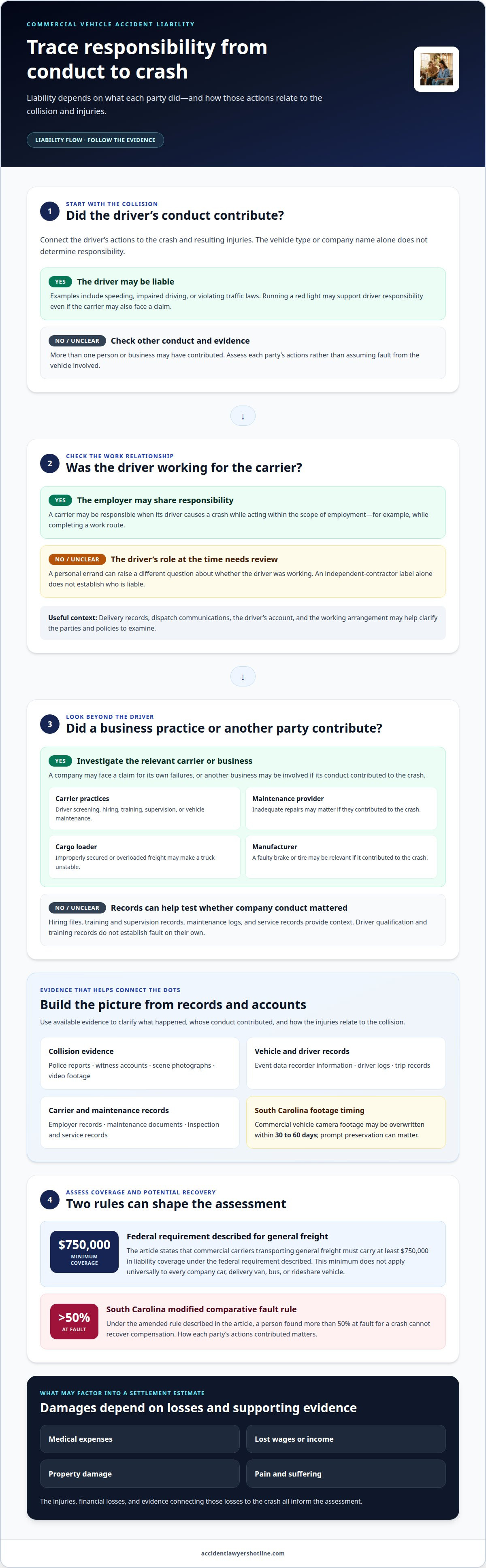
Commercial vehicle accident liability may fall on the driver, the carrier, or other businesses whose actions contributed to the crash. A carrier may share responsibility if its driver was working within the scope of employment, and it may also be liable for its own failures, such as inadequate training or vehicle maintenance. The facts of the collision matter more than the company name on the vehicle.
It’s understandable to look first to the driver, but responsibility may extend beyond the person behind the wheel. That distinction can affect which records and actions matter when evaluating a claim. This article explains who may be liable, how carrier duties and other parties’ conduct can shape a case, and which factors influence commercial vehicle accident settlement estimates.
The sections ahead explain how investigators assess fault, what evidence can help clarify what happened, and how medical costs, lost income, property damage, and the effects of an injury may factor into a settlement estimate.
Key Takeaways
- Responsibility may extend beyond the driver to a carrier or another business whose conduct contributed to the crash.
- Driver schedules and carrier practices can help reveal whether safety duties played a role.
- Maintenance records, driver logs, video, and witness accounts can help clarify how the collision happened.
- Settlement estimates depend on the injuries, financial losses, and evidence connecting those losses to the crash.
- Understanding how fault is shared can help you assess what may affect a potential recovery.
Who holds liability in commercial vehicle accidents?
Commercial vehicle accident liability may involve the driver, employer, or another business whose conduct contributed to a crash. Assessing liability means examining what each party did and how those actions relate to the injuries.
Employer Responsibility for Driver Negligence
An employer may share responsibility when a driver causes a crash while acting within the scope of employment. This matters because a claim may involve company conduct as well as the driver’s actions. For example, an employer may be connected to damages if a delivery driver crashes while completing a work route. A personal errand can raise a different question about whether the driver was working at the time.
Fault and Liability Across Vehicle Types
Fault is assessed by connecting each party’s conduct to the collision and resulting injuries. The vehicle type alone doesn’t determine responsibility. A delivery van driver’s actions, a bus company’s maintenance practices, or a tractor-trailer carrier’s records may be relevant. In a rideshare crash, the driver’s role at the time may also matter. Police reports, witness statements, photographs, and available vehicle data can help clarify what happened.
Commercial Vehicle Insurance Coverage
Coverage depends on the vehicle’s use and the carrier’s operations. According to the Federal Motor Carrier Safety Administration, commercial carriers transporting general freight must carry at least $750,000 in liability coverage under the federal requirement described here. That minimum does not apply universally to every company car, delivery van, bus, or rideshare vehicle. Identifying the responsible carrier and applicable policy helps determine which coverage may address damages.
Company negligence can involve driver screening, training, supervision, or maintenance. Hiring files may show what a carrier considered before assigning a driver. Training and supervision records can help explain whether the company addressed safety concerns. Maintenance logs and service records may show whether a mechanical problem was reported or repaired. A third-party maintenance provider may also be responsible if inadequate repairs contributed to the crash.
Preserving evidence can help establish how the collision happened. Relevant materials may include event data recorder information, driver and employer records, maintenance documents, police reports, witness accounts, scene photographs, and video footage. In South Carolina, commercial vehicle camera footage may be overwritten within 30 to 60 days, so prompt preservation can matter. A lawyer can use these records to assess commercial vehicle accident liability and identify parties whose conduct warrants investigation.
Fault can also affect compensation. Under the amended modified comparative fault rule described here, according to the South Carolina Legislature, a person found more than 50% at fault for a crash cannot recover compensation. For a company-car accident, damages may include medical expenses, lost wages, property damage, and pain and suffering. How each party’s actions contributed helps shape the assessment of commercial vehicle accident liability and potential recovery.
Potentially liable drivers, carriers, and other businesses
A crash may involve several responsible parties, not just the commercial driver. Identifying each party’s role helps clarify how fault and resulting damages may be assessed.
Commercial Driver Liability
A commercial driver may be liable when negligent driving causes a collision and injuries. Speeding, impaired driving, or violating traffic laws can connect the driver’s conduct to the crash. For example, a driver who runs a red light may bear responsibility even if the carrier also faces a claim. Driver logs, witness accounts, and police reports can help establish what happened.
Shared Fault With Other Drivers
Shared fault means more than one driver’s conduct may have contributed to the same collision. For example, a car driver who changes lanes abruptly may share responsibility with a truck driver who was following too closely. Each driver’s actions matter, so an attorney may examine statements, scene photographs, and available vehicle data. This evidence can help show how each person’s decisions contributed to the injuries and suffering.
Independent Contractor Driver Liability
An independent-contractor label does not, by itself, establish who may be liable after a crash. The driver’s conduct remains central, while the company’s role and the facts of the working arrangement may also matter. Delivery records, dispatch communications, and the driver’s account can help clarify the parties involved. These details may affect which claims and insurance policies need to be examined.
Carriers and other businesses may also be involved in a claim if their actions contributed to the collision. A cargo loader could be responsible if improperly secured or overloaded freight made a truck unstable. A manufacturer may be accountable if a faulty brake or tire contributed to the crash. Maintenance records and inspection documents can help show whether a company’s conduct played a role.
Driver qualification and training records can help explain how a carrier selected and prepared its drivers. A review may consider the driver’s work history, training documentation, and trip records. These materials don’t establish fault on their own. They provide context alongside evidence of the driver’s actions and the company’s practices.
Hours-of-service records can also matter. According to the Federal Motor Carrier Safety Administration, property-carrying commercial drivers are limited to 11 hours of driving within a 14-hour on-duty window under 49 C.F.R. Part 395. The Federal Motor Carrier Safety Administration also requires these drivers to take at least 10 consecutive hours off duty before their next shift begins under 49 C.F.R. Part 395. Logs can help show whether fatigue or scheduling deserves closer examination.
Responsibility may extend to a courier service or company that contributed to a crash, but the evidence must connect its conduct to the harm. A truck accident case evaluation can help organize questions about the driver, carrier, records, and other businesses involved.
Commercial carrier hiring, supervision, and maintenance duties
A carrier’s decisions before and after a crash can help explain how a commercial vehicle became unsafe. Hiring files, maintenance records, and road conditions may point to responsibility beyond the driver.
Applicable federal and state safety regulations can affect whether a carrier’s actions contributed to a crash. Commercial drivers and trucking companies must follow applicable safety protocols and vehicle maintenance standards. A failure to do so may be relevant when assessing liability.
Hiring practices matter when a company puts a driver behind the wheel. A review may examine screening records, the driver’s qualifications, and whether the carrier assessed relevant experience. For example, a hiring file may show what information the trucking company considered before assigning a driver to operate a large vehicle. Those records can help explain whether the company’s selection process contributed to a foreseeable safety risk.
Training and supervision can also shape a driver’s decisions on the road. Training records may show whether the driver received instruction relevant to the vehicle and assigned work. Company communications and supervision records can clarify how the carrier addressed safety concerns. If a company ignored known performance problems, that conduct may be considered alongside the driver’s actions and the crash evidence.
Maintenance evidence can connect a vehicle defect to a collision. Service records, inspection documents, and repair orders may show whether a problem was reported, assessed, or left unresolved. A worn tire or faulty brake matters if evidence connects that condition to the crash. These records can also help distinguish a sudden failure from a problem that earlier maintenance could have identified.
A manufacturer may be liable if a defective vehicle or part, such as faulty brakes or tires, contributed to the accident. A third-party maintenance provider may also bear responsibility if inadequate inspection or repair led to mechanical failure. In either situation, the key issue is whether the company’s work or product is connected to the collision. Parts records and repair documents can help establish that connection.
Road conditions may point to another potential source of responsibility. A government agency responsible for road maintenance may share liability if a poorly maintained road causes a commercial vehicle crash. For example, investigators may consider whether a road defect contributed to a driver losing control. Evidence about road conditions can help distinguish a roadway hazard from a vehicle or driver failure.
To assess these possible causes, an investigation can compare driver and employer records with maintenance logs, service records, and available scene evidence. The review can identify which actions may have contributed to the crash and whether economic losses followed. That connection matters: a maintenance lapse or training gap alone does not establish responsibility unless evidence links it to the collision and resulting harm.
Seeking legal counsel after a commercial vehicle or rideshare crash
Commercial crashes can leave injured people with unanswered questions about fault, evidence, and potential recovery. A careful review can connect the collision to responsible parties and resulting personal injury damages.
Responsible Parties in Commercial Crashes
Potentially responsible parties include drivers, carriers, cargo loaders, manufacturers, and maintenance businesses. Their involvement depends on whether their actions contributed to the crash or injuries. In a rideshare collision, the driver’s conduct and role at the time may matter. In a tractor-trailer crash, investigators may also examine carrier records, cargo, and vehicle maintenance. Identifying each potential party helps clarify which evidence and insurance policies matter.
The scale of truck crashes underscores why the details deserve attention. More than 5,400 fatal crashes involving a large truck or bus occurred in the United States in 2022. Across Texas, commercial motor vehicle crashes resulted in 608 fatalities and 1,601 serious injuries in 2024. Harris County recorded 4,003 commercial truck crashes that year, including 29 fatal crashes. These figures describe different measures, but each shows the serious harm these collisions can cause.
Steps After a Commercial Vehicle Crash
After a crash, call law enforcement so officers can complete a report. Seek medical attention for injuries, even if their full impact is not immediately clear. Preserve photographs, witness details, and relevant messages or trip information. These records may help explain the sequence of events and connect injuries to the collision. Avoid guessing about fault when describing what happened.
Legal counsel can help organize an investigation by examining police reports, witness statements, photographs, video, and available vehicle data. A commercial case may also require driver logs, employer records, cargo details, and maintenance documents. For example, a lawyer may compare a delivery company’s route records with the crash timeline. This review can help identify whether the driver, carrier, or another business may have contributed.
Timing can affect access to useful evidence. Commercial vehicle camera footage in South Carolina accident cases may be overwritten within 30 to 60 days. Prompt attention to preserving footage and company records can therefore matter. Medical documentation also helps explain the injuries, treatment, and effects on daily activities. Together, these materials can support a clearer assessment of responsibility and damages.
Texas filing deadlines also deserve attention after a crash. Texas Civil Practice and Remedies Code Section 16.003 sets a two-year statute of limitations for personal injury claims, according to the Texas Legislature. A lawyer can assess how that rule applies while reviewing fault, records, and losses. The investigation’s focus is practical: establish what happened, identify potentially responsible parties, and document the harm connected to the crash.
Commercial vehicle accident settlement estimates
A settlement estimate starts with losses linked to the collision, then considers evidence about who caused it. Medical needs, missed work, property damage, and the effect of injuries on daily life all shape the claim. If multiple parties contributed to a vehicle crash, each party’s actions and share of responsibility can also affect how the claim is assessed.
Published figures offer context, not a calculation for a particular person. One reported average range for commercial vehicle accident settlements is $50,000 to $100,000. Data covering truck and tractor-trailer accidents from 2015 to 2023 showed an average settlement of around $73,000. Individual claims differ because injuries, liability evidence, and documented losses differ.
Economic damages include losses that can be documented with financial records. Medical expenses, property damage, lost wages, and loss of earning capacity may be included. Treatment bills, for example, document care already received, while wage records can show income missed during recovery. If an injury affects a person’s ability to work, evidence of that effect helps explain the claimed economic loss.
Non-economic damages address harm without a straightforward bill or receipt. They can include physical pain, mental and emotional anguish, scarring or disfigurement, and loss of enjoyment of life. A person recovering from a serious injury may describe changes to daily activities, while medical records and witness accounts can provide context. The nature and documented effects of the injury matter.
Findings about commercial vehicle accident liability connect evidence of fault to a settlement estimate. A driver’s actions, carrier records, maintenance evidence, and witness statements can help establish how the collision happened. If evidence shows that a company or another driver contributed, multiple parties may be involved. Clear documentation helps connect each party’s conduct to the crash and resulting losses.
Coverage is another practical factor. Commercial insurance policies often have higher limits than personal auto policies, but applicable coverage depends on the carrier, vehicle, and claim. A policy limit is not the same as a settlement estimate. Losses and evidence shape the estimate, while available insurance helps determine what coverage may respond.
Assess an estimate by asking what injuries the crash caused, what financial and personal losses followed, and what evidence connects those losses to responsible parties. In a claim involving commercial vehicle accident liability, a settlement figure without medical, wage, and fault documentation may leave important factors unaddressed. A truck accident case evaluation can help assess those records and the factors affecting a potential claim.
Accident Lawyers Hotline: Motor Vehicle Accident Attorney
Accident Lawyers Hotline helps people assess what may follow a commercial vehicle crash and connects them with motor vehicle accident attorneys. If you’re weighing fault, evidence, or settlement factors, a Truck Accident Case Evaluation can help organize the questions surrounding your claim.
The evaluation can consider how the collision happened, which parties may have contributed, and what records could support your account. Accident Lawyers Hotline also offers Car Accident Case Evaluation and Motorcycle Accident Case Evaluation for people injured in those crashes. Attorneys connected through the service work on a contingency basis, meaning there are no fees unless the case is won.
Contact Accident Lawyers Hotline to discuss an accident evaluation and possible next steps.
Take the Next Step Toward Clarity
After a serious crash, uncertainty can make every decision feel harder. A useful next step is to turn unanswered questions into a clear account of what happened, how your injuries affect daily life, and what concerns remain. That gives a case review a practical starting point and helps focus attention on the issues that matter to you.
Understanding commercial vehicle accident liability is not only about identifying fault. It also means considering how the collision has changed your circumstances and what information could help explain those effects. You deserve a thoughtful review of the facts, without pressure to make decisions before you’re ready.
Accident Lawyers Hotline can help you take that next step. Contact Accident Lawyers Hotline to discuss your situation and find a clearer path forward.
Frequently Asked Questions
Can I still recover compensation if I was partially at fault for the crash?
Yes, partial fault does not always prevent recovery. In South Carolina, compensation is reduced by your percentage of fault, and according to the South Carolina Legislature, a person found more than 50% at fault cannot recover compensation under the modified comparative fault rule. For example, if evidence shows both drivers contributed, the fault allocation can affect the amount recoverable. Police reports, photographs, and witness accounts may help clarify each person’s actions.
Who Can Be Held Liable?
Responsibility may involve a driver, employer, vehicle owner, carrier, cargo loader, manufacturer, or maintenance business. The relevant question is whether a party’s conduct contributed to the crash or resulting harm. For example, a vehicle owner’s role may warrant examination if the owner assigned the vehicle for a work task. A claim can involve more than one party, so records connecting each party to the event can matter.
Who is Liable in a Commercial Truck Accident?
Liability may involve the truck driver, trucking company, cargo loader, vehicle or parts manufacturer, or maintenance provider. A specific party’s involvement depends on evidence linking its actions to the collision. For instance, a tire defect may direct investigators to the manufacturer or maintenance history, while unsafe driving may focus attention on the driver. Trip documents, inspection records, and cargo information can help distinguish these possibilities.
How is liability determined when the driver is an independent contractor rather than a direct employee?
The contractor label alone does not identify every potentially responsible party. An investigation considers the driver’s conduct and what the driver was doing when the crash occurred. A delivery record or dispatch communication may help show whether the driver was completing a company assignment or making a personal trip. The driver may still be responsible for negligent driving, while evidence about the business relationship can help establish whether another party also contributed.
What Counts as a Commercial Vehicle in South Carolina?
In South Carolina, the description includes a business-use vehicle with a gross vehicle weight rating greater than 10,001 pounds. It also generally includes vehicles designed to carry 16 or more passengers, including the driver, without compensation, or 9 or more passengers for compensation. For example, a company shuttle’s passenger capacity may matter even if its weight differs from a heavy truck’s. Vehicle use and design help determine which category applies.
What Qualifies as a Commercial Vehicle in Colorado?
The Colorado definition described includes a vehicle used in commerce weighing at least 16,001 pounds. It also states that a Colorado commercial vehicle must be designed to transport six or more passengers. These criteria make the vehicle’s weight, commercial use, and passenger design important details. For example, a vehicle’s appearance alone may not establish its classification, so records describing its rated weight and intended capacity can help clarify the issue.
What happens if someone hits you in a company vehicle?
The company’s involvement depends on who was driving, why the vehicle was being used, and how the crash happened. If the driver was working within the scope of employment, the employer may share responsibility for the driver’s negligence. A personal errand or activity outside normal work can raise a different issue. Preserve work-related messages, route details, and vehicle information, as those materials may explain the driver’s purpose.
What if the trucking company’s insurer contacts me right away and offers a settlement?
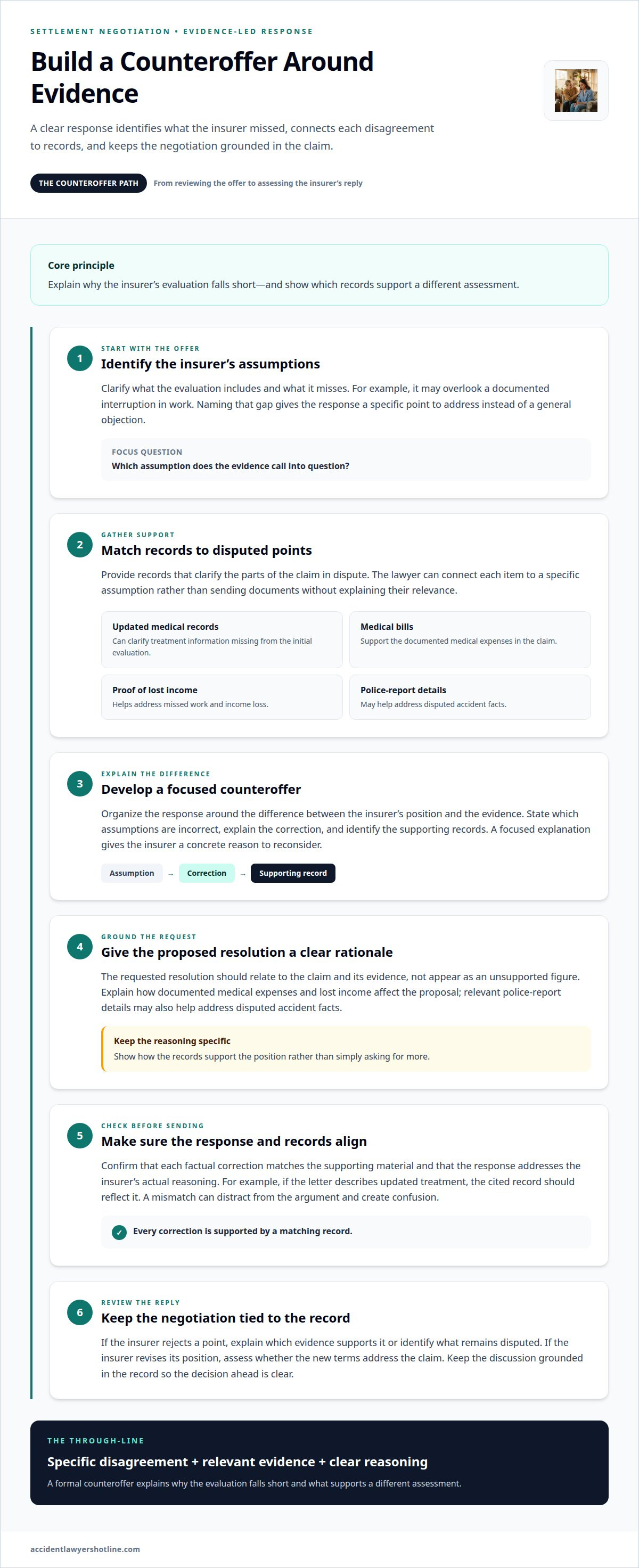
You can ask for the offer and its terms in writing before deciding. Compare the proposed payment with documented losses, including medical care, missed income, and property damage. Keep copies of bills, treatment records, and correspondence, and avoid signing a release until you understand which claims it would resolve. A lawyer can review the offer and evidence, especially if treatment or the effects of your injuries are ongoing.
Were You Injured in an Accident?
Get a free, confidential case evaluation. No upfront fees.
Get Free Case Evaluation