Evidence for a Personal Injury Claim: What to Gather in Georgia and Pennsylvania
Learn what evidence needed for a personal injury claim in Georgia and Pennsylvania can include: medical records, photos, witness accounts, and expense records.
Strong personal injury claims rely on evidence showing how an accident happened, who was responsible, what injuries followed, and how those injuries affected your life. In Georgia and Pennsylvania, evidence needed for a personal injury claim can include medical records, photographs or video, witness statements, police or incident reports, and records of accident-related expenses.
It can be hard to know what matters while you recover. Focus first on records and details that connect the incident to your injuries and losses. Medical notes document treatment, while bills, pay records, and repair receipts can help show financial effects.
This article explains how evidence can support a claim in both states, including how witness statements add context and why posts about an accident, injuries, or recovery on social media can matter. You’ll also learn what to preserve, why prompt documentation can help, and how Pennsylvania evidence may include records that show another party’s conduct and the impact of the injury.
Key Takeaways
- Keep medical records, bills, and treatment notes together to help document your injuries and related losses.
- Witness accounts can add context to how an incident happened and how an injury has affected your daily life.
- Be cautious about posting accident, injury, or recovery updates on social media while a claim is open.
- In Georgia, preserve scene evidence and damaged items, and act promptly when footage may be overwritten.
- Pennsylvania claims may draw on a range of evidence, from reports and photos to employment records and expert analysis.
Do witness statements help a personal injury case?
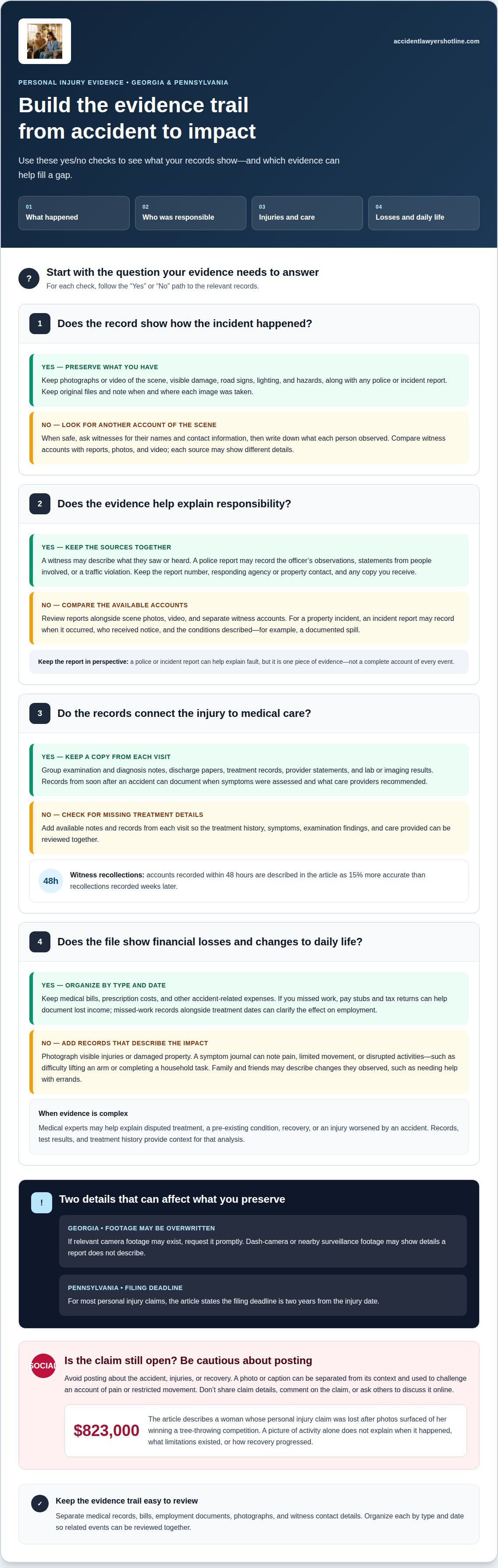
Yes. Witness statements and police or incident reports can help establish fault by recording what people saw, heard, or observed afterward. For example, a witness might describe a driver entering an intersection against a signal, while a police report may record the officer’s observations and statements from people involved.
A witness can add details that photographs or medical records can’t show, such as the sequence of events or conditions at the scene. Ask witnesses for their names and contact information when it’s safe, then write down what each person observed. Recollections recorded within 48 hours are described as 15% more accurate than recollections recorded weeks later.
Medical records connect the reported incident to the care that followed. They may include examination and diagnosis notes, discharge papers, treatment records, provider statements, and lab or imaging results. Keep copies from each visit. Records showing an injury soon after an accident can document when symptoms were assessed and what care providers recommended.
Medical bills and receipts help show an injury’s financial effects. Save statements for medical care, prescription costs, and other accident-related expenses. If an injury kept you from working, pay stubs and tax returns can help document lost income. Records of missed work alongside treatment dates can clarify how the injury affected your employment.
Photos can complement those records. Images of visible injuries, damaged property, or the accident scene capture details written notes may miss. A symptom journal can describe pain, limited movement, or disrupted daily activities. Be specific, noting, for instance, difficulty lifting an arm or completing a regular household task.
Family and friends may describe changes they observed after the injury, such as needing help with errands or withdrawing from usual activities. Their accounts can document effects on daily life. Medical-provider records serve a different purpose: treatment notes can record symptoms, examination findings, and care provided.
Medical experts may help explain complex evidence when a claim involves disputed treatment, a pre-existing condition, recovery, or an injury worsened by an accident. Their analysis can clarify how medical findings relate to the reported harm. Records, test results, and treatment history provide important context.
Organize evidence by type and date. Keep medical records, bills, employment documents, photographs, and witness contact details separate, so each item can be reviewed alongside related events. Together, these materials can show the injury, its costs, and its effect on daily life.
For most personal injury claims, Pennsylvania’s filing deadline is two years from the injury date, according to the Pennsylvania General Assembly. Organized records can help an attorney assess how evidence supports a claim and identify gaps that need attention.
Should I post about my accident on social media?
While a personal injury claim is open, avoid posting online about the accident, your injuries, or recovery. A photo or caption can be separated from its context and compared with your account. Even a post meant for friends may become relevant if liability or the extent of your injuries is disputed. Don’t share details, comment on the claim, or ask others to discuss it online.
Consider the example of a woman whose $823,000 personal injury claim was lost after photos surfaced of her winning a tree-throwing competition. A picture of physical activity doesn’t, by itself, explain when it happened, what limitations existed, or how recovery progressed. But opposing parties may use posts to challenge an account of pain or restricted movement. A brief caption can also be read differently from what you meant.
Social media isn’t the only record that may shape a claim. A police report after a car accident may include the responding officer’s observations and statements from people involved. It may also document a traffic violation that directly caused the collision. These details can help explain fault, but a report is one piece of evidence, not a complete account of every event.
Incident reports serve a similar purpose after falls or other events on business or public property. A report may record when the incident occurred, who received notice, and the conditions described. For example, a report about a spill may help establish that a hazard was documented. Compare it with scene photos, video, and witness accounts to understand what each source shows.
Keep the report number, the responding agency or property contact, and any copy you receive with your claim records. Note witness names, contact details, and what each person saw. A witness who saw a vehicle signal change may offer different information from someone who arrived after impact. Separate accounts can help clarify the sequence of events and questions about liability.
Photographs and videos can preserve details that reports summarize. When safe, capture vehicle positions, visible damage, road signs, lighting, and hazards. Dash-camera or nearby surveillance footage may show events a report doesn’t describe. In Georgia, request relevant camera footage promptly because it may be recorded over. Keep original files and note when and where each image was taken.
Don’t post evidence publicly or edit images before preserving the originals. Instead, keep photos, videos, reports, and witness details together, with dates and brief descriptions. If you’re weighing how accident documentation may relate to liability or compensation, a car accident case evaluation can help assess the available records.
Witness statements
Witness statements can add another person’s account of an accident, its aftermath, or changes during recovery. Gather each witness’s contact information and observations while details are fresh.
Firsthand Witness Accounts
A firsthand witness statement describes what someone directly saw, heard, or experienced during an incident. It can clarify the sequence of events, such as whether a vehicle stopped before turning or whether a hazard was visible before a fall. Ask the witness to distinguish personal observations from assumptions. Specific details make it easier to compare accounts and identify what other evidence may support them.
Independent Witness Statements
An independent witness is someone without a close personal connection to the injured person or another party. Their account may offer a separate perspective on details such as where people were standing or what happened just before impact. Record the witness’s name, contact information, and a brief description of what they observed. A personal injury lawyer can assess how the account fits with other records.
Statements from Family and Friends
Family and friends can describe changes they personally observed after an injury. A relative, for example, might explain that the injured person needed help with errands during recovery, or a friend might note that they stopped attending usual activities. These statements can document effects on daily life even if the person didn’t witness the accident. Include contact details and the dates they noticed changes.
Timing matters. Witness recollections recorded within 48 hours of an event are described as 15% more accurate than those recorded weeks later. If you can, write down the witness’s words promptly and note when and where the conversation happened. Don’t coach the witness or fill gaps for them. Their own account should remain distinct from yours.
Useful statements answer practical questions: Where was the witness? What could they see or hear? Which details did they observe directly? Someone near a crosswalk, for example, may have seen a vehicle approach, while a nearby employee may know when a spill was noticed. These accounts can reveal consistent details and clarify differences between versions of events.
Date and organize statements with contact information. If a witness shares an account by message or email, preserve the original communication. Clear records make it easier for lawyers to compare the statement with photographs, reports, and other evidence. They may also help explain disputed details during settlement discussions, without making one account proof of every issue.
Witnesses may remember events differently over time, so preserve their initial observations without pressuring them to agree. A personal injury lawyer can assess how firsthand and family accounts relate to the injury, recovery, and claimed damages.
Evidence for a Personal Injury Claim in Georgia
In a Georgia injury case, evidence should connect the incident, another party’s conduct, and your losses. Preserve records and physical items as the claim develops.
Accident-Scene and Physical Evidence
Accident-scene evidence captures conditions and objects that may explain how an injury occurred. After a car accident, scene photos can show vehicle positions, road conditions, signs, and visible damage. Physical evidence may include torn clothing or damaged property. Keep relevant items in their original condition. Don’t clean, repair, or discard anything that could help explain what happened.
Gather scene details only when it’s safe, and write down what you remember promptly. In Georgia, request relevant camera footage quickly because it may be recorded over. Keep original photos, incident-related messages, receipts, and reports together. These materials can help an injury lawyer compare documented scene conditions with later accounts.
Pain and Injury Documentation
Documenting pain and injury means recording both medical findings and the practical effects of recovery. Keep examination notes, diagnoses, treatment records, discharge papers, and lab or imaging results. A symptom journal can describe pain, sleep, mobility, or tasks that became difficult. Be specific: note when pain limits driving or carrying groceries instead of relying on a broad description.
Photos taken during recovery can show visible changes over time. Consistent journal entries can also record psychological effects and daily limitations. Seek medical attention and keep the resulting records, which document the care received and symptoms discussed with providers.
Catastrophic and Future Losses
Documentation of catastrophic and future losses describes how a severe injury may affect life beyond current treatment. Examples include spinal cord or traumatic brain injuries, loss of hearing or sight, communication loss, and disfigurement. Keep records of treatment, functional limits, and care needs. Provider statements and medical evidence can help explain the injury’s ongoing effects.
Future effects may include continued treatment, help at home, or limits on work and daily activities. Save related bills and receipts, and record specific changes, such as needing help with routine tasks. A personal injury attorney can review how medical documentation, treatment history, and other records support claimed losses.
Evidence of Negligence and Liability
Evidence of negligence and liability connects another party’s conduct to the incident and resulting harm. Photos, videos, witness accounts, police reports, and physical evidence can help show what happened. A report, for example, may record an officer’s observations or a traffic violation, while scene images may capture road conditions. An accident alone doesn’t establish that another party breached a duty.
In Georgia, an injured person may recover damages if they are less than 50% at fault, with recovery reduced by their share of fault. A personal injury lawsuit generally must be filed within two years. Preserve relevant evidence until the claim is resolved, including damaged items and messages. Contact a personal injury lawyer when fault is disputed, injuries are serious or ongoing, or evidence may disappear. Bring available reports, medical records, photos, expense records, and witness contact details to discuss the case.
Evidence types for Pennsylvania personal injury claims
A Pennsylvania personal injury case needs evidence linking another party’s conduct to the injury and resulting losses. Build a clear record of what happened, how it caused harm, and what changed afterward.
Start with evidence about the incident itself. Accident reports, photographs, videos, witness statements, and surveillance footage can help establish the sequence of events. A storefront video, for example, may show a fall, while photographs record the floor condition afterward. Preserve original files and note where each item came from. Together, these records can clarify details a single account may leave uncertain.
Different sources can support different parts of a claim:
- Medical records: Document diagnoses, treatment, and recovery. Records from before an accident can help show whether it worsened an existing condition.
- Financial and employment records: Bills, pay records, and tax documents can help show accident-related costs and lost income.
- Communications: Messages about the incident, injuries, or treatment may preserve relevant details.
- Vehicle and phone data: Dash camera footage, cell phone records, or navigation logs may help clarify conduct, though access can be limited.
- Expert analysis: Expert testimony or accident reconstruction may help explain how an incident caused an injury.
Keep the connections clear. If vehicle damage suggests a particular impact, preserve repair documents with photographs and reports. If treatment changed after an accident, organize earlier and later medical records by date. This can show what changed and when, rather than leaving each document as an isolated fact.
Police reports can record observations and incident details, and may help during settlement discussions. They don’t necessarily establish every disputed fact. Compare report details with witness accounts, scene images, and other records. A report may describe vehicle positions, for example, while photographs show damage that helps explain the collision’s impact.
Evidence may also address responsibility. Pennsylvania claimants may recover damages when they are no more than 50% responsible, with compensation reduced by their share of fault. Evidence about each party’s conduct therefore matters alongside proof of injury. A personal injury consultation can help organize documentation around causation, fault, and losses.
For most Pennsylvania personal injury claims, the filing deadline is two years from the date of injury, according to the Pennsylvania General Assembly. Preserve relevant records as they arise, including insurance policy documents that may apply. Keep a dated inventory so reports, communications, expenses, and expert analysis can be reviewed together.
If you’re organizing Pennsylvania records and need help assessing how they support a claim, request a personal injury case evaluation.
Accident Lawyers Hotline: Car Accident Case Evaluation
Accident Lawyers Hotline offers Car Accident Case Evaluation to help you assess how records, witness accounts, and injury documentation relate to a collision. Consider an evaluation when fault is disputed, injuries affect daily life, or important evidence needs review. Gather available reports, photos, medical records, and expense documents to explain what happened and what followed.
For other accident types, Accident Lawyers Hotline also offers Truck Accident Case Evaluation, Motorcycle Accident Case Evaluation, and Pedestrian Accident Case Evaluation. The service connects people with personal injury and motor vehicle accident attorneys who can provide legal assistance. An evaluation can help you understand how available information may support a claim and which questions need attention next.
Contact Accident Lawyers Hotline to discuss a case evaluation.
Take the Next Step With a Clear Record
Your next step can be turning scattered documents into a clear account of what happened and how it affected you. Gather important records, note unanswered questions, and keep new information with related materials. A focused timeline can help you explain the situation without having to recall every detail under pressure.
The evidence needed for a personal injury claim should make the connection between the incident, the harm, and its effects clear. If you’re unsure how different records fit together, an attorney can help you consider what your documentation shows and what questions remain. You don’t need to resolve every detail before seeking guidance.
Accident Lawyers Hotline offers case evaluations for car, truck, and motorcycle accidents. Contact Accident Lawyers Hotline today to discuss your situation and available next steps. Taking a thoughtful step now can help you approach the process with greater clarity and confidence.
Frequently Asked Questions
How do I prove pain and suffering?
Document how the injury affects everyday routines, not just medical appointments. Keep dated notes about sleep, mobility, mood, and activities you’ve had to change. For example, note when pain prevents driving or caring for a family member. Treatment notes and statements from people who observe these changes can add context. Consistent, specific records help show how the injury affects your life over time.
How do lawyers explain an injury to an insurer or a jury?
Lawyers can connect medical findings with a clear account of an injury’s cause and effects. A timeline can place the incident, symptoms, appointments, and treatment in order. Diagrams or tables may also make complex information easier to follow. Courtroom demonstrative evidence must accurately depict a witness’s statement. For example, an accident diagram should match the witness account it illustrates.
What documents should you gather for an injury claim?
The evidence needed for a personal injury claim depends on the incident, treatment, and losses involved. Gather medical documents, bills, receipts, repair invoices, employment records, insurance policy papers, and messages about the event. Keep each item with its date and a short note explaining its relevance. For example, pair a repair invoice with photos of the vehicle damage it describes. This organization can help reveal missing information.
What if I did not take photos at the scene?
You can still build a record without scene photos. Write down what you remember, including the location, conditions, and sequence of events. Save witness contact details, incident reports, and messages sent soon after. Ask promptly about relevant camera footage, since surveillance video may be deleted within days to weeks. Later photos can document continuing conditions or visible injuries, but label when they were taken.
What photos and physical evidence should you keep?
Keep original images of injuries, property damage, road or walkway conditions, and changes during recovery. Preserve relevant physical items, such as torn clothing or damaged property, without cleaning or repairing them. Record when and where each photo was taken, and store copies securely. For example, keep a photo of a damaged bicycle with repair records and a note identifying the affected parts.
When should you start collecting evidence after an injury?
Prioritize medical care and getting help. Once it’s safe, preserve details as soon as possible, while conditions and memories are fresh. Write down what you remember, save messages, and keep documents as they arrive. Identify possible camera footage promptly, since it may be overwritten or deleted. Add records throughout recovery, including later treatment notes and receipts, so the file reflects how events develop.
What evidence is needed to prove a personal injury claim in the United States?
In the United States, evidence needed for a personal injury claim should help show how an injury happened, who may be responsible, what harm followed, and how it affected you. Depending on the incident, evidence may include reports, photographs, witness accounts, medical documentation, expense records, or expert analysis. The right combination varies by case. A fall claim, for example, may rely on evidence about conditions, while a vehicle collision may involve driver conduct and crash documentation.
How do medical records and bills support a personal injury claim?
Medical records document reported symptoms, diagnoses, examinations, and care, while bills show treatment charges. Together, they can explain the injury and care received. Keep appointment summaries, discharge papers, prescriptions, and billing statements in date order. If a bill lists a service you don’t recognize, preserve it with the related record so the charge can be reviewed in context.
Were You Injured in an Accident?
Get a free, confidential case evaluation. No upfront fees.
Get Free Case Evaluation