Garbage Truck Accident Claim Liability for Injured People
Learn who may be liable in a garbage truck accident claim, what evidence can help, and how private or city trucks affect deadlines and compensation, too.
A garbage truck crash doesn’t automatically make the driver solely responsible. A garbage truck accident claim may involve the driver, employer, truck owner, municipality, or another party, depending on what caused the collision. Whether a private company or a city operated the truck can also affect how the claim proceeds.
If you’re injured, it’s understandable to focus on your health and wonder who may be responsible. The truck’s ownership, the driver’s actions, vehicle maintenance, and available evidence can all help establish where responsibility lies.
This article explains who may be liable, how private and city-operated trucks can affect a claim, and what evidence may help establish fault. It also covers how legal representation can investigate the crash, assess potential compensation, and handle insurer discussions.
Key Takeaways
- Responsibility may extend beyond the driver to an employer, truck owner, municipality, manufacturer, or mechanic, depending on what caused the crash.
- Private and city-operated trucks can involve different claim procedures. In Illinois, personal injury claims generally have a two-year filing deadline, while municipal claims require one-year notice under 745 ILCS 10/8-101.
- Preserve evidence promptly. Route records, maintenance files, camera footage, witness accounts, and medical records may help show how the collision happened.
- Seek medical attention and report the crash. Avoid admitting fault or giving the company’s insurer a statement about fault before an investigation.
- Learn what compensation may cover and how a legal investigation can help connect the evidence to the parties who may be responsible.
Does it make a difference whether the garbage truck was operated by a private company or the city?
Yes. A private operator and a city are different potential defendants, and a city-operated truck can raise government-immunity issues and special claim procedures. Truck ownership alone doesn’t establish liability. Investigators must connect the crash to evidence about the driver, vehicle, route, or maintenance. In either situation, promptly documenting what happened can help identify who controlled the truck.
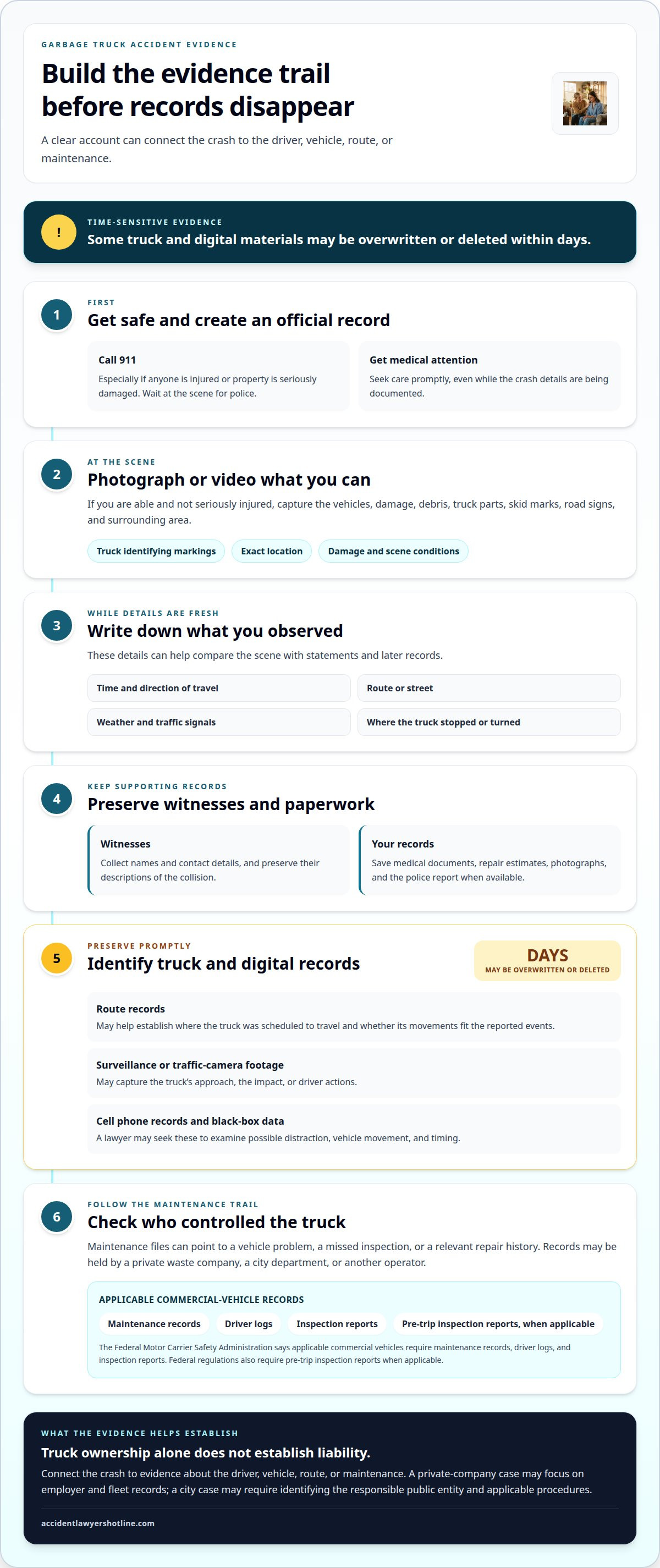
Start with safety and an official record. Call 911 after a crash, especially if anyone is injured or property is seriously damaged, and wait at the scene for police. Seek medical attention promptly. If you’re able and not seriously injured, photograph or video the vehicles, damage, debris, truck parts, skid marks, road signs, and the surrounding area. Include the truck’s identifying markings and the exact location. These details can help an attorney compare the scene with statements and later records.
- Record what you observed: note the time, direction of travel, route or street, weather, traffic signals, and where the truck stopped or turned.
- Identify witnesses: collect names and contact details, and preserve their descriptions of the collision.
- Keep records: save medical documents, repair estimates, photographs, and the police report when available.
Truck and company records may reveal facts that a roadside photograph cannot. Route records can help establish where the truck was scheduled to travel and whether its movements fit the reported events. Surveillance or traffic-camera footage may capture the approach, impact, or driver actions. A lawyer may seek cell phone records and black-box data to examine possible distraction, vehicle movement, and timing. These materials can be overwritten or deleted within days, so timely preservation matters.
Maintenance files can point to a vehicle problem, a missed inspection, or a repair history relevant to liability. According to the Federal Motor Carrier Safety Administration, applicable commercial vehicles require maintenance records, driver logs, and inspection reports. Federal regulations also require pre-trip inspection reports when applicable. Depending on who controlled the vehicle, these records may be held by a private waste company, a city department, or another operator.
For a garbage truck accident claim, the evidence trail may involve more than the driver. A private-company case may focus on employer and fleet records; a city case may require identifying the responsible public entity and applicable procedures. An accident attorney can organize scene evidence, witness statements, medical records, and truck records to assess liability and damages. Preserve what you have promptly, then use those details to build a clear account of the crash.
Injured in a Garbage Truck Accident?
Speeding, distraction, fatigue, falling garbage, blind spots, and poor maintenance can cause crashes. Fault depends on which actions or conditions contributed and what the evidence shows.
Injury Filing Deadlines and Notice
In Illinois, a personal injury lawsuit generally must be filed within two years of the accident. A claim involving a municipal truck may be subject to notice requirements before a lawsuit is filed. That notice period and the court filing deadline are separate requirements. A city-operated truck may therefore involve a shorter first deadline than a claim against a private waste company.
Identify who owned and operated the truck as soon as possible. The company name on the vehicle, collection route information, and police report may help distinguish a private operator from a municipal department. Claims involving an Illinois government-operated garbage truck may have shorter notice requirements than other personal injury claims. Missing a notice deadline can affect the right to pursue a claim, so the applicable deadline should guide the next steps.
Common Crash Injuries
Injuries depend on how the collision happened. Someone struck by a garbage truck faces a different impact from someone hit by a falling object during collection. A vehicle collision can also cause injuries even when damage appears limited. Prompt medical attention helps identify injuries and creates a record of symptoms and treatment connected to the crash.
Falling garbage or truck parts can strike a pedestrian, cyclist, or person near the collection route. The object’s size and location, the force of impact, and the injured person’s position all shape the harm. Describe those details to medical professionals, including when symptoms began. Keep records of appointments and treatment to help explain the accident’s effects over time.
Backing and Blind-Spot Injuries
Rear-loading garbage trucks have substantial blind zones directly behind and beside the vehicle. A pedestrian may be difficult for the driver to see while the truck backs toward a collection point. Garbage trucks commonly use large side mirrors and noise-making devices to warn people and nearby drivers. Those features don’t establish fault on their own; the circumstances and evidence matter.
Many garbage truck accidents involve pedestrians struck by the vehicle. People walking near a curb, crossing behind a stopped truck, or approaching a collection area may face particular danger. The truck’s direction, stopping point, warning devices, and nearby visibility can help explain how contact occurred. Record the location and what you observed as soon as it’s safe.
Filing a Personal Injury Claim
Filing begins with identifying the cause and the parties whose conduct may have contributed. Evidence may show speeding, running a red light or stop sign, failing to yield, losing control, distracted driving, fatigue, falling garbage, or failing to check blind spots. Improper maintenance may also matter. A route stop or collection maneuver alone doesn’t prove negligence; an investigation must connect a specific action or condition to the collision.
Preserve the official police report, witness details, medical records, and photographs that document injuries and the scene. These materials can help explain how the crash happened and how it affected you. For a personal injury claim, consider the separate Illinois deadlines if a municipal truck was involved. An attorney can assess potential liability and damages using the crash circumstances, available records, and treatment documentation.
Potential liability of drivers, waste companies, truck owners, manufacturers, and municipalities
Responsibility can involve several parties, not just the driver. A garbage truck crash investigation examines who controlled the truck and what conduct or defect contributed.
Driver and Operator Liability
A truck driver may be liable when careless driving causes a collision. The employer may also face liability if the driver was working when the crash occurred. The operator’s role matters: a private waste company may employ the driver, while a separate entity owns the truck or manages its route.
Employers must ensure employees follow applicable federal hours-of-service regulations. A company may also be responsible for hiring an unsafe driver or providing inadequate training. Driver records and training materials, for example, may help show whether the company addressed safe backing or collection-route practices. These facts can distinguish an individual driving error from broader employer failures.
Truck ownership adds another question. Identify the owner, operator, employer, and any contractor involved in the collection work. A lease or service arrangement may show who controlled maintenance, dispatch, or driver supervision. Those responsibilities help determine which parties’ actions belong in a liability investigation.
Municipal Liability and Immunity
A city or county may be a potential defendant if it owns the garbage truck or employs the driver. Government-immunity rules can affect whether and how an injured person may pursue that entity. The analysis depends on the government body, the conduct involved, and applicable state law.
In Kentucky, negligence claims against the Commonwealth or its agencies fall within the exclusive jurisdiction of the Board of Claims. The Board caps a single award at $250,000. Kentucky’s KRS 411.110 also sets a 90-day notice rule for cases against a city involving injuries from a defect in a city bridge, street, sidewalk, alley, or other public thoroughfare. That rule concerns specified public-property defects, not every collision with a city truck.
For a municipal vehicle case, identify the responsible public entity and the alleged cause. A driver’s conduct, a street defect, or a maintenance issue may raise different legal questions. The government’s role and the incident location help frame which rules apply.
Manufacturer and Maintenance Liability
A manufacturer may be liable when a defective vehicle or part causes a crash. A tire defect that leads to a blowout is one example. The investigation should connect the specific defect to the collision, rather than assume a damaged part caused it.
Maintenance responsibility may rest with the truck owner, operator, or a mechanic, depending on who handled inspections and repairs. Maintenance files, inspection reports, and repair histories can show whether a problem existed before the crash and how it was addressed. A mechanic may also face potential liability if faulty work contributed.
These roles can overlap. A defective component, missed repair, and driver response may each need examination. An accident case benefits from identifying each responsible party and linking their conduct to the harm. That evidence helps assess liability and the damages connected to the collision.
Legal investigation, insurance negotiations, and court representation
Legal support can connect crash evidence to the people or organizations responsible. An attorney can investigate liability, handle insurer communications, and pursue compensation through negotiations or court proceedings.
Legal Investigation
An attorney can build an investigation around the crash scene, vehicle records, and your injuries. This may include seeking cell phone records, surveillance footage, and black-box data, then comparing them with the police report and witness accounts. For example, vehicle movement data and nearby camera footage may help clarify whether the truck stopped or turned before impact.
The investigation also connects evidence to legal questions. Medical records document treatment, while repair records can show property damage. Driver logs, inspection reports, and maintenance files can help assess whether an operator or employer contributed to the collision. These details help identify who may be liable and which damages the evidence supports.
Give your attorney a clear account of the crash and its effects. Include the dates of medical visits, missed work, and changes to daily activities. An organized timeline can help present events in sequence without overlooking relevant details. This can also help protect your rights when an insurer disputes fault or the extent of your injuries.
Insurance Negotiations
An insurer may ask for a recorded statement or details about fault. Avoid discussing fault or giving the company’s insurer a statement before consulting an attorney. A comment made before the evidence is assembled can be presented without the full context of the crash, vehicle records, or medical treatment.
Legal support can organize the claim’s evidence and explain how it relates to liability and compensation. An attorney can present medical expenses, lost wages, property damage, disability, and pain and suffering as relevant categories. Treatment records and wage documents, for example, can help explain the financial effects of an injury alongside the crash evidence.
Negotiations also require attention to the parties involved. A private waste company, truck owner, insurer, or municipality may each play a different role. Identifying the correct parties and supporting the account with records can help address disputes over who caused the collision and what losses followed.
Contingency-Fee Representation
Some attorneys handling personal injury matters work on a contingency basis, meaning there are no attorney fees unless the case is won. The fee arrangement should be explained before representation begins, including how it treats fees and case-related costs.
An attorney can explain the difference between negotiating a resolution and presenting a case in court. If negotiations don’t resolve the dispute, court representation involves presenting evidence and legal arguments to support liability and damages. That evidence may include witness statements, medical records, and truck data relevant to the accident.
For an injured person, legal help can reduce the burden of dealing with insurers while treatment continues. A focused investigation, clear documentation, and a well-supported account of losses help present the claim. Each factor, from the truck’s operation to the documented injuries, shapes how the case is developed.
Garbage truck accident claims
A collection route can make a garbage truck crash different from an ordinary traffic collision. Trucks may stop often and may be permitted to travel on the left side, along curbs, at the street’s edge, or in bike lanes. A claim must connect the truck’s movements to the collision and the injured person’s losses.
Start by establishing the crash circumstances. Report the collision to authorities, especially when someone is injured or property damage is significant. Record where the truck was traveling, whether it was collecting waste, and what happened immediately before impact. A sudden stop near a collection point, for example, may matter differently from a truck turning across a cyclist’s path. The driver’s actions and route conditions both help shape the account.
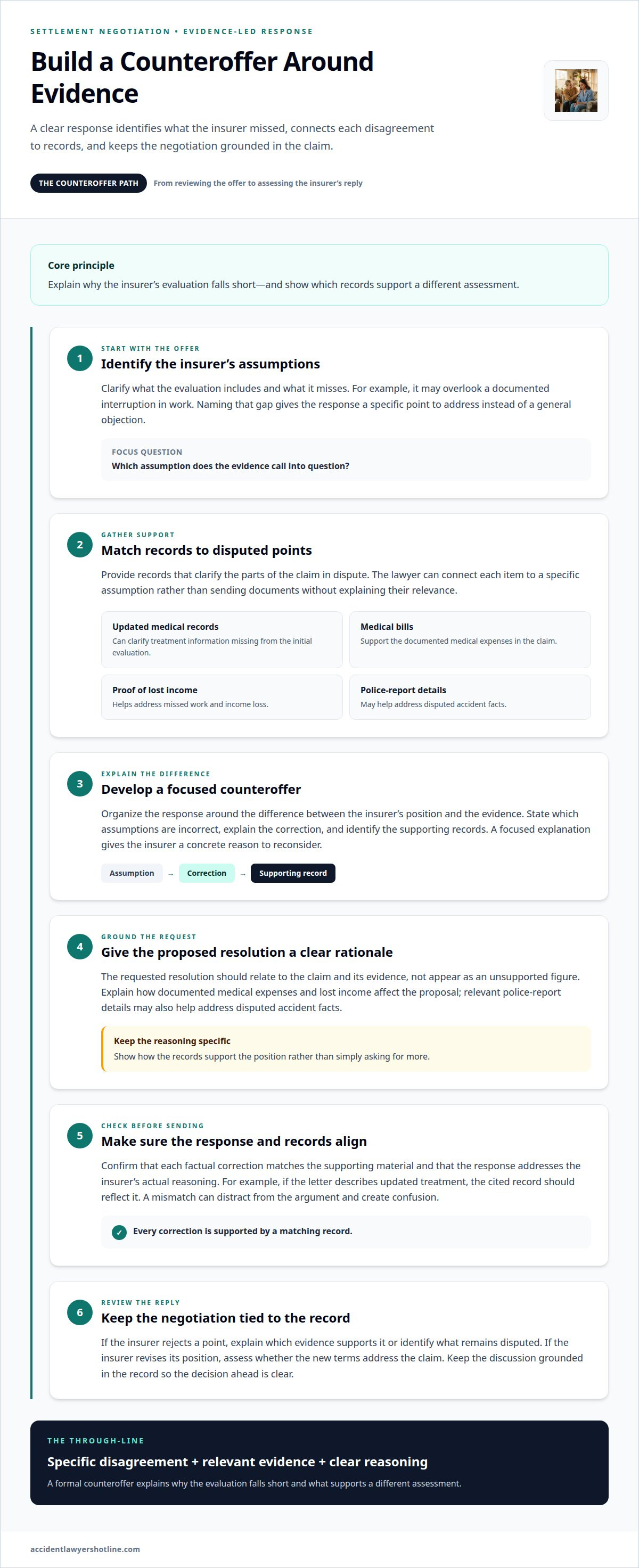
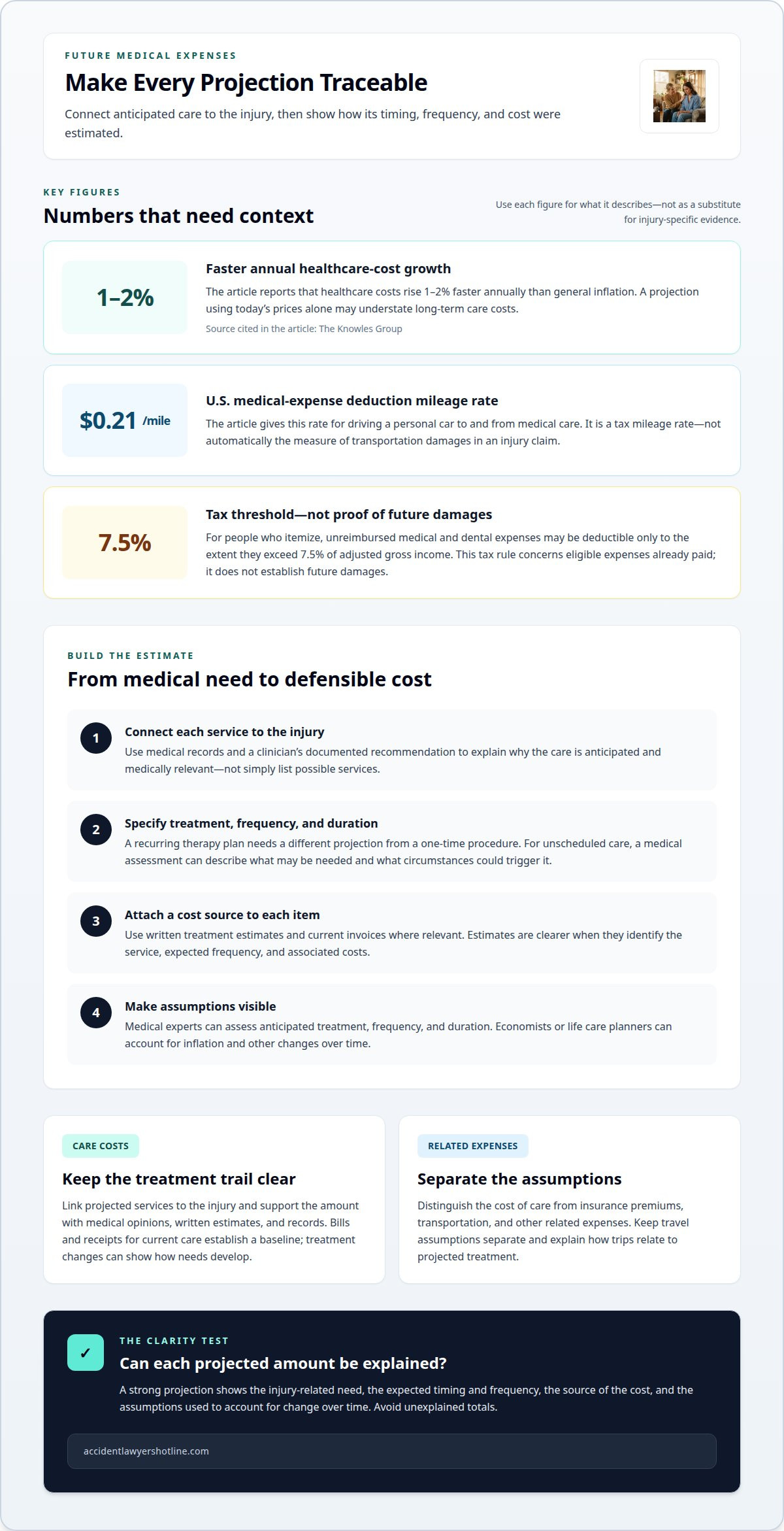
Next, organize the losses the claim may address. Potential compensation can include current and future medical expenses, lost wages, reduced earning capacity, pain and suffering, and property damage. The relevant categories depend on the injury and its effects. Treatment records can document medical expenses, while employment records can help show missed work. A damaged bicycle or vehicle may support a property-damage request.
- Medical effects: connect treatment and future care needs to the crash.
- Work effects: document lost wages and changes to earning capacity.
- Property effects: identify damaged items, such as a vehicle or bicycle.
Fault can involve more than one party. The driver’s conduct, the waste company’s role, truck maintenance, or a defective part may all require consideration. In a truck accident case, the key question is how evidence connects a party’s actions to the collision and resulting losses. A lawyer can assess those connections and identify the damages supported by available records.
Some cases may also raise punitive damages. They may be recoverable when negligence is particularly egregious. This is distinct from compensation for medical care, lost income, pain, or property damage. The nature of the conduct matters, so a claim should explain the specific actions at issue rather than rely on the seriousness of the injury alone.
To pursue a claim, preserve the crash report, medical records, wage documents, and proof of damaged property. Then organize them by date and connect each loss to the collision. A truck accident lawyer can assess the evidence, potential liability, and available compensation. For help evaluating a truck accident case, request a truck accident case evaluation.
Accident Lawyers Hotline: Truck Accident Case Evaluation
Accident Lawyers Hotline offers a Truck Accident Case Evaluation for people injured in collisions involving garbage trucks. The evaluation can help organize key questions: who operated the truck, what evidence may show how the crash happened, and which losses the claim may involve. It’s a useful next step when you’re unsure whether a driver, waste company, truck owner, or municipality may be responsible.
The evaluation connects individuals with experienced personal injury and motor vehicle accident attorneys who can provide legal assistance. Share the basic crash circumstances and the injuries or losses you’re facing to frame the discussion. Accident Lawyers Hotline also offers case evaluations for car, motorcycle, and pedestrian accidents.
To discuss your garbage truck accident, contact Accident Lawyers Hotline for a case evaluation.
Take the Next Step Toward Clarity
After a serious collision, choosing the next step can feel difficult. A garbage truck accident claim is easier to assess when the crash details, injuries, and questions about responsibility are considered together. The right next step depends on the circumstances and what you need help understanding.
Accident Lawyers Hotline offers Car Accident Case Evaluation, Truck Accident Case Evaluation, and Motorcycle Accident Case Evaluation. These evaluations can help you discuss an accident and the issues affecting your potential claim. You don’t need every answer before starting the conversation.
Contact Accident Lawyers Hotline to talk through your situation and consider a practical path forward. Taking that first step can help you approach what comes next with greater clarity.
Frequently Asked Questions
Are claims against a city or municipal garbage truck different?
Yes. A claim involving a municipal truck can involve government-immunity rules, a required notice process, and deadlines that differ from claims against private operators. First identify which public entity owned or operated the truck; a city department and a contractor may have different roles. Then determine the applicable state and local requirements. A government vehicle’s presence alone doesn’t establish that the government is legally responsible.
Garbage Truck Crash on Your Street?
If a garbage truck crashes on your street, keep clear of traffic and call 911 if anyone is injured or property damage is significant. If you witnessed the collision, note the direction the truck traveled, nearby intersections, and where it stopped. For example, a parked vehicle or obstruction may help explain the truck’s path. Share factual observations with responding authorities, and avoid guessing about fault.
What Is My Truck Accident Case Worth?
A truck accident case’s value depends on the documented harm and evidence connecting it to the collision. Relevant losses can include treatment expenses, income effects, property damage, and how injuries affect daily activities. For example, someone unable to return to the same work may have different losses from someone whose injury caused a brief absence. Available evidence and applicable law shape what compensation may be pursued.
What should you do immediately after a garbage truck accident?
Move away from immediate danger, call 911 when someone is injured or property damage is significant, and seek medical care promptly. Follow instructions from emergency responders. If you can safely do so, exchange identifying and insurance information with the other driver and note witnesses’ contact details. Keep copies of medical paperwork and any incident information. Don’t speculate about responsibility while the collision is still being assessed.
Who can be liable for a garbage truck accident: the driver, employer, or city?
The driver, employer, truck owner, manufacturer, mechanic, or municipality may be liable if evidence connects that party’s conduct or a defect to the crash. A driver’s unsafe turn, for example, presents a different issue from a tire defect or inadequate repair. The employer’s role may also matter if the driver was working. Liability depends on the specific cause, control of the vehicle, and supporting evidence.
What evidence should you collect after a garbage truck accident?
Collect information that records the scene and the people involved: photographs of vehicle positions, street signs, debris, and visible damage; witness names and contact details; and the responding agency’s incident information. Save medical and repair documents as they become available. If a nearby business or residence may have recorded the crash, note its location and the likely camera view. Truck data and footage may require formal preservation efforts.
What deadlines apply to garbage truck accident injury claims and government claims?
Deadlines depend on the state and whether a public entity is involved. In Illinois, personal injury claims generally must be filed within two years, while municipal claims require one-year notice under 745 ILCS 10/8-101. In Kentucky, a negligence claim against the Commonwealth must be filed within one year under KRS 49.120. These are different rules, so identify the state and defendant promptly.
How do you file a claim against a municipal garbage truck?
Identify the public entity connected to the truck, then determine the claim notice process and deadline that apply in that jurisdiction. Gather the incident report, treatment records, and information showing the truck’s public ownership or operation. The notice procedure may differ from filing a lawsuit, so treat each as a separate step. For example, Illinois municipal claims have a one-year notice requirement under 745 ILCS 10/8-101.
Were You Injured in an Accident?
Get a free, confidential case evaluation. No upfront fees.
Get Free Case Evaluation