How Are Medical Bills Paid After a Car Accident? Find Out Who May Cover Them
How are medical bills paid after a car accident? Learn which coverage may pay first, what out-of-pocket costs to expect, and how liens can affect settlements.
The at-fault driver’s insurer isn’t always the first to pay medical bills after a crash. How medical bills are paid after a car accident depends on the coverage available: your health insurance or auto policy may help with treatment costs upfront, while a later claim may seek compensation from the responsible driver. You may still owe deductibles, copays, or expenses your coverage doesn’t pay.
It’s understandable to worry about bills arriving before an insurance claim is resolved. Payment can involve more than one source, and a settlement may not cover every expense. This article explains how health insurance and out-of-pocket costs fit in, what auto insurance may contribute, and what options could help if a settlement falls short. You’ll also learn why reimbursement claims or medical liens can affect how much of a settlement remains available to you.
Key Takeaways
- Medical bills may be paid through health insurance, auto coverage, or a claim against the at-fault driver, depending on the circumstances.
- Plan for possible deductibles, copays, and other costs that insurance may not cover upfront.
- Keep records of treatment and expenses to support a claim and help track what remains unpaid.
- If the at-fault driver’s coverage falls short, your own policy or other payment arrangements may help address the gap.
- Understand how reimbursement claims or medical liens could affect the funds left from a settlement.
What If the Insurance Settlement Is Not Enough to Cover My Medical Bills?
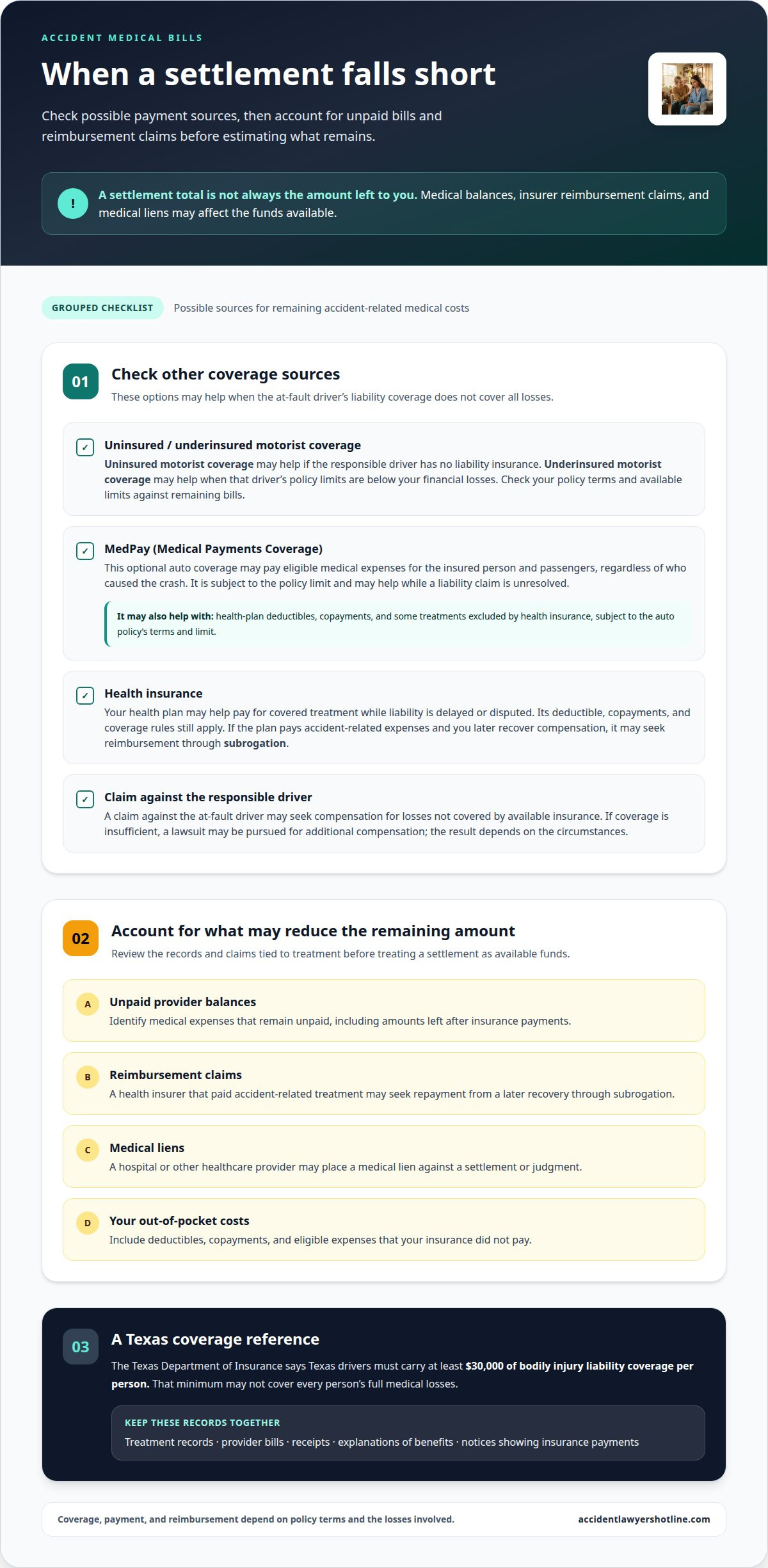
A settlement can fall short when medical expenses exceed the at-fault driver’s liability coverage. Your own auto policy, health insurance, and a claim against the responsible driver may offer other ways to address unpaid costs.
Uninsured and Underinsured Motorist Coverage
Uninsured motorist coverage may help when someone who caused the crash has no liability insurance. Underinsured motorist coverage may help when their policy limits fall below your financial losses. These coverages can provide another source for medical bills when the at-fault driver’s insurance cannot cover the injury claim. Their role depends on your policy and the losses involved, so compare the available limits with your remaining bills.
MedPay for Insured People and Passengers
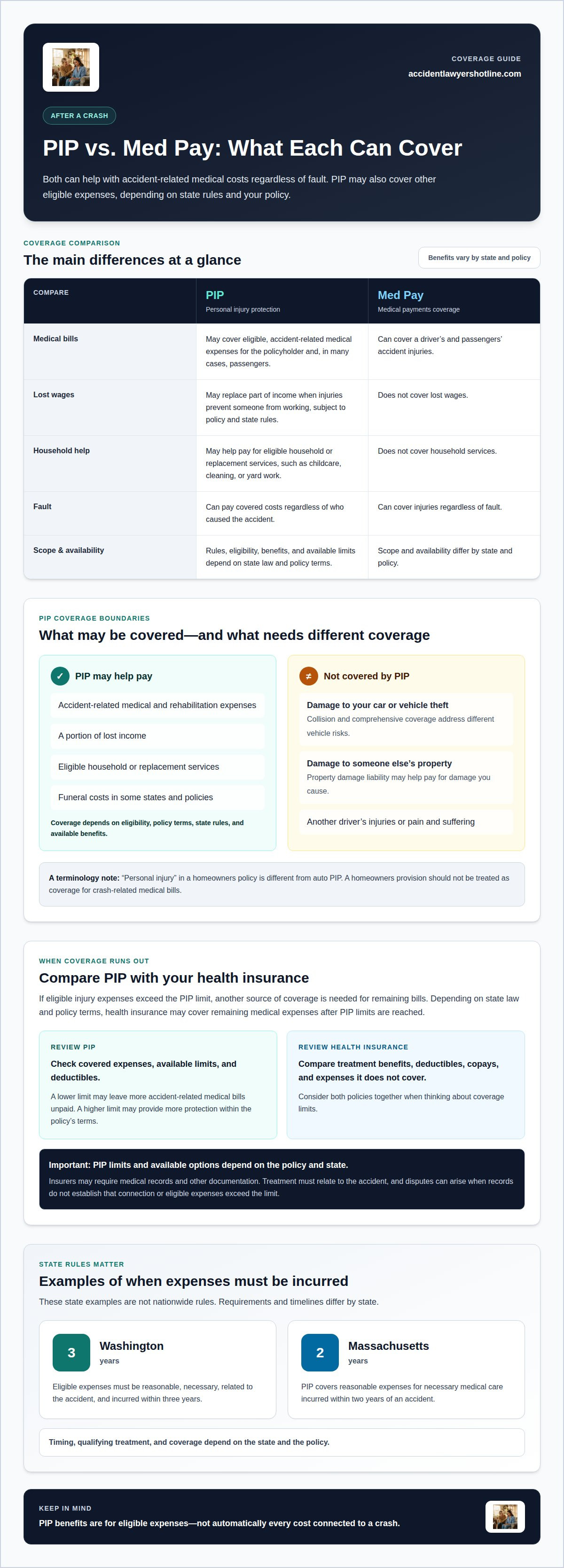
Medical Payments Coverage, often called MedPay, is optional auto insurance that can pay eligible medical expenses for the insured person and passengers, regardless of who caused the crash. Payment is subject to the policy limit. MedPay can help with bills while you pursue a settlement with an at-fault driver, rather than making every payment wait for the liability claim to resolve. It may also apply when the insured caused the accident.
Medical Payments for Deductibles and Copayments
MedPay may help cover health insurance deductibles and copayments for accident treatment, reducing what you pay yourself as bills arrive. Subject to the auto policy’s limit and terms, it may also cover some treatments excluded by your health insurance. For example, if your health plan pays for a visit but leaves a copayment, MedPay may help with that eligible balance.
Health Insurance During Liability Delays
If the at-fault driver’s liability coverage is delayed or disputed, your health insurance may help pay for treatment under your plan. This can address medical bills while the insurer investigates responsibility. Your plan’s deductible, copayments, and coverage rules still apply. If your health insurer pays accident-related expenses and you later recover compensation, it may seek reimbursement through subrogation.
Policy limits matter. The Texas Department of Insurance says Texas drivers must carry at least $30,000 of bodily injury liability coverage per person. That minimum may not cover every person’s full medical losses. If the responsible driver’s coverage is insufficient, Texas accident victims may pursue a lawsuit against that driver for additional compensation.
Before accepting a settlement, account for unpaid provider balances and any reimbursement claim from an insurer that paid for treatment. A hospital or other healthcare provider may place a medical lien against a settlement or judgment. The settlement amount alone doesn’t show what will remain after outstanding bills and valid claims are addressed.
Using health insurance and paying deductibles or co-pays
Health insurance can help pay for accident-related treatment before a liability claim is resolved. The injured person may still owe plan costs and later need to reimburse the health insurer from a settlement.
Using Health Insurance for Medical Bills
Using health insurance means submitting accident-related treatment to your health plan under its coverage rules. This can help pay hospital, doctor, or other provider bills without waiting for the at-fault driver’s insurer to resolve liability. The plan may apply a deductible, copayment, or other cost-sharing amount. Give providers your health insurance information so they can process eligible treatment through the plan.
Keep explanations of benefits, provider statements, and receipts together. These records show what the health plan paid and what you paid yourself. If an ambulance or hospital bill arrives, give the provider your insurance information and ask for an updated statement after the claim is processed. This helps distinguish the plan’s payment from your remaining balance.
Treatment Costs Before a Settlement
Medical expenses can come due before the at-fault driver’s insurer makes a settlement offer. Health insurance may pay for covered treatment during that period, while you remain responsible for plan cost-sharing and excluded services. In Georgia, an injured person generally relies on health or auto insurance for initial expenses while awaiting reimbursement from the at-fault driver’s insurer. A later settlement does not erase bills already incurred.
Track every medical expense from the first visit onward. Keep bills, receipts, treatment records, and notices showing health insurance payments. These documents connect treatment to the crash and help identify unpaid amounts. If treatment continues, add new statements so the claim reflects ongoing care, not just the hospital’s first bill.
Colorado ended its no-fault auto insurance system in 2003. In a fault-based system, an injured person may seek compensation from the driver responsible for the crash, but that claim does not necessarily pay providers immediately. Health insurance can serve as an interim payment source while responsibility and settlement are addressed. The settlement may later account for eligible medical expenses and out-of-pocket costs.
After a compensation recovery, a health insurer that paid accident-related care may seek reimbursement through subrogation. That means the settlement may need to account for the insurer’s payments as well as your deductible, copayments, and other eligible expenses. Review the payment records together before treating the settlement amount as money available for other losses. A car accident case evaluation can help assess how medical expenses and reimbursement claims relate to an injury claim.
Who Pays the Injured Party’s Medical Bills After a Car Accident?
Payment may come first from your health or auto insurance, with a personal injury claim seeking compensation from the responsible driver. Emergency room, ambulance, surgery, and rehabilitation bills may be included when they relate to crash injuries and are supported by treatment records and bills.
Submitting Bills With a Personal Injury Claim
Including bills in a compensation claim means documenting accident-related treatment and its costs. The claim needs evidence of both the injury and the expenses it caused. Keep provider bills, invoices, receipts, and medical records together. Records may also support anticipated future care, rehabilitation, and ongoing treatment expenses. For example, a hospital invoice and follow-up treatment statements can show how care continued after the initial emergency visit.
In Michigan, an auto insurer generally must pay medical bills within 30 days after receiving reasonable proof of the loss for them not to be overdue, according to the Michigan Department of Insurance and Financial Services. Keep copies of bills and proof of submission, including the date the insurer received them. If payment is disputed or delayed, those records help identify which bills remain unpaid and what information the insurer received.
Bills After an Unsuccessful Injury Claim
If an injury claim is rejected or a lawsuit ends unfavorably, the injured person remains responsible for medical bills. A claim does not erase a provider’s balance just because the crash caused the treatment. Payment then depends on available health or auto insurance, any arrangement with the provider, and the outstanding balance. Compare each statement with insurance payments to identify what remains unpaid.
Medical bills and treatment records also help connect the crash to the claimed injury. Keep provider statements, receipts, and records of rehabilitation or continuing care. In a Texas injury claim, medical records, provider testimony, bills, invoices, and receipts can document past costs and anticipated future care. Organized evidence helps explain what treatment occurred and which expenses the claim includes.
Attorney Help With Claims and Liens
An attorney may help present an injury claim, address provider balances, and negotiate medical liens after a settlement. This can matter when more than one party seeks payment from a recovery. A hospital or other provider may place a lien against a settlement or judgment for outstanding bills. Reviewing the lien alongside the settlement helps clarify what must be addressed before funds are distributed.
Michigan law also allows a medical provider with a payment dispute to bring a direct action against an insurer to recover overdue benefits for services provided to an injured person. This concerns the provider’s payment dispute, while the injured person’s records help track treatment and unpaid expenses. Keep a current list of each provider, bill, insurance payment, and remaining balance through claim resolution.
Will the at-fault driver pay my medical bills after a car accident in Michigan?
Michigan generally uses No-Fault PIP benefits for medical bills, while an at-fault driver may be responsible for certain losses beyond applicable coverage. Rules differ by state: Florida generally handles bills through each driver’s own insurance, while Texas PIP can cover medical expenses regardless of fault.
At-Fault Drivers’ Responsibility for Medical Expenses
In Michigan, the responsible auto insurer generally pays medical bills under the No-Fault Law, rather than the other driver’s liability insurer paying first. The applicable PIP medical coverage level limits those benefits. This matters because fault alone doesn’t determine which insurer handles initial medical expenses. If someone else caused the crash, their responsibility may still matter when your losses exceed applicable PIP coverage.
Michigan’s No-Fault system also has timing requirements. An injured person must file a No-Fault application within 1 year after the crash to preserve a claim for medical costs and other No-Fault benefits. Keep records of when the application was submitted and which treatment expenses it covers. Prompt notice helps preserve the route for seeking benefits.
Claims for Excess Medical Costs
If your medical costs exceed the applicable PIP medical coverage level, Michigan law allows you to sue the at-fault driver for excess and future No-Fault PIP medical benefits. This can matter when ongoing treatment creates expenses beyond available insurance coverage. Medical records, provider bills, and evidence of anticipated care help explain the amount claimed and connect the expenses to the crash.
The responsible driver’s insurance may affect what compensation is available, but it doesn’t change the need to document expenses. Keep statements for treatment already received and records describing future care. In Michigan, No-Fault PIP medical coverage depends on the level selected in the policy under which you claim benefits. That level helps define when excess-cost issues arise.
Seeking Compensation From an At-Fault Driver
A claim against an at-fault driver seeks compensation for losses the driver caused. In Michigan, a claim for excess medical costs may follow when expenses exceed the relevant PIP level. Distinguish benefits handled through No-Fault coverage from the additional costs pursued against the responsible driver. This makes the requested recovery easier to understand.
After a crash, report it to your insurer promptly and avoid admitting fault. The insurance companies investigate the collision and determine responsibility. Keep the accident report, medical bills, and treatment records together. These documents can support the injury claim and show how expenses developed.
Michigan’s No-Fault application deadline is separate from the process of establishing another driver’s responsibility. Track application and treatment records as distinct parts of the claim. If an insurer disputes payment, submitted medical statements and proof of loss can help identify the issue. Clear records also show which bills remain unpaid and whether they relate to the crash.
Potential sources for paying accident-related medical bills
How are medical bills paid after a car accident? The answer depends on state rules, policy terms, and who caused the crash. Potential sources include your own auto insurance, health coverage, and a claim against the responsible driver. Identifying the applicable policies can help you understand how medical care may be paid for and what losses could remain unresolved.
Your own auto policy: Personal injury protection (PIP) or Medical Payments Coverage (MedPay) may help pay eligible bills regardless of fault, subject to policy terms and limits. Washington PIP covers medical expenses for the insured and close family members up to $10,000, whether the insured or another driver caused the crash. Washington drivers may reject PIP in writing. Texas insurers must offer at least $2,500 in PIP coverage with each auto policy, and Texas PIP can cover accident-related medical expenses regardless of fault.
MedPay is optional coverage that can pay initial medical expenses up to the policy limit. In Texas, MedPay can help pay medical bills regardless of who caused the crash, but it doesn’t compensate for lost wages. That distinction matters if you need both treatment payments and compensation for time away from work. Review your declarations page and policy terms to identify coverages that may apply to medical care.
The at-fault driver’s liability insurance: In North Carolina, the responsible driver’s liability insurance should pay the injured person’s medical bills, lost wages, and related losses. This depends on establishing responsibility and available coverage. If the driver’s insurer disputes liability, another source may be needed to address treatment costs while the claim proceeds.
State systems affect which policy pays first. In Florida, each driver’s own insurance generally handles medical bills regardless of fault. Michigan uses No-Fault PIP medical benefits, limited by the coverage level selected in the policy. In North Carolina, medical expenses, rehabilitation, and future treatment may be pursued through a personal injury claim or lawsuit.
Uninsured or underinsured motorist coverage: Your own policy may help when the at-fault driver has no liability insurance or insufficient limits. Uninsured coverage addresses the first situation; underinsured coverage may apply when financial losses exceed the driver’s liability coverage. A private health plan may require you to seek payment first from MedPay or other auto medical coverage, so payment order can matter.
Health coverage and other arrangements: Health insurance, Medicare, or Medicaid may pay for crash-related treatment. A provider may agree to defer payment through a medical lien until the claim settles. For injuries during work driving, workers’ compensation may pay medical bills in North Carolina and Michigan. Each source has its own rules for eligible care and reimbursement.
To understand how medical bills are paid after a car accident, map each bill to the policy or claim that may cover it. Track remaining balances and reimbursement demands, then request a car accident case evaluation to discuss which coverage and claims may fit your crash.
Accident Lawyers Hotline
Accident Lawyers Hotline provides case evaluations for people addressing accident-related medical bills, insurance coverage, and potential claims. If bills remain unpaid, the at-fault driver’s coverage is limited, or a provider has asserted a medical lien, an evaluation can help clarify the legal issues and identify possible next steps. The service connects people with experienced personal injury and motor vehicle accident attorneys who can provide legal assistance.
Gather your medical bills, insurance payment records, settlement communications, and any lien notices. These details help show what has been paid and which expenses remain unresolved. Accident Lawyers Hotline offers case evaluations for car, truck, motorcycle, and pedestrian accidents.
If you’re weighing your options after a crash, contact Accident Lawyers Hotline for a case evaluation.
Take the Next Step With a Clearer Claim
Knowing how medical bills are paid after a car accident can help you make informed decisions as your claim progresses. Next, understand how your treatment records, unpaid balances, and insurance communications fit together, especially before making settlement decisions. A clear picture of these details can help you raise focused questions and consider the options for your situation.
Accident Lawyers Hotline offers Car Accident Case Evaluation, Truck Accident Case Evaluation, and Motorcycle Accident Case Evaluation. These evaluations can help people understand potential claim issues after a crash and consider what to do next. If you’re ready to discuss your circumstances, contact Accident Lawyers Hotline. You can take the next step at your own pace, with a clearer understanding of the issues that matter.
Frequently Asked Questions
Could Subrogation Affect My Car Accident Settlement?
Yes. If your health insurer paid for crash-related treatment, it may seek reimbursement from a later recovery. Before settlement funds are distributed, compare the insurer’s reimbursement demand with its payment records and your provider statements. For example, check that the demand includes only treatment tied to the crash and that the listed payments match your records. This can clarify what portion of the recovery remains after claims are addressed.
Should I File An Injury Claim After an Accident?
Consider an injury claim when the crash caused medical expenses, lost wages, or continuing treatment needs. Keep records connecting the accident to your care, including appointment notes and bills. Before accepting an insurer’s settlement, consult an attorney: accepting an offer will most likely prevent you from seeking additional compensation later. An injury claim can address documented losses, but its value depends on the evidence and applicable coverage.
What Do You Do If The Medical Bills Are Coming Due Before You Receive Your Accident Settlement?
Use available health or auto insurance to address eligible treatment while the liability claim proceeds. Give the hospital or provider your insurance information, then review updated statements to see what remains unpaid. If immediate payment is difficult, ask whether the provider will defer collection through a medical lien until the claim settles. Keep copies of bills, insurance explanations, and any written payment arrangement together.
What Happens if the At-Fault Driver Only Had Minimal Insurance Coverage or is Uninsured?
Your own uninsured or underinsured motorist coverage may help when the responsible driver has no liability insurance or insufficient limits. Uninsured coverage applies when the driver has no liability policy; underinsured coverage may apply when losses exceed available limits. Review your policy’s terms and preserve records of medical expenses and other losses. In Texas, an injured person may also sue the at-fault driver when coverage is insufficient.
What If Someone Else Is At-Fault?
You may seek compensation from the person responsible for the crash, including eligible medical expenses and related losses. Their liability insurer may handle the claim, but a disagreement about fault can delay payment. Preserve the collision report, witness details, medical records, and bills. These materials help establish what happened and document how the injuries affected you. Your own auto or health coverage may help pay for treatment while responsibility is addressed.
What if I'm hurt in an auto accident?
Call 911 to report the collision and request medical assistance. Get a medical evaluation even if you feel fine, because some injuries may not appear until days later. Follow the treatment plan and keep records of appointments, prescriptions, bills, and time missed from work. Prompt care supports your health and creates documentation of the injury. Report the crash to your insurer, but avoid accepting an early settlement before getting legal advice.
What is Third Party Liability?
Third-party liability refers to a claim seeking payment from the insurance coverage of the person responsible for causing harm. The injured person is the third party, not the policyholder whose actions led to the claim. For example, if a driver causes a collision, another injured driver may claim medical expenses through the responsible driver’s liability coverage. Available payment depends on policy limits and documented losses.
Who pays medical bills immediately after a car accident in the United States?
There is no single first payer across the United States. Depending on state rules and policy coverage, an injured person may initially use their own auto or health insurance, or pay a provider directly. Some providers can submit eligible MedPay bills to an auto insurer. The at-fault driver’s liability insurer may address covered losses through a later claim, but payment timing can depend on fault investigations and available coverage.
Were You Injured in an Accident?
Get a free, confidential case evaluation. No upfront fees.
Get Free Case Evaluation