Personal Injury Deposition: What Happens Before and After
Learn what to expect during a personal injury deposition, how to prepare, what questions may cover, and how your testimony can affect negotiations or trial.
A deposition isn’t a trial, but your answers can shape what happens next. To understand what to expect during a personal injury deposition, know that it’s a sworn question-and-answer session during the pretrial information-gathering phase. Attorneys may ask about the incident, your injuries, medical treatment, and how those injuries affect your life. A court reporter records your testimony, which may later help assess the case or be used in negotiations or court.
It’s understandable to feel uneasy about answering questions under oath, especially while you’re dealing with an injury. A deposition is more structured than a casual conversation, and you can ask for clarification if a question isn’t clear. You can also say you don’t know or remember something rather than guess.
This guide explains who may attend, what questions can cover, and how to prepare with your attorney. You’ll also learn what happens to the transcript or video afterward and how deposition testimony may affect negotiations, mediation, arbitration, or a trial.
Key Takeaways
- Preparation with your attorney can help you understand the topics you may be asked about and feel more ready to respond.
- Clear, factual answers help keep your testimony focused. If a question is unclear, ask for it to be explained.
- Your testimony can help both sides evaluate the evidence and may shape discussions about resolving the case.
- After the deposition, review the transcript carefully and identify any corrections you need to make.
- Learn how testimony and recordings may be considered in later case proceedings.
What Happens During and After a Deposition in a Personal Injury Case?
A deposition is a sworn question-and-answer session during a lawsuit’s information-gathering phase. Attorneys ask questions to learn what happened and assess how witnesses may testify.
Background and Accident Questions
Questions about your background and the accident establish who you are and how you remember the event. Attorneys may compare your account with other case information, so they may ask about your work history, prior health, earlier injuries, or legal claims. In a car accident case, questions may cover where you were, what you saw, and what happened immediately before and after impact.
Questions may then turn to your injuries, treatment, and daily life. An attorney may ask which body parts hurt, when symptoms began, and what care you received. They may also ask about physical limitations, missed work, or tasks that became difficult. Explain what changed in your routine after the accident, relying on what you personally remember. Questions about treatment can clarify how the injury developed and affected you over time.
Memory Gaps and Unclear Questions
If you have a memory gap, say truthfully that you don’t know or can’t remember rather than guessing. An uncertain estimate can be mistaken for a definite fact. If a question is unclear, ask the attorney to repeat or explain it before answering. Take a moment to understand what’s being asked, then respond to that question.
Keep your answers accurate and focused. If you remember seeing a traffic signal but not its color, say so instead of choosing one. If you don’t know the exact time, don’t invent one. You can ask to see a record or report an attorney mentions. This helps distinguish what you recall from what a document may show.
Deposition Length and Procedures
A personal injury deposition often takes one to two hours, though some estimates describe sessions lasting two to seven hours, depending on the case’s complexity. The number and detail of the questions can affect the length. Because duration varies, plan for a focused session without assuming every deposition follows the same schedule.
Yes, deposition procedures can vary by state or court, although the basic process remains sworn questions and answers. The specific rules depend on where the case proceeds. Attorneys generally ask questions that may resemble courtroom examination and cross-examination. They may also object based on a question’s form, relevance, or privilege. An objection does not change the need to listen carefully and follow your attorney’s guidance.
After questioning, the testimony becomes part of the case information attorneys use to evaluate evidence and prepare for later proceedings. Your answers can clarify disputed details, such as the sequence of events or the effects of an injury. Understanding what to expect during a personal injury deposition means treating each answer as testimony: pause, be truthful, and distinguish what you know from what you don’t recall.
Preparing for a deposition
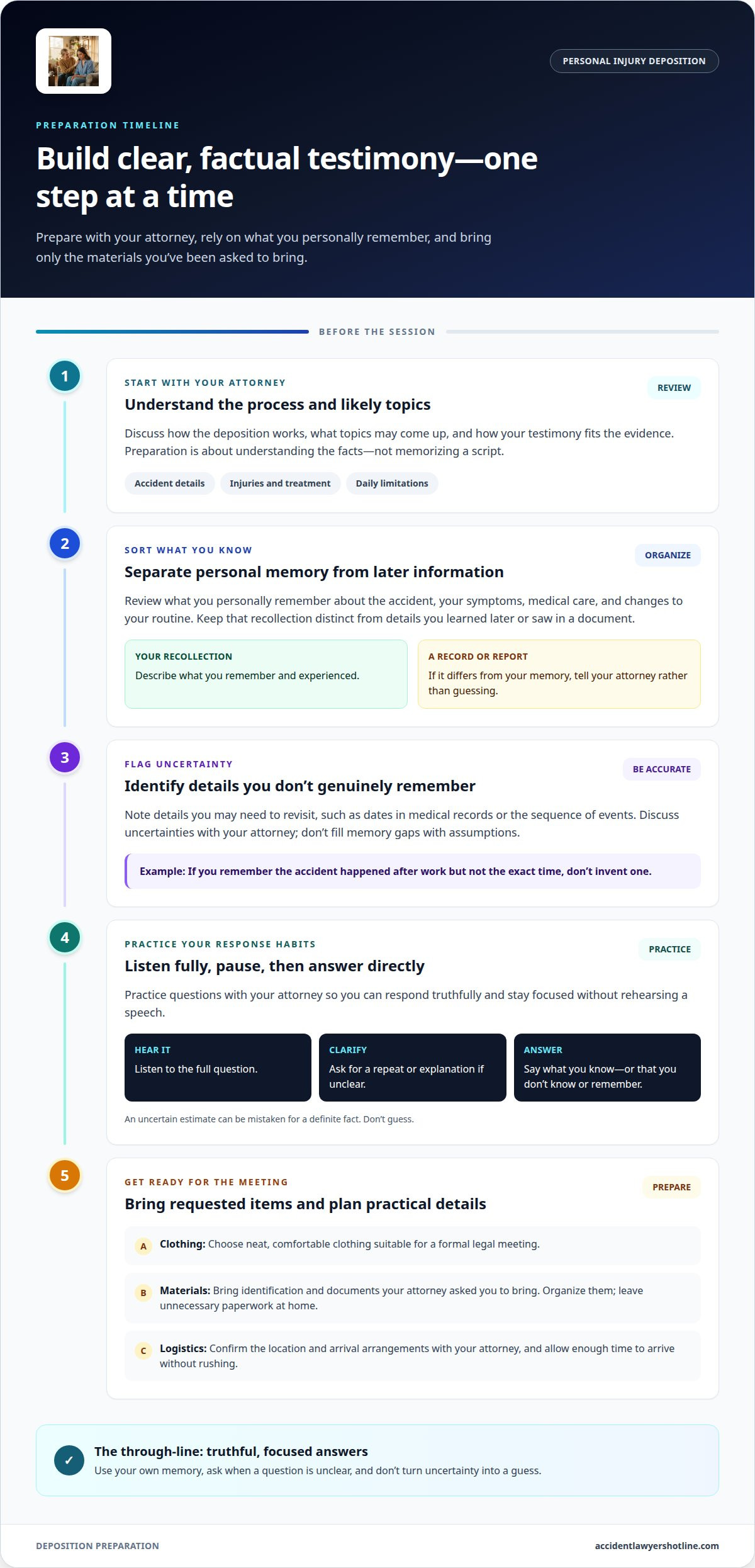
Preparation helps you give clear testimony without memorizing a script. Work with your attorney to review the facts, practice answering questions, and organize materials relevant to your claims.
Preparing With an Attorney
Preparing with a personal injury attorney means reviewing the process and practicing accurate answers. A practice session can help you recognize when to pause, clarify a question, or say you don’t remember. Your attorney can explain possible topics and how your testimony fits the evidence.
Use that discussion to identify details you may need to revisit, such as dates in medical records or the sequence of events. If your recollection differs from a document, tell your attorney rather than trying to resolve the difference by guessing. Preparation is about understanding the facts, not rehearsing answers.
Preparing Testimony
Preparing for testimony means organizing what you personally remember and separating it from what you learned later. A confident answer should reflect your actual memory, not an assumption. With your attorney, practice listening to the full question, pausing, and responding directly before adding any necessary detail.
For example, if you remember the accident happened after work but not the exact time, don’t invent one. If asked about a symptom, describe what you experienced rather than adopting wording that doesn’t feel accurate. Practice questions with your attorney can help you give truthful, focused responses without memorizing a speech.
What to Wear and Bring
Choose neat, comfortable clothing suitable for a formal legal meeting, such as a clean shirt and slacks. Comfort matters because you may be seated while answering questions. Bring identification and any documents your attorney has asked you to bring. Don’t assume every record belongs in the room.
Before the deposition, ask your attorney which materials are relevant and how to handle them if opposing counsel refers to a record. Keep requested documents organized so you can find them without losing focus. Leave unnecessary paperwork at home, and don’t write notes intended to shape your testimony.
A simple preparation routine can make the session easier to manage. Review your account of the accident, injuries, treatment, and daily limitations with your attorney. Mark details you genuinely don’t remember, then discuss how to answer accurately if asked. Gather the documents your attorney identifies, and allow enough time to arrive without rushing. These steps support clear testimony grounded in what you know.
Plan for practical details, too. Confirm the meeting location and arrival arrangements with your attorney, and consider whether your injuries make sitting for an extended period difficult. If you may need a break or adjustment, raise that with your attorney before questioning begins. Discussing logistics in advance can help you stay focused on each question and answer.
Using deposition testimony in court, mediation, arbitration, or negotiations
A deposition creates sworn testimony that attorneys can use to evaluate a personal injury case. The answers may inform settlement discussions, mediation, arbitration, or trial. Their importance depends on what the testimony clarifies, how it compares with other evidence, and whether the witness can testify in court.
What are the rules for answering questions under oath in a deposition? Answer truthfully, listen to each question, and respond with facts you know. If you don’t remember or understand a question, say so or ask for clarification instead of guessing.
During a deposition, a court reporter records the questions and answers in a transcript, preserving the witness’s account for later review. For example, if you describe the direction of travel before a car accident, attorneys can compare your answer with other case evidence. The transcript gives both sides a record to discuss when evaluating the case and negotiating a settlement.
Deposition testimony can shape settlement discussions by helping each side assess strengths and weaknesses. An attorney may compare your account of an injury with treatment records or other evidence. If your testimony clarifies how an injury affects daily activities, that information can inform discussion of the claim. Testimony doesn’t decide a settlement by itself, but it can shape what each side considers during negotiations.
In mediation or arbitration, testimony may help explain disputed facts even when there is no courtroom trial. During mediation, the parties discuss whether they can resolve the dispute. In arbitration, testimony may be among the information considered when deciding the dispute. For instance, an earlier answer about when symptoms began may help frame discussion of the injury and treatment.
At trial, deposition testimony may be used if a witness cannot attend or gives inconsistent testimony. Attorneys may refer to an earlier answer to address a difference between the deposition and courtroom testimony. For example, they may compare a witness’s account of an intersection with a later description. That comparison can help the court assess the evidence, but it doesn’t automatically determine the outcome.
Because sworn answers can be revisited, each response matters beyond the deposition room. You and your attorney can discuss your testimony and how it fits the evidence before negotiations or trial. If you later notice a difference between an earlier answer and a record, raise it with your attorney rather than trying to explain it by guessing.
The transcript gives attorneys a stable account to use when preparing for mediation, arbitration, or court. If a video is made, it may preserve testimony visually as well. Whether the parties negotiate a settlement or proceed toward trial, recorded testimony can help keep later discussions tied to the witness’s actual answers.
Court reporter transcripts and video recording
A deposition creates a record of sworn testimony for later use in a personal injury case. A court reporter records the questions and answers, usually in a written transcript. The lawyers for both sides generally attend, along with the witness and court reporter. Attorneys can compare this record with evidence about the accident, injuries, liability, and compensation.
A court reporter may record testimony using stenography, audio, or video. In many depositions, the reporter prepares a written transcript; video recording is possible but not usual. The transcript captures spoken words, so answer aloud rather than relying on a nod or gesture. If an attorney asks whether you saw a traffic signal, say your answer clearly instead of nodding.
Medical records can provide important context for questions about injuries and treatment. Before the deposition, reviewing records for similar complaints from five or ten years before the accident may help you recognize relevant history. A prior record doesn’t explain itself. If opposing counsel refers to a report, ask to see it so you understand the question before answering.
Records may help attorneys distinguish a new injury from an earlier condition. For example, a question about back pain could concern symptoms before the accident, treatment afterward, or both. Answer from your own memory, and don’t assume what a record says. The attorneys can explain how medical treatment and prior complaints relate to the case.
After questioning, the court reporter prepares the transcript, and the witness usually has an opportunity to review it. You can identify corrections to your testimony, which are noted in the record. Read the wording carefully. If an answer seems different from what you remember saying, raise the specific passage through the proper review process rather than silently changing your account.
A video recording preserves more than the transcript’s words. It may show how a witness answered, while the written transcript records the spoken exchange. Attorneys can use either format to evaluate testimony or prepare for later proceedings. A video isn’t part of every deposition, so the record may consist of the transcript alone.
Each format has a practical role. A transcript lets lawyers locate a particular answer and compare it with other case evidence. Video can preserve the witness’s delivery alongside the testimony. Together, these records help attorneys discuss what the testimony establishes and where questions remain. Reviewing the transcript after the session also gives you a chance to spot recording errors before the testimony is used again.
What a personal injury deposition is
A personal injury deposition is a formal interview under oath, usually held during a lawsuit’s discovery process. Discovery lets both sides gather information before trial. The person answering questions is the deponent, and attorneys may question a plaintiff, defendant, or another witness. Unlike a trial, a deposition is not where a judge or jury decides the claim.
A deposition helps clarify what each person knows about the events and their effects. In a car accident case, an attorney might ask a driver to describe the collision and compare that account with other evidence. Questions may also cover injuries, treatment, and changes to everyday activities. This information helps attorneys assess what is disputed and what the parties agree happened.
Being under oath makes the answers sworn testimony, not an informal conversation. The witness must answer truthfully but doesn’t need to prove every part of the personal injury case during questioning. For example, a witness can explain what they remember about an intersection without deciding who is legally responsible. Attorneys evaluate the lawsuit using the answers alongside other evidence.
A deposition is one part of a broader case, not the entire case. Testimony may help explain events, but attorneys can also build a case using other evidence. For instance, a medical record may provide information about treatment that the witness can discuss. The deposition gives both sides a chance to ask questions and understand how testimony relates to the claim.
Many people give a deposition after their attorney files a lawsuit against the party they believe is responsible. Questions can help attorneys assess how a witness may testify at trial and identify details that need further examination. A deposition may also reveal where accounts differ. If one person recalls a turn signal and another does not, that difference may be reviewed later.
Think of the deposition as structured evidence gathering. It creates a record of a witness’s answers that attorneys can consider as the case moves forward. That record may inform negotiations or later proceedings, but doesn’t determine the outcome by itself. Understanding this role puts the questioning in context: it is one step in evaluating a personal injury lawsuit.
If you’re weighing next steps after an accident, speak with a personal injury lawyer about your case.
Accident Lawyers Hotline: Car Accident Case Evaluation
Accident Lawyers Hotline offers Car Accident Case Evaluations for people considering next steps after a crash. If you’re preparing for a deposition or have already given testimony, an evaluation can help you assess your case and connect with an attorney who provides legal assistance. The service also offers evaluations for truck, motorcycle, pedestrian, and bus accident cases.
A deposition is one part of a personal injury case, so questions about your testimony may arise alongside broader concerns about your injuries and claim. A case evaluation can help you discuss those concerns and consider what comes next. Contact Accident Lawyers Hotline to discuss your case.
Move Forward With a Clear Plan
Knowing what to expect during a personal injury deposition can help you approach the next stage with a clearer sense of what matters. After testimony, write down any questions or concerns that came up. Note specific answers or records you want to discuss with your attorney while your recollection is fresh. This gives you a focused starting point for your next conversation.
Your next step may depend on where your case stands and what you still need to understand. If you’re weighing your options after a car, truck, or motorcycle accident, a case evaluation can help you discuss your situation and consider possible next steps. Bring your questions, including how your testimony fits into the wider case.
Accident Lawyers Hotline offers case evaluations for accident-related claims. Contact Accident Lawyers Hotline to discuss an evaluation and what you’d like help understanding.
You don’t have to sort through every question at once. Take the next step when you’re ready.
Frequently Asked Questions
What Is a Deposition Hearing?
A deposition hearing is usually a sworn interview outside the courtroom, not a session where a judge or jury decides the case. The word “hearing” can make it sound like a trial, but the focus is question-and-answer testimony. For example, a lawyer may ask a driver to describe a turn before a collision. The testimony helps clarify facts for the lawsuit.
What Is the Purpose of a Deposition?
A deposition lets attorneys gather information and understand what a witness may say later. It can clarify disputed details and show which evidence may need closer review. For example, if two accounts differ about a vehicle’s position, questions can narrow down the disagreement. Attorneys can then consider what records or other testimony may help explain it.
How Does the Process Work?
The process usually follows a clear sequence: the witness takes an oath, an attorney asks questions, and the witness answers aloud. A court reporter records the exchange. Attorneys may raise objections, and questioning can move from general background to the events and resulting harm. If an attorney refers to a report, ask to see it before answering questions about its contents.
What Types of Questions Will They Ask and How Should I Answer?
Questions often cover your background, the incident, injuries, treatment, and effects on work or daily activities. Answer what’s asked, using details you personally remember. If asked whether you missed work, distinguish days you actually missed from duties you could no longer perform. Don’t fill gaps with estimates. If a question is confusing, ask for clearer wording before responding.
What kinds of questions will they ask?
Expect questions that establish context, such as where the incident occurred and what you noticed beforehand. An attorney may ask what happened next, when pain began, and what medical care followed. Questions may also cover earlier illnesses, injuries, work history, or previous claims. Topics depend on the issues in the case. Give a direct answer, then stop unless more detail is requested.
What is a personal injury deposition and why is it taken?
A deposition is sworn testimony gathered during a personal injury lawsuit so the parties can learn what a witness knows. Attorneys use the answers to examine the account, identify disputed details, and assess how testimony fits with other evidence. For instance, they may consider a description of symptoms alongside treatment records. A deposition is one information-gathering tool, not the entire case.
What happens step by step during a personal injury deposition?
First, the witness takes an oath. Then an attorney asks questions, and the witness responds aloud while the exchange is recorded. Attorneys may object during questioning. If a document comes up, the witness can ask to see it before responding. Afterward, the testimony may be transcribed for review. This sequence keeps questioning focused and creates a record for later case discussions.
What questions are commonly asked in a personal injury deposition?
Common questions cover what you did before the incident, what you observed, and what happened immediately afterward. Attorneys may also ask when you first noticed symptoms, what treatment you received, and how an injury affects everyday tasks. For example, a question about walking may ask you to describe what you can do now. Separate what you remember from what someone told you later.
Were You Injured in an Accident?
Get a free, confidential case evaluation. No upfront fees.
Get Free Case Evaluation