Proving Fault in a Rear-End Collision in California
Learn how proving fault in a rear-end collision in California works. Discover key evidence, comparative negligence rules, and how to protect your compensation.
Being rear-ended doesn’t automatically make you responsible for the crash. In California, the driver behind is usually at fault for failing to leave enough room to stop, as required by Vehicle Code § 21703, but the front driver or another party may also share responsibility. Proving fault in a rear-end collision means showing how someone’s conduct contributed to the crash and your injuries or vehicle damage.
It’s understandable to assume the rear driver is always at fault. But an unsafe lane change, reversing, or another action by the front driver can affect how responsibility is assigned. California also allows fault to be shared, which can reduce the compensation available to you.
This article explains when a rear-end collision may not be your fault, what evidence can help prove responsibility, and how California’s comparative negligence rule affects compensation. It also covers how vehicle damage, witness accounts, and other records can help clarify what happened.
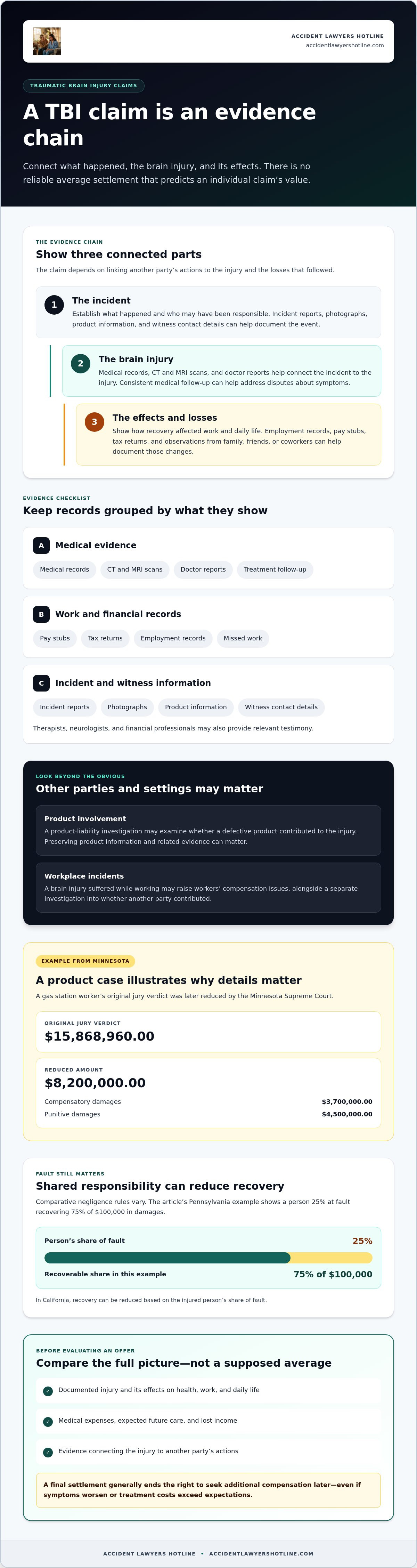
Key Takeaways
- A rear-end impact doesn’t automatically settle who was responsible. The actions of both drivers and other contributing factors can matter.
- Photos, video, witness accounts, police reports, and medical records can help show how the crash happened and what harm it caused.
- Vehicle damage and event data may help clarify details such as braking, impact angle, and speed.
- California’s pure comparative negligence rule reduces compensation according to the injured person’s share of fault.
- Organize records and preserve available evidence so the sequence of events is easier to assess.
When Is a Rear-End Collision Not Your Fault in California?
A rear driver is often responsible for striking the vehicle ahead, but that isn’t automatic. Evidence may show that the front driver contributed to the crash, or that both drivers were negligent.
The Rear Driver’s Safe Following Distance
A safe following distance gives a driver enough room to respond to traffic and stop without hitting the vehicle ahead. California Vehicle Code § 21703 prohibits following more closely than is reasonable and prudent for traffic, speed, and road conditions. A driver who tailgates, speeds, or fails to notice stopped traffic may have breached that duty. Photos of vehicle positions and witness accounts can help explain what happened.
Rear-driver fault can involve more than distance. A distracted driver looking at a phone may fail to brake in time. Speeding for wet pavement or driving while drowsy can also leave too little time to react. Under California Vehicle Code § 22350, drivers must not travel faster than is reasonable or prudent for weather, visibility, traffic, and road surface. These facts may help show negligence, which means failing to use reasonable care and causing harm.
The front driver’s conduct can matter too. For example, a driver who changes lanes abruptly and cuts off a nearby car may leave the rear driver little time to react. A sudden stop without a reasonable cause, reversing into the vehicle behind, or malfunctioning brake lights may also contribute. The circumstances matter: failed brake lights, for instance, may make it harder for the following driver to recognize that traffic is slowing.
Evidence of Front-Driver Negligence
Evidence of the front driver’s negligence can help show whether their actions contributed to the impact. Photos and video may capture an unsafe lane change, reversing, or brake lights that failed to illuminate. Witness statements can describe what each vehicle did just before the crash. These details help insurers assess responsibility instead of relying only on the fact that one car struck another.
Preserve relevant photos, video, and witness contact details when possible. A police report may record statements and an officer’s assessment, but it does not settle fault by itself. Medical records document reported injuries and treatment, while vehicle damage can help connect the impact to the crash. If a driver had a flat tire, their response may matter too: failing to pull over or turn on hazard lights could contribute to a collision.
California Civil Code 1714 allows fault to be divided among multiple parties. That means a rear-ended driver’s actions may reduce, rather than eliminate, a claim for compensation. In proving fault in a rear-end collision, the key is to connect each driver’s conduct to the crash with specific evidence. A sudden stop, for example, should be considered alongside the rear driver’s distance, speed, and attention.
What Evidence Helps Prove Fault After a Rear-End Accident?
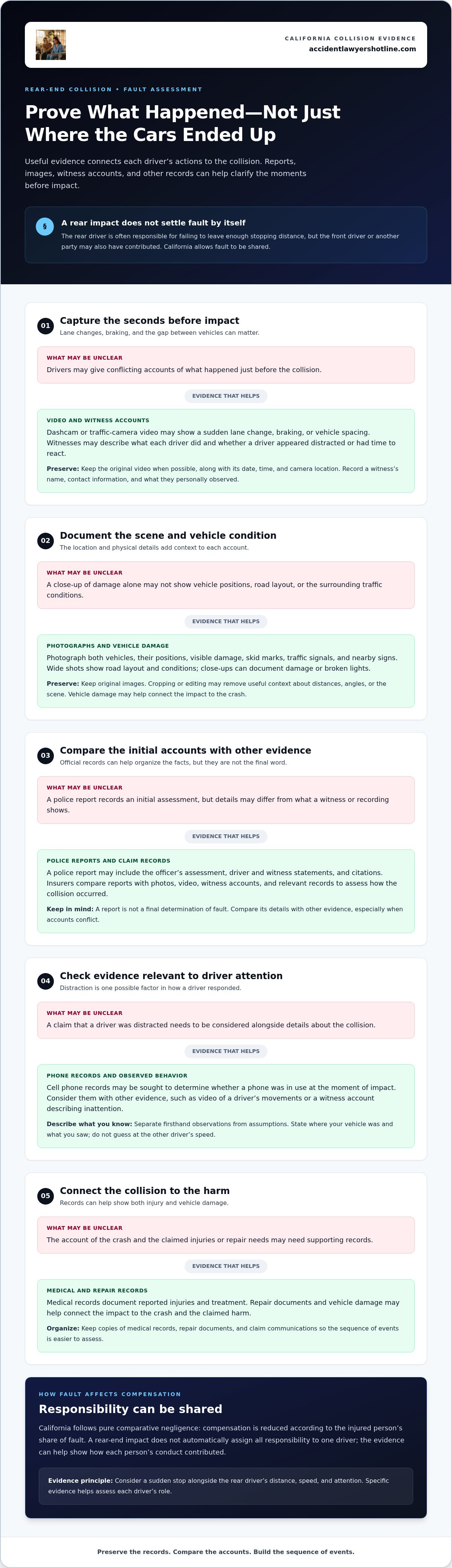
Useful evidence connects each driver’s actions to the collision, rather than focusing only on where the vehicles ended up. Insurers review reports, images, witness accounts, and other records to compare each account with the available facts.
Video and Witness Accounts
Video and witness accounts can provide independent details about the moments before impact. A dashcam or traffic camera might show a sudden lane change, braking, or the distance between vehicles. A witness may describe whether a driver appeared distracted or had time to react. These details can clarify conflicting statements and help establish a timeline.
Preserve the original video file when possible, along with its date, time, and camera location. Record a witness’s name and contact information, and note what they personally observed. Someone who saw the vehicles just before impact may offer useful context, while a person who arrived afterward may only be able to describe the scene.
Cell phone records may also be relevant if distraction is alleged. Records can be sought to determine whether a phone was in use at the moment of impact. Consider them alongside other evidence, such as video showing a driver’s movements or a witness account describing inattention.
Police Reports and Photographs
A police report may record the officer’s assessment, driver and witness statements, and any citations issued. It can help organize the initial account, but it isn’t a final determination of fault. Compare its details with other evidence, especially if a driver’s statement differs from what a witness or recording shows.
Photograph both vehicles, their positions, visible damage, skid marks, traffic signals, and nearby signs. Wide shots can show the road layout and traffic conditions; close-ups can document damage or broken lights. Keep the original images, since cropping or editing may remove useful context about distances, angles, or the scene.
Insurance Fault Investigations
Insurers investigate by reviewing statements, police reports, photos, videos, witness accounts, and relevant records. They compare timelines and physical evidence to assess how the collision occurred and whether one or more drivers contributed. This review matters because an insurer’s fault assessment can affect how it handles a personal injury or vehicle-damage claim.
Give a clear account of what you observed, and distinguish firsthand knowledge from assumptions. For example, say where your vehicle was and what you saw before impact; don’t guess at the other driver’s speed. Keep copies of claim communications, medical records, and repair documents, as they may help connect the collision to the claimed harm.
If evidence is incomplete or accounts conflict, a car accident case evaluation can help clarify how available records may support your claim. Careful rear-end crash evidence review can bring the timeline, witness details, and damage documentation into focus.
Vehicle damage and accident reconstruction
Dashcam footage, scene photos, and vehicle damage can help show how a car accident unfolded. Together, they may clarify vehicle positions, braking, impact angles, and whether a driver moved suddenly.
The location of damage offers clues, not a complete finding of fault. A rear bumper crushed near its center may fit a straight-line impact, while damage along a corner may suggest angled contact. Investigators compare those marks with each driver’s account, the final vehicle positions, and witness descriptions. No single photograph necessarily explains the full sequence.
Preserve the original dashcam file and note its date, time, and camera view. Footage showing the moments before impact may reveal traffic flow, following distance, braking, or a sudden lane change. A witness can add context the camera missed, such as a vehicle entering the lane shortly before impact. Comparing the recording with witness observations can help build a clearer timeline.
Vehicle event data recorders may capture speed, braking, and impact information. Those details can be compared with photographs, skid marks, and damage patterns to assess whether a driver slowed before impact. Accident reconstruction experts can analyze crash dynamics, including speed, impact angles, and force distribution. Their analysis may help determine whether the evidence fits a driver’s account, rather than relying on damage alone.
California Vehicle Code § 21703 prohibits following another vehicle more closely than is reasonable and prudent given traffic, speed, and road conditions. Evidence of distance before impact may therefore matter. For example, footage showing a car following closely in dense traffic may support a different account than footage showing an abrupt merge immediately before contact. The surrounding conditions help put recorded distance into context.
Not every rear impact begins with a moving vehicle ahead. If a driver backs into a car behind, video, witness accounts, and damage location may help distinguish reversing from a forward-moving collision. A scrape or dent pattern can be considered alongside the vehicles’ positions and each driver’s description. The sequence matters because a driver’s movement before impact can change how responsibility is assessed.
Keep photographs, original recordings, witness details, and repair documents together. Note which vehicle each image shows and what part was damaged. If damage is repaired or a vehicle is moved, earlier photos can preserve its condition near the time of the crash. Comparing these records with event data and reconstruction findings can help identify inconsistencies and explain how the collision occurred.
Partial fault and compensation
California applies pure comparative negligence in rear-end claims. Under Li v. Yellow Cab Co. (1975) 13 Cal.3d 804, an injured person’s recovery is reduced by their percentage of fault. Shared responsibility can affect compensation even when another driver also caused the accident.
Fault depends on each driver’s conduct and its connection to the collision. A rear driver may have followed too closely, while the lead driver may have changed lanes abruptly or reversed. Evidence about each action helps determine whether one person or multiple parties contributed. The question is not simply which vehicle hit the other, but what caused the impact and resulting harm.
For example, the rear driver may say the lead car stopped without warning, while the lead driver says the rear vehicle was following too closely. Witness accounts, traffic footage, vehicle damage, and statements from both drivers can help assess those competing explanations. If the lead car’s brake lights were not working, that fact may also affect the fault analysis. Consider the evidence together, not in isolation.
Comparative negligence means a person’s share of responsibility reduces their recovery; it does not automatically bar compensation. Someone found partly responsible may still pursue damages from another party. The reduction reflects the claimant’s assigned share of fault, while the remaining claim depends on evidence of the other party’s negligence and the losses connected to the crash.
Compensation relates to actual damages caused by the collision. A claim may include bodily injury and vehicle damage, supported by records such as medical documentation, repair estimates, and proof of expenses. Medical records can connect treatment to the crash, while repair records can document the cost and nature of vehicle damage. The evidence must support both the claimed loss and its connection to the accident.
Keep your records consistent. If a driver’s statement describes a sudden stop, review photos or video for details that support or challenge the account. Medical records should accurately reflect symptoms and treatment, and repair documents should relate to the damaged vehicle. Gaps between statements and records may raise questions about fault or claimed losses.
An attorney assessing an accident claim may examine how each party’s driving contributed, what evidence supports each account, and how documented damages relate to the impact. The analysis may also consider whether another responsible party contributed. A clear account of the sequence, supported by records and witness information, helps explain why fault should be assigned as claimed.
California rear-end collision fault rules
California uses a fault-based insurance system, so a party who causes a vehicle collision may be financially responsible for resulting damages. A rear impact alone doesn’t decide fault. The central question is whether a driver’s failure to use reasonable care caused the collision and a resulting injury or property loss.
For a negligence claim, the injured person must show that the other driver owed a duty, breached it, caused the accident, and caused actual damages. In a rear-end crash, that duty may include leaving enough room to stop safely. A front driver’s unsafe lane change or a rear driver’s inattention may be relevant when evidence connects that conduct to the impact.
California Civil Code 1714 holds drivers accountable for negligence and allows fault to be divided among multiple parties. This matters when both drivers’ conduct contributed. For example, the rear driver may have been following too closely, while the front driver changed lanes without adequate warning. The evidence can support assigning responsibility to both, rather than treating the collision as an all-or-nothing question.
California follows pure comparative negligence under Li v. Yellow Cab Co. (1975) 13 Cal.3d 804. A claimant’s compensation is reduced by their own percentage of fault. A person can therefore seek recovery even when partly responsible, with the reduction reflecting their share. The rule makes accurate fault evidence important to both the liability decision and the amount recoverable.
Consider a front driver who alleges that the rear driver caused a neck injury by failing to stop. The rear driver says the front vehicle merged abruptly. Investigators can compare witness accounts, photographs, video, and vehicle damage to assess those explanations. Medical records can document the injury and treatment, while repair records can show damage caused by the collision.
Insurers use evidence to evaluate responsibility and claimed losses, but their assessment is not the same as a court judgment. A driver’s statement should clearly describe observed events, without guessing about speed or intent. A family member who witnessed the crash may provide useful information; someone who arrived afterward can describe the scene but not the impact itself.
A California lawyer or attorney evaluating a rear-end claim may examine each driver’s conduct, the evidence of causation, and records supporting injury and property damages. The practical takeaway is to connect each claimed loss to the collision and each fault allegation to specific evidence. For help understanding how California’s rules apply to your collision, request a car accident case evaluation.
Accident Lawyers Hotline: Car Accident Case Evaluation
Accident Lawyers Hotline offers a Car Accident Case Evaluation for people sorting through questions about fault, evidence, and injuries after a crash. If driver accounts conflict or you’re unsure how photos, witness statements, and medical records support your claim, an evaluation can help clarify the issues and connect you with an attorney for legal assistance.
Gather the records you already have, such as the police report, photos, repair documents, and treatment records. A clear timeline can help explain what happened and identify questions about shared fault or documented losses. Accident Lawyers Hotline also offers case evaluations for truck, motorcycle, and pedestrian accidents.
If you’d like to discuss your situation, contact Accident Lawyers Hotline.
Take the Next Step Toward Clarity
A useful next step is to turn what you remember into a clear account while the details are fresh. Note the sequence of events, preserve relevant records, and identify unanswered questions about responsibility or injury. This organized starting point can make a discussion about your situation more focused.
Proving fault in a rear-end collision can require careful review of evidence, especially when drivers disagree or responsibility may be shared. Accident Lawyers Hotline offers case evaluations for car, truck, and motorcycle accidents, connecting people with experienced personal injury and motor vehicle accident attorneys for legal assistance.
You don’t need to resolve every question before seeking guidance. Share the details you have and discuss what may help clarify your next steps. Contact Accident Lawyers Hotline today to discuss your situation and move forward with greater clarity.
Frequently Asked Questions
Is Rear-Ending Someone Always Your Fault?
No. The rear driver is often responsible, especially if tailgating, speeding, or distraction prevented a safe stop. But the front driver’s actions can matter too. An unsafe merge, reversing, or failed brake lights may contribute to the impact. Review the sequence of events, not just which vehicle struck the other. Photos, video, and witness accounts can help establish what each driver did.
How Can You Prove You Were Not the At-Fault Driver in a Car Crash?
Build a clear account of what happened and connect it to evidence. Record where each vehicle was, what you saw before impact, and whether traffic or a lane change affected your ability to react. Then compare your account with available footage, witness descriptions, vehicle damage, and the police report. For example, dashcam video showing another car merging directly in front of you may support your version.
How Does Fault Work in a California Car Accident Claim?
California assigns responsibility based on whether a driver’s failure to use reasonable care caused the crash and resulting damages. A claim generally addresses duty, breach, causation, and actual harm, such as injury or vehicle damage. More than one party may share fault. California’s pure comparative negligence rule reduces an injured person’s compensation according to their share of responsibility.
How Does California’s Comparative Negligence Law Apply to Rear-End Collisions?
In California, an injured person may recover compensation even if they share some responsibility for the crash. The final recovery is simply reduced by their exact percentage of fault. For example, evidence might show that the rear driver followed too closely while the lead driver also contributed through an unsafe maneuver. Because California uses pure comparative negligence rules, consulting with Accident Lawyers Hotline can help ensure your fault percentage is assessed fairly.
What If You Were Partially at Fault?
Partial fault doesn’t automatically prevent recovery in California. Under pure comparative negligence, compensation is reduced by the injured person’s share of responsibility. The evidence must still connect another party’s conduct to the crash and support the claimed losses. If drivers disagree about a sudden stop or lane change, compare their statements with independent evidence before assuming either account settles the issue.
What Steps Should You Take Immediately After a Rear-End Collision?
First, check for injuries and call 911. Some symptoms, including whiplash, may appear later, so seek medical attention and keep records of care. If it’s safe, document the scene with photos of vehicle positions, damage, road conditions, and visible warning lights. Exchange information, identify witnesses, and preserve available video. Write down what you remember while details are fresh, and avoid guessing about speed or cause.
What Evidence Helps Prove Fault in a Rear-End Collision?
Useful evidence includes police reports, scene photographs, video, witness statements, medical records, and vehicle information. Each item can answer a different question. Video may show the moments leading up to impact, while repair records document damage and medical records track reported injuries and treatment. Keep original files and note when and where they were created. Comparing sources can reveal whether accounts match the physical evidence.
Is the Rear Driver Automatically at Fault in a Rear-End Crash?
No. A rear impact doesn’t automatically establish that the following driver caused the crash. That driver may still be responsible if they failed to maintain a prudent distance or stop safely. But evidence of a sudden unsafe merge, reversing, or another contributing action can change the assessment. The key distinction is between where the impact occurred and what conduct caused it.
Were You Injured in an Accident?
Get a free, confidential case evaluation. No upfront fees.
Get Free Case Evaluation