PTSD After a Car Accident Settlement: What Compensation May Cover
Seeking a PTSD after car accident settlement? Learn how emotional trauma impacts compensation, what evidence you need, and how claims are evaluated today.
A severe PTSD diagnosis doesn’t automatically mean a larger settlement. A settlement for PTSD after a car accident depends on the intensity and duration of symptoms, their effects on daily life and work, and how clearly the evidence connects them to the crash. No single average amount applies to every claim.
If symptoms appeared later or you had no physical injuries, it may be harder to show how the crash affected you, but neither fact automatically ends a claim. This article explains how PTSD severity may affect compensation, why delayed treatment can raise questions, and what records and testimony can support your account. It also covers how claims based on emotional harm alone may be assessed, so you can understand the factors that matter and what to expect.
Key Takeaways
- Settlement value depends on how severe and lasting PTSD symptoms are and how much they affect daily life, work, and relationships.
- Delayed treatment can make it harder to connect symptoms to the crash, so a clear timeline of symptoms and care can help explain the connection.
- Therapy records, prescriptions, work absences, and observations from people close to you can help document the effects of trauma.
- A claim may still be possible without physical injuries, but evidence of a PTSD diagnosis, its connection to the crash, and its impact becomes especially important.
- Learn which losses may be considered, including treatment costs and income affected by PTSD, and how evidence can support each part of a claim.
Claims without physical injuries
A car crash can cause diagnosable PTSD even when it leaves no broken bones, wounds, or other visible physical injuries. A claim must connect the emotional harm to the collision and show how it affected you.
Challenges in Emotional Distress Claims
An emotional distress claim seeks compensation for psychological harm, rather than relying only on visible physical injuries. The key is to establish a diagnosis, connect it to the crash, and show its effects on everyday life. Therapy records, for example, can document symptoms, while coworkers may describe missed shifts or difficulty concentrating. The applicable injury law shapes which evidence matters.
Insurer Challenges to PTSD Claims
Insurers may question whether the crash caused PTSD, particularly if treatment began later or records show earlier symptoms. They may also argue that the evidence does not establish a diagnosis or show meaningful effects on work and daily activities. A consistent timeline can address these questions: note when symptoms began, when care started, and how specific tasks changed. Distinguish pre-existing conditions from changes after the crash.
Negotiating PTSD Damages
Lawyers negotiate PTSD damages by organizing evidence of fault, diagnosis, causation, and resulting losses into a supported demand. They may compare treatment records with work absences, prescription records, and accounts of changed routines. This shows how the crash affected the person, rather than relying on a diagnosis alone. The evidence gives both sides a clearer basis for discussing emotional harm and related losses.
Can lawyers negotiate PTSD damages without physical injuries? Yes. They can present evidence that another party’s negligence caused the crash, that PTSD resulted from it, and that the condition caused recoverable damages. A passenger, for example, may use treatment records and family observations to show how symptoms disrupted daily activities. The absence of visible injuries does not rule out psychological harm.
State rules can affect recovery. New Jersey identifies N.J.S.A. 39:6A-8 as relevant to recovering non-economic damages, including emotional distress, in personal injury cases. Its verbal threshold can limit recovery unless an injury meets specified criteria, such as being permanent. In Pennsylvania, a limited tort policy can restrict recovery unless an exception applies, including when the at-fault driver was intoxicated or drove a commercial vehicle. Policy type and injury details matter.
Children and people with pre-existing conditions need careful documentation. A child’s PTSD claim limitation period is generally tolled until age 18, but applicable rules depend on the claim. For a pre-existing anxiety or trauma condition, compare records from before and after the crash. That comparison can help distinguish earlier symptoms from new or worsened effects. An injury lawyer can use that timeline, along with passenger or caregiver observations, to clarify the claim.
Can Severe PTSD Raise A Car Accident Settlement Amount?
PTSD severity can affect compensation because symptom intensity, frequency, and effects on daily life help show the harm caused by a crash.
Emotional Distress Symptoms After a Crash
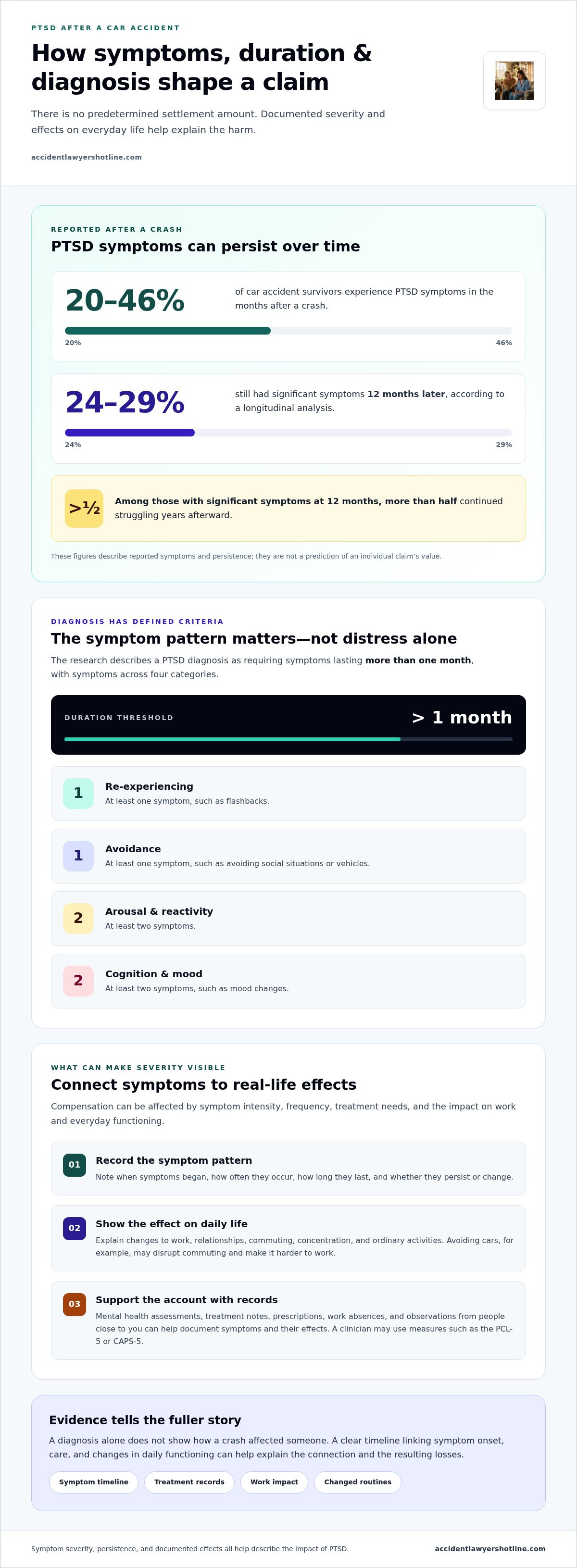
Emotional distress after a collision can include anxiety, flashbacks, insomnia, depression, and fear of vehicles. These symptoms matter when they interfere with work, relationships, or ordinary activities. For example, avoiding cars after a crash may disrupt commuting and make it harder to work. When assessing damages, a lawyer considers the documented effects of symptoms, not just the diagnosis.
Frequency and Persistence of PTSD Symptoms
PTSD symptoms vary in frequency and duration, and that pattern can help explain the condition’s effect. Research summarized in the available market facts reports that 20% to 46% of car accident survivors experience PTSD symptoms in the months after a crash. A longitudinal analysis found that 24% to 29% still had significant symptoms 12 months later. Among that group, more than half continued struggling years afterward.
PTSD Diagnosis and Symptom Requirements
A PTSD diagnosis requires a defined pattern and duration of symptoms, not distress alone. The National Institute of Mental Health criteria described in the research require symptoms lasting more than one month, including at least one re-experiencing symptom, one avoidance symptom, two arousal and reactivity symptoms, and two cognition and mood symptoms. Flashbacks, social avoidance, anxiety, and mood changes may be relevant examples after a collision.
Documenting a PTSD Diagnosis
A diagnosis is documented through a mental health assessment and records describing symptoms, duration, and effects on daily life. A clinician may use a psychological evaluation and standardized measures such as the PCL-5 or CAPS-5 to record symptom severity. Those records help explain how the crash caused the condition and how it affects work or relationships. Consistent treatment notes can also show whether symptoms persist or change.
Can a PTSD car accident settlement be taxable in the United States? It isn’t automatically taxable or tax-free. Tax treatment depends on what the payment compensates and how the settlement allocates damages.
How is a PTSD diagnosis documented for a car accident injury claim? A mental health professional records the diagnosis, symptoms, assessment, and effects on daily functioning. Treatment notes, prescriptions, and work records can help connect the condition to changes after the crash.
There is no predetermined compensation amount for PTSD after a vehicle accident. A claim’s value depends on symptom intensity and frequency, treatment needs, and effects on the person’s ability to work or function. A car accident lawyer can assess how these factors and the supporting records relate to damages.
A car accident claim evaluation can help organize the diagnosis, symptom timeline, and losses for a claim review.
Can I recover compensation for PTSD if I didn’t seek treatment right away?
Delayed treatment doesn’t automatically erase a PTSD claim, but it can make the connection between the crash and symptoms harder to show. Medical records, treatment expenses, and work losses help explain the compensation being sought.
Treatment Expenses and Related Losses
PTSD-related damages can include mental health care, prescriptions, and income lost when symptoms interfere with work. Medical bills and treatment records show what care you received and how it relates to the crash. Counseling visits and prescription records, for example, can support expenses, while attendance records can document missed shifts or reduced work.
Keep records that show the timeline and practical effects of symptoms. A treatment record created after symptoms first appear can help explain why care began later. A journal entry about panic during a commute, followed by a therapy appointment, provides a dated example. Prescription receipts and counseling bills document expenses. Work schedules, pay records, and absence notices can help show income losses tied to symptoms.
Other claimed expenses can include psychological counseling, alternative therapies, prescription medication, and support animals. Each expense needs a clear connection to care, recovery, or rehabilitation after the collision. If PTSD keeps you from traveling to work, for example, document missed work and the symptoms affecting your ability to commute. Records help distinguish treatment costs and lost wages from unrelated expenses.
Michigan No-Fault law allows recovery of reasonable charges for reasonably necessary products, services, and accommodations for an injured person’s care, recovery, or rehabilitation under MCL 500.3107(1)(a). This provision can be relevant to mental health treatment expenses after a Michigan crash. Keep bills and clinical records together so the purpose of each service is clear.
Settling Before Treatment Is Complete
Should you accept an insurance settlement before PTSD treatment is complete? First consider whether the records show the care received, ongoing symptoms, and expected treatment needs. Weigh an early offer against documented expenses, lost wages, and the effects of symptoms on work and daily functioning.
Incomplete treatment can make important losses harder to measure. Someone still attending therapy, for example, may not yet have a clear record of how long care will continue or whether symptoms have improved. Review current bills and prescriptions, along with documented effects on work. Don’t treat an insurer’s first offer as a full measure of the claim.
Delayed care can also raise questions about whether PTSD resulted from the crash. Explain the gap with a specific timeline: when symptoms began, what changed, and when treatment started. If you initially avoided driving, then sought counseling after anxiety disrupted your work commute, those details can clarify the sequence. Clear dates and consistent records help connect mental health effects to the collision.
Before resolving a claim, organize treatment notes, invoices, prescriptions, and wage records. Compare them with the losses included in the proposed settlement. This review helps identify whether the amount accounts for treatment and work effects already documented.
Therapy records and expert testimony
Therapy records and testimony can explain how a crash caused psychological distress and changed daily life. A personal injury claim may include emotional harm even without major physical injuries. Records, for example, can connect a driver’s reported nightmares with treatment, while a witness describes missed family events. Together, these details show more than a diagnosis alone.
Useful records include psychological evaluations, treatment notes, prescriptions, and a clinician’s description of symptoms and their daily effects. A therapist can identify stressors discussed during treatment and explain care already received or still needed. If a patient reports avoiding the road where the collision happened, dated notes can document that concern and its effect on travel. Consistent records also help establish a timeline.
An expert’s opinion should explain its basis, not simply repeat that a patient has PTSD. A mental health professional, for example, can describe the evaluation, observed symptoms, information reviewed, and how the findings fit diagnostic criteria. An expert may also explain how trauma affects concentration at work or relationships at home. This analysis connects the diagnosis to specific consequences.
Fact witnesses and expert witnesses provide different kinds of evidence. A fact witness describes what they personally observed, such as a coworker noticing repeated absences or a spouse seeing new sleep difficulties. An expert offers an opinion based on the information reviewed and professional analysis. A family member can describe changed routines, while a therapist explains diagnosis and treatment. Neither role replaces the other.
Expert testimony can also address future losses when PTSD affects someone’s ability to work. A treating professional may describe ongoing treatment needs and functional limits. An economist can quantify accident losses and explain their short- and long-term financial effects. Work records, for example, may show reduced hours, while expert analysis explains how those changes affect future earning capacity. Specific support makes projected losses easier to understand.
Organize evidence by the question it answers: diagnosis, connection to the crash, daily impact, or financial loss. Pair therapy notes with prescription records, work absences, and accounts from people who observed changes. If a driver stopped commuting after the crash, attendance records and a family member’s observations may show the practical effect. A clear set of records helps each witness focus on firsthand knowledge or professional analysis.
PTSD prevalence after motor vehicle accidents
Research shows that traumatic stress after a vehicle collision is not unusual. One study found signs of post-traumatic stress disorder in between a quarter and a third of people involved in motor vehicle accidents, at least a month after the crash. That finding concerns symptoms, not confirmed diagnoses. The distinction matters when interpreting prevalence in relation to an individual claim.
Other findings use different methods and timeframes. A systematic review found that 22% of road traffic accident survivors had PTSD. The American Psychological Association identifies motor vehicle accidents as the leading cause of PTSD among civilians. These figures describe groups, not any one driver. A population statistic cannot prove that a particular crash caused someone’s symptoms or establish the value of a claim.
Why do the reported figures differ? Studies may examine different survivors, follow-up periods, and definitions of symptoms or diagnosis. Someone reporting nightmares after a collision may be experiencing traumatic stress, but that alone does not establish PTSD. A clinical assessment considers the person’s symptoms and history. Anxiety while riding in a vehicle, for example, may be one part of a broader pattern that needs professional evaluation.
Prevalence provides context, while documentation establishes an individual account. A dated record of the collision, subsequent symptoms, and mental health care can clarify the timeline. A driver might document new difficulty sleeping, avoiding the crash route, and missing work. These details show how symptoms appear in daily life, rather than relying on a broad population estimate.
The physical consequences of a crash can also complicate the picture. Someone recovering from physical injuries may face stress, disrupted routines, and treatment demands alongside psychological symptoms. Separating these effects in records can help explain what changed after the collision. Notes distinguishing pain-related sleep disruption from recurring crash nightmares, for example, provide more detail than a general statement about poor sleep.
A difficult symptom history still matters even when population studies report different rates. Treat prevalence as background, then focus on the person’s diagnosis, timeline, and documented functional changes. A family member may describe new avoidance, while treatment records explain the clinical assessment. Together, these specifics can give a clearer account than statistics alone.
If you’re assessing how crash-related symptoms fit into your claim, request a car accident claim evaluation to discuss the documented facts.
Accident Lawyers Hotline: Car Accident Case Evaluation
Accident Lawyers Hotline offers a Car Accident Case Evaluation to help you understand how crash details, PTSD records, and related losses may shape a claim. It can be a useful next step when symptoms began after a collision, treatment started later, or an insurer questions the connection between the crash and your condition.
Gather available therapy records, prescription information, work documentation, and a timeline of symptoms. These details help clarify what happened and which questions remain. Accident Lawyers Hotline also offers evaluations for truck, motorcycle, and pedestrian accident cases.
If you’re ready to discuss your circumstances, contact Accident Lawyers Hotline to request a case evaluation.
Take the Next Step Toward Clarity
Deciding whether to pursue a settlement for PTSD after a car accident can feel like another burden while you’re trying to recover. You don’t have to make that decision based on a diagnosis alone. A focused review of your circumstances can help clarify which questions to address and what information may matter before you respond to an insurer.
Accident Lawyers Hotline offers Car Accident Case Evaluations, Truck Accident Case Evaluations, and Motorcycle Accident Case Evaluations. These evaluations can help you consider the next step for a claim involving crash-related trauma and its impact on your life.
When you’re ready, contact Accident Lawyers Hotline to discuss your situation. Taking one considered step can help you move forward with greater clarity and support.
Frequently Asked Questions
What Factors Affect the Amount of a PTSD Car Accident Settlement?
The amount depends on the condition’s severity, duration, and documented effects on work and daily activities. Treatment needs and income losses can also shape claimed damages. Ongoing therapy and reduced work capacity, for example, have different financial effects from symptoms that resolve quickly. Evidence connecting PTSD to the crash also matters, as do applicable state law and available insurance coverage. A PTSD after car accident settlement claim is assessed based on these case-specific factors.
What Types of Compensation Can You Receive in a PTSD Car Accident Settlement?
Potential damages can include emotional distress, therapy and medication expenses, and lost wages related to PTSD. A claim may also account for changes in work ability, job retraining, or future lost earning capacity. If trauma changes someone’s relationship with a spouse or family, loss of consortium may be relevant. Which categories apply depends on the losses and evidence in the individual case.
How Does Contributory Fault Affect My Claim for PTSD Damages?
Contributory fault can affect or prevent recovery, depending on the law governing the claim. Under case law in four states, including Alabama, a person who shares any fault for a crash could be barred from financial recovery. An insurer, for example, may argue that a driver’s action contributed to the collision. The effect of that argument depends on the applicable state rules and evidence about how the crash occurred.
How Do You Prove Emotional Distress in Court?
Present a consistent account of the diagnosis, its connection to the crash, and its effects on your life. Treatment notes can document symptoms over time, while work records may show absences or difficulty performing specific duties. Someone close to you can describe changes they observed firsthand. A coworker, for example, may explain how your concentration changed after the collision, while a clinician addresses the psychological assessment.
How Does PTSD Play into Your Case?
PTSD can form part of claimed damages when evidence links the condition to another party’s negligence. The claim must connect the crash to the diagnosis and show resulting harm, such as treatment needs or disrupted work. Records might, for example, show a new inability to drive for work after the collision. The diagnosis provides context, while evidence of practical effects explains how it changed your circumstances.
How Do New Jersey and Pennsylvania Laws Affect PTSD Claims?
New Jersey identifies N.J.S.A. 39:6A-8 as relevant to recovering non-economic damages, including emotional distress. Its verbal threshold can limit recovery unless an injury meets specified criteria, such as being permanent. In Pennsylvania, a limited tort policy can restrict recovery unless an exception applies, including when the at-fault driver is intoxicated or drives a commercial vehicle. Your policy choice and claim circumstances matter.
Can PTSD After a Car Accident Qualify for Compensation in the United States?
Yes, PTSD may qualify when a claim establishes that another party’s negligence caused the crash, the condition resulted from it, and the condition led to recoverable damages. A diagnosis alone does not establish each element. A claim can, for example, explain how symptoms began after the collision and affected work or daily functioning. State law and available evidence shape how the claim proceeds.
What Evidence Is Needed to Prove PTSD Was Caused by a Car Accident?
Useful evidence can include a psychological evaluation, treatment records, prescriptions, work history, and witness observations. A clear timeline can help connect the collision to the diagnosis. Records showing no prior treatment, followed by documented symptoms and care after the crash, may help explain when the condition emerged. Evidence can support a PTSD after car accident settlement claim by showing the diagnosis and its connection to the crash.
Were You Injured in an Accident?
Get a free, confidential case evaluation. No upfront fees.
Get Free Case Evaluation